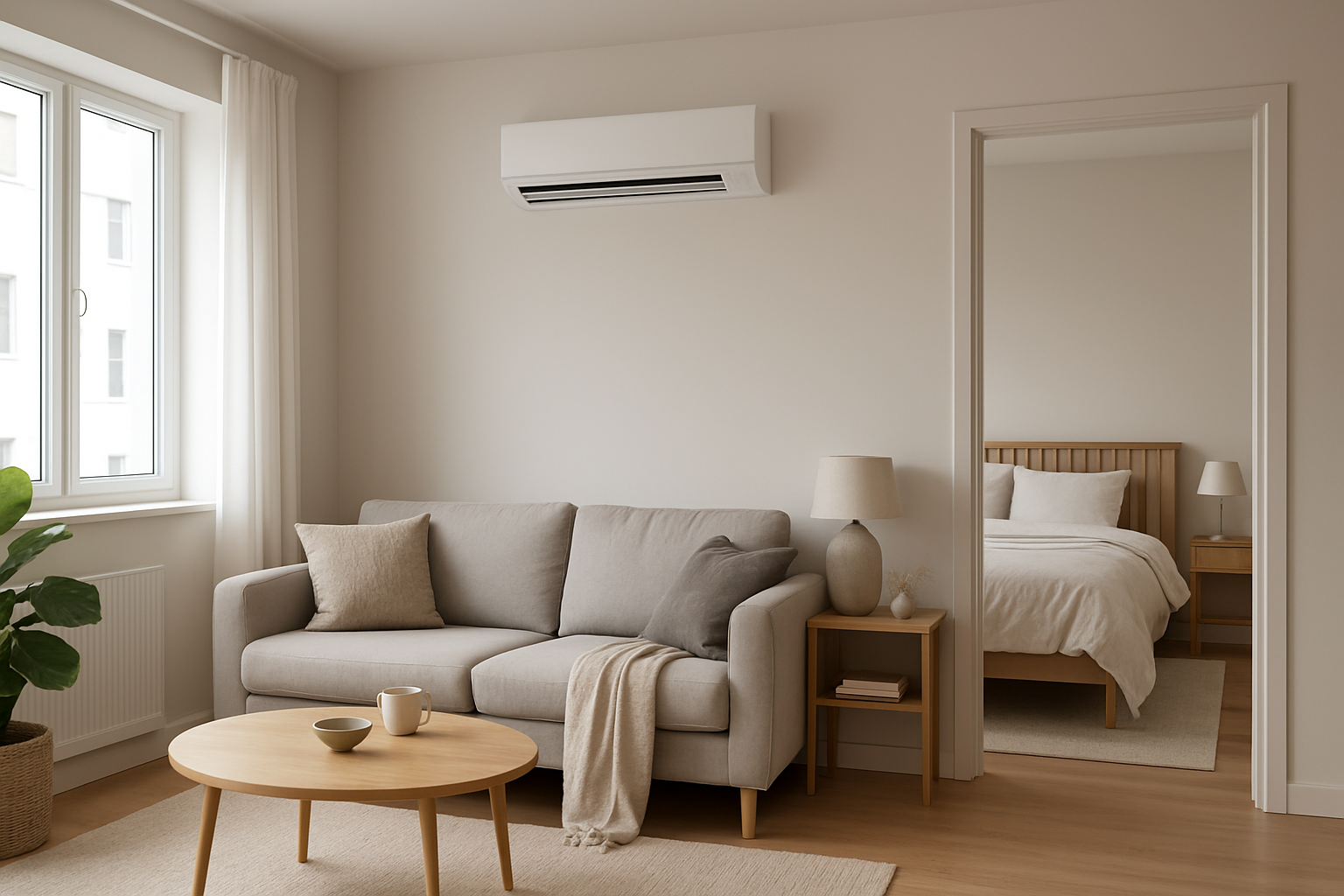
Diagnose and fix airflow imbalances or excess heat gain causing your living room to be too warm while bedrooms stay cool. Improve comfort and HVAC efficiency.
Living Room Too Warm Bedrooms Cool? Airflow Misbalance
Quick Answer
Most cases come from the living room taking more heat gain (sun, exterior walls, high ceilings) and/or getting more supply airflow than the bedrooms. First check: with the system running steadily, compare airflow at a living room supply vent versus a bedroom vent using your hand and a tissue. If the living room is clearly stronger, you have a distribution imbalance driving the temperature split.
Identify the Comfort Pattern First
Before chasing equipment problems, sort the complaint by pattern. The pattern tells you whether this is mainly excess heat gain in the living room, an airflow imbalance, or a control issue.
Time of day / weather: If the living room runs warmer during sunny afternoons or mild weather, suspect solar gain and stratification. If it is warmer regardless of sun or outdoor temperature, suspect airflow imbalance or return/sensor placement.
Where it happens: Living room warm while multiple bedrooms stay cool points to distribution and/or heat gain in the living room, not a single isolated room issue.
System running vs off: If the difference is biggest while the HVAC is running, it is usually airflow balance (who is getting the conditioned air). If the difference grows when the system is off, it is usually envelope heat gain or poor mixing.
Constant vs intermittent: A consistent 2–6°F split suggests a stable airflow/heat gain problem. Big swings that come and go suggest control behavior (thermostat location, short cycles, or dampers if present).
Doors open vs closed: If bedrooms get closer to living room temperature when you leave doors open, the bedrooms likely lack return air path or have weak supply. If doors make little difference, the living room likely has higher heat gain or the thermostat is being influenced.
Vertical temperature difference: If the living room ceiling area feels much warmer than the seating level, stratification is part of the problem (common with vaulted ceilings and high supply registers).
Humidity perception: If the living room feels warmer and stickier while the bedrooms feel cooler and drier, the living room may be taking more solar/humidity load or receiving less effective air mixing. If humidity feels similar everywhere, focus more on airflow split than moisture load.
Airflow strength from vents: Strong living room airflow with weak bedroom airflow is the classic misbalance. Weak airflow everywhere is a different problem (filter, coil, blower, duct restriction).
What This Usually Means Physically
When a living room is warm while bedrooms are cool, the house is not behaving like one uniform box. Two physical effects usually dominate.
Excess heat gain in the living room: Large windows, west/south exposure, cathedral ceilings, exterior walls, fireplace chases, and open floor plans can add heat faster than the system can remove it locally. Even if the system capacity is adequate for the whole house, the living room can be the highest-load space and “runs behind” the bedrooms.
Airflow distribution imbalance: Supply air follows the path of least resistance. Shorter, larger, or straighter ducts (often feeding the living room) deliver more airflow. Longer runs, kinks, flex duct compression, closed registers, or dirty grilles starve bedrooms. The result can be counterintuitive depending on season: one room can be over-conditioned while another is under-conditioned, because the system is not dividing airflow in proportion to each room’s load.
Add two amplifiers that make the split worse:
Stratification and poor mixing: Warm air pools high in tall living rooms. If supplies are high or aimed poorly, the room can stay warm at occupant level even while the system is running.
Control influence: If the thermostat sits in a hallway or bedroom area, it may satisfy early because those areas cool faster, shutting the system off while the living room is still warm. The equipment may be fine; the control point is not representative of the hardest-to-condition space.
Most Probable Causes (Ranked)
1) Living room has higher heat gain than bedrooms (solar gain and envelope load): Warmest during sunny hours; temperature rises quickly when sun hits windows; closing blinds or curtains noticeably helps.
2) Supply airflow imbalance favoring the living room: Living room vents feel clearly stronger than bedroom vents during the same cycle; bedroom temperature improves when bedroom doors are open.
3) Bedroom return air path is restricted (door undercut too small, no transfer grille): Bedrooms cool when doors are open but warm up or feel stuffy with doors closed; you may feel air rushing under the door when the system runs.
4) Duct restriction to bedrooms (crushed flex, sharp bends, disconnected run, closed damper): One or more bedrooms have consistently weak airflow compared to others; issue does not change with sun or curtains.
5) Thermostat location or sensor bias causes early shutoff: Bedrooms reach setpoint quickly while living room never catches up; short run cycles are common and the living room is worst at the end of the off-cycle.
6) Stratification in a tall living room (vaulted ceiling, high registers): Ceiling area is significantly warmer than seating level; fan use or supply direction changes make a noticeable difference.
How to Confirm the Cause Yourself
These checks use observation only. Do them on a day when the problem is noticeable.
Airflow comparison test (system running continuously for 10–15 minutes): Hold a tissue or single sheet of toilet paper at a living room supply register, then at a bedroom supply register. If the living room pulls/pushes the tissue much more strongly, the system is delivering disproportionate airflow to the living room or starving bedrooms.
Door position test: With the system running, close a bedroom door for 15 minutes, then open it for 15 minutes. If the bedroom feels more comfortable or airflow at the bedroom supply increases with the door open, the room likely lacks a return air path and is becoming pressurized, reducing supply flow.
Sunload test: On a sunny day, close blinds/curtains in the living room for 1–2 hours during peak sun. If the living room-to-bedroom temperature gap shrinks noticeably, prioritize solar gain and window-related heat gain over duct problems.
Run cycle pattern: Note whether the system runs in short bursts (for example, less than 10 minutes on, long off periods) while the living room stays warm. If yes, the thermostat area may be satisfying early, leaving the living room under-conditioned.
Vertical stratification check: Stand in the living room and compare how warm it feels at the couch versus near the ceiling (or upstairs landing overlooking the space). If it is much warmer higher up, stratification is a contributing mechanism.
Register setting check: Without changing anything yet, verify that bedroom registers are actually open and unobstructed by furniture, rugs, or drapes. A partially closed register can create a persistent cool-bedroom or warm-bedroom complaint depending on season and duct layout.
Normal Behavior vs Real Problem
Normal: A small split (about 1–3°F) between rooms, especially with open floor plans, sunny windows, or bedrooms with doors closed. Living rooms with large glass areas often run warmer in late afternoon even when the system is operating correctly.
Likely a real problem: A persistent 4°F+ difference between living room and bedrooms for multiple hours, especially when the system is running and the living room registers blow much stronger than bedrooms or bedrooms change dramatically with door position. Also abnormal: one-bedroom airflow is consistently weak compared to other bedrooms, suggesting a duct issue rather than normal room-to-room variation.
When Professional Service Is Needed
Temperature split persists: Living room remains 4–6°F+ warmer than bedrooms for more than a week under similar weather conditions after basic checks (blinds, register open, door-position test).
Airflow imbalance is obvious: Living room airflow is clearly stronger than bedrooms across multiple vents, indicating distribution design, duct restriction, or damper issues that require measurement and adjustment.
System performance decline: Longer runtimes than normal, poor cooling/heating overall, rising energy use, or weak airflow throughout the home (not just bedrooms) suggests a broader airflow or equipment issue.
Control problems suspected: Short cycling or the system shutting off while the living room is still uncomfortable points to thermostat location, sensor calibration, or zoning/damper behavior that needs diagnostic instrumentation.
Any safety indicator: Burning smell at registers, persistent whistling, or signs of duct disconnection (dusty air blasts, attic smell) should be inspected promptly.
How to Prevent This in the Future
Manage living room heat gain: Use effective window shading during peak sun (close-fitting blinds/curtains), and prioritize exterior shading on high-gain windows when possible. This directly reduces the living room load the HVAC must overcome.
Keep return paths functional: Avoid sealing bedrooms too tightly with closed doors if there is no dedicated return. A simple habit of leaving doors slightly cracked during long cycles can stabilize airflow until a permanent return path is added.
Maintain consistent register positions: Avoid frequent large changes to supply registers. Big throttling changes can shift airflow and create new hot/cold spots elsewhere.
Keep filters and grilles clean: A loaded filter reduces total airflow and makes balancing issues more noticeable. Clean supply and return grilles so room-to-room comparisons remain meaningful.
Use ceiling fans for mixing in tall living rooms: Gentle mixing reduces stratification so the thermostat and occupants experience closer temperatures.
Related Home Comfort Symptoms
One room is always hotter than the rest of the house
Bedrooms stuffy with doors closed
Upstairs rooms warm while downstairs is cool
Living room gets hot only in late afternoon sun
Weak airflow from bedroom vents but strong at the thermostat area
Conclusion
A living room that stays too warm while bedrooms feel cool is most often a combination of higher living room heat gain and an airflow distribution imbalance that fails to deliver the right amount of conditioned air where the load is highest. Start by confirming airflow differences at the registers and whether bedroom doors change the outcome. If the temperature split is consistently 4°F or more, or airflow to bedrooms is clearly weak, the next step is a professional airflow and duct diagnostic rather than adjusting the thermostat.
Frequently Asked Questions
Why is the living room warmer even when the thermostat is set correctly?
The thermostat only controls based on the temperature where it is located. If bedrooms or the hall reach setpoint faster, the system can shut off while the living room still has higher heat gain from windows, exterior walls, or a tall ceiling. The equipment may be operating normally, but the control point is not representing the living room load.
If my bedrooms are cool, doesn’t that prove the AC is strong enough?
It suggests the system can produce cooling, but it does not prove the cooling is being delivered proportionally. A home can have enough total capacity while still being poorly distributed, causing one space to be over-served and another to be under-served.
Do closed bedroom doors really change airflow?
Yes. If a bedroom has supply air but no adequate return path, closing the door can pressurize the room. That backpressure reduces how much supply air can enter, weakening airflow and changing temperatures. The door-position test is a reliable indicator of a return-path problem.
Should I close living room vents to force more air to the bedrooms?
Minor adjustments can help, but aggressive closing can increase duct pressure and create noise, reduce total airflow, or shift comfort problems to other rooms. If the living room airflow is much stronger than bedrooms, the better fix is correcting restrictions, dampers, or return paths rather than heavily choking off vents.
How big of a room-to-room temperature difference is acceptable?
In many homes, 1–3°F variation is typical due to sun exposure and room location. A sustained 4°F+ gap, especially when paired with noticeably uneven airflow at the registers, points to a correctable imbalance or heat gain issue.
Need a complete overview? Visit the full troubleshooting guide here: Read the full guide for more causes and fixes.
When the living room runs hot and the bedrooms stay cool, it can feel like the house is playing favorites. The good news is that the comfort mismatch doesn’t have to be the new normal—things can settle into a more sensible rhythm.
After the airflow stops acting like it’s got its own agenda, the whole place just feels calmer. You’ll notice it in the simplest moments, like taking your shoes off without instantly regretting it.