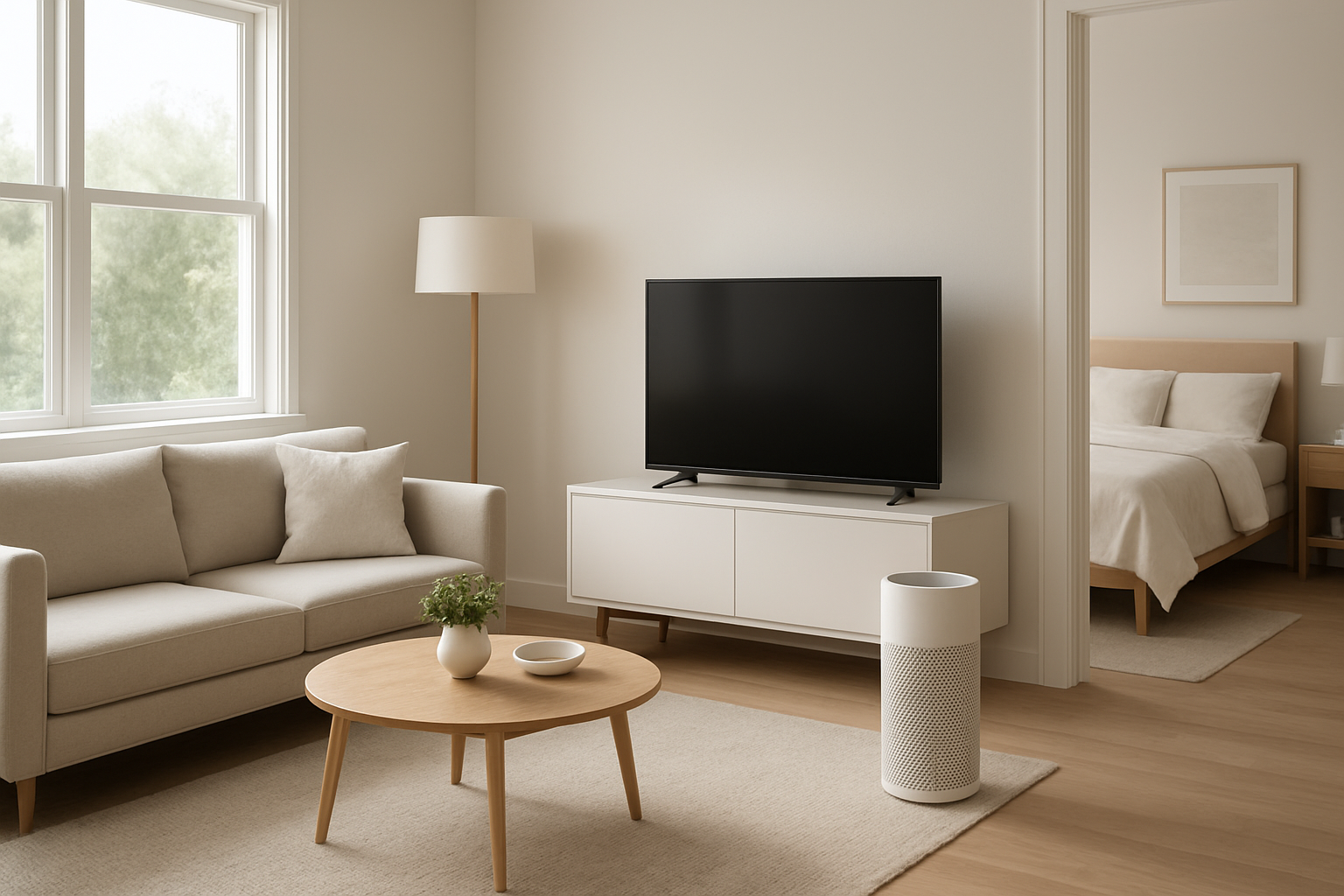
Diagnose why your living room air feels stale in the evening by identifying causes of reduced ventilation and learning solutions to improve airflow and indoor air quality.
Living Room Air Feels Stale In The Evening? Here’s The Cause
Quick Answer
Most evening stale-air complaints come from reduced ventilation and natural air movement after sunset, causing air stagnation in the living room. The first check: around the time it feels stale, confirm whether the HVAC blower is running and whether air is actually moving at the living room supply vent and the main return grille. If airflow drops, stagnation is the driver.
Identify the Comfort Pattern First
Stale air is a ventilation and mixing problem before it is a temperature problem. Use the pattern below to pinpoint when your home stops exchanging and circulating air.
Time of day: Does it start reliably in the evening (after sunset) and improve by morning? A consistent evening onset points to reduced natural ventilation and reduced HVAC mixing.
Weather dependence: Worse on mild evenings when the HVAC barely runs, or when outdoor wind dies down. If a windy evening fixes it, that is a strong ventilation clue.
Room specificity: Mainly the living room while bedrooms or the kitchen feel normal. Localized staleness usually means poor mixing or a return-air path issue affecting that area.
System running vs off: Does it feel stale when the system cycles off for long stretches? Staleness that tracks with long off-cycles indicates insufficient air changes and mixing when the blower is idle.
Constant vs intermittent: Intermittent staleness that clears when the system runs a while suggests an airflow/mixing limitation, not an ongoing odor source.
Doors open or closed: If opening a hallway door or bedroom door quickly improves the living room, the house is short on circulation paths in the evening configuration.
Vertical differences: If the air feels heavier near seating level while the ceiling feels warmer or “thicker,” stratification and low mixing are present.
Humidity perception: If it feels slightly clammy or sticky in the evening even without a temperature change, humidity is lingering because ventilation and airflow are reduced.
Airflow strength: Compare supply airflow at the living room register at 2 pm versus 8 pm by feel. If it is noticeably weaker in the evening, the symptom is being fueled by low circulation, not just perception.
What This Usually Means Physically
Evenings commonly reduce the forces that normally refresh indoor air and keep it mixed. Two things happen at once:
Natural ventilation drops: As outdoor temperatures moderate and wind often decreases, infiltration and exfiltration slow. If windows and doors are closed for the night, the home’s air exchange rate can fall sharply.
Mechanical mixing drops: HVAC demand often declines after sunset. Longer off-cycles mean less blower-driven circulation through the return and supply system. When air is not being pulled through returns and pushed through supplies, rooms develop stagnant pockets.
In a living room, stagnation is amplified by typical evening conditions: doors closed for privacy, curtains drawn, fewer people moving between rooms, and localized heat sources (people, electronics) creating gentle stratification. Without enough air change and mixing, CO2 from occupants, moisture from normal living, and low-level indoor odors become more noticeable. The air is not suddenly worse; it is simply not being diluted and redistributed.
Most Probable Causes (Ranked)
1) HVAC runtime drops in the evening, reducing air circulation: Diagnostic clue: the stale feeling tracks with long periods when the blower is off and improves after the system runs 10–20 minutes.
2) Return-air pathway becomes restricted by evening door positions: Diagnostic clue: the living room improves quickly when interior doors are opened, or worsens when a nearby door is closed, especially if the return is down a hall or in a different zone.
3) Supply/return imbalance in the living room leading to weak mixing: Diagnostic clue: supply air is present but seems to “dump” in one spot, while the return grille does not seem to pull much air from the living room area.
4) Kitchen/bath exhaust fans or a dryer run in the evening and disrupt house pressure: Diagnostic clue: staleness increases during/after showers, cooking, or laundry; doors may become harder to close or you notice drafts at specific locations.
5) A filter or grille loading that becomes apparent when airflow is already low: Diagnostic clue: during low-demand evenings, airflow feels inadequate everywhere and the system sounds quieter than normal; the problem is less noticeable during high-demand daytime operation.
How to Confirm the Cause Yourself
These checks rely on observation and simple comparisons. Perform them on an evening when the problem is obvious.
Confirm whether the “stale” period matches long off-cycles: Note the time the air starts to feel stale and whether the thermostat shows the system has been idle. If the air improves shortly after a normal run cycle, low mixing is confirmed.
Compare living room air movement afternoon vs evening: Place your hand near the living room supply register when the system runs at each time. If evening airflow feels weaker during a run, suspect a return-path restriction (doors/pressure) or a system airflow constraint that becomes noticeable at low load.
Do a door-position test: Keep the HVAC fan in Auto. When the staleness is present, open the nearest hallway door(s) and any door between the living room and the return grille area. If the air clears within 5–15 minutes or the room feels less heavy, you have a circulation/path issue, not an equipment failure.
Check return pull by feel: While the blower is running, place a tissue near the return grille. You should see steady pull. If the return pull is weak and the home feels stale mainly during low-runtime periods, the system is not moving enough air through the house for mixing.
Correlate with exhaust equipment: On an evening when it feels stale, note whether a bath fan, range hood, or dryer ran recently. If the stale feeling spikes after exhaust use and improves when it stops, pressure-driven airflow patterns are changing and reducing effective mixing in the living room.
Humidity check by sensation: If your skin feels slightly clammy without a temperature change, the air is not being dried or diluted. That supports reduced air changes rather than a new odor source.
Normal Behavior vs Real Problem
Normal: A mild evening change in air freshness is common when HVAC runtime drops and windows are closed. If the air feels better after the next normal system run cycle, and no one in the home experiences headaches, excessive odors, or persistent humidity, you are likely seeing normal reduced air movement.
Likely a real problem: The living room consistently feels stale each evening even when the system runs normally, the issue is strongly localized to one area, or the air feels heavy and does not recover after 20–30 minutes of normal operation. Another red flag is noticeable improvement only when doors are opened, indicating a return-air pathway deficiency that is predictable and fixable.
When Professional Service Is Needed
Stale feeling persists nightly for more than 2 weeks despite normal filter changes and consistent thermostat settings.
Comfort impact is significant: the living room becomes avoided in the evening, or sleep and evening activities are affected.
System performance decline: reduced airflow at multiple vents, longer heating/cooling cycles, or new duct noise suggesting restrictions or imbalance.
Humidity concerns: recurring clamminess, condensation on windows, or musty odor that does not clear with a normal run cycle.
Safety indicators: any unexplainable nausea, dizziness, or combustion-appliance backdraft signs (soot, exhaust smell). These are not typical staleness issues and warrant immediate evaluation.
How to Prevent This in the Future
Maintain predictable evening air mixing: If your thermostat supports it, use a scheduled fan circulation period in the evening so the house does not “go still” when heating/cooling demand drops.
Keep return-air pathways open: Avoid closing off the living room from the return location for long periods. If doors must be closed, confirm there is a clear airflow path between living areas and the return.
Reduce evening pressure disruptions: Use exhaust fans only as long as needed and confirm interior doors are not creating isolated zones when exhaust equipment runs.
Keep grilles unobstructed: Furniture placement commonly blocks low-wall returns or supply registers in living rooms, which matters most when airflow is already reduced in the evening.
Replace filters on schedule: A slightly restrictive filter is often tolerated during high-demand operation but becomes noticeable when airflow/mixing is marginal during low-demand evenings.
Related Home Comfort Symptoms
Living room feels stuffy but temperature is normal
Air feels heavy when the HVAC is not running
One room feels stale when bedroom doors are closed
Clammy evenings without a thermostat change
Weak return-air pull or whistling at doors
Conclusion
Evening stale air in a living room is most often caused by reduced ventilation and reduced HVAC-driven mixing after sunset, leading to air stagnation. Focus your diagnosis on whether the symptom aligns with long off-cycles and whether door positions reduce the return-air pathway. If opening doors and a normal run cycle quickly improve the room, you are dealing with a circulation and air-change problem, not a mysterious air quality event.
Frequently Asked Questions
Why does the living room only feel stale at night, not during the day?
Daytime typically has more natural air exchange (wind, door use, movement between rooms) and more HVAC runtime from higher loads. At night, doors close, wind may drop, and the system cycles off longer, so the living room can develop stagnant air pockets.
If I set the fan to On, will that confirm the diagnosis?
Yes. If the stale feeling improves within 10–20 minutes with the fan set to On, the core problem is insufficient mixing during normal Auto operation in the evening. If it does not improve, the issue is more likely a blocked return path, poor distribution in that room, or a localized source.
Can closing bedroom doors make the living room feel stale?
It can. Closing doors changes interior pressure relationships and can reduce the effective path for air to travel back to the central return. If opening doors reliably improves the living room, the house is short on return-air pathways when configured for the evening.
Does stale air mean my HVAC system is failing?
Not usually. A properly working system can still allow staleness if it is not running enough to circulate air and the home’s natural ventilation is low. It becomes an HVAC performance issue when airflow is weak even during a call for heating/cooling or when the condition is severe and persistent.
How fast should the room feel better once airflow is restored?
If stagnation is the main cause, you should notice improvement within one normal run cycle or within about 10–30 minutes of steady circulation, depending on room size and how isolated it was. No improvement in that timeframe suggests a distribution/path problem or a localized source.
Need a complete overview? Visit the full troubleshooting guide here: Read the full guide for more causes and fixes.
By evening, the room can feel like it’s holding its breath, even when you’re doing everything “right.” It’s usually the same few patterns showing up—less exchange, more lingering, and that mild, dusty sense that time is moving indoors.
Once you notice it, the problem stops being mysterious and starts being predictable. And honestly, that kind of clarity is its own little relief, because the air finally feels like it belongs to the living you’re trying to do.