Diagnose and fix high-pitched whining noises from your heat pump caused by motor or bearing wear, including steps to identify and address motor strain issues.
Heat Pump Emits A High-Pitched Whine? Motor Strain
Quick Answer
A high-pitched whine from a heat pump is most often motor or bearing wear in the outdoor fan motor, indoor blower motor, or compressor, causing the motor to strain and sing at higher frequency. First check: identify whether the whine is coming from the indoor air handler, the outdoor unit, or both by listening at each cabinet while the system is running.
Identify the Comfort Pattern First
Before assuming a major failure, sort the complaint by when and where it occurs. The source and the operating mode usually point to the specific motor or bearing that is wearing.
When it happens: Note whether the whine appears only in heating, only in cooling, or in both. Motor/bearing wear often shows up in any mode where that motor runs, but compressor-related whine may be more noticeable in heating during cold weather when the unit works harder.
Weather relationship: If the whine is worse on very cold or very hot days, that suggests higher load and higher motor torque, which makes worn bearings or a weakening motor more audible.
Where it is loudest: Loudest near outdoor unit points to outdoor fan motor or compressor. Loudest near the indoor return grille/air handler points to indoor blower motor bearings.
System running vs off: True motor/bearing whine occurs only when the motor is energized and spinning. If noise continues after shutdown, look for non-motor sources (not the primary angle).
Constant vs intermittent: A steady whine that tracks with continuous fan operation suggests a fan or blower motor. A whine that comes and goes with staging or defrost cycles can point toward compressor speed changes or fan speed changes revealing bearing wear.
Changes with doors open/closed: If closing bedroom doors makes the whine seem worse and airflow drops, you likely have higher static pressure. Higher static pressure increases blower load, which can amplify motor strain noise and reduce comfort.
Vertical differences: If upstairs is stuffy/hot in cooling or cool in heating while the whine is present, suspect restricted airflow or blower strain reducing delivered air volume, increasing stratification.
Humidity perception: If indoor air feels clammy during cooling when the whine is present, reduced airflow or reduced capacity can lengthen pull-down and reduce consistent dehumidification.
Airflow strength: Compare supply airflow at multiple vents. Noticeably weaker airflow along with whine supports a blower under strain or a system moving less air due to mechanical drag or increasing restriction.
What This Usually Means Physically
A healthy motor spins with minimal friction. As bearings wear, lubrication breaks down, or the rotor starts to run slightly off-center, friction rises and the motor has to work harder to maintain speed. That load creates a higher-frequency tonal noise because the motor’s electromagnetic forces and the mechanical vibration couple into the cabinet and ductwork.
When the blower or fan is strained, airflow can drop even if the system still runs. Lower airflow changes indoor comfort through basic physics:
Reduced heat transfer: The indoor coil depends on airflow to move heat. Less air across the coil reduces effective capacity, so rooms drift from setpoint and recovery time increases.
More stratification: Weaker circulation allows warm air to pool high and cool air to settle, increasing floor-to-ceiling temperature differences.
Humidity side effects: In cooling, unstable airflow can lead to inconsistent moisture removal and a clammy feel even when temperature is near setpoint.
Higher duct noise transmission: A tonal whine from a stressed motor transmits efficiently through metal cabinets and ducts, so the sound can seem to come from vents even when the source is at the air handler.
This is why a noise complaint is often also a comfort complaint: the same mechanical wear that makes the whine can also reduce the air and heat movement your rooms depend on.
Most Probable Causes (Ranked)
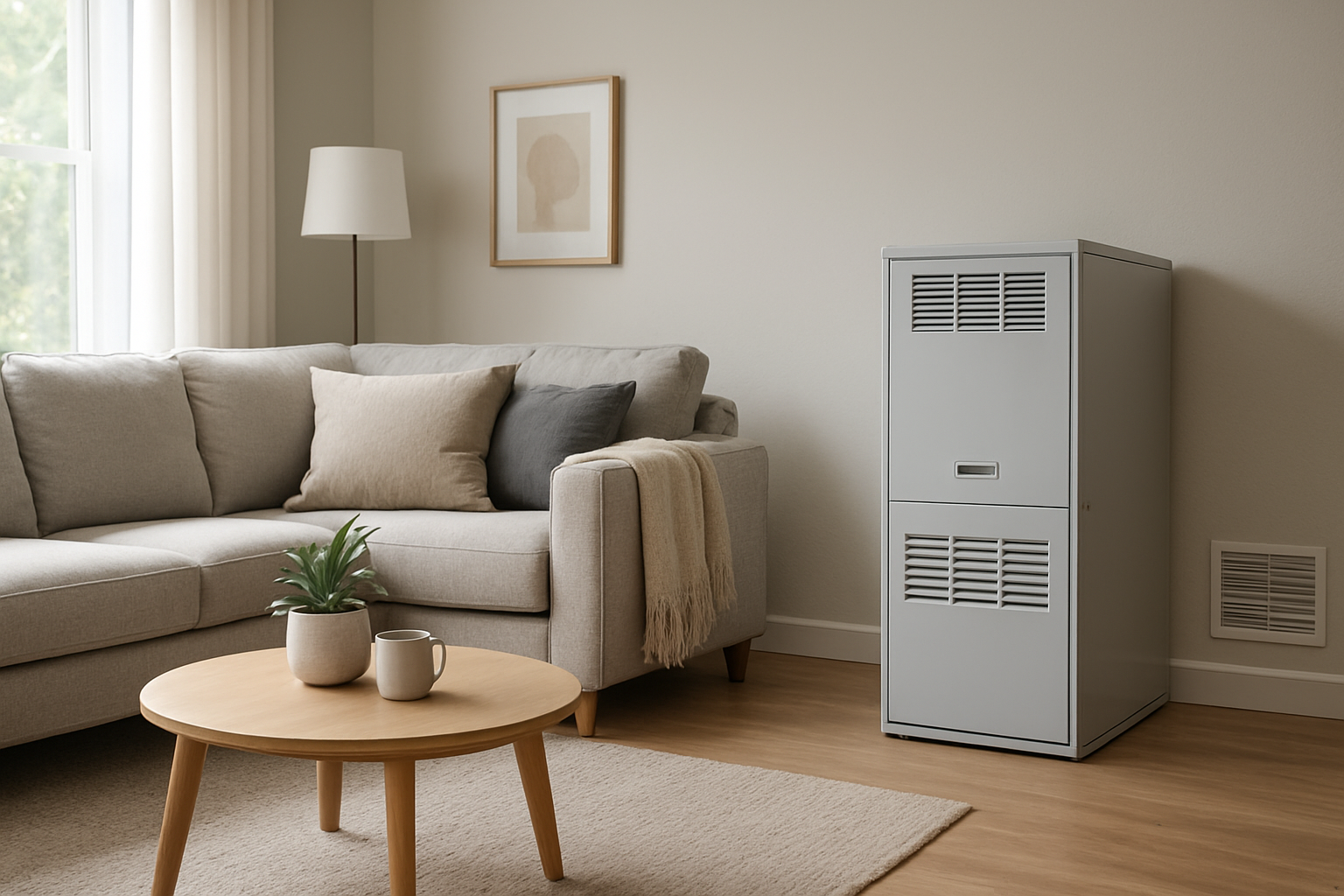
Indoor blower motor bearing wear: Whine is loudest at the return grille or indoor air handler; may get worse on higher fan speeds; often accompanies weaker airflow and more room-to-room imbalance.
Outdoor fan motor bearing wear: Whine is loudest at the outdoor unit; tone rises smoothly as the fan ramps; comfort impact is usually secondary until airflow across the outdoor coil becomes unstable, especially in extreme weather.
Compressor motor strain or bearing wear: High-pitched whine centered at the outdoor unit near the compressor; often more noticeable when the system is working hardest; may coincide with longer runtimes and wider indoor temperature swings.
Blower operating under high static pressure (restriction amplifying motor strain): Whine becomes more noticeable with dirty filter, closed registers, or many closed doors; airflow feels weak; comfort complaints increase even though the underlying motor may already be worn.
Loose motor mount or cabinet resonance triggered by wear: A tonal whine that changes when the cabinet is lightly pressed (do not open panels); can make a moderate bearing issue sound severe.
How to Confirm the Cause Yourself
These checks use observation and simple comparisons. Do not remove panels or reach into equipment.
Pinpoint indoor vs outdoor: With the system running and the whine present, stand near the indoor return grille and then near the outdoor unit. If one location is clearly dominant, you’ve likely identified the motor type involved (indoor blower vs outdoor fan/compressor).
Fan-only test: Set the thermostat fan to ON (no heating/cooling call). If the whine appears in fan-only, the indoor blower motor is the primary suspect. If the whine only happens during heating/cooling, outdoor components or compressor involvement becomes more likely.
Listen for speed-related pitch changes: A pitch that rises and falls smoothly with ramping operation suggests a motor/fan. A whine that is strongest right when the system loads up (start-up, cold mornings, hot afternoons) supports motor strain/bearing wear under higher torque.
Airflow comparison at vents: Compare airflow at the closest vent to the air handler and the farthest vent. If overall airflow is down everywhere during the whine (not just one room), that supports blower strain or restriction impacting the whole system.
Door position check for static pressure sensitivity: If closing interior doors noticeably reduces airflow noise at the door undercut and makes the whine more prominent, the blower is likely working against higher pressure, which can amplify a worn bearing’s tone and worsen comfort in closed rooms.
Run-time observation: Track whether the system runs longer than it used to to hold setpoint when the whine is present. Motor drag or compromised air movement can lengthen cycles and increase temperature drift between rooms.
Normal Behavior vs Real Problem
Normal: A brief, soft electronic or airflow-related tone during start-up that fades within seconds and does not change comfort. Mild outdoor operating sound that is steady, not sharply tonal, and does not worsen over weeks.
Likely problem: A distinct, high-pitched whine that repeats every cycle, grows louder over time, or is tied to a specific motor running. Any whine that coincides with weaker airflow, longer runtimes, new hot/cold rooms, increased stratification, or a new clammy feeling in cooling.
High confidence of motor/bearing wear: Whine occurs only when a specific fan runs (indoor fan-only test or outdoor-only listening) and the tone tracks speed changes.
When Professional Service Is Needed
Persistence: The whine is present on most cycles for more than a few days, or it is clearly getting louder week to week.
Comfort impact: You notice reduced airflow, rooms drifting from setpoint, increased upstairs/downstairs temperature split, or new humidity discomfort during cooling.
Performance decline: Runtime increases significantly compared with similar weather, or the system struggles to recover after setbacks.
Operational red flags: Intermittent stopping/starting, fan not spinning reliably, or the sound shifts from whine to grinding/squeal. Turn the system off and schedule service to avoid cascading damage from a seizing bearing or overheating motor.
How to Prevent This in the Future
Keep airflow resistance low: Replace filters on schedule and avoid overly restrictive filters if your system is not designed for them. High static pressure increases motor load and accelerates bearing wear.
Maintain return air paths: Ensure rooms can return air when doors are closed (adequate door undercuts or transfer paths). Starving the return increases blower effort and noise.
Keep outdoor unit breathing: Maintain clearance around the outdoor coil and keep debris away. Poor outdoor airflow raises operating load, which can amplify compressor and fan strain.
Address new noises early: A new whine is often early-stage wear. Catching it early can prevent motor overheating, control board stress, and comfort degradation.
Related Home Comfort Symptoms
Airflow is weaker than usual at all vents during heating or cooling
Upstairs feels hotter in summer or colder in winter even though the system runs longer
Indoor air feels clammy in cooling despite a normal thermostat setting
Intermittent buzzing or tonal noise that changes with fan speed
Heat pump seems to run constantly during extreme weather with little improvement
Conclusion
A persistent high-pitched whine from a heat pump most commonly points to motor or bearing wear causing motor strain, typically in the indoor blower, outdoor fan motor, or the compressor. Use location (indoor vs outdoor) and the fan-only test to isolate the source. If the whine is worsening or comfort is slipping through lower airflow, longer runtimes, or increased room-to-room differences, schedule professional diagnosis before the motor load escalates into a shutdown or loss of performance.
Frequently Asked Questions
Can a dirty filter cause a high-pitched whine?
A dirty filter more often increases airflow noise and can amplify an existing motor whine by raising static pressure and blower load. If the whine becomes noticeably worse right after airflow is restricted and improves after a filter change, the blower is being strained and may already have bearing wear.
If the whine happens in fan-only mode, what does that mean?
If the whine occurs with the thermostat set to fan ON and no heating or cooling call, the indoor blower motor and its bearings are the leading suspect. That test removes the compressor and outdoor fan from the equation.
Why is the whine worse on very cold mornings or hot afternoons?
Extreme outdoor temperatures increase system load. Higher torque demand and higher operating pressure make a marginal motor or worn bearing louder. Comfort impacts also show up more in extremes because reduced airflow or capacity is less forgiving.
Is a high-pitched whine always the compressor?
No. Blower and fan motors commonly produce high-frequency tonal noise when bearings wear. The fastest way to avoid misdiagnosis is to confirm whether the sound is strongest at the indoor air handler/return grille or at the outdoor unit near the compressor.
Should I keep running the system if it still heats and cools?
If the whine is mild and not worsening, you can monitor short-term while you isolate the source. If it is getting louder, airflow is dropping, or comfort is clearly degrading, reduce run time and schedule service. Continued operation under motor strain increases the chance of a seized bearing, overheating, or an unexpected shutdown.
Need a complete overview? Visit the full troubleshooting guide here: Read the full guide for more causes and fixes.
There’s a strange comfort in hearing that thin whine and recognizing it for what it is—an early signal rather than a mystery. The sound can feel like it’s living in your walls, but it doesn’t have to own your evenings.
After the noise is addressed, the whole place seems to breathe easier, like the system finally found its rhythm again. And somehow, that little bit of quiet feels like more than just background—more like relief you didn’t realize you were waiting for.