Learn how high humidity on cloudy days can overload your air conditioner, causing reduced cooling efficiency and making your AC work harder to maintain comfort.
AC Struggles More On Cloudy Humid Days? Moisture Is Overloading It
Quick Answer
When your AC cools worse on cloudy, humid days, the usual issue is not outdoor heat but indoor moisture load. The system spends capacity removing water vapor, so room temperature wins less. First check: measure indoor relative humidity while the AC runs. If it stays above 55% and the system runs long cycles, humidity load is dominating.
Identify the Comfort Pattern First
Before changing settings or assuming the unit is failing, sort the complaint by pattern. Humidity-driven performance problems have a consistent signature.
When it happens: Mild outdoor temperatures with high humidity, cloudy or rainy weather, after storms, early morning, or evenings when the outdoor air feels damp.
When it improves: Sunny, drier afternoons even if the outdoor temperature is higher.
What you feel: Air feels heavy or sticky, skin feels damp, floors or surfaces may feel slightly cool and clammy. You may say it is not hot but it is uncomfortable.
Temperature behavior: Thermostat may hover 1–4 degrees above setpoint for long periods, or it reaches setpoint but still feels muggy.
System behavior: Longer runtimes with fewer satisfied cycles; the indoor fan may run nearly continuously. If you use Auto fan, comfort often improves compared to On.
Where it shows up: Bedrooms with doors closed, basements, north-facing rooms, and rooms with less supply airflow usually feel worse first because they retain moisture longer.
Door test: With bedroom doors open, the space often feels noticeably better within 20–40 minutes because the drier air from the main area mixes in.
Vertical differences: On humid days, the air can feel uniformly muggy from floor to ceiling rather than a classic hot-upstairs/cool-downstairs split. If there is stratification, it is often mild compared to sunny-day solar gain issues.
Airflow strength: Vents may feel normal in volume but the air feels less crisp or less cool. Weak airflow plus humidity almost always feels worse than either problem alone.
What This Usually Means Physically
Your AC has two jobs at the indoor coil: remove sensible heat (temperature) and remove latent heat (moisture). On humid days, the latent load rises sharply because more water vapor is entering the home and being generated inside. That forces the system to spend more of its capacity condensing water on the coil instead of dropping air temperature.
Cloudy weather is a common trigger because solar heat gain is lower, so the home is not being heated by sun as much, but outdoor humidity is often higher. The thermostat only sees temperature, not comfort. So the system can run a long time trying to pull down temperature while the real discomfort driver is high indoor humidity.
Several physics effects stack together:
Moisture load from infiltration: Humid outdoor air leaks in through attic bypasses, rim joists, recessed lights, leaky returns, fireplace dampers, and door/weatherstrip gaps. When it is humid outside, every cubic foot of leakage brings in more water vapor.
Reduced sensible capacity on the coil: As the coil condenses more water, the heat transfer is partly used for phase change. Supply air temperature may not be as low as you expect for the amount of runtime.
Evaporation rebound from the duct system: If the fan runs after the compressor cycles off, water sitting on the coil can re-evaporate back into the airstream, raising indoor humidity and making the house feel like it never dries out.
Comfort perception shift: At higher humidity, the same indoor temperature feels warmer because sweat evaporation slows. A house at 75°F and 60% RH often feels worse than 78°F at 45% RH.
Most Probable Causes (Ranked)
High humidity infiltration and ventilation load (most likely): Comfort drops on damp days even when outdoor temperature is moderate; indoor RH remains elevated during long AC runs.
AC airflow too high for dehumidification: House cools slowly and feels clammy; supply air feels not very cold; humidity does not drop well. Common after a blower speed change, new air filter grille, or duct change.
Thermostat fan set to On or continuous circulation: Comfort is worst when the fan never stops; humidity spikes after the compressor shuts off; switching to Auto improves the next day.
Oversized AC or short cycling under mild loads: On mild cloudy days the system satisfies temperature quickly, shuts off, and never runs long enough to wring out humidity. The symptom can be worse in spring/fall or during rainy stretches.
Wet coil or drainage problem affecting latent performance: Musty odor, visible water in the pan, or intermittent wet filter area; humidity remains high even with long runtimes.
Low refrigerant charge or coil restriction (less likely for weather-specific symptoms): Cooling is weak on all hot days too, not just humid ones; may see icing signs or very long runtimes with poor temperature drop.
How to Confirm the Cause Yourself
These checks use observation and simple comparisons. Do them on a humid cloudy day when the problem is happening.
Measure indoor humidity at the thermostat level: Use a basic hygrometer. If the AC has been running normally for 1–2 hours and RH is still above 55%, moisture removal is not keeping up. If it is 60% or higher, comfort complaints are expected even at normal temperatures.
Check the supply air feel and register condensation clues: If supply air is not noticeably cool and dry, or registers feel slightly damp, the system may be spending capacity on latent load while sensible cooling lags. Avoid obsessing over exact temperatures; focus on consistent difference between dry days and humid days.
Fan mode test: Set the thermostat fan to Auto for 24 hours. If comfort improves and the house feels less clammy, you are likely re-evaporating coil moisture when the compressor is off or mixing humid air continuously.
Door position test for mixing versus moisture sources: Keep one humid-feeling bedroom door closed for 2 hours, then open it. If it improves quickly with the door open, the room likely has low air exchange and retains moisture; the whole-house humidity load is still the root problem, but distribution is amplifying discomfort.
Runtime pattern check: Note whether the system runs long continuous cycles on humid days and still struggles, versus short cycles that satisfy temperature quickly but leave you sticky. Long cycles point to high moisture load or reduced capacity; short cycles point more toward oversizing or airflow/fan-control issues.
Indoor moisture generation check: On a humid day, avoid shower exhaust delays, boiling water, and drying clothes indoors for one day. If RH and comfort improve noticeably, your internal moisture load is significant and may be pushing the AC past its latent capacity.
Normal Behavior vs Real Problem
Normal: On rainy or very humid days, the AC may run longer and the house may feel less crisp. Indoor RH may drift into the low-to-mid 50% range temporarily, especially in older or leakier homes. Some rooms with weaker airflow may feel slightly more humid.
Likely a real problem:
Indoor RH stays above 55–60% for most of the day while the AC is operating normally.
Thermostat holds temperature but comfort is poor and improves quickly on drier days without any system changes.
Humidity rebounds quickly after each cooling cycle, especially if the fan runs continuously.
Basement or lower level remains clammy even when the main floor seems okay.
Musty odor or visible moisture signs near supply registers, around the air handler, or on cool surfaces.
When Professional Service Is Needed
Indoor RH is consistently above 60% with the AC running and you cannot bring it down with fan set to Auto and normal operation.
The system runs nearly nonstop on mild days and still cannot hold within 2–3 degrees of setpoint.
Water management issues: signs of pan overflow, persistent musty odors, or visible standing water at the indoor unit.
Airflow concerns: multiple weak vents, whistling returns, or a filter that collapses or loads rapidly, suggesting restriction or duct issues.
Performance decline across all weather: if it also struggles on hot sunny days, the problem may extend beyond humidity load into capacity, refrigerant, or coil cleanliness.
How to Prevent This in the Future
Keep thermostat fan on Auto: This prevents re-evaporation of coil moisture and helps the system actually lower indoor RH.
Control moisture entry points: Seal obvious air leaks at attic penetrations, rim joists, and around return duct connections. Humidity problems that track weather often trace back to infiltration.
Use exhaust fans correctly: Run bath fans during showers and for 15–20 minutes after. Use a kitchen hood when boiling. These actions reduce latent load the AC would otherwise have to remove.
Maintain drainage readiness: Keep the condensate line clear and the drain pan drying properly. A marginal drain can reduce latent performance and create humidity rebound.
Confirm airflow is not excessive after changes: If a blower was adjusted, a new thermostat installed, or ducts modified, verify the system did not end up with too much airflow for good dehumidification.
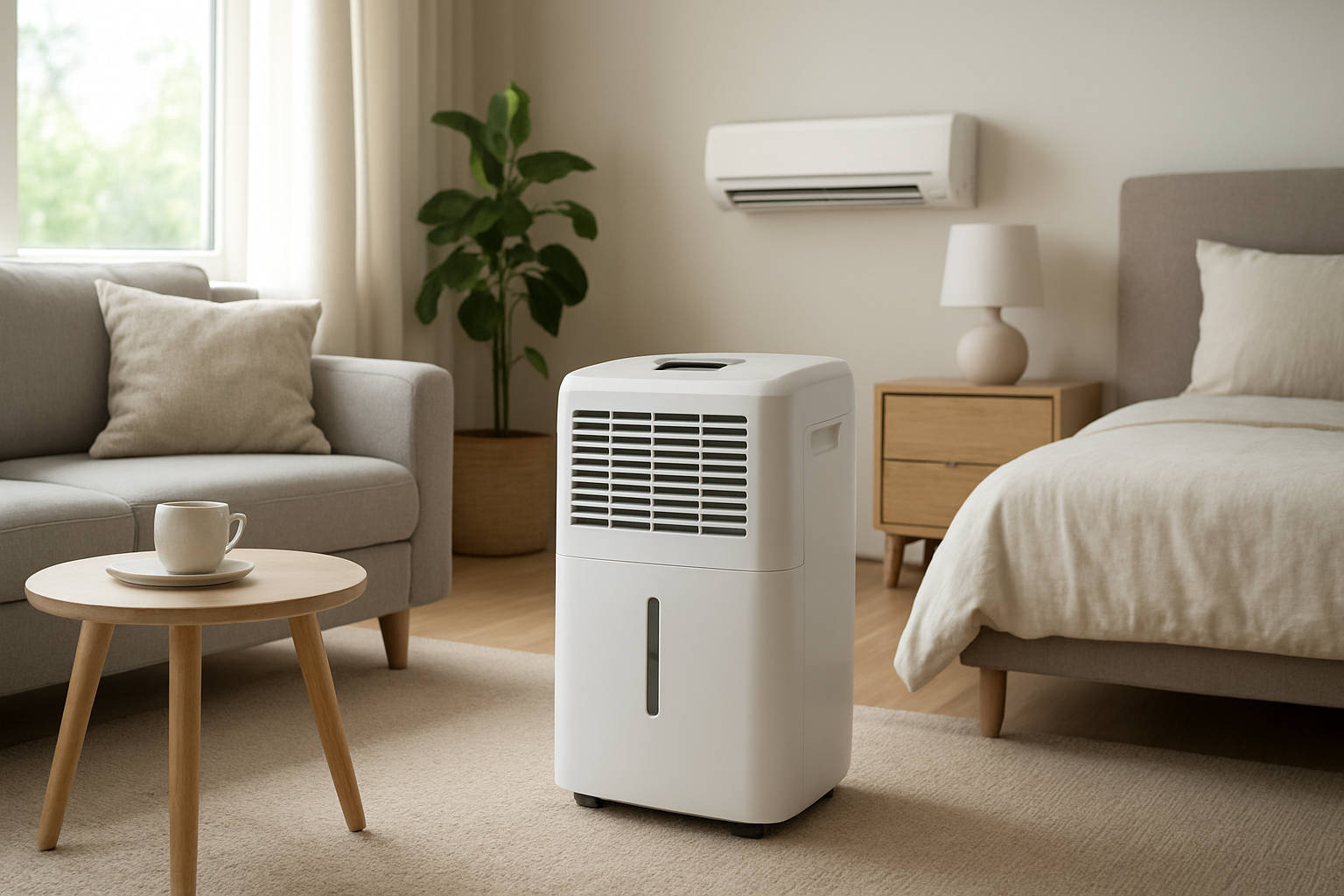
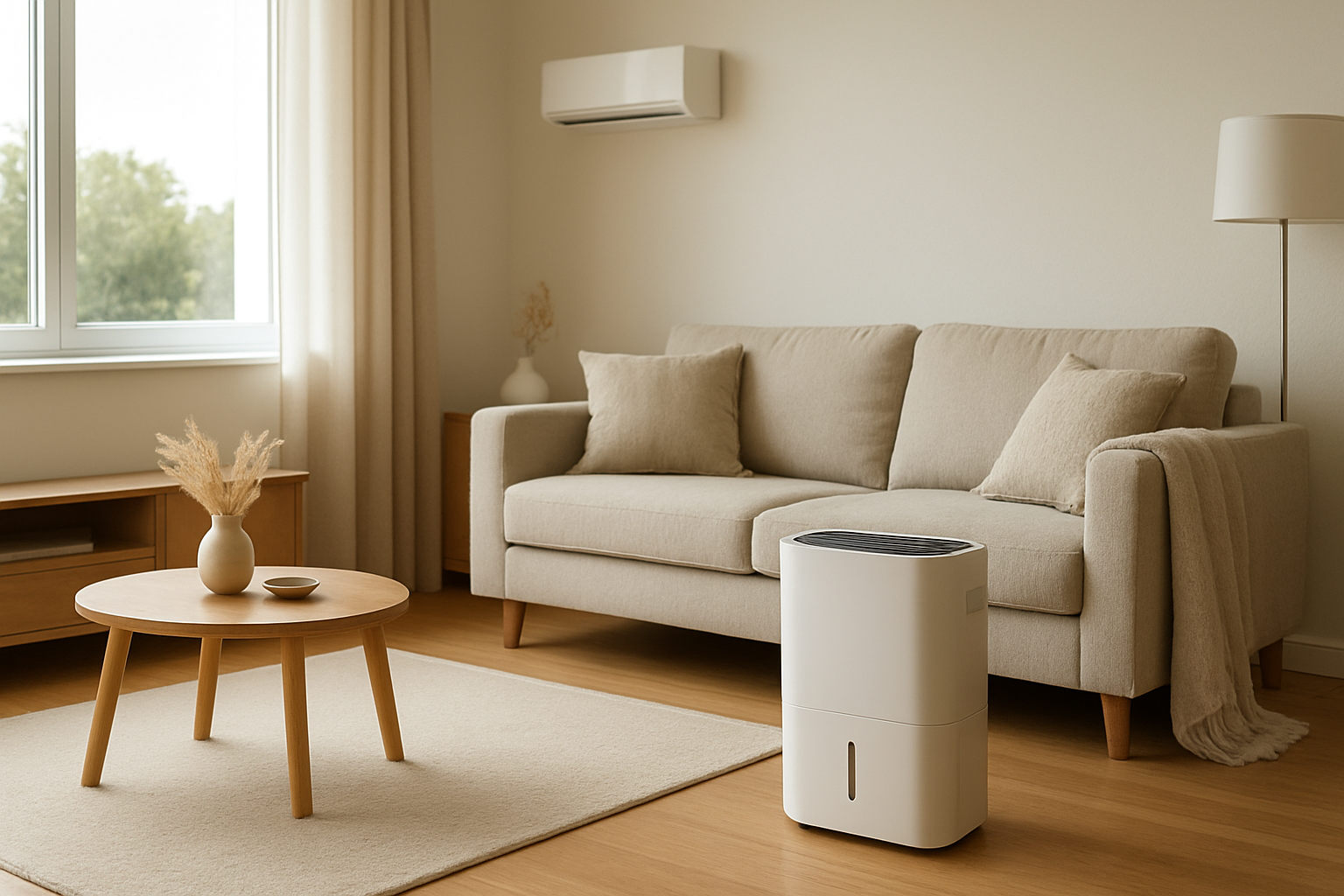
Consider dedicated dehumidification if needed: In very humid climates or tight homes with ventilation requirements, a whole-home dehumidifier can stabilize RH without forcing overcooling.
Related Home Comfort Symptoms
House feels clammy even at the right temperature
AC runs long cycles on mild rainy days
Humidity spikes when the fan is set to On
Bedrooms feel muggy with doors closed
Basement feels damp in summer even with AC running
Conclusion
If your AC seems weaker on cloudy humid days, the most probable explanation is a high latent load: the system is using its capacity to remove moisture, and comfort suffers even if the temperature is close. Confirm it by checking indoor RH during operation and by switching the fan to Auto for a full day. If RH stays above 55–60% or comfort remains poor, the next step is a professional evaluation focused on infiltration, airflow settings, and moisture removal performance.
Frequently Asked Questions
Why does my AC feel stronger on hotter sunny days than on cooler cloudy days?
Sunny days often have lower outdoor humidity and the home’s heat load is more sensible than latent. The AC can convert more of its capacity into temperature drop. On humid cloudy days, more capacity is diverted to condensing moisture, and the air feels less crisp even if the thermostat reading is similar.
What indoor humidity level should I aim for in summer?
Most homes feel consistently comfortable around 40–50% RH. Brief periods in the low-to-mid 50% range can be normal. If you are spending much of the day above 55–60% RH with the AC running, humidity is likely driving the comfort complaint.
Will lowering the thermostat fix the problem?
Sometimes it helps because longer runtime can remove more moisture, but it is an inefficient way to solve a latent-load problem and can lead to overcooling. If comfort only improves when you set the thermostat several degrees lower, treat it as a humidity control issue, not a temperature setting issue.
Does running the fan continuously help remove humidity?
Usually it makes humidity worse. When the compressor shuts off, water on the indoor coil can evaporate back into the air if the fan keeps blowing, raising indoor RH and making the home feel clammy. Auto fan is typically the correct setting for better dehumidification.
How do I know if this is humidity load versus a failing AC?
If the complaint is tightly linked to humid weather and improves on drier days, moisture load is the lead suspect. If the system also struggles on hot sunny days, cannot maintain temperature, or shows signs like icing, water problems, or declining airflow, then a mechanical performance issue is more likely and should be checked by a technician.
Need a complete overview? Visit the full troubleshooting guide here: Read the full guide for more causes and fixes.
By the time the sky hangs low and the air feels sticky, the indoor comfort battle stops being dramatic and starts being constant. The system may keep trying, but the day has its own mood—dimmer, heavier, harder to shake off.
Still, there’s a kind of relief in recognizing the pattern, even if it’s not a romantic one. You can almost feel the effort level shift, like your home exhaling a little slower than you’d like.