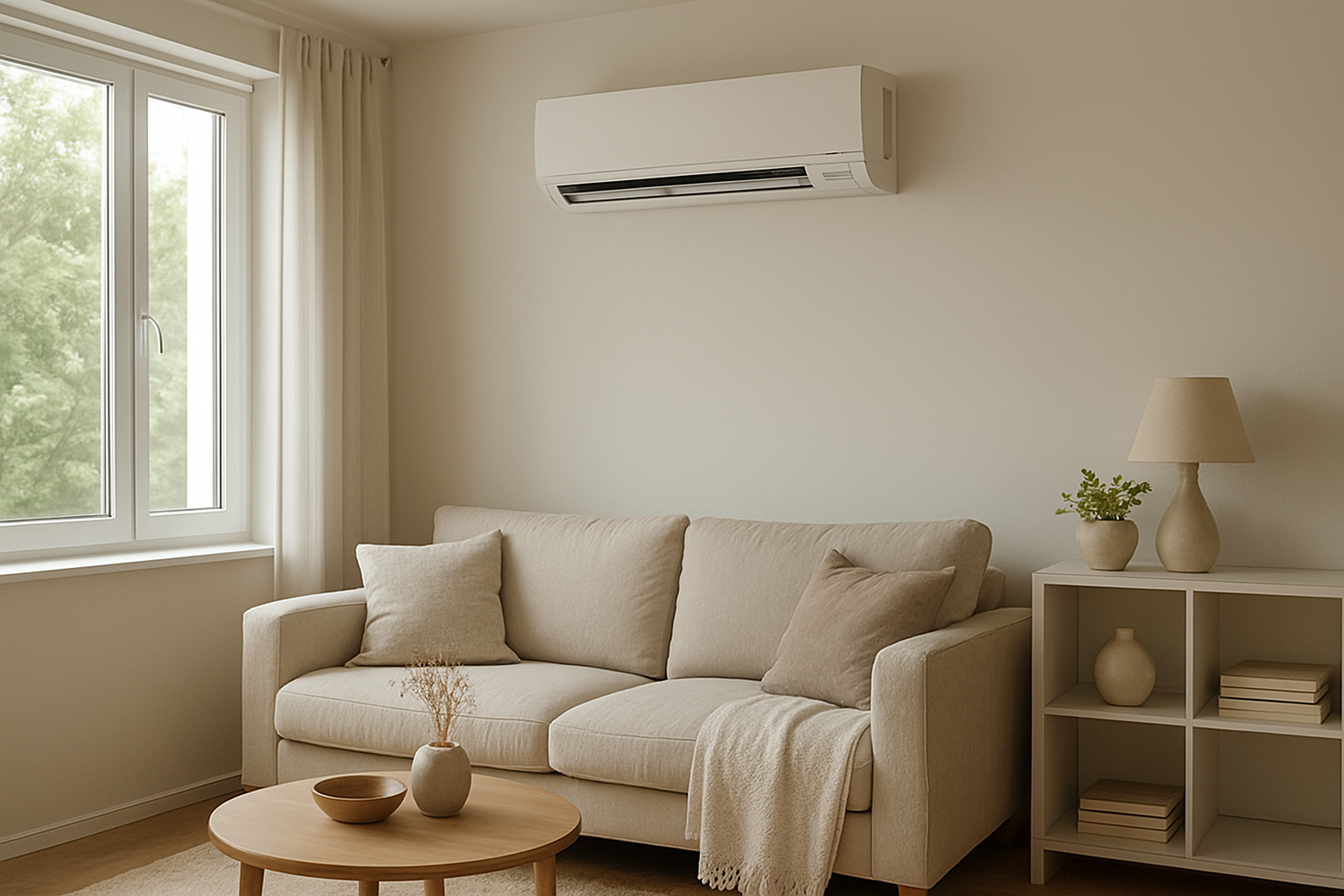
Diagnose why a heat pump runs nonstop in mild weather, focusing on low load efficiency issues or faulty control logic causing continuous operation.
Heat Pump Runs All Day In Mild Weather? That’s Not Normal
Quick Answer
In mild weather, a heat pump that runs continuously is usually not meeting the thermostat because it is operating at very low load efficiency or being held on by control logic. First check whether the thermostat is calling nonstop while the indoor temperature hangs 1–3°F below setpoint, and whether airflow from supply vents feels weaker than normal.
Identify the Comfort Pattern First
Continuous operation can be either normal modulation or a sign the system cannot convert electrical input into delivered heat efficiently at low load. Sort the pattern before you chase causes.
Outdoor conditions: Happens in mild weather (roughly 40–60°F) when the system should normally cycle or run at low, stable output.
Thermostat behavior: The thermostat shows Heating On almost all day, yet the indoor temperature creeps slowly or stalls just below setpoint.
Comfort feel: Rooms feel slightly cool rather than cold; the house never quite settles. You may notice frequent temperature drift instead of clean recovery.
Room-to-room differences: Bedrooms or far rooms feel cooler, especially with doors closed. With doors open, the problem reduces.
Airflow strength: Supply airflow feels soft or inconsistent, even though the outdoor unit runs steadily.
Vertical difference: Upstairs stays warmer than downstairs in heating mode, or ceilings feel warmer than floors, suggesting stratification that keeps the thermostat satisfied slowly.
Humidity perception: The air may feel dry (normal in heating) but if it feels clammy, you may be over-ventilating or bringing in outdoor air, increasing load.
Intermittent vs constant: True continuous operation means the outdoor unit and indoor fan rarely stop. If you hear periodic whooshes and the outdoor unit changes sound often, you may be seeing normal inverter modulation rather than a fault.
What This Usually Means Physically
In mild weather, the heating load of the home is low. A properly matched heat pump should either cycle normally or modulate down and maintain temperature with a small, steady heat output. When it runs all day and still struggles, one of two physical realities is usually happening.
Low load efficiency problem: The system is running, but the delivered heat per hour is reduced. That can come from low refrigerant charge, coil airflow issues, improper airflow across the indoor coil, or a sensor/valve problem that keeps the system from operating at its best point. In mild weather the system should be efficient; if it is not, you notice long runtimes first.
Control logic holding the system on: Thermostat configuration, staging rules, defrost logic, or auxiliary heat lockout settings can make the heat pump run continuously even when the load is small. The system may be protecting itself, prioritizing steady operation, or making small corrections that never allow a clean shutoff.
In both cases the indoor symptoms are similar: the thermostat call never ends, supply air feels only mildly warm, and the house hovers near setpoint but does not land firmly on it.
Most Probable Causes (Ranked)
Thermostat control strategy or setup causing continuous call: Tight temperature differential, aggressive recovery settings, or incorrect heat pump settings can keep a call active. Diagnostic clue: the thermostat rarely shows satisfied status and may be configured for electric heat or wrong number of stages.
Low airflow across the indoor coil (dirty filter, blower issue, closed registers, restrictive duct): Reduced airflow lowers heat delivery and can distort sensor readings. Diagnostic clue: weak airflow at multiple vents and higher room-to-room temperature differences when doors are closed.
Refrigerant charge or metering issue reducing capacity: Even in mild weather, a small charge problem can cut capacity enough to prevent satisfying the thermostat quickly. Diagnostic clue: long runtimes with supply air only slightly warm and worse performance when it gets colder.
Defrost or outdoor unit sensor logic running more than it should: Incorrect sensor inputs can trigger unnecessary defrost cycles or keep the system from optimizing. Diagnostic clue: periodic steam events or noticeable shifts where the air briefly turns cooler even though it is mild outside.
Balance point mismatch or auxiliary heat lockout set too high/too low: In mild weather, aux heat normally stays off. If lockout is wrong, the system may avoid needed staging or may run the heat pump in a way that never resolves the load. Diagnostic clue: auxiliary heat never comes on even when indoor temperature falls behind, or it comes on when it should not.
Building load higher than expected due to infiltration or a single weak boundary: A leaky return duct in an attic, a stuck-open damper, or a large air leak can create a continual low load that never stops. Diagnostic clue: one area near an exterior wall or over a garage stays cooler and improves markedly when interior doors are open.
How to Confirm the Cause Yourself
These checks use observation only. Do not open electrical panels or refrigerant compartments.
Confirm the thermostat is truly calling nonstop: Note the indoor temperature and setpoint every 30 minutes for 2 hours during mild weather. If the room temperature stays 1–3°F below setpoint while Heating On never stops, you have a capacity or control issue, not just normal cycling.
Check for low airflow pattern: With the system running, compare airflow at a near vent and a far vent using your hand or a tissue. If both are weak, suspect overall airflow restriction. If near is strong and far is weak, suspect duct restriction or dampers.
Door test for pressure and distribution: Run the heat pump for 20 minutes with bedroom doors closed, then open them. If comfort improves quickly after doors open, you likely have return air restriction or supply/return imbalance that forces low effective airflow and poor mixing.
Time-of-day solar gain sorting: If the system runs all day but stops briefly in afternoon sun on south-facing days, the heat pump is likely marginal and solar gain is doing the work. That points away from thermostat logic and toward low delivered heat or distribution problems.
Listen for control-driven behavior changes: Stand near a supply vent. If the air alternates between warm and noticeably cooler bursts in mild weather, especially with a repeating rhythm, suspect defrost logic errors or staging changes. Normal modulating operation should not repeatedly blow cool air during heating in mild conditions.
Check perceived supply air temperature trend: Without measuring tools, you can still compare: the supply air should feel clearly warmer than room air during heating. If it feels only slightly warm for hours while the thermostat never satisfies, the system is running but not transferring heat effectively.
Normal Behavior vs Real Problem
Normal: Inverter-driven heat pumps often run long cycles at low speed in mild weather. The house holds steady within about 0–1°F of setpoint, supply air feels mildly warm but consistent, and comfort is stable across rooms with normal door positions.
Not normal: The system runs nearly nonstop and still drifts 1–3°F below setpoint, or the indoor temperature rises very slowly even though outdoor weather is mild. Airflow is weak, some rooms remain persistently cooler, or you notice repeated cool-blow events during heating.
Also not normal: Frequent thermostat adjustments are required to feel comfortable, or the system only catches up when outdoor temperature rises or the sun hits the house.
When Professional Service Is Needed
Persistence threshold: The heat pump runs continuously for more than 6 hours in mild weather while failing to reach setpoint within 1°F.
Comfort impact threshold: Any consistent room-to-room difference greater than about 3–4°F with doors in normal positions, especially if opening doors changes comfort quickly.
Performance decline threshold: The problem is getting worse week to week, or it becomes significantly worse when outdoor temperatures drop slightly.
Control/sensor indicators: Repeated defrost-like events in mild weather, short bursts of cool air during heating, or thermostat staging behavior that does not match your equipment type.
Electrical cost indicator: A noticeable bill increase without a matching weather change suggests low load efficiency or unnecessary runtime driven by controls.
How to Prevent This in the Future
Use a filter that fits and is not overly restrictive: A high-MERV filter can be fine, but only if the duct system can handle it. If airflow drops when you change filters, step down in restriction or address duct sizing.
Keep interior doors and return pathways functional: If closing doors changes comfort, add return pathways (jump ducts, transfer grilles, undercut clearance) so the system can move air without pressure problems.
Do not chase comfort by cranking the setpoint: Large setpoint jumps can trigger control strategies that increase runtime or staging. Use small adjustments and let the system stabilize.
Seasonal check of thermostat configuration after replacements: After any thermostat change, confirm it is set up for your exact heat pump type and stages. Misconfiguration is a common reason for abnormal runtime.
Maintain outdoor coil cleanliness: Gentle rinsing (when power is off and per manufacturer guidance) helps keep efficiency high at low loads where the system should excel.
Related Home Comfort Symptoms
Heat pump never reaches setpoint until afternoon
Heat pump blows lukewarm air for hours
Some rooms cold when doors are closed
Heat pump short cycles in mild weather
Aux heat never turns on when it should
Temperature swings 2–4°F even with long runtimes
Conclusion
A heat pump that runs all day in mild weather is usually either being held on by control logic or delivering less heat than it should at low load due to airflow or refrigerant-side efficiency loss. Start by confirming the thermostat call never ends and whether indoor temperature stalls 1–3°F below setpoint. Then sort airflow and room-to-room patterns. If the system cannot satisfy in mild weather, it is unlikely to perform correctly when it turns colder.
Frequently Asked Questions
Is it normal for a variable-speed heat pump to run continuously?
It can be normal if the home stays within about 0–1°F of setpoint and comfort is steady. It is not normal if it runs continuously and still cannot reach setpoint, or if airflow is weak and some rooms lag significantly.
Why does my heat pump run nonstop but only feels slightly warm?
In mild weather, supply air can feel less hot than a furnace, but it should still be clearly warmer than room air and should maintain setpoint. If it is only slightly warm for hours and the thermostat never satisfies, suspect low airflow, reduced refrigerant-side capacity, or control logic that is not allowing the unit to operate efficiently.
My system runs all day only when bedroom doors are closed. What does that indicate?
That pattern strongly suggests return air restriction or pressure imbalance. Closing doors can trap supply air in rooms and starve the return, reducing effective airflow across the indoor coil and lowering delivered heat to the thermostat area.
Can thermostat settings cause nonstop running in mild weather?
Yes. Incorrect heat pump setup, wrong staging configuration, tight temperature differential, or recovery settings can keep a call active. If a new thermostat was installed or settings were changed shortly before the problem started, configuration jumps to the top of the list.
How long should it take to reach setpoint in mild weather?
In a typical, reasonably tight home, a properly operating heat pump should usually recover a 2°F setback within about 30–90 minutes in mild conditions. If it takes several hours or never quite gets there, treat it as a diagnostic issue rather than normal operation.
Need a complete overview? Visit the full troubleshooting guide here: Read the full guide for more causes and fixes.
There’s a strange comfort in hearing it hum all day, like the house is working overtime for no reason. But the long stretch of mild-weather running usually isn’t a flex—it’s more like a stuck song you can’t quite turn off.
By the time everything lines up, the routine finally feels normal again. And honestly, there’s a tiny relief in that—quiet hours, sensible rhythms, and fewer “wait, is it still going?” moments.