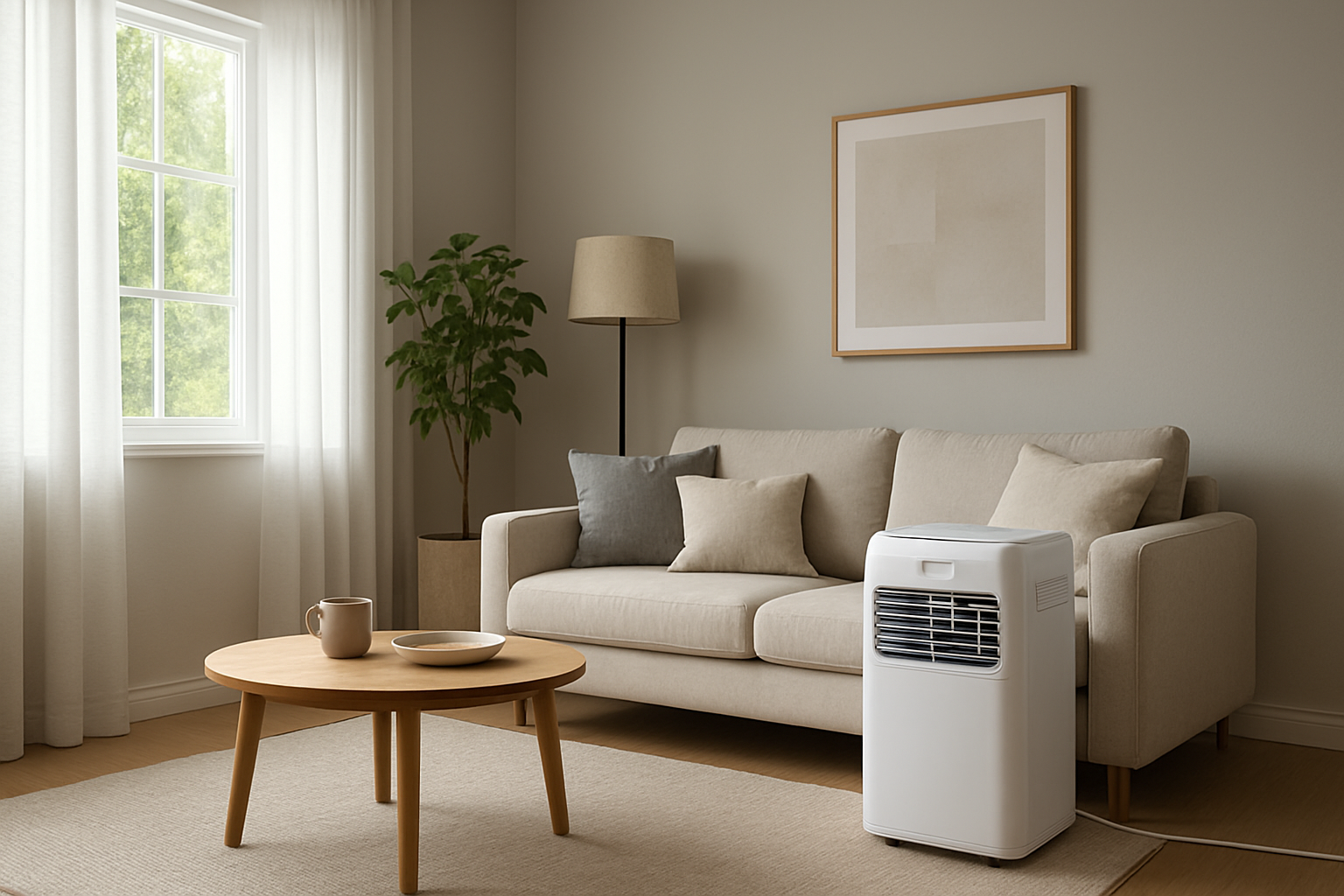
Diagnose why a portable AC cools the air but fails to lower room temperature, focusing on issues with moisture removal and ineffective dehumidification.
Portable AC Cooling The Air But Not The Room? Here’s The Catch
Quick Answer
If your portable AC makes the discharge air feel cold but the room stays sticky and uncomfortable, the usual issue is sensible cooling without effective moisture removal. The air temperature drops briefly near the unit, but humidity stays high so comfort does not improve. First check: measure indoor humidity or compare comfort after running the unit for 45–60 minutes with the door closed.
Identify the Comfort Pattern First
Before you blame the machine, sort the symptom. Portable AC complaints split into two very different problems: not enough cooling capacity versus cooling air locally while the room still feels warm due to humidity load.
When it happens: Worse on humid days, after rain, in the evening, or when outdoor dew points are high even if the outdoor temperature is moderate.
Where it happens: The air feels cool within a few feet of the unit, but the rest of the room feels unchanged. Adjacent rooms feel equally sticky unless doors are closed.
System running vs off: You feel relief only while standing in the airstream. Ten minutes after shutting it off, the room feels immediately muggy again.
Constant vs intermittent: Comfort swings: the unit runs hard, then cycles off, yet the room never feels truly dry. Cycling is more common when the thermostat sensor is influenced by the cold discharge air.
Doors open vs closed: With the door open, comfort gets worse quickly. With the door closed, temperature may drop a bit but the air still feels heavy.
Vertical differences: The room may read cooler at chest level near the unit but still feels stuffy near the ceiling. A humid room often feels worse upstairs even if the measured temperature is similar.
Humidity perception: Skin feels tacky, fabrics feel damp, windows may haze lightly, and you may notice a musty odor even though the unit is producing cold air.
Airflow strength: Airflow feels strong and cold out of the unit, which often misleads people into thinking the unit is working correctly when the problem is moisture management.
What This Usually Means Physically
Comfort is not just air temperature. If humidity stays high, your body cannot shed heat efficiently through evaporation at the skin. A portable AC can produce a cold airstream (sensible cooling) yet fail to lower the room’s moisture content (latent removal). That produces the exact complaint: cold air, uncomfortable room.
The most common physical mechanisms behind poor moisture removal with portable units are:
High humidity load relative to the unit: People, cooking, showers, plants, and infiltration can add moisture faster than the unit can condense and remove it.
Short cycling prevents dehumidification: Moisture removal requires the evaporator coil to stay cold long enough for sustained condensation. Frequent on/off cycling cools air briefly but does not pull down humidity.
Negative pressure and makeup air: Many single-hose portable ACs exhaust indoor air outdoors. The room replaces that air by pulling in warm, humid air from elsewhere in the house or outside through leakage paths. The unit cools air, but it may continuously import new moisture.
Warm return air mixing and stratification: If the unit is cooling a small pocket of air near its sensor, it may satisfy the setpoint while the rest of the room remains humid and warmer, especially near the ceiling.
Most Probable Causes (Ranked)
1) Single-hose exhaust pulling humid makeup air into the space: Diagnostic clue: comfort is worse with interior doors open, worse on humid days, and the unit seems to run forever without the room ever feeling dry.
2) Unit short cycling due to sensor placement or cold-air recirculation: Diagnostic clue: the unit shuts off while the room still feels muggy; restarting it provides only brief relief near the discharge.
3) Latent load is simply too high for the unit’s dehumidification rate: Diagnostic clue: cooking, showers, or multiple occupants quickly bring the muggy feeling back, and the water collection rate (if not self-evaporating) is low compared to how damp the room feels.
4) Exhaust hose or window panel leaks returning humid air: Diagnostic clue: you can feel warm air around the window kit or hose connections; the area near the window stays clammy.
5) Coil not staying cold enough for condensation (airflow or maintenance related): Diagnostic clue: discharge air is cool but not very cold, the unit runs continuously, and humidity barely changes over hours.
How to Confirm the Cause Yourself
You can confirm the sensible-without-latent problem using observation and a few simple checks. No disassembly required.
Run-time and comfort test (45–60 minutes): Close the door to the room, close windows, and run the unit continuously. If the temperature drops a couple degrees but the room still feels sticky and your skin does not feel drier, the issue is moisture removal, not airflow.
Door position test: Run the unit for 30 minutes with the door closed, then 30 minutes with the door open. If it feels significantly worse with the door open, you are likely pulling humid makeup air into the space (pressure-driven infiltration).
Humidity check: Use any basic hygrometer. If the room stays above about 55–60% relative humidity after an hour of continuous operation, comfort will remain poor even if the supply air is cold.
Cycle behavior check: Watch for frequent on/off cycling. If the unit cycles off while the room still feels humid, the thermostat is being satisfied by its own cold discharge pocket, limiting coil run time and moisture removal.
Window kit leakage check: Put your hand near the window panel edges and around hose connections. If you feel warm, damp air entering or the panel is sweating, the unit may be reintroducing outdoor humidity faster than it can remove it.
Condensate behavior check: If your model has a drain or tank: in humid conditions, you should typically see ongoing water removal during long runs. If you see little to no water and the room remains muggy, the system is not removing latent heat effectively or is re-evaporating condensate.
Normal Behavior vs Real Problem
Normal: Portable ACs often cool the air near the unit first. In a humid climate, it can take time for the whole room to feel better, especially if doors are opened frequently. Some models intentionally evaporate condensate into the exhaust airstream, so you may not see a full tank even when dehumidifying.
Not normal: After 60–90 minutes of steady operation with the room closed off, the air still feels sticky, you only feel comfortable standing directly in the airstream, and humidity remains above 60%. That pattern points to inadequate latent removal or continuous humidity intrusion defeating the unit.
When Professional Service Is Needed
Persistent high humidity: The room stays above 60% RH after 1–2 hours of continuous run with doors and windows closed.
Comfort impact: Sleep is disrupted, the space feels damp daily, or musty odor persists even when temperature drops.
Performance decline: The unit used to make the room feel drier and now does not, with similar weather conditions and usage patterns.
Building-side indicators: Visible condensation on windows/walls, recurring moldy smells, or damp materials in the room. These suggest moisture intrusion or ventilation/pressure problems that exceed what a portable AC can manage.
How to Prevent This in the Future
Reduce moisture sources during peak humidity: Use bath and kitchen exhaust fans; cover boiling pots; avoid drying laundry indoors in the served room.
Keep the room isolated while conditioning: Close the door and limit traffic. Portable units are sensitive to air exchange and infiltration.
Seal the window kit tightly: Any leakage around the panel or hose connections becomes a continuous humidity supply.
Set for longer run times: Avoid extreme low setpoints that trigger short cycling. Longer steady operation improves moisture removal.
Maintain airflow: Keep filters clean and ensure the unit has adequate clearance for intake and discharge so the coil can stay cold and condense moisture.
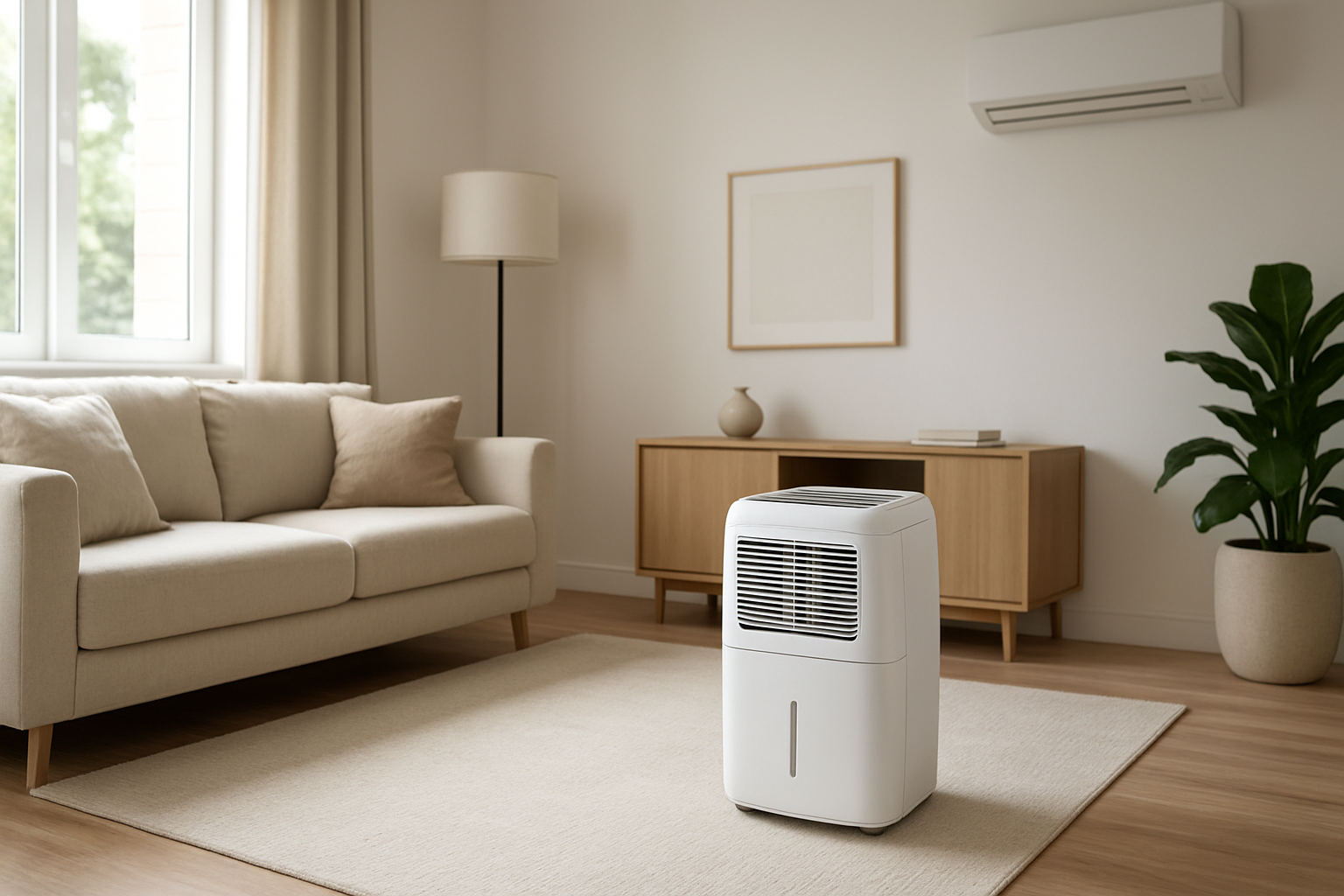
Match the tool to the problem: If the main complaint is stickiness rather than temperature, adding a dedicated dehumidifier often improves comfort more than lowering the thermostat setting.
Related Home Comfort Symptoms
Room feels cold but clammy
Portable AC runs constantly but never feels comfortable
Temperature drops near the unit but not across the room
Unit shuts off early while the room still feels muggy
Musty odor increases when the portable AC runs
Conclusion
If your portable AC produces cold air yet the room stays uncomfortable, the most likely catch is poor moisture control: the unit is delivering sensible cooling but not lowering the room’s humidity. Confirm it by running the unit continuously with the room closed off and checking whether humidity drops below roughly 55–60% RH. If it does not, focus on infiltration, short cycling, and humidity load rather than chasing colder discharge air.
Frequently Asked Questions
Why does the portable AC air feel cold but the room still feels hot?
Your body can feel hot at a lower temperature when humidity is high. The unit may be cooling the air it blows (sensible cooling) but not removing enough moisture from the room air, so comfort does not improve except directly in the airstream.
What humidity level should I expect a portable AC to reach?
In a closed room with adequate sizing and steady run time, you should typically see humidity trend toward the mid-40% to mid-50% range. If it stays above about 60% after 1–2 hours of continuous operation, something is preventing effective moisture reduction.
Does a full bucket prove it is dehumidifying correctly?
Not always. Many portable ACs evaporate condensate into the exhaust, so the bucket may stay nearly empty even while removing moisture. A better indicator is whether room humidity actually drops over time and whether the air feels less sticky.
Why is it worse when I leave the door open?
With many portable units, exhaust air leaving the room causes makeup air to be pulled in from elsewhere. If that incoming air is humid, the unit may be fighting a continuous moisture supply. Closing the door reduces this exchange and helps humidity fall.
Can I fix this by setting a lower temperature?
Sometimes it helps, but it can also make cycling worse if the unit satisfies its sensor near the cold discharge air. The better test is longer steady operation with the room sealed, then verify humidity reduction. If humidity will not drop, lowering the setpoint mainly increases run time without solving the moisture problem.