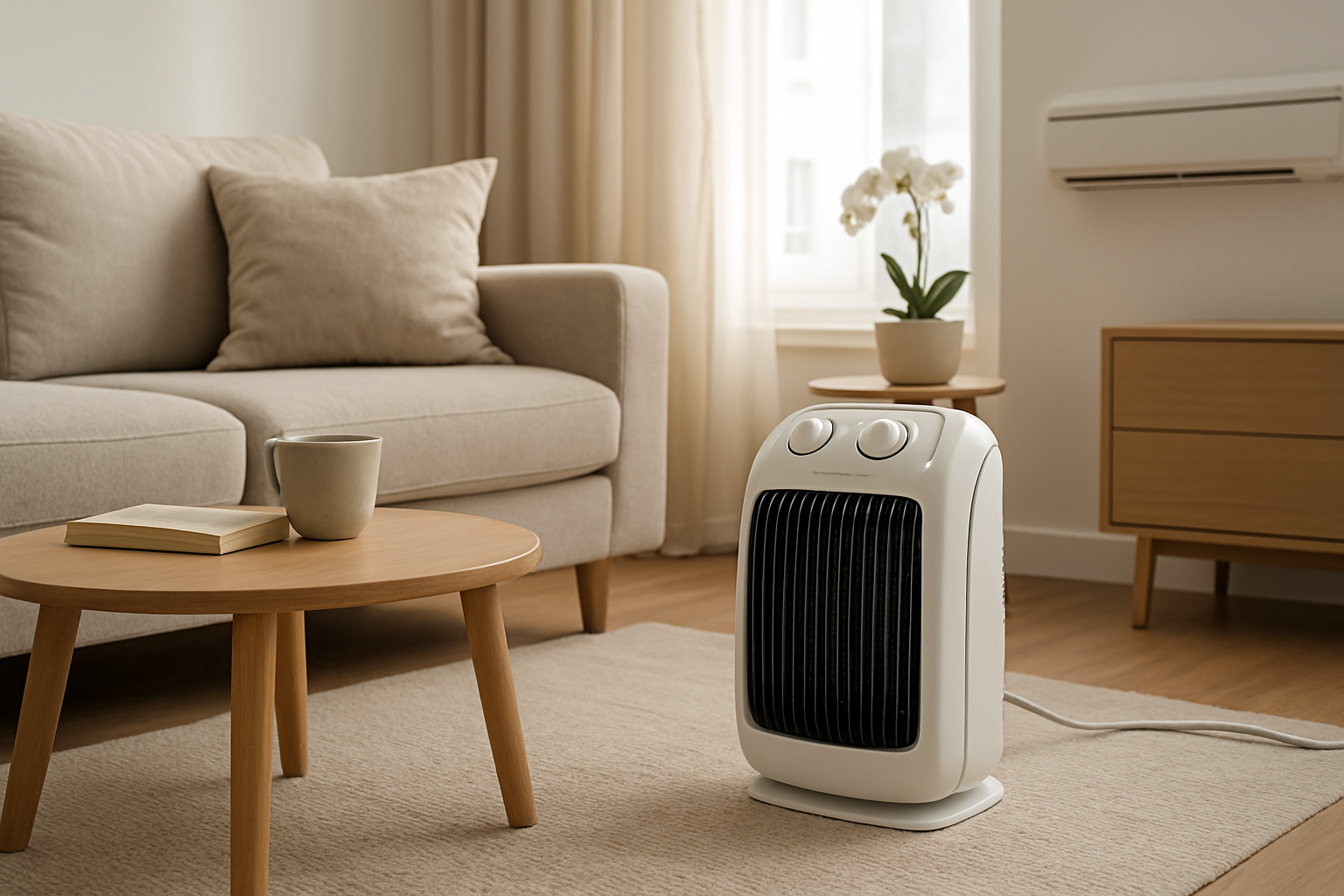
Diagnose why a portable heater warms air but the room stays cool, focusing on poor heat retention and solutions to improve overall room warmth.
Portable Heater Warms Air But Room Still Feels Cool? Poor Heat Retention
Quick Answer
If the portable heater blows warm air but the room still feels cool, the most likely issue is poor heat retention: heat is leaving the room nearly as fast as the heater adds it. First check: measure the room air temperature at the center of the room and compare it to the temperature near an exterior wall or window. A large difference points to localized heat loss and cold surface effects.
Identify the Comfort Pattern First
Before blaming the heater, sort the symptom into a repeatable pattern. The pattern tells you whether you have a heater problem or a room heat loss problem.
When it happens: Worse at night, during windy weather, or when outdoor temperatures drop quickly typically indicates increased heat loss through leakage and cold surfaces.
Where it happens: If it is mainly one room (especially a corner bedroom, room over a garage, or room with many windows), suspect poor insulation, air leakage, or high surface heat loss rather than heater failure.
System running vs off: If the room feels cool even while the heater is actively running and the air at the heater outlet feels hot, you are heating air but not keeping heat in the space.
Constant vs intermittent: Constant cool feel with slight warm bursts suggests the room cannot hold heat; intermittent comfort changes often track drafts, wind gusts, or door position.
Doors open vs closed: If it feels better with the door closed, the room is losing heat to adjacent colder areas or a hallway return path; if it feels worse with the door closed, the room may be drafty and isolated with poor mixing.
Floor vs ceiling: Warm head height but cold feet indicates stratification plus cold floor surfaces; uniformly cool everywhere points more to overall heat loss or insufficient total heater output.
Humidity perception: If the air feels warm at the heater but the overall room feels dry and cool, you may be experiencing low humidity plus cold surface radiation. Dry air does not cause low temperature, but it increases perceived coolness.
Airflow strength: Strong warm airflow right at the heater with weak warmth elsewhere suggests the heat is not distributing or is being pulled out by leakage and boundary drafts near windows and exterior walls.
What This Usually Means Physically
A portable heater can raise air temperature locally, but comfort is not just air temperature. Comfort is heavily influenced by how fast your body loses heat to the surrounding surfaces and moving air.
Cold surface radiation: If exterior walls, windows, and floors are cold, your body radiates heat to them. You can have 70–72°F air and still feel cool when the mean radiant temperature is low, especially near windows.
Air leakage and wind washing: Leaks around window frames, baseboards, outlets, and sill plates can exchange warmed indoor air for cold outdoor air. Wind dramatically increases this, making the heater feel ineffective.
Conduction losses: Poor insulation in an exterior wall, attic slope, or floor over a garage pulls heat out continuously. The heater becomes a constant replacement source rather than building stored warmth in surfaces.
Stratification and short-circuiting: Warm air rises. If the heater output goes straight up and the room has little mixing, the upper room warms while the occupied zone stays cool. If there is a strong return path or hallway pressure effect, warmed air may flow out high while cold air enters low.
Capacity mismatch (room loss exceeds heater input): If the room’s heat loss rate exceeds the heater’s heat add rate, the temperature will plateau low no matter how long it runs.
Most Probable Causes (Ranked)
Air leakage at windows, door trim, and exterior penetrationsDiagnostic clue: noticeable drafts at ankle height, comfort worsens on windy days, curtains move slightly, or you feel a cold stream when you pass your hand near trim.
Cold window and exterior wall surfaces driving radiant chillDiagnostic clue: you feel colder within 3–6 feet of windows/exterior walls even when the center of the room feels warmer, and comfort improves if you stand closer to interior walls.
Insulation weakness in a specific building cavityDiagnostic clue: one section of wall, ceiling slope, or floor area feels consistently colder to the touch; the room is always harder to heat than neighboring rooms with similar size.
Room-to-room pressure imbalance causing warm air to leave and cold air to enterDiagnostic clue: closing the door changes comfort strongly; the room feels drafty at the bottom of the door or along baseboards, or you notice airflow when the central HVAC fan runs.
Heat stratification from poor air mixingDiagnostic clue: ceiling area becomes noticeably warmer than the occupied zone; your face feels warm while your legs and feet stay cold.
Portable heater output too low for the heat lossDiagnostic clue: the heater runs continuously on high but room temperature rises a few degrees then stops increasing, especially during colder outdoor conditions.
How to Confirm the Cause Yourself
These checks rely on observation and basic measurements. They are designed to separate heat loss, poor distribution, and heater limitations.
Center vs perimeter temperature check: Place a thermometer at sitting height in the center of the room for 10 minutes. Then place it 12 inches from a window or exterior wall, same height, for 10 minutes. A difference of 4°F or more indicates strong perimeter heat loss and cold surface influence.
Vertical stratification check: Measure temperature at about 6 inches above the floor and again at about 5 feet high in the same spot. A difference of 5°F or more suggests stratification and poor mixing. If the heater is on and the floor stays cold, comfort will remain poor even if average air temp rises.
Draft mapping with the back of your hand: Slowly move your hand around window trim, baseboards on exterior walls, electrical outlets on exterior walls, and the bottom corners of the room. Any consistent stream of cool air indicates leakage. Confirm by checking if it gets worse during gusty wind or when the bathroom exhaust fan or kitchen hood runs.
Door position test: Run the heater for 30 minutes with the door closed, then repeat on a different day or after the room returns to baseline with the door open. If comfort improves significantly with the door closed, heat is being pulled out to adjacent areas or a return path. If comfort worsens, the room itself is likely leaky and the open door is supplying warmer air from the house.
Window proximity comfort test: Stand 2 feet from the window for 2 minutes, then stand near an interior wall for 2 minutes. If the window position feels distinctly cooler despite similar air temperature, radiant cooling from the glass is dominating your comfort complaint.
Heater limitation check by plateau behavior: Start with the room at a stable baseline temperature. Run the heater on high for 60 minutes with the door in the best position you found above. If the room temperature rises quickly at first and then stalls well below your target, your room heat loss is likely exceeding the heater’s capacity or you have significant leakage.
Normal Behavior vs Real Problem
Normal behavior: The area right in front of a portable heater feels warm first. Rooms with large windows often feel cooler near the glass even when the thermostat reading is acceptable. Floors commonly lag behind air temperature changes.
Likely real problem: You feel a steady draft, especially near the floor or around windows; comfort drops sharply during wind; the room will not hold heat after the heater cycles off; the room feels cold near exterior surfaces even when measured air temperature in the center is reasonable; the temperature difference between center and perimeter is consistently 4°F or more.
When Professional Service Is Needed
Persistent comfort failure: After you confirm drafts/heat loss patterns, the room still cannot maintain comfort without continuous heater operation.
Large measured deltas: Vertical stratification greater than 8°F or center-to-perimeter differences greater than 6°F repeatedly indicate a building envelope or airflow control problem that typically needs targeted sealing, insulation correction, or airflow balancing.
Evidence of building defects: Visible condensation on windows, musty odors at exterior walls, staining around trim, or cold spots that track specific cavities suggest moisture risk and insulation/air barrier issues.
Electrical or combustion safety concerns: Any burning odor beyond initial dust burn-off, hot cord/plug, frequent breaker trips, or a heater that shuts off unpredictably should be addressed immediately by qualified service or replacement.
How to Prevent This in the Future
Reduce room heat loss first: Improve window coverings at night, seal obvious trim gaps, and address door undercuts if you can feel airflow. The goal is to stop heat from leaving so the heater can warm surfaces, not just air.
Control stratification: Use gentle air mixing so warm air reaches the occupied zone. A low fan setting away from the heater often improves comfort more than increasing heater output.
Target the cold surfaces: Position the heater to warm the coldest exterior wall area indirectly (not blowing straight at you). Warming surfaces reduces radiant chill significantly.
Keep doors and return paths consistent: If door position strongly affects comfort, establish a consistent configuration and address the underlying pressure/return issue rather than chasing it daily.
Track performance with simple measurements: Occasional center/perimeter and floor/ceiling readings will tell you if improvements are actually reducing losses.
Related Home Comfort Symptoms
Room feels cold near windows even when thermostat reads normal
Warm ceiling, cold floor in winter
Drafts at baseboards or outlets on exterior walls
Space heater runs constantly but temperature barely rises
One bedroom always colder than the rest of the house
Conclusion
If your portable heater is producing warm air but the room still feels cool, the highest-probability diagnosis is poor heat retention: cold surfaces and air leakage are removing heat fast and lowering mean radiant comfort. Confirm it by comparing center-room temperature to exterior-wall/window temperatures and checking for low-level drafts. Once heat loss is controlled, the same heater output typically produces a stable, comfortable room instead of a warm-air bubble.
Frequently Asked Questions
Why does the air feel warm but my body still feels cold?
Because comfort depends on more than air temperature. Cold windows, exterior walls, and floors pull heat from your body through radiation and conduction. If the surfaces are cold, you can feel chilled even with warm air moving around you.
How big of a temperature difference indicates a real heat retention problem?
If the air temperature near an exterior wall or window is 4°F or more colder than the center of the room at the same height, the room is likely losing heat rapidly or experiencing strong cold-surface effects. If the floor is 5°F or more colder than head height, stratification is contributing to discomfort.
Does low humidity make a heated room feel cooler?
Low humidity does not prevent air from heating, but it can increase perceived cooling because evaporation from skin happens more readily. If the room is also drafty or has cold surfaces, low humidity can make the discomfort feel worse even when the heater is working.
Why is it worse at night or when it is windy?
At night, windows and exterior surfaces cool down and solar help is gone, lowering mean radiant temperature. Wind increases air leakage and can flush warm air out while pulling cold air in through small gaps, which makes the heater feel ineffective.
Should I upsizing the heater if the room will not warm up?
Only after checking for drafts, perimeter temperature drop, and stratification. If you have confirmed strong leakage or cold surface effects, increasing heater size often just increases energy use while the room still feels uncomfortable. Fixing heat loss and air mixing usually provides the biggest comfort gain first.
Need a complete overview? Visit the full troubleshooting guide here: Read the full guide for more causes and fixes.
That strange mismatch—warm air nearby, chill in the rest of the room—can make you feel like you’re paying to heat the space between spaces. Heat is showing up, just not sticking around, like a guest who stays long enough to be seen and then disappears.
What follows is less about chasing the next setting and more about letting the room behave like it means business. When warmth has a chance to stay put, the heater finally feels less like a polite suggestion and more like the dependable presence you wanted.