Diagnose why a portable heater emits a dusty smell, understand if it’s safe, and learn how to address dust burnoff or heated material odors.
Portable Heater Produces Heat But Smells Dusty? Safe Or Not
Quick Answer
Most dusty smells from a portable heater are normal dust burnoff or mild heating of plastics/paint when the unit first runs after sitting. First check: does the odor fade significantly within 10–30 minutes and only occur on startup? If it persists, intensifies, or you see haze/smoke, shut it off and inspect for debris or overheating.
Identify the Comfort Pattern First
Before assuming a failure, sort the situation by the pattern. Dust burnoff has a predictable signature, and real problems deviate from it.
When it happens: Only on first use of the season, after weeks of non-use, or after cleaning/renovations typically points to dust on hot surfaces. A smell that appears every time, every day, is less likely to be simple burnoff.
How long it lasts: A normal burnoff odor usually fades rapidly as the heater warms and the dust layer is consumed. If it stays strong beyond about 30 minutes of steady operation, treat it as abnormal.
Where it’s strongest: Strongest right at the heater discharge or grille is consistent with heat-source burnoff. Strongest across the whole room regardless of position suggests room air quality (dusty room air being heated and circulated) or another source.
System running vs off: If the smell is only present while the heater is actively heating (not just fan-only), that points toward something heating on the element, heat exchanger plate, or internal wiring.
Constant vs intermittent: Intermittent odor that cycles with the thermostat click-on/click-off is typical of dust or residue being reheated each cycle. A constant strong smell even after the heater cycles off can indicate ongoing overheating or melting.
Doors open vs closed: If the odor concentrates in a closed room quickly but is mild with the door open, you’re likely dealing with localized burnoff plus limited dilution/ventilation, not necessarily a defect.
Vertical differences: Warm air rises. If the odor is noticeably stronger higher in the room or near the ceiling, the heater is creating a warm plume carrying the odor upward, consistent with heated dust/film.
Humidity perception: Low humidity makes heated dust and “hot dry air” feel sharper and more irritating. If the house is dry, a mild burnoff smell may feel worse even when heat output is normal.
Airflow strength: A dusty smell that gets worse when airflow is weak can mean the heater is running hotter internally than designed, which can cook dust and plastics more aggressively.
What This Usually Means Physically
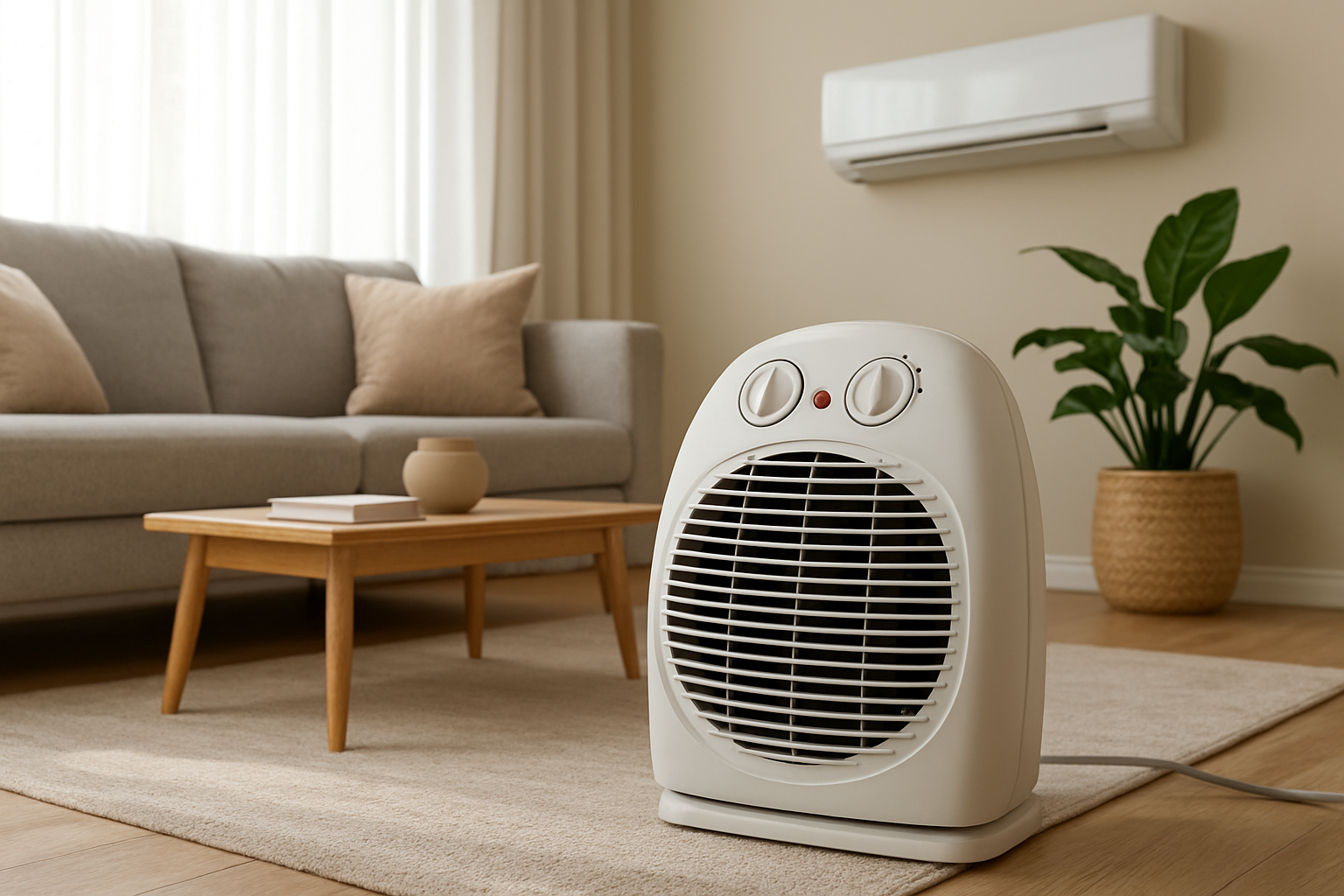
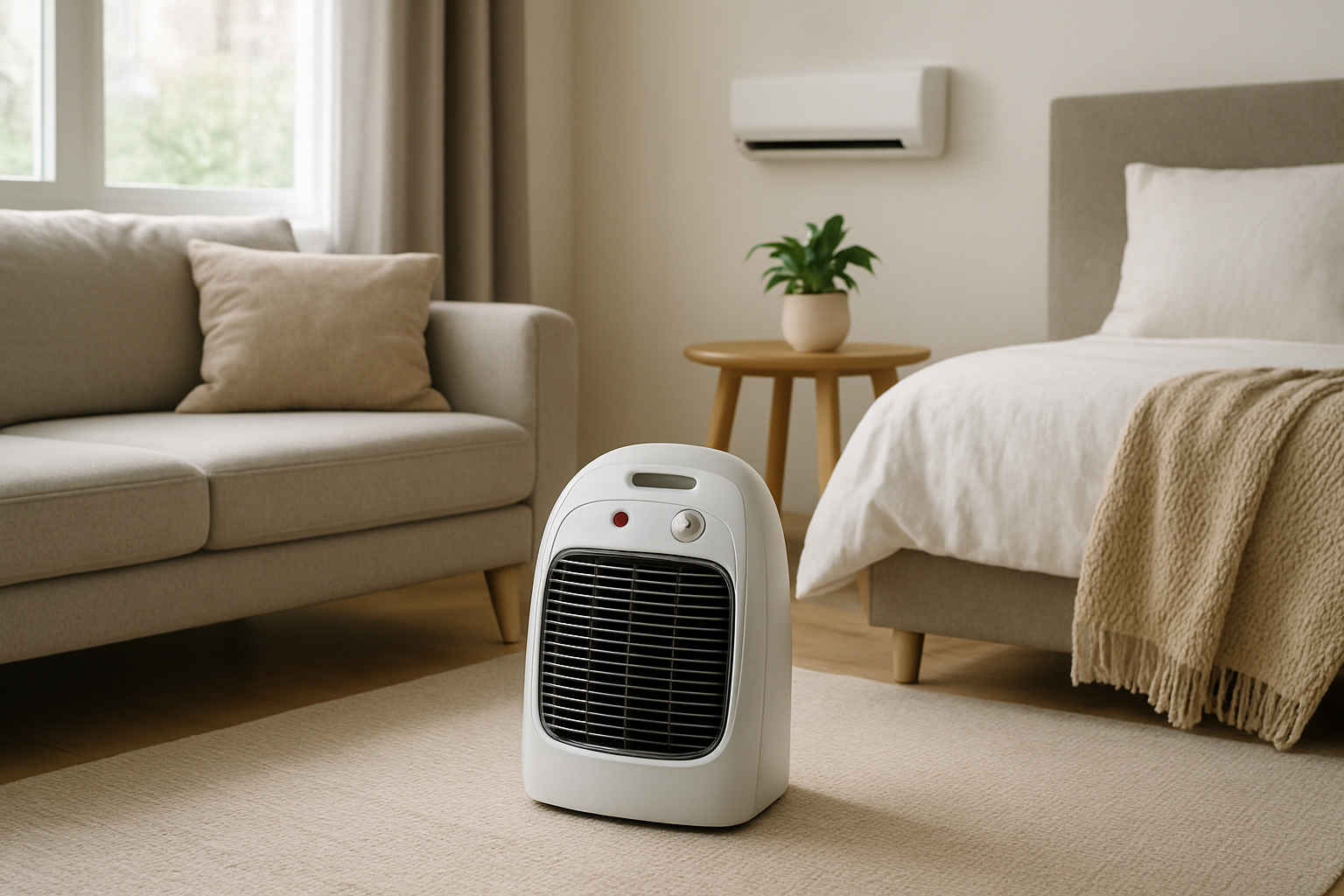
A portable heater moves room air across a hot surface (electric element, ceramic core, or oil-filled radiator fins). When the heater has been off for a while, a thin layer of household dust settles on those hot surfaces and nearby panels. On startup, that dust heats rapidly and oxidizes. The result is a dry, dusty, slightly burning odor that typically fades once that surface layer is consumed.
A second normal mechanism is mild material heating. Newer heaters, or heaters stored in warm areas, can release a temporary odor as protective coatings, manufacturing residues, or plastic parts warm up. This is most noticeable on the first few heat cycles.
The reason the smell can be strong even when heat feels normal is airflow physics. Warm air leaving the heater forms a buoyant plume. That plume carries the odor upward and can concentrate it near breathing zones depending on where you sit and how the room circulates air. In a closed room, the odor builds faster because dilution is low.
Most Probable Causes (Ranked)
Normal dust burnoff on the heating element or internal hot surfaces Clue: Happens after long downtime; strongest for the first 5–20 minutes; decreases each day you use it.
Dust accumulation inside the intake/outlet grille creating hotter-than-normal dust cooking Clue: Odor is worse when airflow feels weak; heater casing feels unusually hot; smell returns every cycle.
Heated plastic, paint, or protective coating (new unit or recently stored/cleaned) Clue: Odor is more chemical than dusty; strongest in first few uses; fades over several sessions.
Foreign debris inside the heater (pet hair, lint, carpet fibers) Clue: Odor is stronger when heater sits on carpet or near bedding; visible lint on grilles; smell may be sharper and localized.
Electrical overheating at a cord, plug, or internal connection Clue: Smell is acrid or fishy rather than dusty; plug or cord feels warm/hot; odor is strongest near the outlet, not the heater discharge.
How to Confirm the Cause Yourself
Use observation and simple comparisons. Do not disassemble the heater beyond what the manufacturer allows.
Time-to-fade test: Run the heater on a stable setting in the same room. Note odor intensity at 2 minutes, 10 minutes, and 30 minutes. Dust burnoff should drop noticeably by 10–20 minutes and be minor by 30 minutes.
Repeat-use trend: Use the heater once daily for 2–3 days. Normal burnoff should lessen each day. If it is identical or worse each use, look for ongoing dust ingestion, lint, or overheating.
Airflow feel check: Compare airflow at the outlet to what you remember from when it was new. Weak airflow suggests clogged intake/outlet screens or internal blockage, increasing internal temperature and making odors stronger.
Location comparison: Run the heater off the carpet on a hard surface, away from drapes and bedding. If odor drops sharply, you were likely pulling lint/fibers into the unit or heating nearby dust sources.
Room dilution check: Crack a door or window slightly for a few minutes while it runs. If the smell becomes tolerable quickly without changing the heater behavior, you’re likely dealing with burnoff plus low ventilation, not a failing heater.
Outlet/plug check by proximity: Without touching metal prongs, smell near the wall outlet and along the cord versus at the heater grille. If the strongest smell is at the outlet/plug area, stop using it.
Visual clues: Any visible haze, smoke, or discoloration at the grille is not typical dust burnoff. Shut off and unplug.
Normal Behavior vs Real Problem
Normal: A dry dusty odor on startup that fades within 10–30 minutes, decreases over a few run cycles, and is strongest right at the heater outlet. Heat output is steady and the unit cycles normally. No visible smoke. No unusual casing hot spots. No odor concentrated at the plug.
Likely a real problem: Odor remains strong beyond 30 minutes, gets worse with runtime, or returns at full strength every cycle. Airflow is noticeably weak. The heater shuts off unexpectedly (thermal limit). You notice an acrid electrical smell, see haze/smoke, or the cord/plug becomes warm to the touch.
When Professional Service Is Needed
Immediate stop and service/replace: Any smoke, visible haze, melting odor, sparking, buzzing, or odor strongest at the plug/outlet.
Service soon: Dusty smell does not fade after 30 minutes of steady operation, or it persists after 2–3 days of use, especially with reduced airflow or frequent safety shutoffs.
Comfort impact threshold: If the odor forces you to ventilate enough that the room cannot hold temperature, the heater is not operating cleanly for that space and should be inspected or replaced.
Performance decline: Noticeably less heat than before at the same setting, combined with stronger odor, often means airflow restriction or overheating conditions that warrant evaluation.
How to Prevent This in the Future
Season-start burnoff plan: First run of the season, operate the heater for 20–30 minutes in a ventilated area to clear settled dust.
Keep intake air clean: Do not place the heater where it pulls lint: near bedding, drapes, pet beds, or on thick carpet if the intake is low.
Reduce dust loading: Vacuum the room and nearby baseboards before first seasonal use. Less airborne dust means less burnoff and less odor cycling.
Maintain airflow paths: Keep grilles unobstructed. Odors intensify when internal surfaces run hotter due to restricted airflow.
Storage control: Store the heater covered and off the floor to reduce dust accumulation inside the cabinet.
Electrical basics: Use a proper wall outlet, keep the plug fully seated, and avoid questionable power strips or damaged cords that can create overheating odors.
Related Home Comfort Symptoms
Heater makes the air feel dry and irritating even when temperature is comfortable
Portable heater smells fine at first, then smells worse after 15 minutes
Portable heater cycles off frequently and the room never warms up
Burning smell near a wall outlet when using a space heater
Dusty smell only in one room when heat is running
Conclusion
A portable heater that heats normally but smells dusty is most often experiencing dust burnoff or mild material heating, especially after sitting unused. The key diagnostic is the pattern: a startup odor that fades within 10–30 minutes and diminishes over a few uses is usually normal. If the odor persists, worsens with runtime, airflow is weak, or the smell centers at the plug/outlet, stop using it and have it inspected or replaced.
Frequently Asked Questions
Why does my heater smell dusty only for the first few minutes?
Dust settles on hot internal surfaces while the heater is off. On startup, that dust heats rapidly and oxidizes, producing a temporary dusty odor that should fade as the surface layer burns off.
How long is too long for a dusty smell to last?
If the odor remains strong beyond about 30 minutes of steady operation, or returns at full strength every time you run it for several days, treat it as abnormal and look for restricted airflow, lint ingestion, or overheating.
Is a dusty smell the same as an electrical burning smell?
No. Dust burnoff is typically dry and musty and is strongest at the warm air discharge. Electrical overheating tends to smell sharper and acrid and may be strongest at the cord, plug, or wall outlet area.
Can low airflow make the smell worse even if the heater still heats?
Yes. Restricted intake or outlet airflow raises internal temperatures. Hotter surfaces cook dust and plastics more aggressively, making the odor stronger and more persistent even when the room still warms.
Should I open a window when running it the first time?
For a first seasonal startup or after storage, brief ventilation can help clear burnoff odors faster. If ventilation is required every time to tolerate the smell, the heater likely has an ongoing airflow restriction or contamination issue.
Need a complete overview? Visit the full troubleshooting guide here: Read the full guide for more causes and fixes.
For a lot of people, that dusty smell is the little “yep, it’s running” sign—more unsettling than dangerous in most everyday cases. It can be the heater waking up, not plotting anything, and that tiny moment of worry tends to fade fast.
The bigger the pattern, the more you notice what’s really happening in your space, not just inside the unit. Either way, you end up with a calmer routine: heat on, nose spared, and the room back to feeling like home.