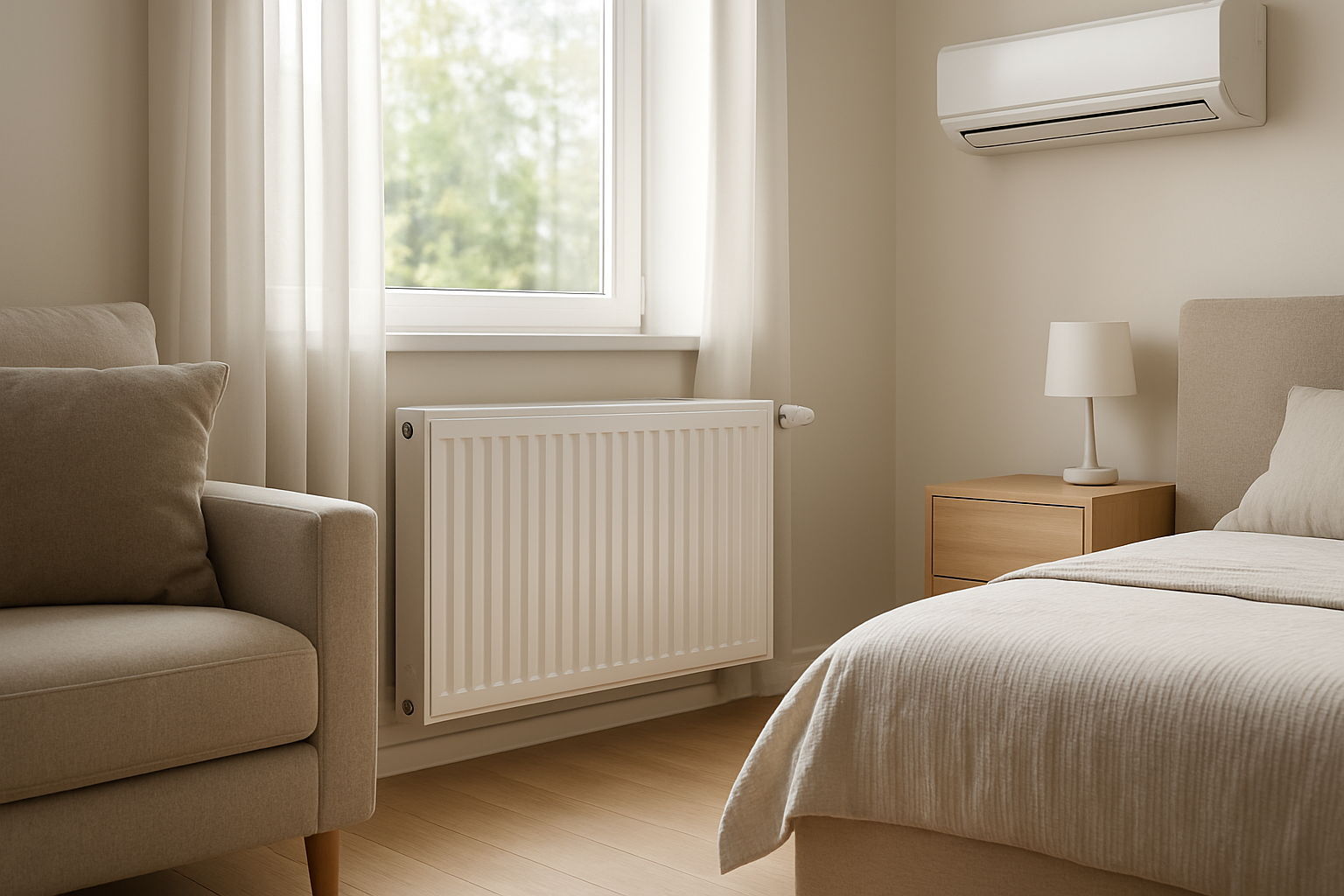
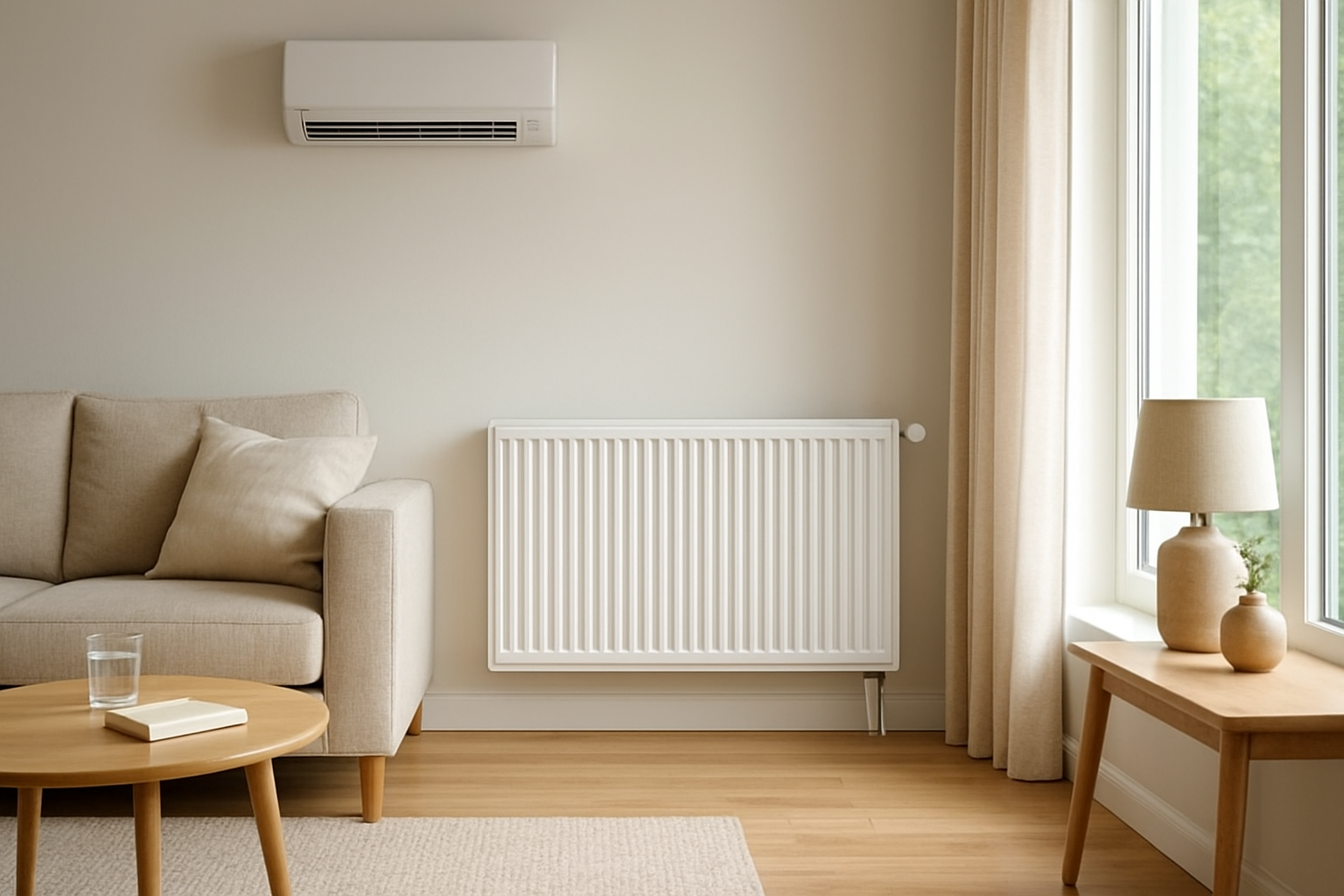
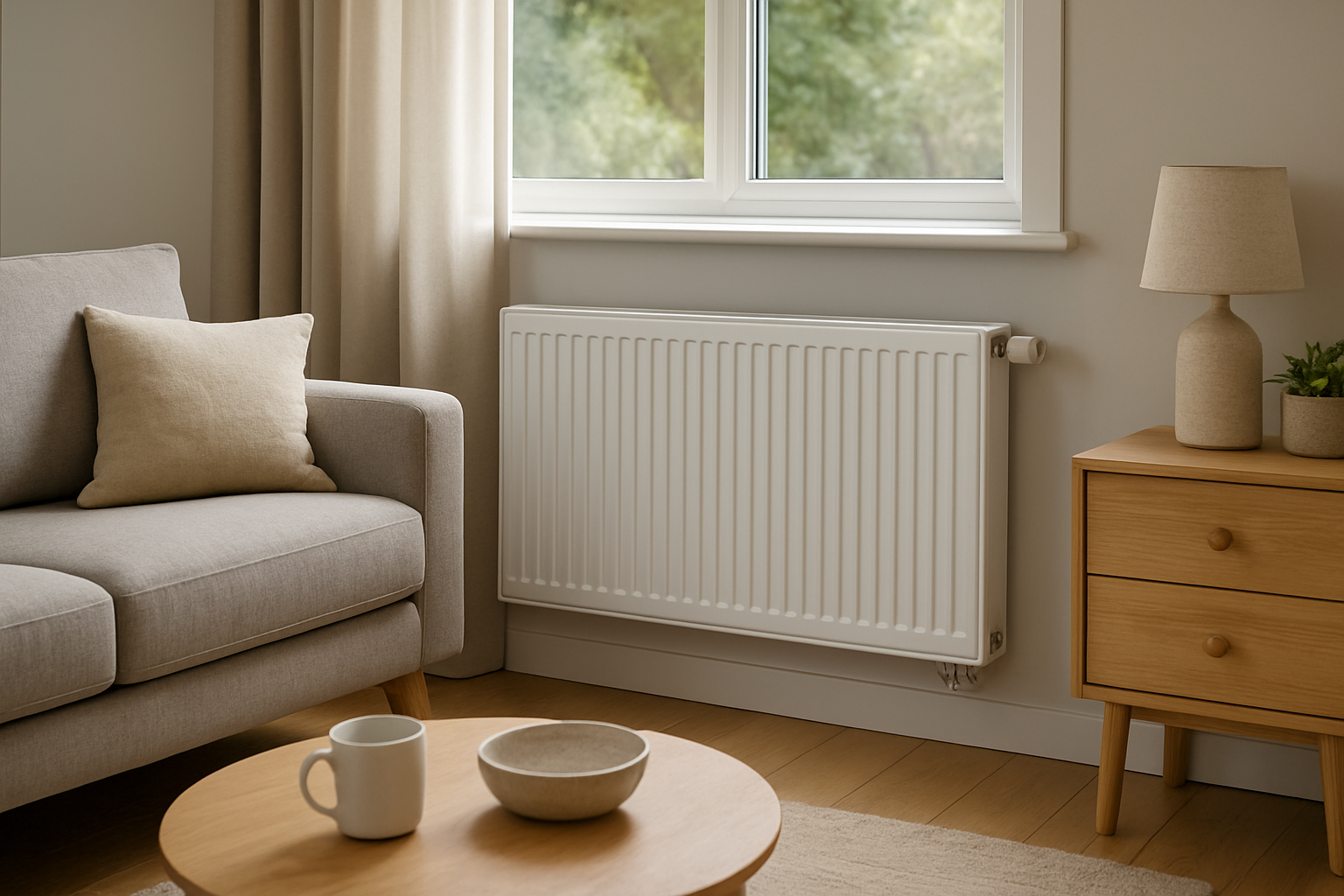
Diagnose and fix slow-heating radiators caused by delayed water circulation after periods of inactivity, including common causes and steps to restore efficient heating.
Radiator Heats Slowly After Being Off? Water Circulation Delay
Quick Answer
When a radiator heats slowly after being off for hours or days, the most common reason is delayed hot-water circulation caused by air pockets or a circulator that takes time to re-prime and establish flow. First check: when the heat turns on, feel the radiator from the pipe connection upward. If the bottom gets warm but the top stays cool longer than 10–15 minutes, suspect trapped air or poor flow.
Identify the Comfort Pattern First
Before assuming a defect, sort the complaint by pattern. Slow warm-up can be normal in some layouts, but a circulation delay shows consistent, repeatable clues.
When it happens: Most noticeable on the first heat call of the morning, after nighttime setback, or after the system has been off for a day or more. Less obvious during continuous cold weather operation.
Where it happens: Often affects the farthest radiators from the boiler, the highest floor, or only one branch of the system. If every radiator is equally slow, the issue is more central (pump, near-boiler air, control, or boiler output).
System running vs off: The thermostat calls for heat, boiler is operating, but one radiator (or a group) lags behind by 20–60+ minutes compared to others.
Constant vs intermittent: Circulation delay is typically repeatable after long off cycles and improves once the system has been running for a while.
Doors open vs closed: Door position changes room temperature distribution but does not change how quickly the radiator metal warms. If opening doors makes the room feel better but the radiator is still slow to heat, that points to distribution delay rather than room-to-room airflow.
Vertical differences: A radiator that warms at the bottom first and stays cool at the top suggests air trapped in the radiator. A radiator that stays uniformly cool (no warm bottom) suggests a flow or valve problem.
Humidity perception: If the house feels clammy when the thermostat first calls but improves only after long run times, that often matches slow heat delivery to key rooms. The humidity level may not be changing quickly; the surface temperatures are.
Airflow strength: Hydronic radiators don’t provide forced airflow. If you have baseboard with a fan-assist, weak fan airflow can mimic slow heating, but most slow-warm complaints are water flow related.
What This Usually Means Physically
After a long off period, the system has to re-establish hot-water circulation to each emitter. The boiler can be making hot water, but the radiator will not heat until enough hot water actually moves through it. The root physics is simple: heat transfer at the radiator depends on water temperature and, critically, water flow rate through the radiator.
Two things commonly slow that initial flow:
Compressible air in a system designed for incompressible water: Air pockets collect at high points and inside radiators. When the circulator starts after inactivity, the pump’s energy first compresses and moves air rather than pushing a solid water column. Flow can be restricted or temporarily blocked until air shifts or bleeds out of the radiator, delaying heat delivery.
Higher friction and weaker driving force at startup: After long off cycles, water is cooler and more viscous, check valves can be slow to open, and zone valves may take time to travel. If the system is marginally balanced, the first heat call exposes weak circulation paths: long piping runs, partially closed valves, or slight blockages produce a noticeable lag before hot water reaches the radiator.
The comfort effect inside the room is amplified by building physics: cold walls, windows, and furniture pull heat from the air quickly at startup. If the radiator is late getting hot, the room temperature can drift downward fast, and the space feels colder than the thermostat reading because mean radiant temperature is low.
Most Probable Causes (Ranked)
Air trapped in the radiator or high-point piping (most common): Bottom warms first, top stays cool; gurgling or trickling sounds; problem worse after long off periods or after recent work on the system.
Partially closed or sticking radiator valve (TRV or manual): Radiator stays cool longer than others even when the supply pipe nearby is hot; valve feels difficult to turn; heat may arrive suddenly once it frees up.
Weak circulation on that branch due to balancing or flow resistance: Far radiators heat last every cycle; nearby radiators heat quickly; supply pipe warms slowly along its length rather than abruptly.
Zone valve slow to open or not fully opening: The entire zone lags, not just one radiator; you may hear the actuator run but heat delivery is delayed; other zones may heat normally.
Circulator pump struggling at startup: Many or all radiators are slow after long off periods; pump may be unusually hot, noisy, or inconsistent; heat improves after the pump has been running for a while.
System pressure too low (closed hydronic systems): Upper-floor radiators are slow or stay partially cold; symptoms worsen at higher elevations; may correlate with frequent air appearance in radiators.
Sludge or internal restriction in the radiator or valve body: That radiator is consistently slower than before; supply may be hot but return stays cool; delay persists even during continuous operation.
How to Confirm the Cause Yourself
These checks use observation only. Do them at the first heat call after the system has been off long enough that pipes and radiators are fully cool.
Track the warm-up sequence: When heat starts, note the time and check the affected radiator every 5 minutes. A normal radiator begins warming within 10–20 minutes depending on distance and water temperature. If it takes 30–60+ minutes while others warm sooner, you have a distribution delay specific to that radiator/branch.
Feel the temperature gradient (bottom-to-top test): Carefully feel the radiator at the inlet side near the floor and then higher up. Bottom warm/top cool for an extended period points strongly to trapped air. Uniformly cool points to no flow, a closed valve, or a zone delivery issue.
Listen for air: Gurgling, bubbling, or water trickling sounds during warm-up are consistent with air moving through a radiator or riser. Silence does not rule air out, but noise makes it more likely.
Compare supply and return behavior: Without tools, you can still compare by touch. If the pipe feeding the radiator becomes hot but the pipe leaving stays cool much longer, flow through the radiator is restricted (air, valve, sludge). If neither pipe heats for a long time, hot water isn’t reaching the radiator (branch/zone issue).
Valve position reality check: Confirm the radiator valve is fully open and not “snugged down” partway. On thermostatic radiator valves, a stuck pin can prevent opening; the knob position may not reflect the valve’s internal movement.
Whole-zone timing check: If multiple radiators on the same floor or loop are slow together, focus on the zone valve or circulator rather than individual radiator bleeding.
Repeatability after long inactivity: If the lag is worst after setbacks/off periods but mostly disappears when the system runs frequently, air migration or marginal circulation is more likely than a hard blockage.
Normal Behavior vs Real Problem
Usually normal: After a long off cycle, some delay is expected before any radiator warms, especially in large homes or with low-temperature water settings. A slight stagger where far radiators warm a bit later can be normal if comfort remains acceptable.
Likely a real problem: One radiator repeatedly lags by more than 30 minutes compared with others; the radiator never heats fully top-to-bottom; you hear frequent gurgling; the same room chronically starts cold and only catches up late in the cycle.
Strong indicator of air: Radiator consistently heats from bottom up, leaving a cool top section during the first part of the heating cycle, or requires repeated bleeding to restore full heat.
Strong indicator of flow restriction: Supply pipe gets hot quickly but radiator body remains mostly cool or return pipe stays cool for a long time during a sustained heat call.
When Professional Service Is Needed
Persistent delay after basic checks: If the radiator still takes longer than 30–60 minutes to heat after confirming the valve is open and the pattern repeats across multiple cycles.
Frequent air return: If you have to bleed radiators repeatedly (daily/weekly). That suggests an underlying cause such as low system pressure, a failing air eliminator, or water makeup issues.
Upper-floor radiators underheating: Consistent slow or partial heating on the highest level can point to pressure problems that require gauge verification and adjustment.
Zone-wide sluggishness: If an entire zone is slow after inactivity while others are fine, diagnosis may involve zone valve operation, check valves, and circulator performance.
Noise, leaks, or boiler short-cycling: Unusual mechanical noise at the pump/valves, visible leakage, or the boiler rapidly turning on and off while rooms stay cold should be evaluated professionally to prevent worsening performance.
How to Prevent This in the Future
Avoid deep setbacks that force long off periods: Large temperature setbacks can make first-cycle delays feel worse because room surfaces cool down and the system must overcome both building loss and distribution lag.
Keep radiator valves exercised: Once or twice per season, move manual valves fully open/closed and back to open to reduce sticking. For TRVs, ensure the valve pin moves freely.
Monitor for recurring air symptoms early: If a radiator starts warming unevenly, address it promptly rather than waiting until it becomes a long delay pattern.
Maintain stable system pressure (closed systems): A properly pressurized system is less prone to air problems at upper floors. If you notice repeat air issues, schedule service to verify fill pressure and air elimination equipment.
Reduce hidden flow restrictions: If one radiator is always last, a technician can verify balance and check for partially closed valves on the branch that may have been left from prior work.
Related Home Comfort Symptoms
Radiator warm at bottom but cold at top
Gurgling sounds in radiators after startup
Top-floor radiators slow or not fully heating
One room stays cold until the system has run a long time
Zone heats inconsistently after thermostat setbacks
Conclusion
A radiator that heats slowly after being off usually points to delayed hot-water circulation, most often from trapped air or marginal flow on that radiator’s branch. Confirm it by observing the warm-up sequence and the bottom-to-top temperature pattern during the first heat call after the system has been cool. If the delay is repeatable, exceeds 30–60 minutes, or requires frequent bleeding, schedule service to correct the underlying air elimination, pressure, valve, or circulation issue.
Frequently Asked Questions
Why does my radiator heat fine once it finally gets going, but starts slow after being off?
That pattern fits circulation establishing itself after inactivity. Once water is moving, the radiator can transfer heat normally. The slow start usually means the initial flow is restricted by air, a sticky valve, or weak flow on that branch until the system runs long enough to push past it.
Is it normal for the farthest radiator to heat last?
Some stagger is normal, especially in larger homes and multi-story layouts. It becomes a problem when the delay is large enough to affect comfort or when that radiator is consistently much later than its neighbors in the same zone.
What does it mean if the radiator is hot at the bottom and cool at the top?
That is a classic sign of trapped air in the radiator. Hot water enters and warms the lower section, but air collects higher up and reduces the effective water volume and heat output until the air is removed or displaced.
If I keep getting air in the radiator, what is the likely root cause?
Repeated air often points to low system pressure (especially affecting upper floors), ineffective air removal at the boiler, or water makeup introducing fresh air. The symptom is not just the radiator; it is the system’s ability to keep air out over time.
How long should it take a radiator to start feeling warm after the heat turns on?
Many systems deliver noticeable warmth within 10–20 minutes, but it varies by piping length, water temperature, and zoning. If one radiator regularly takes 30–60 minutes longer than others, that is a meaningful diagnostic threshold for a circulation delay or restriction.
Need a complete overview? Visit the full troubleshooting guide here: Read the full guide for more causes and fixes.
That lag after everything’s been quiet for a while stops feeling mysterious and starts making sense, like the house is just stretching before it does its thing. The radiator doesn’t actually need saving—more like a moment to catch up.
It’s a small daily annoyance, but it also says something reassuring: when the rhythm returns, the warmth comes back the way you remember. After a bit of patience, the room feels normal again, and you can stop second-guessing every thermostat click.