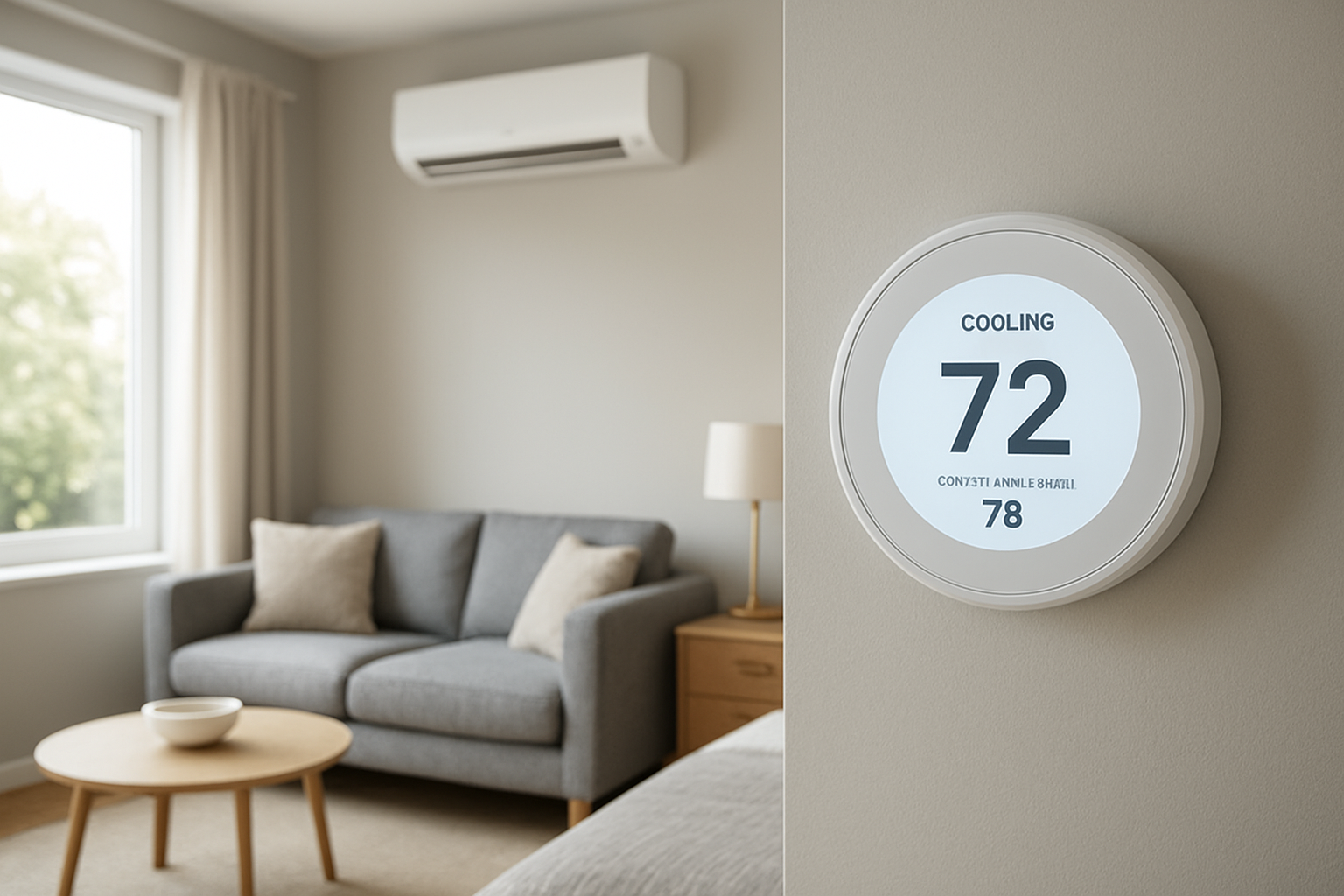
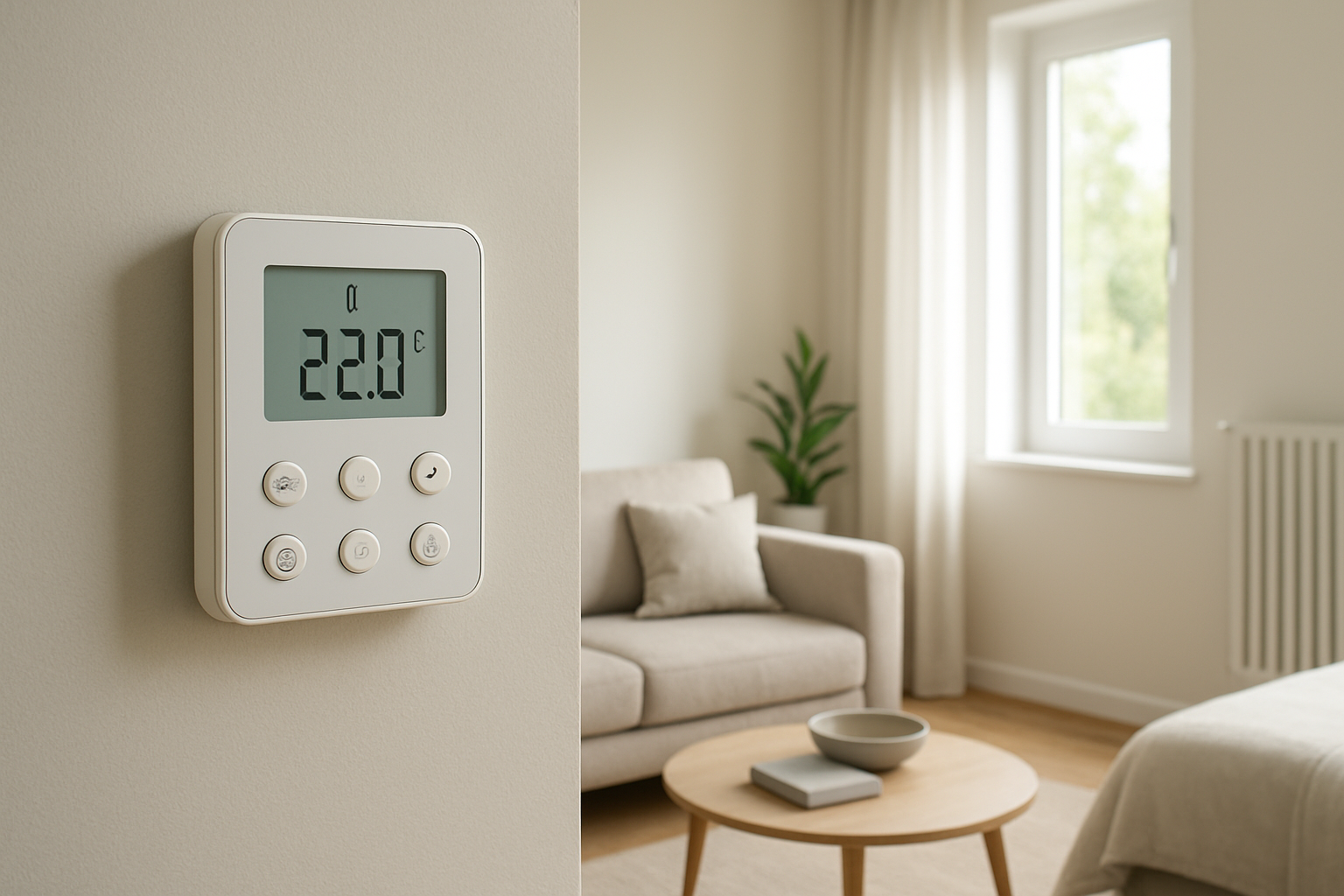
Diagnose why your thermostat displays cooling mode but the air conditioner never starts, focusing on control signal issues that prevent equipment activation.
Thermostat Says Cooling But AC Never Starts? Signal Blocked
Quick Answer
If the thermostat display shows Cooling or a snowflake but the outdoor unit and indoor blower never start, the most likely issue is a blocked control signal: the thermostat is calling, but power or the low-voltage circuit to the equipment is open (float switch, safety switch, blown fuse, loose wire, or control board not responding). First check: does the thermostat show Cooling but you hear absolutely no click, blower, or outdoor hum?
Identify the Comfort Pattern First
Before chasing parts, sort the symptom into the correct bucket. This problem is specifically a call for cooling without equipment activation, not weak cooling.
When it happens: Often after heavy humidity days, after rainfall, or during long cooling runs. Also common right after a thermostat change, power outage, or electrical work.
Where it happens: Whole house warms evenly because the system never runs. This is different from one hot room or one hot floor.
System running vs off: No indoor blower airflow at vents, no outdoor fan/compressor sound, and no air handler vibration. If the blower runs but outdoor unit does not, you have a different symptom.
Constant vs intermittent: Intermittent no-start points toward a float switch tripping, a loose low-voltage connection, or a control board issue. Constant no-start points toward loss of power, a blown control fuse, or miswired thermostat.
Doors open vs closed: Door position will not meaningfully change anything because the equipment is not operating. If opening doors improves comfort, you likely have airflow or distribution imbalance instead.
Vertical differences: You may notice ceiling areas get hot first due to natural stratification, but the whole home temperature drifts up together because cooling never begins.
Humidity perception: Humidity rises and stays “sticky” because there is no dehumidification without evaporator operation. If the house feels dry but warm, look for other heat gain issues.
Airflow strength: At supply vents, airflow is zero or only faint natural draft. If airflow is strong but warm, the system is running and not cooling for a different reason.
What This Usually Means Physically
When a thermostat calls for cooling, it closes a low-voltage control circuit that tells the air handler and outdoor unit to start. If the thermostat indicates Cooling but nothing starts, the call is not reaching the equipment or the equipment cannot act on it.
Physically, the home continues to gain heat from solar gain, people, appliances, and outdoor infiltration. Without the blower moving air across the evaporator coil, there is no sensible heat removal and no latent moisture removal. Indoor temperature climbs steadily, and relative humidity typically climbs as well because moisture sources continue (cooking, showers, outdoor air leakage) with no active drying.
This symptom is rarely a capacity issue. Capacity problems still produce operation: the system runs long, airflow exists, and temperatures change slowly. A blocked control signal produces no cycle at all.
Most Probable Causes (Ranked)
Condensate float switch open (most common in humid climates): Thermostat calls, but a safety switch in the drain pan or drain line breaks the control circuit. Clue: problem appears after long runtime or muggy weather; may reset later and fail again.
Loss of power to the air handler or outdoor unit: A tripped breaker, disconnect pulled, or service switch off prevents any response. Clue: no blower, no outdoor sound, and sometimes thermostat stays powered (battery) even though equipment is dead.
Blown low-voltage fuse on the air handler control board: A shorted thermostat wire or contactor coil can pop the 3–5 amp automotive-style fuse, killing the 24V control circuit. Clue: thermostat may be on, but equipment never reacts; often happens after thermostat work or wire rubbing.
Thermostat not actually sending a cooling call: Misconfiguration (heat pump vs conventional), wrong wiring, dead batteries, or failed thermostat relay. Clue: display says Cooling but no audible click from thermostat and no 24V signal reaches equipment.
Open low-voltage circuit between thermostat and equipment: Loose wire at thermostat base, wire break, corroded splice, or float switch wiring failure. Clue: intermittent operation when doors are slammed, when attic temperature changes, or after handling the thermostat.
Control board not responding to a valid call: Board failure or internal lockout. Clue: correct power present, correct thermostat call present, but board never energizes blower/contactor.
How to Confirm the Cause Yourself
These checks use observation only. Do not remove electrical covers or access energized components.
Confirm it is truly a no-start: Set the thermostat at least 3°F below room temperature. Wait 5 minutes. Stand by the return grille and a supply vent. If there is no increase in airflow and no sound change at the air handler, you have a no-start, not poor cooling.
Listen at both pieces of equipment: Indoor unit: any hum, fan spin-up, or vibration? Outdoor unit: any fan start or compressor hum? If both are silent, prioritize power loss, control fuse, or a safety switch opening the 24V circuit.
Check thermostat power source behavior: If the thermostat is battery-powered, it can display Cooling even when the HVAC transformer has no power. If the thermostat is normally powered by the system and the display is blank or rebooting, suspect a lost 24V supply or blown control fuse.
Look for condensate overflow indicators: Without opening panels, check for a wet area near the indoor unit, a full auxiliary drain pan under the unit, water staining, or a recently clogged drain symptom. If the issue appears after long humid runtimes and then resolves after hours, a float switch is highly likely.
Check for a recent change event: If the problem began immediately after changing the thermostat, moving furniture near the thermostat, or doing electrical work, miswiring or a shorted thermostat cable rises to the top.
Time-of-day pattern correlation: If it fails mostly in late afternoon and works in the morning, do not assume it is capacity. Intermittent control faults can be temperature-related (attic heat affecting wire splices) or condensate-related (more run time equals more water).
Differentiate fan-only operation: Switch the thermostat fan to ON. If the blower runs in fan-only but will not run on cooling, the blower has power and the issue is more likely the cooling call path (Y circuit, safeties, outdoor unit response). If fan-only does not run either, power to the indoor unit is the first suspect.
Normal Behavior vs Real Problem
Normal: A short delay (30 seconds to several minutes) after a call for cooling due to built-in compressor protection timers or smart thermostat logic. During this delay, the system may be quiet or only the indoor fan may start later.
Normal: Some thermostats display Cooling during a waiting period while preventing rapid cycling. The key is that the equipment starts after the delay.
Problem: Cooling indicated for more than 10 minutes with no indoor airflow and no outdoor operation.
Problem: Recurring pattern where cooling works, then stops responding to calls, especially after long runtime or high humidity days.
Problem: Humidity and temperature both rise steadily with no periods of noticeable airflow or sound from the system.
When Professional Service Is Needed
Immediate service: Cooling call persists beyond 10–15 minutes with no equipment response, and indoor temperature is climbing.
Same-day service: The system starts sometimes but fails repeatedly in the same day. Intermittent control faults typically worsen and can lead to water damage if condensate safeties are involved.
Service required (do not keep forcing it): Any evidence of water around the indoor unit, a full auxiliary pan, or ongoing drain overflow signs.
Service required: Thermostat replacement or wiring changes preceded the failure and you cannot confidently verify settings and connections without accessing wiring.
Escalate priority: Breakers that trip again after being reset, burning odor, or buzzing from the electrical area.
How to Prevent This in the Future
Keep the condensate drain functional: Have the drain line inspected and cleared periodically, especially in humid climates. Most no-start cooling calls caused by safeties trace back to slow drains and algae buildup.
Protect the low-voltage wiring: Ensure thermostat wire is secured away from sharp metal edges and not pinched at access panels. Many blown control fuses originate from rubbed-through insulation.
Document thermostat wiring and configuration: When swapping thermostats, confirm system type settings (heat pump vs conventional) and keep a photo of the original wiring for reference.
Keep return airflow unobstructed: Better airflow reduces coil icing risk and excessive condensate events that can trigger safeties. This does not fix a blocked control signal, but it reduces common triggers.
After outages: If your area has frequent power interruptions, consider surge protection for HVAC controls to reduce board and transformer failures that can present as no-response calls.
Related Home Comfort Symptoms
Thermostat says Cooling but only the indoor fan runs
AC runs sometimes, then stops responding until hours later
Outdoor unit not running but indoor blower is on
Indoor humidity rising quickly with no airflow from vents
Thermostat display on but system is completely silent
Conclusion
If the thermostat indicates Cooling but the AC never starts, the highest-probability diagnosis is a blocked control signal: the call is being interrupted by a safety device, loss of equipment power, a blown low-voltage fuse, an open control wire, or a control board that is not responding. Confirm it is a true no-start by checking for zero airflow and silence at both indoor and outdoor units for more than 10 minutes. If the pattern is intermittent or associated with moisture around the indoor unit, schedule service promptly.
Frequently Asked Questions
Why does my thermostat show Cooling if the AC is not running?
The display reports the thermostat’s demand, not what the equipment actually did. If the low-voltage control circuit is open (float switch, blown fuse, broken wire) or the equipment lacks power, the thermostat can still indicate Cooling while nothing starts.
How long should I wait before assuming it is not just a delay?
Most normal delays are under 5 minutes. If you have a steady cooling call for 10 minutes with no indoor airflow and no outdoor operation, treat it as a fault rather than a protection delay.
Could a clogged air filter cause this exact symptom?
A clogged filter can cause weak airflow, coil icing, and poor cooling, but it usually does not prevent all equipment from starting. If nothing starts at all, prioritize power, safeties, thermostat call path, and low-voltage control issues.
Why does it sometimes start later without me changing anything?
Intermittent starts strongly suggest a safety opening and later resetting (common with condensate float switches), a loose control connection, or a control board that intermittently fails when warm. Time and conditions change the circuit state even if you do nothing.
What is the easiest homeowner clue that a float switch is involved?
The failure happens after long cooling runs during humid weather, and you notice signs of water at or near the indoor unit area (wet pan, staining, dampness). The system may run again after enough time passes for water to drain or evaporate.
Need a complete overview? Visit the full troubleshooting guide here: Read the full guide for more causes and fixes.
There’s a particular kind of silence that follows—everything looks ready to cool, yet nothing follows through. When the control signal never makes it to the unit, the system just sits there in soft, misleading confidence.
It’s the kind of problem that feels bigger than it is, mostly because it keeps pretending. The good news is you don’t have to wrestle with the whole setup—just recognize where the message gets stuck.