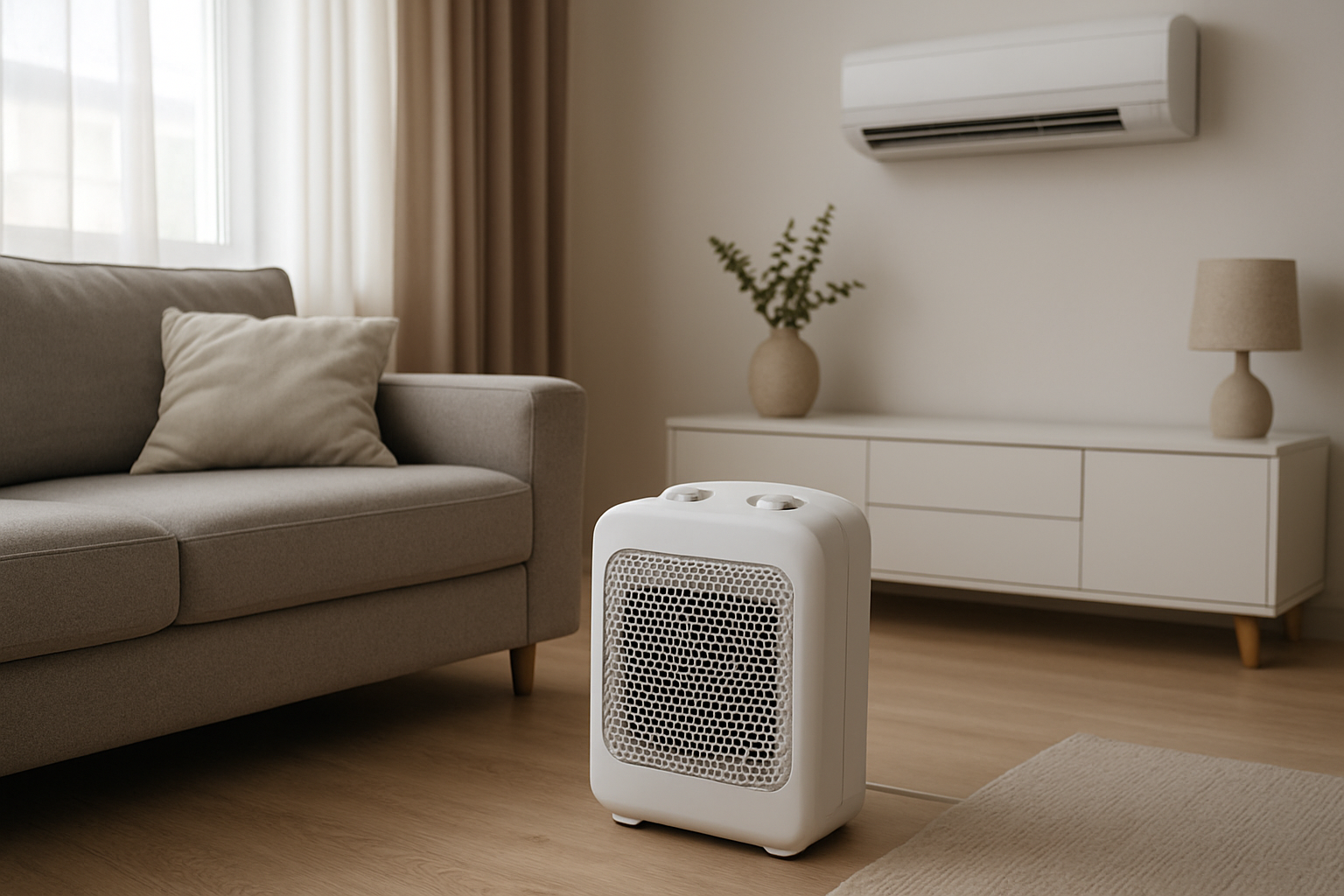
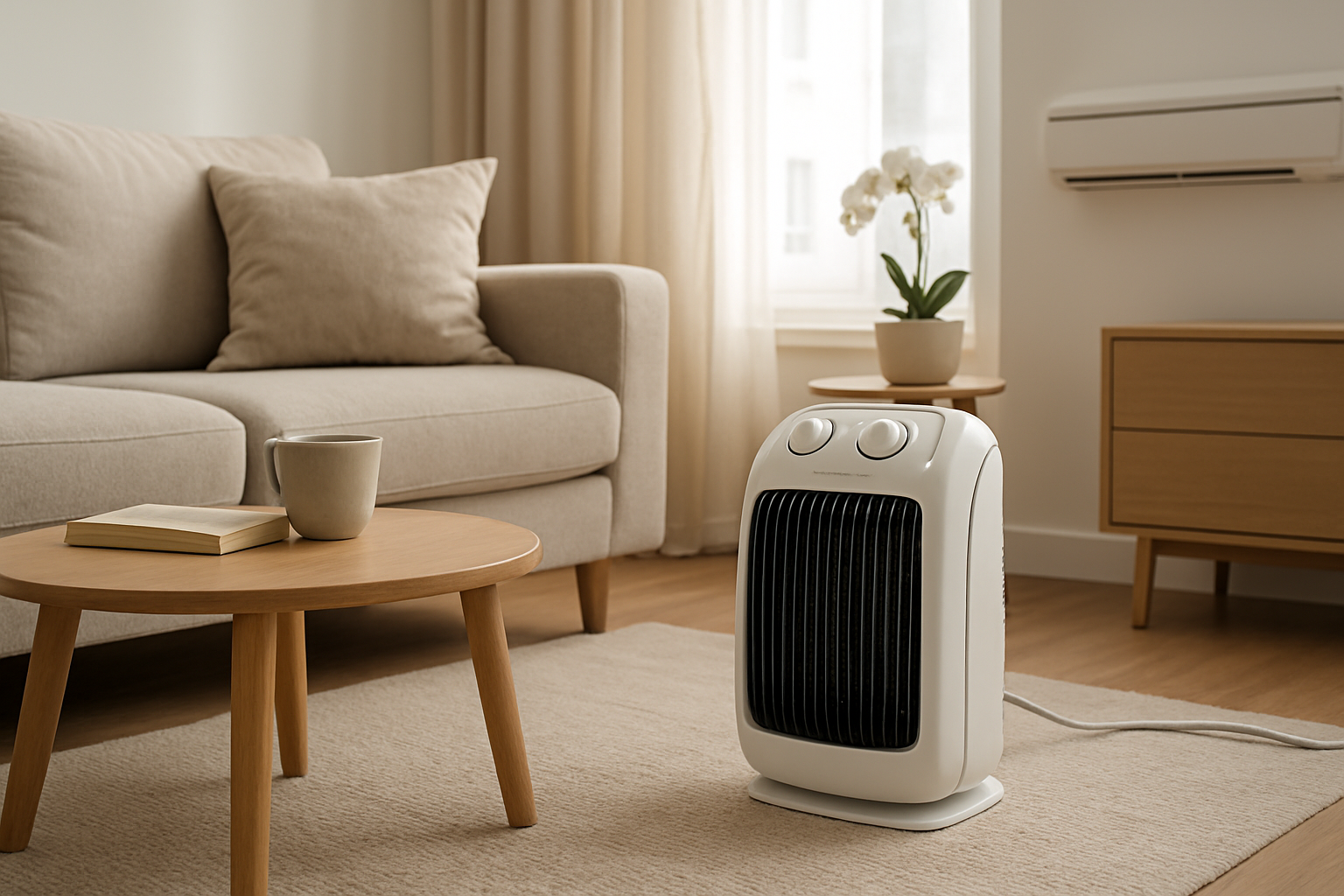
Diagnose why a portable heater warms air but leaves the room cold, focusing on convective heating and how it may not effectively heat room surfaces.
Portable Heater Produces Heat But Room Still Feels Cold? Here’s Why
Quick Answer
Most often, the heater is warming the air (convection) but cold room surfaces are still pulling heat from your body by radiation, so you feel chilled even with warmer air. First check: measure the air temperature at head height and then touch-test exterior-wall surfaces and windows. If those surfaces feel cold, the issue is surface temperature, not heater output.
Identify the Comfort Pattern First
Before blaming the heater, sort the complaint by pattern. This points to surface-cold convection heating almost immediately.
When it happens: worse at night, early morning, or during windy/very cold weather; improves briefly after long runtime but never feels truly comfortable.
Where it happens: strongest near exterior walls, windows, and rooms over garages or crawlspaces; less noticeable in interior rooms.
Heater running vs off: you feel the heat stream or warm air, but the room still feels chilly; comfort drops quickly after the heater cycles off.
Constant vs intermittent: often constant discomfort even though the heater cycles normally; comfort improves only when you sit directly in the heater’s line-of-sight.
Doors open vs closed: closing the door may make air warmer faster, yet the room still feels cold; opening the door may reduce stuffiness but doesn’t fix the chill.
Vertical differences: warm head/face but cold feet; ceiling area feels warm while floors stay cold, especially with taller ceilings.
Humidity perception: air may feel dry and sharp; skin feels cooler than expected for the thermostat reading, especially after showers or cooking stop.
Airflow strength: if it’s a fan-forced portable heater, you feel moving warm air but not deep comfort; if it’s a radiant dish-style heater, comfort improves only in the beam path.
What This Usually Means Physically
A portable heater mainly adds heat to the air near it. The room can show a decent air temperature while still feeling cold because your comfort is not controlled by air temperature alone.
Cold surfaces dominate comfort: exterior walls, glass, and poorly insulated floors stay cold. Your body radiates heat to those colder surfaces. That radiant heat loss can make you feel chilled even when the air is warm.
Convection warms air faster than materials: air temperature rises quickly, but furniture, drywall, window glass, and flooring have thermal mass and may remain cold for hours. Until surfaces warm up, you continue losing heat to them.
Air stratification: warm air floats. Portable heaters can create a warm layer near the ceiling while the occupied zone (knees to feet) remains cooler, especially in rooms with high ceilings or low air mixing.
Heat loss at the perimeter: the coldest surfaces are at the perimeter of the room (windows, rim joists, corners). As the heater warms the air, that warm air moves to those surfaces and is cooled again, creating a persistent chill and drafts along the floor.
Humidity and perceived temperature: very dry air increases evaporative cooling from skin and can amplify the sensation that the room is cold, but it rarely explains the full complaint without cold surfaces or stratification.
In short: you can heat air and still be uncomfortable when the average radiant temperature of the room is low.
Most Probable Causes (Ranked)
Cold window and exterior-wall surfaces pulling radiant heat from you: the room feels cold unless you stand close to the heater; you feel chilled when sitting near windows or exterior walls even though the air feels warm.
Warm air stratifying at the ceiling while the occupied zone stays cool: warm head, cold feet; noticeable in taller rooms; ceiling feels much warmer than the floor.
Heater location heating a micro-zone but not the room’s cold perimeter: the heater is pointed into open space; the walls and floors stay cold; moving the heater changes comfort quickly without changing overall room temperature much.
Excess infiltration creating a cold boundary layer along floors and walls: you feel a persistent low-level draft near baseboards, outlets, window trim, or around the door; tissue or incense smoke moves at the perimeter.
Humidity is low enough to increase “cold feel”: static shocks, dry throat/skin; room feels less comfortable at the same temperature than other rooms, but surfaces are not dramatically colder.
Capacity mismatch for the room’s heat loss: the heater runs continuously on high, yet air temperature barely climbs; typically occurs in very leaky rooms, rooms with lots of glass, or during extreme cold.
How to Confirm the Cause Yourself
Use observation and simple comparisons. You are trying to separate air temperature from surface temperature and identify stratification.
Air vs surface check: when the room feels cold, read the air temperature at about 4 to 5 feet high (not right beside the heater). Then place your hand near (not on) the window glass and exterior wall drywall. If the air reads comfortable but the surfaces feel noticeably cold, radiant loss is driving discomfort.
Floor-to-ceiling temperature split: compare temperature at ankle height versus head height. If your feet feel cold while your upper body feels fine, and the heater output feels normal, stratification and cold floor surfaces are likely. A noticeable difference suggests the heat is not mixing in the occupied zone.
Perimeter draft check: stand near baseboards, window trim, and outlets. If you feel moving cool air along the floor or near exterior corners, infiltration is cooling surfaces and the occupied zone, making convection heating feel ineffective.
Location test: move the heater 2 to 3 feet closer to the room perimeter (toward the cold wall/window area) while maintaining safe clearances. If comfort improves more than the measured air temperature changes, the issue is cold surface dominance and poor perimeter warming, not lack of heat production.
Door position test: run the heater with the door closed for 30 to 60 minutes, then repeat with the door open. If closing the door raises air temperature but the room still feels cold, that supports surface temperature as the main issue. If opening the door improves comfort, you may be dealing with stratification or a stagnant cold layer.
Runtime behavior: if the heater cycles off normally and the room still feels cold, suspect surfaces. If it runs continuously on high and never seems to catch up, suspect excessive heat loss or insufficient heater capacity.
Normal Behavior vs Real Problem
Normal: a portable heater makes the immediate area feel warmer first; exterior walls and windows can remain cool to the touch during cold weather; the room feels best when you are closer to the heater and away from glass.
Normal: slight cold-floor sensation in rooms over unconditioned spaces, especially before the house has been heated for several hours.
Real problem indicators: the air temperature reads warm (for example, similar to other rooms) but you still feel chilled everywhere in the room; cold radiating from windows/walls is obvious; severe warm-at-ceiling/cold-at-floor layering; persistent drafts at the perimeter; heater must run constantly and still cannot raise room temperature.
When Professional Service Is Needed
Persistent discomfort despite adequate air temperature: if the room consistently feels cold when the air is at a normal setpoint, a pro should evaluate insulation gaps, window performance, and air leakage paths that keep surface temperatures low.
Large stratification: strong warm ceiling/cold floor conditions that do not improve with basic air mixing may require airflow balancing, return-air evaluation, or ceiling fan strategy.
Continuous runtime with minimal temperature rise: suggests heat loss exceeds heater output or the home has a building-envelope problem that needs targeted sealing/insulation work.
Safety indicators (stop and get help): tripping breakers, scorching smell, discoloration on outlets, or a heater that overheats or shuts down unexpectedly.
How to Prevent This in the Future
Raise surface temperatures, not just air temperatures: reduce radiant chill by improving window coverings at night, addressing obvious air leaks at the perimeter, and warming the cold-wall side of the room safely with better heat distribution.
Improve mixing in the occupied zone: gentle air circulation helps pull warm ceiling air down and reduces the cold boundary layer near the floor.
Control perimeter heat loss: focus on the coldest surfaces first (glass, corners, floors over unconditioned spaces). Small improvements there often change comfort more than increasing heater wattage.
Stabilize humidity within a reasonable range: if the house is excessively dry, moderate humidity can reduce the sharp cold feel, but only after the main surface-temperature issue is addressed.
Related Home Comfort Symptoms
Thermostat reads warm but you still feel chilly in certain rooms
Cold floors even when the room air feels warm
Room feels drafty near windows though they are closed
Warm upstairs, cold downstairs during heating season
Portable heater runs constantly but comfort barely improves
Conclusion
If your portable heater produces heat but the room still feels cold, the most common explanation is convective heating warming the air while cold windows, walls, and floors keep the average radiant temperature low. Confirm it by comparing air temperature to surface coldness and checking for warm-at-ceiling/cold-at-floor layering. If surfaces are the issue, address perimeter heat loss and air mixing rather than assuming the heater is defective.
Frequently Asked Questions
Why do I feel colder near windows even when the room temperature is high?
Because the glass surface temperature can be far below the room air temperature. Your body radiates heat to that colder surface, and the air next to the glass cools and sinks, creating a cold boundary layer. That combination feels like a chill even if a thermostat reads normal.
My heater makes the air hot, but my feet stay cold. What does that indicate?
It usually indicates stratification and cold floor surfaces. Warm air rises and collects near the ceiling while the occupied zone near the floor stays cooler. If the room is over a garage or crawlspace, the floor can also be a strong radiant heat sink.
How can I tell if the heater is undersized or if the room is just losing heat too fast?
If the heater runs continuously on high and the room air temperature barely increases over 60 to 90 minutes, the space heat loss likely exceeds the heater output. If the air temperature rises to normal but comfort remains poor, the heater is probably adequate and the issue is cold surfaces and/or stratification.
Will adding humidity fix a room that feels cold with a portable heater?
Humidity can improve comfort when the air is extremely dry, but it will not solve the main problem if windows, walls, or floors are staying cold. Treat humidity as a fine-tuning step after addressing surface temperatures and drafts.
Does a radiant-style space heater work better for this problem than a fan heater?
A radiant heater can make you feel warmer faster because it warms surfaces and your body more directly, reducing radiant heat loss to cold surroundings. But if the room has very cold perimeter surfaces, you may still need to reduce heat loss and improve mixing to make the whole room comfortable.
Need a complete overview? Visit the full troubleshooting guide here: Read the full guide for more causes and fixes.
It’s a small daily annoyance that makes you doubt your own instincts: the heater seems busy, yet the room acts like it’s ignoring the effort. The air moves, the warmth shows up briefly, and then—nothing, like the cold found a good hiding spot.
What finally settles in is simpler than you’d expect. Warmth doesn’t always land where you feel it most, and that mismatch is less dramatic than it is stubborn.