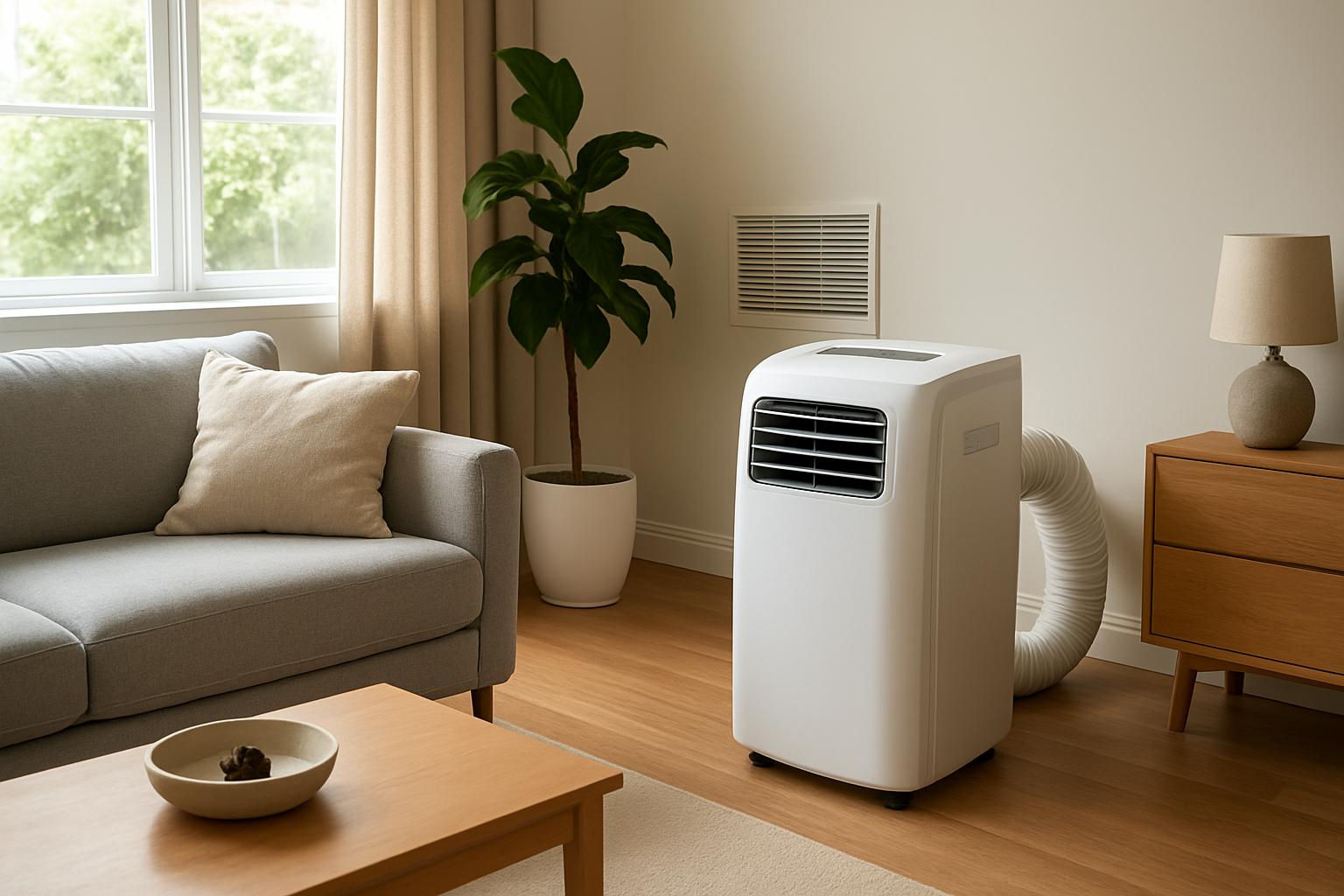
Diagnose why a portable AC runs but barely cools the room, focusing on cooling capacity limits and matching unit size to room heat load.
Portable AC Runs But Barely Lowers Room Temperature? Capacity Limit
Quick Answer
If your portable AC runs continuously but the room temperature drops only a degree or two, the most likely issue is capacity mismatch: the room heat load is higher than the unit can remove. First check: measure how long it runs and whether it ever cycles off at your setpoint. A portable AC that never reaches setpoint under typical conditions is usually undersized, not broken.
Identify the Comfort Pattern First
Before assuming failure, sort the complaint by pattern. Capacity problems have a specific fingerprint.
Time of day: Does it cool better at night or early morning, but struggles mid-afternoon? That points to solar gain and peak outdoor heat raising the heat load above unit capacity.
Weather dependence: If performance collapses during heat waves or high humidity days, the unit is being asked to remove more heat and moisture than it can handle.
Room-specific: Is the problem limited to one larger room, a room with big windows, or an upstairs room? Those spaces typically have higher heat gain.
Runs vs off: Does it run almost nonstop on cool, yet the temperature barely moves? That pattern usually indicates the AC is working but outmatched.
Door open vs closed: If the room only feels cooler when doors are closed and the unit is isolated, the portable AC is being asked to condition an entire open-plan area or hallway volume.
Vertical temperature difference: If it feels cooler at ankle level but warm at head height, you have stratification and poor mixing; the unit may be cooling a small low zone while the room’s average temperature stays high.
Humidity perception: If the air feels a little less sticky but not much cooler, the unit may be spending a lot of its limited capacity on moisture removal, leaving less capacity for temperature reduction.
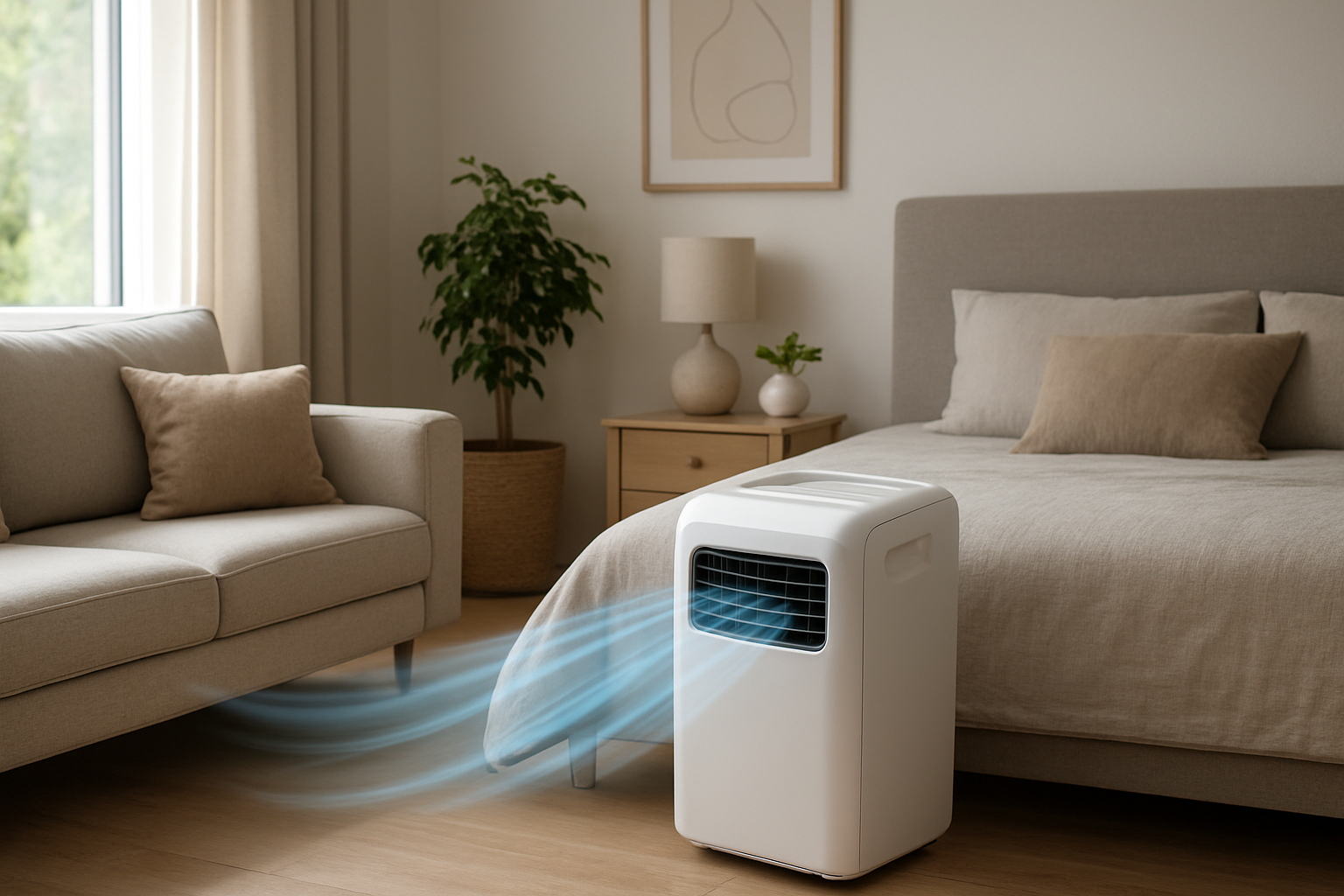
Airflow strength: Strong cold airflow from the discharge but weak room cooling supports capacity mismatch (good spot cooling, poor whole-room heat removal).
What This Usually Means Physically
A portable AC is a heat-moving machine with a fixed maximum rate of heat removal. The room has a heat load: heat entering through windows, walls, ceiling, and gaps; heat generated by people and electronics; and moisture load that must be condensed out to feel comfortable.
When heat load exceeds the AC’s capacity, the unit can still blow cold air and run continuously, but the average room temperature stabilizes at a higher value. You are not seeing a malfunction; you are seeing a balance point where heat coming in equals heat being removed.
Several real-home physics factors push the heat load up specifically for portable AC setups:
Solar gain: Sun on glass can add a large, fast heat input that overwhelms small ACs even in otherwise normal rooms.
Infiltration and negative pressure: Many portable units exhaust air out the window. That air must be replaced, often by hot outdoor air leaking in through cracks, under doors, or from adjacent hot spaces. This can effectively add load the AC must fight continuously.
Air stratification: Cool dense air settles. Without good mixing, you get a cool bubble near the unit and a warm upper layer; the thermostat may be sensing one area while you feel another.
Humidity load: If indoor air is humid, a portion of capacity is dedicated to condensing water. The room may feel slightly drier but temperature reduction is limited.
Most Probable Causes (Ranked)
Unit is undersized for the actual room heat load: Runs continuously, produces cold discharge air, but room temperature plateaus well above setpoint, especially on hot or sunny afternoons.
Room is effectively larger than you think due to open doors or open-plan layout: Cooling is noticeably better with doors closed; struggles when the room connects to hallways, kitchens, or stairs.
High solar gain from windows and glass doors: Temperature climbs during sun exposure; standing near the window feels radiantly warm even while AC blows cold.
Exhaust and make-up air penalty typical to portable ACs: Room feels like it is fighting outside air; you may notice warm air pulling in from other rooms or under exterior doors when the unit is running.
Humidity load consuming capacity: The unit fills its condensate system quickly or runs in very humid conditions; the room feels less clammy but not much cooler.
Air mixing/stratification limiting perceived cooling: Floor feels cool, upper room stays warm; comfort improves with a fan even without changing the AC settings.
How to Confirm the Cause Yourself
Use observation-based checks that indicate capacity limit rather than mechanical failure.
Cycle test: Set the thermostat to a realistic target and watch whether the unit ever cycles off after several hours. If it never cycles off during typical daytime conditions, capacity is likely insufficient for that load.
Door boundary test: Run the unit with the room closed off for 60–90 minutes, then repeat with doors open (same time of day). A big difference indicates the unit cannot handle the larger connected volume.
Time-of-day pattern check: Compare performance at 8–10 a.m. versus 3–6 p.m. If mornings cool acceptably and afternoons fail, peak load (solar plus outdoor temperature) is exceeding capacity.
Window and sun test: During sun exposure, close blinds/curtains and reduce direct sun on the glass, then observe the next hour of temperature trend. If the room stabilizes lower, solar gain was a major load component.
Stratification test: Note comfort at seated head height versus near the floor. If the floor zone is comfortable but the upper zone is warm, add a simple room fan to mix air and watch if comfort improves without any change in AC output.
Adjacent heat sources: Turn off heat-generating devices (gaming PC, TV, oven use in adjacent kitchen) for one hour and observe if temperature decline accelerates. A small portable unit is sensitive to internal gains.
Expectations check: If the outdoor temperature is extreme, confirm whether your target is realistic. A portable AC may reduce a hot room significantly but still not reach a low setpoint under peak load.
Normal Behavior vs Real Problem
Normal for an undersized portable AC: continuous operation during the hottest hours, gradual temperature change, and a stable room temperature that stays above setpoint but is still somewhat improved from no cooling. You may feel comfortable only in the direct airflow path.
More consistent with a real malfunction:
No meaningful cooling anywhere: discharge air does not feel distinctly cool relative to room air.
Performance suddenly worsened: it used to cool the same room and conditions, and now it cannot, with no changes to sun exposure, room use, or layout.
Short cycling: frequent on/off operation without cooling progress can indicate sensor placement issues or other faults, but it is not the typical undersized pattern.
Rapid condensate problems: repeated shutoffs due to a full tank may limit runtime and can mimic low capacity, but it is a separate constraint to address.
When Professional Service Is Needed
Capacity mismatch confirmed and comfort is unacceptable: you cannot maintain a tolerable temperature during normal summer conditions even with doors closed and solar reduced. A technician can help determine realistic sizing or alternative solutions.
Measurable performance decline compared to prior seasons: same room, same setup, worse results now. That pattern warrants inspection for airflow issues, sensor placement problems, or internal faults.
Persistent water management shutoffs: frequent stoppages due to condensate problems prevent adequate run time and should be corrected.
Electrical or safety indicators: unusual odors, repeated breaker trips, or abnormal noises require service/stop-use decisions based on safety, not comfort.
How to Prevent This in the Future
Control the load first: block direct sun on glass during peak hours, especially west-facing windows; reduce internal heat sources during the hottest part of the day.
Keep the conditioned zone small: close doors, use draft stoppers, and minimize air exchange with hot hallways or stairwells.
Improve mixing: use a fan to break up stratification so the unit’s cooling affects the whole occupied zone.
Match expectations to conditions: during peak heat and humidity, target comfort and stability rather than an aggressive setpoint that forces nonstop operation.
Reassess capacity for the real room: if you consistently need cooling during peak afternoon load, plan for a higher-capacity solution or a different equipment type that does not incur as much exhaust-driven make-up air penalty.
Related Home Comfort Symptoms
Portable AC blows cold air but room stays hot
Room cools at night but overheats in the afternoon
Upstairs room never gets comfortable in summer
AC reduces humidity but not temperature
Cool air at floor level, warm air near ceiling
Conclusion
A portable AC that runs continuously yet barely lowers room temperature is most commonly hitting a capacity limit: the room’s heat and humidity load plus portable-unit exhaust penalties exceed what the unit can remove. Confirm it by checking for nonstop runtime, strong sensitivity to doors open/closed, and a clear afternoon performance drop tied to sun and outdoor heat. If the pattern matches and basic load reductions do not restore control, the practical fix is increasing effective capacity or reducing the conditioned volume.
Frequently Asked Questions
Why does my portable AC blow cold air but the room temperature barely changes?
Cold discharge air only proves the refrigeration circuit is doing some cooling. If the room’s heat load (sun, outdoor heat leakage, people, electronics, humidity) is higher than the unit’s maximum heat removal rate, the room will stabilize at a warm temperature even while the unit runs nonstop.
Is it normal for a portable AC to run all day without shutting off?
During peak heat, continuous operation can be normal if the unit is undersized or the heat load is high. A properly matched setup should usually cycle off at least occasionally once the room approaches setpoint. Never cycling off under typical conditions is a strong sign of capacity mismatch.
Why does it cool better at night than in the afternoon?
Afternoon conditions combine higher outdoor temperature and higher solar gain through windows and the roof. That pushes heat load above the unit’s capacity. At night, solar gain disappears and outdoor temperature drops, so the same unit can finally catch up.
Why does closing the door make such a big difference?
Closing the door reduces the air volume and surface area being cooled and limits hot air exchange with adjacent spaces. If cooling improves quickly with the door closed, the portable AC is likely capable of conditioning a smaller zone but not the larger connected area.
How much temperature drop should I realistically expect?
In a favorable setup (smaller room, limited sun, doors closed), you should see steady progress toward setpoint rather than a quick stall. If you consistently only get a small drop and then it plateaus well above your target while the unit runs continuously, you are likely at the unit’s capacity limit for that room’s load.
Need a complete overview? Visit the full troubleshooting guide here: Read the full guide for more causes and fixes.
After a while, the pattern stops feeling mysterious. The unit hums along, yet the room holds steady—like it’s politely refusing to get more involved.
That mismatch is the whole story, and it’s oddly comforting in its own way. Nothing’s broken; it just can’t reach the heat it’s being asked to fight.