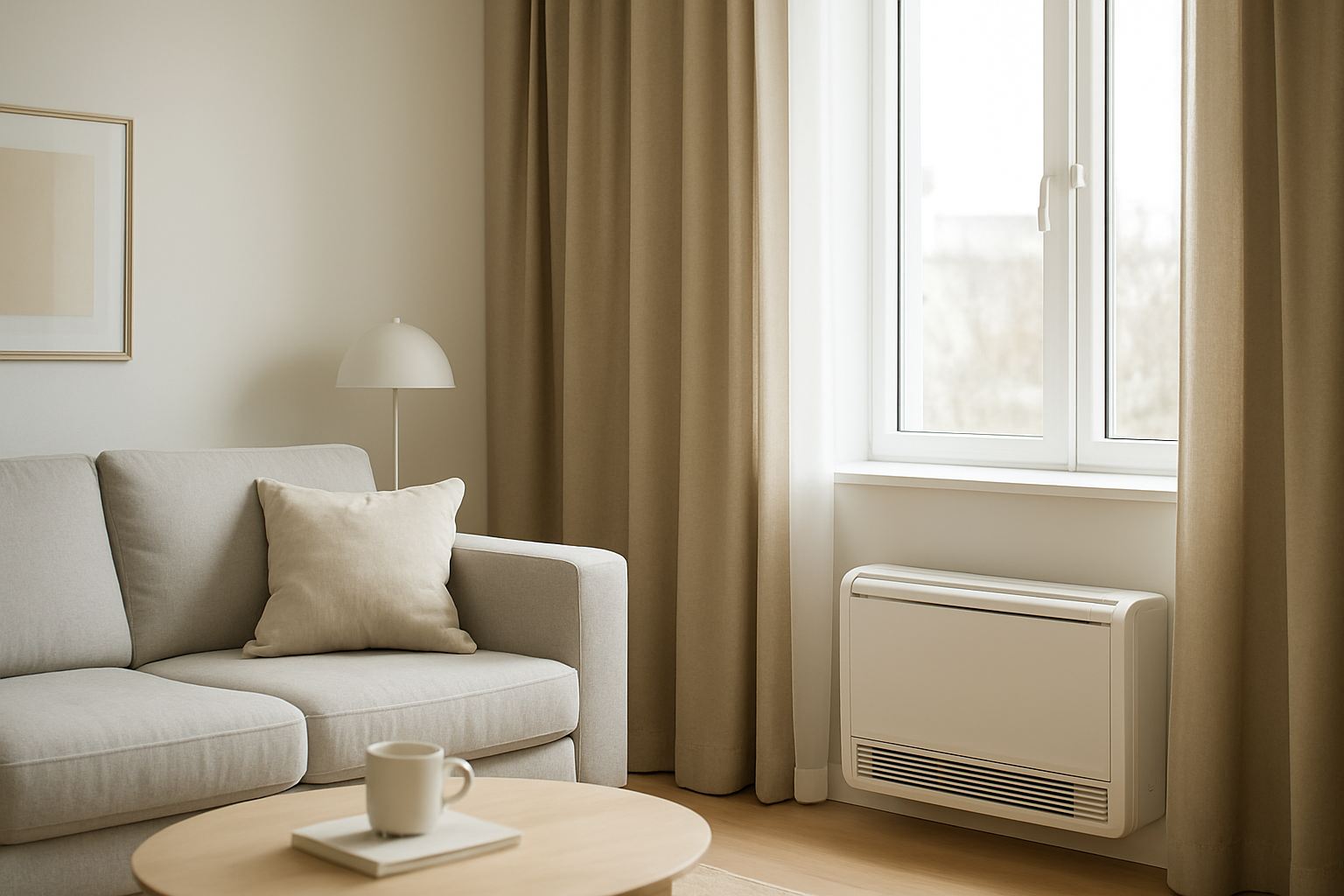
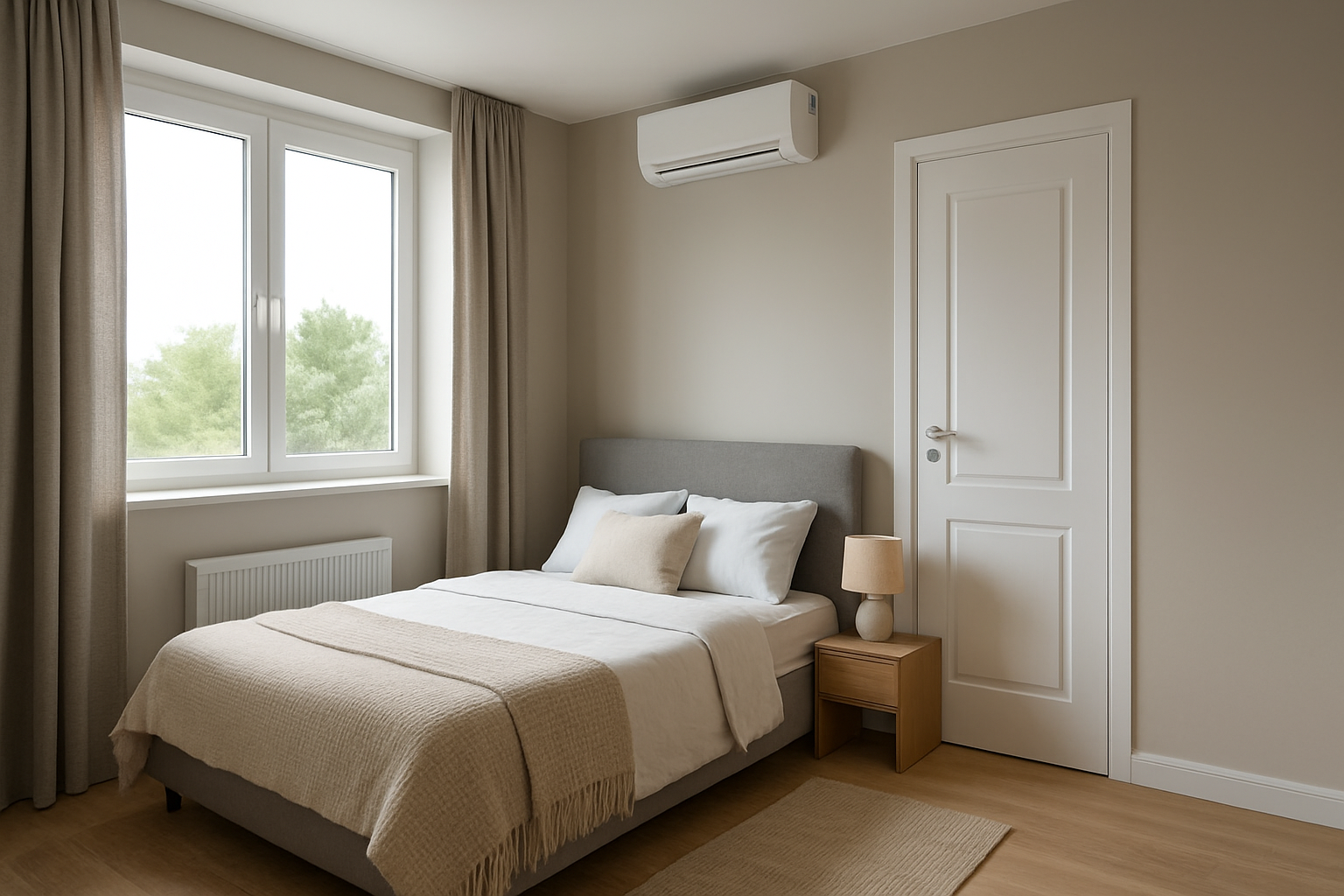
Diagnose uneven bedroom cooling by identifying window-related heat loss near curtains, which can affect cooler performance and room temperature compared to areas near the door.
Bedroom Cooler Near Curtains Than Door? Window Heat Loss
Quick Answer
If the bedroom feels noticeably cooler near the curtains than at the door, the most likely cause is heat loss at the window creating a cold downdraft and a small circulation loop along the glass. First check: on a cold day or night, stand 6–12 inches from the window and feel for a steady downward wash of cool air or a colder band along the floor directly under the window.
Identify the Comfort Pattern First
Use these observations to confirm this is a window-driven comfort problem and not a supply air or equipment issue.
When it happens: Most noticeable at night, early morning, and during windy or very cold weather. Often improves on sunny afternoons if the window gets sun.
Where it happens: Cooling is strongest within 1–4 feet of the window/curtains and along the floor under the window. The rest of the room may feel acceptable.
System running vs off: You can feel the cool zone even when the heat is running; it may feel worse right after the system cycles off.
Constant vs intermittent: Intermittent with wind gusts suggests air leakage. Consistent coolness suggests conductive heat loss through glass/frame.
Door open vs closed: With the door closed, the cold zone is more obvious because the room air mixes less. With the door open, warmer hall air may dilute the effect but the window area still feels cooler.
Vertical differences: Cooler at ankle height near the window, warmer at head height. This is a key signature of downdraft from cold glass.
Humidity perception: Air near the window can feel clammy even at normal humidity because cold surfaces lower local air temperature and raise local relative humidity.
Airflow strength: Supply airflow may be normal at the vent, but the window side still feels cold. If the vent is weak too, you may have a secondary airflow balancing issue.
What This Usually Means Physically
A window is typically the coldest surface in a bedroom during heating season. When the glass and frame are colder than the room air, two things happen.
Conductive heat loss: Heat moves from indoor air to the colder window surface and then to outdoors. The air next to the glass cools continuously.
Cold downdraft loop: The cooled air becomes denser and falls down the glass, spreading across the floor. Warmer room air moves in to replace it, feeding a small circulation loop. This creates a persistent cool zone near curtains even if the thermostat says the house is warm.
Curtains can amplify the sensation. If they hang tight to the wall or reach the floor, they can trap a cold pocket of air behind them and spill it into the room near the floor. If the window is leaky, wind-driven infiltration can add a sharper, drafty feel on top of the steady downdraft.
Most Probable Causes (Ranked)
High heat loss through glass (single-pane, older double-pane, or low-performance window): Coolness is steady, strongest at night, and you feel a cold surface when you place your hand near the glass.
Air leakage at the window (failed weatherstripping, poor sash seal, frame gaps): The coolness becomes noticeably worse during windy conditions; you may feel a directional draft rather than a gentle downward wash.
Cold pocket created by curtain layout: Floor-length or tight curtains create a colder band right along the curtain edge and at the floor; opening the curtains changes the room feel quickly even though outdoor conditions did not change.
Missing or weak insulation at the window header/sill or around the frame: Cold is concentrated at the corners, below the sill, or at the trim rather than evenly across the glass.
Supply register location and mixing problem (secondary issue): If the supply vent is far from the window or obstructed, the room may not wash warm air across the glass to offset downdraft; the window zone stays cold while the door side feels normal.
How to Confirm the Cause Yourself
These checks use observation and simple comparisons. Do them when the symptom is strongest (cold night, early morning, or windy weather).
Hand and body check for downdraft: Stand near the window. Move your hand from mid-glass height down to the sill. A typical window downdraft feels like a gentle, continuous cool flow sliding downward, not a single leak point.
Floorline check: Walk barefoot or in thin socks from the door side to the window side. If the floor feels colder only near the window, the downdraft is spreading along the floor.
Curtain position test: For 15–30 minutes, fully open the curtains so they are not covering or sealing off the window. If the cold zone weakens and the room feels more uniform, the curtain is trapping and dumping cold air. If it stays the same, the window itself is the driver.
Wind sensitivity test: On a calm evening and then on a windy evening, compare how drafty it feels at the same spot. Big change with wind points to air leakage at the sash/frame.
Room mixing test with door position: Close the bedroom door for 30–60 minutes during heating operation, then open it. If opening the door quickly reduces the temperature difference between the curtain side and door side, the room is under-mixing and the window-driven cold pocket is dominating the occupied zone near the bed.
Surface feel check at trim and corners: Touch the interior trim near the bottom corners and sill area. If corners/trim are much colder than the glass area, suspect leakage or missing insulation around the frame in addition to normal glass loss.
Normal Behavior vs Real Problem
Normal behavior: It is normal for the area within a couple feet of a window to feel cooler in winter, especially with older windows. A mild ankle-level coolness near the window at night is expected even when the room temperature is stable.
Real problem indicators: The cool zone expands several feet into the room, the bed area feels cold even with adequate heating, you feel a clear directional draft, curtains move slightly from air movement, or you notice condensation/frost on the glass or dampness at the sill. These point to excessive heat loss or air leakage beyond typical comfort tolerance.
When Professional Service Is Needed
Persistent comfort impact: The bedroom is routinely uncomfortable or sleep is affected despite normal thermostat settings and normal heat run cycles.
Strong infiltration signs: Drafts are obvious, worse with wind, or concentrated at trim corners and sash edges, suggesting sealing or installation issues.
Moisture symptoms: Frequent condensation, wet sills, peeling paint, or musty odor near the window. This can indicate cold surfaces plus humidity accumulation and may lead to material damage.
System performance decline: The HVAC runs long cycles yet the window-side zone stays cold, suggesting the heat loss exceeds mixing and delivery capability in that room.
Safety or envelope concerns: Evidence of water intrusion around the window assembly or significant air pathways that could affect overall building pressure balance.
How to Prevent This in the Future
Reduce the window’s effective heat loss: Use properly fitted cellular shades or insulated curtains that seal at the sides and do not funnel cold air into the room.
Control the curtain-induced cold dump: If using floor-length curtains, keep a small gap at the bottom or avoid sealing the curtain tightly against the wall so the cold pocket does not spill across the floor.
Maintain window air seals: Keep weatherstripping intact and ensure the sash locks pull the window tight against the seals.
Improve local mixing: Keep supply registers unobstructed and avoid furniture blocking airflow that would normally temper the window zone.
Address chronic condensation: Manage indoor humidity during cold weather and verify bath/kitchen exhaust use so window surfaces are less likely to reach dew point.
Related Home Comfort Symptoms
Cold air pooling on the bedroom floor at night
Draft felt only when wind blows, especially near window trim
Condensation or frost on bedroom windows in winter
One side of the room feels colder even though the vent is warm
Bedroom feels fine with door open but cold with door closed
Conclusion
A bedroom that is cooler near the curtains than the door most commonly points to window-driven heat loss creating a cold downdraft and a floor-level cold band. Confirm it by checking for a steady downward cool wash at the glass and a colder floor zone under the window, then compare calm vs windy conditions to separate normal conductive loss from air leakage. If drafts are strong or moisture is present, move from observation to professional envelope and airflow diagnostics.
Frequently Asked Questions
Why does it feel colder near the window even when the thermostat says 70?
The thermostat measures air temperature at its location, not the radiant and airflow conditions near the window. Cold glass cools nearby air and pulls heat from your body by radiation, so you feel colder near the curtains even if the average room air temperature is on target.
Is the cold spot caused by the HVAC vent being too weak?
Usually the window is the primary driver. Weak supply airflow can make it worse by not mixing enough warm air into the window zone, but a distinct cold band at the window and along the floor is more consistent with window heat loss and downdraft than with a pure vent problem.
Why is it worse at night and early morning?
Outdoor temperatures are typically lower, and there is no solar warming of the window. The glass and frame get colder, increasing conductive loss and strengthening the downdraft cycle along the window and across the floor.
How can I tell the difference between a downdraft and an air leak?
A downdraft feels like a broad, gentle downward flow along the whole window area and is present even on calm nights. An air leak feels more like a directional stream from a specific edge, corner, or meeting rail and usually gets noticeably worse with wind.
Do curtains help or hurt this problem?
They can do either. Well-fitted insulating shades can reduce heat loss and improve comfort. Loose or floor-length curtains that trap a cold pocket and spill it into the room can make the area near the curtains feel colder even if they reduce overall heat loss.
Need a complete overview? Visit the full troubleshooting guide here: Read the full guide for more causes and fixes.