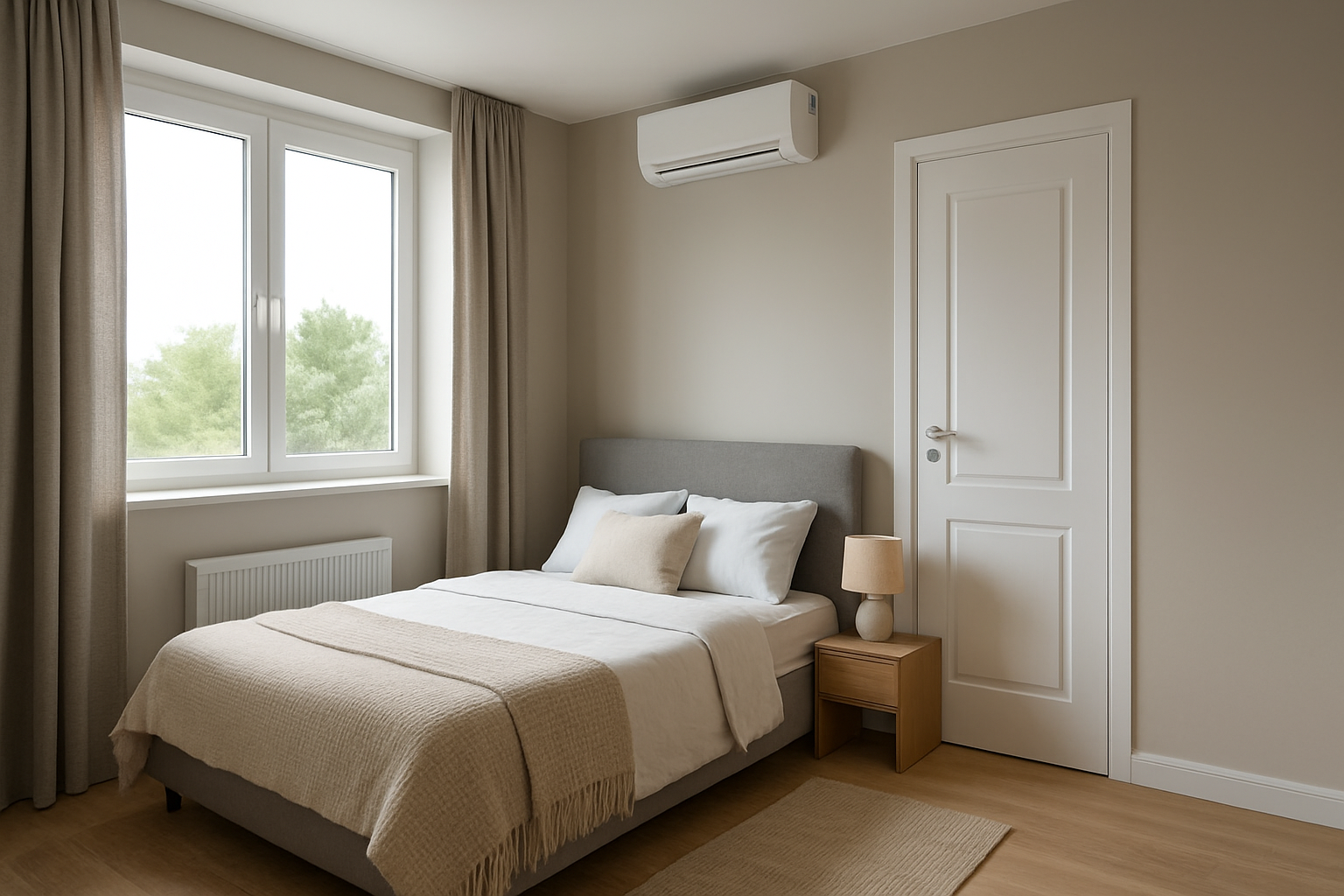
Diagnose why bedrooms are warmer near the door than the window by understanding uneven heat loss patterns and identifying ways to improve room temperature balance.
Bedroom Warmer Near The Door Than The Window? Heat Loss Pattern
Quick Answer
Most often this pattern means the window-side of the bedroom is losing heat faster than the door-side, creating a cooler zone near the exterior wall and a warmer zone near the hall. First check: on a cold or windy day, compare the temperature at the window wall vs the door wall at the same height (about 3–4 feet) with the bedroom door closed for 20 minutes.
Identify the Comfort Pattern First
Before assuming a vent or equipment problem, sort the pattern. This symptom is usually driven by where heat is leaving the room, not where heat is produced.
When it happens: Worse at night, early morning, during wind, and during colder outdoor temps points to exterior-wall heat loss. Worse on sunny afternoons points to solar gain differences rather than heat loss.
Where it happens: If the warm-to-cool gradient runs from the door (interior wall) toward the window (exterior wall), suspect exterior conduction and air leakage. If only one corner is cold, suspect a localized leak or missing insulation bay.
System running vs off: If the window area cools rapidly when the system cycles off, heat loss is dominating. If the issue appears mainly while the system runs, airflow delivery or supply register placement may be part of the problem.
Constant vs intermittent: Intermittent cold near the window during gusty conditions suggests air leakage. A steady difference every day suggests insulation/U-factor and surface temperature effects.
Door open vs closed: If opening the door makes the room more even, the room is being tempered by warmer hall air, masking the window-side loss. If closing the door makes the window side noticeably colder, the bedroom is operating as a separate zone with a stronger exterior loss signature.
Vertical differences (floor vs ceiling): If the floor near the window is much colder than head height, you may have perimeter infiltration and downdraft along the glass. If the ceiling is much warmer than the floor everywhere, stratification from supply placement and low mixing may be amplifying the window-side chill.
Humidity perception: If the window area feels clammy or you see condensation, the glass surface is colder than the room air, confirming a strong heat loss/surface temperature issue.
Airflow strength: Weak or no airflow at the bedroom supply register can worsen the gradient, but a strong gradient can still occur with normal airflow if the window-side loss is high.
What This Usually Means Physically
Heat leaves a bedroom primarily through the exterior envelope: glass, window frames, exterior wall cavities, and any air leaks around trim, outlets, or the sill. When the window-wall side loses heat faster than the interior-wall side, the room develops a temperature gradient across the floor plan.
Three mechanisms typically stack together:
Cold surface effect: Even if the thermostat reads normal, cold glass and framing pull heat from the nearby air and your body. This creates a cold zone near the window without needing a “broken” HVAC system.
Downdraft and mixing: Air cooled by the window surface becomes denser and falls, flowing across the floor away from the window. Warmer air remains nearer the ceiling, so you can feel colder near the window especially at bed height or floor level.
Infiltration amplification: Small gaps around the window, sill plate, or wall penetrations can bring in cold outside air. Wind and stack effect increase that flow, making the window-side temperature drop faster, particularly when the system cycles off.
The warm area near the door is typically warmer because it borders interior conditioned space (hallway) with less heat loss and often receives more mixed air from the rest of the house when the door is open or leaky at the undercut.
Most Probable Causes (Ranked)
1) Window-side envelope heat loss (glass/frame U-factor, poor air sealing): Clue: strongest temperature drop within 2–4 feet of the window, worse on windy nights, and you may feel a slight draft near trim.
2) Missing or compressed insulation in the exterior wall cavity near the window: Clue: a cold vertical band on the wall or one section of wall that feels notably cooler than the rest, not just the glass area.
3) Perimeter air leakage at baseboard, sill plate, or outlet penetrations on the exterior wall: Clue: floor-level cold near the exterior wall, especially at corners; changes quickly with wind.
4) Supply register placement and poor wash across the window wall: Clue: supply air does not reach the window side; the warmest area is near the register and the coldest area is the exterior wall even during long run times.
5) Return-air pathway/door undercut effect changing room pressure: Clue: with the door closed, the room feels stuffy and temperature becomes more uneven; opening the door quickly improves comfort uniformity.
6) Duct delivery deficit specific to that room (balance, restriction, leakage): Clue: the bedroom supply airflow is weaker than similar rooms, and the entire room struggles, not just the window side.
How to Confirm the Cause Yourself
Measure the gradient correctly: Use a basic thermometer and take two readings at the same height (3–4 feet): one 1–2 feet from the window wall, one 1–2 feet from the door wall. With the door closed, check after 20 minutes of stable operation (system running or steady off period). A consistent difference of 3°F or more across the room supports a true heat-loss gradient.
Check wind sensitivity: Repeat the same comparison on a calm day and a windy day. If the window-side drop increases noticeably with wind, infiltration around the window or sill is likely.
Door position test: Close the bedroom door for 30 minutes, then open it for 10 minutes without changing thermostat settings. If the room becomes more even quickly when opened, the door/hall air is buffering a window-side loss problem rather than the bedroom being uniformly underheated.
Cycle-off cool-down test: When the system stops, note how fast the window-side temperature falls compared to the door-side over 15–30 minutes. Faster window-side decline indicates envelope loss. If both sides drop evenly, look more toward overall room capacity/airflow.
Floor vs head-height check: Compare temperature near the floor (6 inches) and at head height (4–5 feet) near the window. A big difference (5°F or more) indicates downdraft/stratification driven by cold surfaces and poor mixing.
Condensation and surface clues: Morning condensation on the window, cold-to-the-touch trim, or a noticeable chill within arm’s length of the glass confirms a surface temperature problem even if airflow seems normal.
Airflow comparison (relative, not absolute): With the system running, compare airflow at the bedroom supply register to another similar-size bedroom. If yours is clearly weaker, duct delivery may be contributing alongside heat loss.
Normal Behavior vs Real Problem
Normal behavior: In cold weather, it is normal for the area near an exterior window to feel cooler than the interior side of the room, especially at night. A small gradient (1–2°F) and a mild cool-to-warm transition across the room is typical in many homes.
Real problem indicators:
Temperature difference across the room consistently 3–5°F or more under similar conditions.
Cold drafts or noticeable floor-level cold air movement near the window or baseboard.
Condensation or frost on the window during normal indoor humidity levels.
The HVAC system runs long cycles but the window-side never catches up while the rest of the room is comfortable.
The discomfort is localized: the bed or desk near the window is unusable due to chill even though the thermostat setting is unchanged.
When Professional Service Is Needed
Persistent gradient: If you can repeat a 4°F or greater window-to-door difference on multiple days after basic verification (door position and measurement at equal height).
Significant comfort impact: If the room is only usable when the door is open or when the thermostat is raised enough to overheat the rest of the home.
Signs of building envelope failure: Visible gaps, recurring condensation, or suspected missing insulation areas in the exterior wall.
System performance decline: If multiple rooms show weak heat delivery, short cycling, or unusually long runtimes compared to prior seasons.
Safety indicators: Any fuel-burning odor, soot, or frequent headaches require immediate HVAC evaluation; do not treat this as a simple comfort imbalance.
How to Prevent This in the Future
Prioritize air sealing at the exterior window wall: The fastest comfort improvement usually comes from reducing infiltration at window trim, sill area, and exterior-wall penetrations.
Improve the window-side surface temperature: Effective options include tight-fitting window coverings at night and addressing window performance if the glass is consistently very cold.
Keep supply air reaching the cold side: Avoid blocking the bedroom supply register with furniture, and ensure the supply jet is not aimed away from the exterior wall if adjustable.
Maintain return-air pathways: Ensure the bedroom can return air properly when the door is closed (adequate undercut or transfer path), so delivered air can circulate instead of stagnating.
Seasonal verification: On the first cold week of the season, re-check the window-to-door gradient and address small drafts early before they become a nightly comfort complaint.
Related Home Comfort Symptoms
Cold draft only near one window or corner of the bedroom
Bedroom comfortable with door open but cold with door closed
Cold floors near exterior walls in winter
Window condensation despite normal thermostat settings
One room feels colder than the rest of the house at night
Conclusion
If your bedroom is warmer near the door than the window, the most likely explanation is an uneven heat loss pattern: the exterior window wall is shedding heat faster, creating a cool zone and downdraft near the glass. Confirm it by measuring window-side vs door-side temperatures at the same height with the door closed and noting wind sensitivity. If the gradient is repeatable and exceeds about 4°F, move from observation to targeted envelope and airflow diagnostics.
Frequently Asked Questions
Why does it feel cold near the window even when the thermostat says the temperature is fine?
The thermostat reports average air temperature where it sits, not the window surface temperature. Cold glass and framing cool the nearby air and can make you feel chilled through radiant heat loss and downdraft, even when the room average looks normal.
Is this more likely an insulation problem or an HVAC problem?
When the room is specifically colder near the window and warmer near the door, insulation/air leakage at the exterior wall and window is usually the primary driver. HVAC delivery problems become more likely if the entire bedroom is underheated and the supply airflow is weak compared to other rooms.
How much temperature difference across the room is too much?
About 1–2°F from door-side to window-side is common in cold weather. A repeatable difference of 3°F suggests a meaningful heat loss pattern. A consistent 5°F or more usually indicates a correctable leakage/insulation deficiency, poor air distribution to the exterior wall, or both.
Why is it worse at night or early morning?
Outdoor temperatures are lower, solar warming is absent, and wind/stack effect often increases infiltration. The window surface temperature drops, increasing downdraft and making the window-side zone feel colder even if the heating system is working normally.
Will closing the bedroom door make it worse?
Often yes. With the door closed, the room is less influenced by warmer hall air and any return-air restriction can reduce circulation. The window-side heat loss becomes more apparent, so the door-side stays relatively warmer while the window-side cools faster.
Need a complete overview? Visit the full troubleshooting guide here: Read the full guide for more causes and fixes.
For once, the room stops playing tricks. The warmth isn’t random—it just shows up where the “usual” habits of a space have decided to let it. You walk in expecting a familiar cold spot and instead get that door-side glow that feels almost smug.
It’s one of those petty little mysteries that make the whole house feel a bit louder than it needs to. After seeing the pattern, the temperature map makes sense in a way that’s oddly satisfying. Not perfect, not dramatic—just finally, properly predictable.