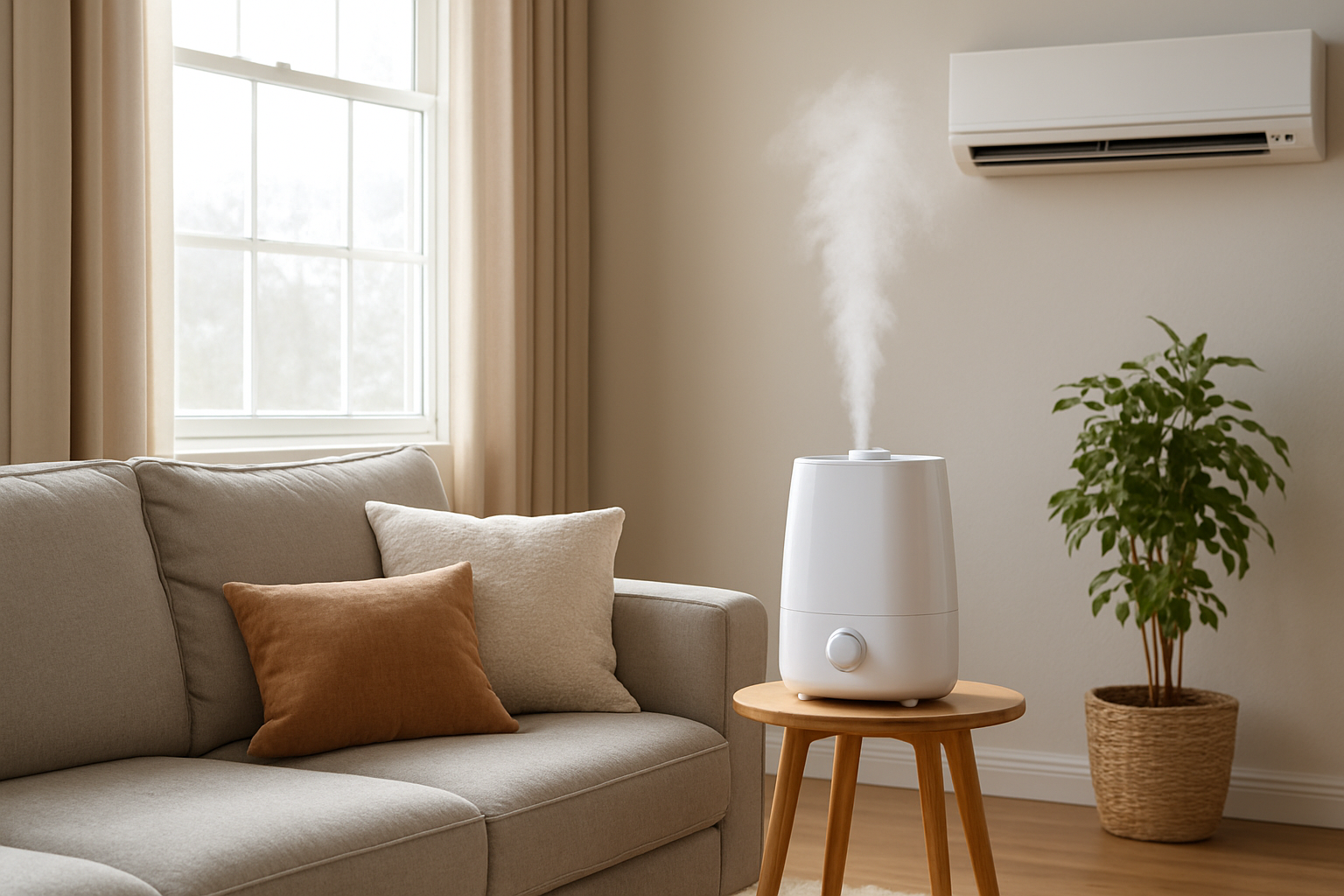
Learn how to identify and fix low indoor humidity caused by winter heating, including solutions for dry air, discomfort, and potential damage to your home and health.
Dry Indoor Air In Winter Making You Miserable? Fix The Cause
Quick Answer
In most homes, miserable dry air in winter is caused by indoor air loss: warm, moisture-carrying air leaks out and cold, very dry outdoor air leaks in, then gets heated and its relative humidity crashes. First check: measure indoor RH with a basic hygrometer and compare it on a windy day versus a calm day. A wind-driven RH drop points to air leakage, not the furnace.
Identify the Comfort Pattern First
Dry air complaints get solved faster when you pin down the pattern. Use these observations to sort what you are dealing with.
Outdoor temperature and wind: If dryness gets noticeably worse during colder weather and gets worse again during windy conditions, that strongly indicates air exchange through leaks. Dryness that is the same regardless of wind is less likely to be leakage-driven.
System running vs off: If you feel drier during long heating runs and it improves when the system is off, that usually means the house is drying out as outdoor air replaces indoor air during operation and pressure changes. If dryness feels identical whether the system runs or not, the building shell is likely the primary driver.
Time of day: Many homes feel driest overnight and early morning. That points to lower indoor moisture generation and extended heating runtime. If it improves mid-day with sun and activity, you are seeing normal moisture load changes, amplified by air loss.
Whole house vs certain rooms: Whole-house dryness suggests general air exchange. If one floor or a few rooms are far worse, suspect localized leakage (attic bypasses, rim joists, bonus rooms, over-garage rooms) or strong exhaust/return imbalances in that area.
Doors open vs closed: If bedrooms feel much drier with doors closed and improve when doors are open, you may have a return-air path issue causing pressure differences that pull in outdoor air from leaks.
Vertical differences: If upper floors feel drier and you also notice more drafts upstairs, that matches stack effect: warm air escapes high, pulling in dry air low.
Humidity perception clues: Dry throat, static shocks, cracking knuckles, and itchy skin that ramp up after a few cold days typically tracks cumulative moisture loss, not a sudden equipment failure.
Airflow strength at vents: Strong airflow does not cause dryness by itself. But if airflow seems stronger at some registers and weak at others and dryness is worse in the high-flow areas, you may have duct leakage or pressure imbalances contributing to air exchange.
What This Usually Means Physically
The primary mechanism is simple: winter outdoor air contains very little water vapor. When that air leaks into your home and is heated, its relative humidity drops sharply because warmer air can hold more moisture. The house then feels dry even if the absolute moisture content has not changed much indoor-to-indoor; it is being lowered continuously because moisture is leaving with escaping indoor air and being replaced by dry outside air.
In heating season, three forces drive this air loss cycle:
Stack effect: Warm indoor air rises and leaks out through upper-level penetrations (attic hatches, recessed lights, plumbing chases). That escaping air must be replaced, so cold dry air is pulled in low (rim joists, sill plates, basement leaks).
Wind pressure: Wind pushes air into the house on the windward side and pulls it out on the leeward side and at the roofline, increasing air changes and drying the home faster.
Mechanical depressurization: Bath fans, range hoods, dryers, and some combustion appliances exhaust indoor air. If makeup air is not provided, the house pulls in outside air through the easiest leaks.
Heating equipment is rarely the root cause. A furnace or boiler does not remove moisture like an air conditioner. What it does do is raise air temperature, which lowers relative humidity, exposing the underlying problem: too much winter ventilation and infiltration compared to the moisture being generated inside the home.
Most Probable Causes (Ranked)
1) Building air leakage amplified by stack effect: Dryness is worst upstairs and on colder nights; you may feel drafts near baseboards downstairs and around attic access points upstairs.
2) Wind-driven infiltration: Humidity and comfort swing with windy weather; one side of the home feels draftier; indoor RH drops quickly when wind picks up.
3) Exhaust appliances pulling the house negative: Dryness spikes during or after long bath fan use, cooking with a strong hood, or running the dryer; doors may feel harder to close or you notice more drafts when exhaust runs.
4) Duct leakage or return-air path issues: Certain rooms get noticeably drier and draftier when the heat runs; closing doors changes comfort; some rooms feel pressurized (air pushing out) while others feel like they are pulling air in.
5) Humidity reading error or misinterpretation: A cheap sensor placed near a register, window, or exterior wall reads artificially low; perceived dryness does not match measured RH in the center of the home.
6) Unusually low indoor moisture generation: Large home with few occupants, minimal cooking, no showers during the day, or frequent travel; dryness is consistent but not associated with drafts or wind changes.
How to Confirm the Cause Yourself
These checks rely on observation and simple comparisons. No tools are required except a basic hygrometer, which improves accuracy of the diagnosis.
Measure indoor RH in the right place: Put a hygrometer in a central area, away from registers, windows, exterior walls, and kitchens/baths. If RH is consistently below 25–30% during cold weather, the house is losing moisture faster than it can be replaced.
Wind vs calm comparison: Note indoor RH and how your skin/throat feel on a calm day, then again during a windy day with similar outdoor temperature. A noticeable RH drop and increased drafty dryness during wind points to leakage-driven air exchange.
Upstairs vs downstairs check: Compare how dry it feels and what the RH reads on the top floor versus the lowest level. If upper levels are drier and draftier, stack effect leakage high is likely. If the basement feels much drier with cold drafts, intake leaks low are likely.
Closed-door bedroom test: Sleep with the bedroom door closed one night, then open the next night. If dryness and static are clearly worse with the door closed, suspect return-air restriction and pressure imbalance pulling exterior air through leaks.
Exhaust fan correlation: Run the range hood or bath fan for 20–30 minutes during cold weather and note whether drafts increase around exterior doors or windows and whether the home feels drier afterward. A consistent pattern suggests depressurization and makeup air coming through leaks.
“Rapid drop” test after moisture events: After a shower or cooking event, the home should feel temporarily less dry. If that relief disappears quickly (within 30–60 minutes) while heat is running, the house is shedding that moisture through high air change, not just warming the air.
Normal Behavior vs Real Problem
Normal: Indoor RH drops in winter compared to summer. Many homes settle around 30–40% RH during mild winter weather and 25–35% during colder stretches, depending on construction, ventilation, and occupant moisture.
Likely a real problem:
Consistently below 25–30% RH in occupied areas even with normal daily cooking and showering.
Fast swings with wind or noticeable drafts that correlate with dryness.
Upper floors much drier than lower floors, suggesting strong stack effect leakage.
Dryness plus comfort instability such as rooms that feel cold and drafty at the same thermostat setting.
Important threshold: Trying to push indoor humidity high in very cold weather can create window condensation and moisture damage. The goal is comfort without condensation. If you see persistent window sweating, the issue is not just dryness; it is also surface temperature and air leakage patterns.
When Professional Service Is Needed
Indoor RH stays under 25% for more than a week during typical winter operation and you have persistent symptoms (nosebleeds, sleep disruption, severe static) even after basic confirmation checks.
Dryness is paired with strong drafts or uneven heating that indicates significant air leakage or duct pressure problems that require diagnostic testing.
You have combustion appliances and notice backdraft indicators such as persistent odors, soot, or a vent that seems to spill air into the room when exhaust fans run. This requires professional evaluation immediately.
Humidifier is present but RH does not change after several days of operation, suggesting installation, control, water supply, or airflow issues.
How to Prevent This in the Future
Reduce air loss at the top first: Air sealing attic bypasses, recessed light penetrations, attic hatches, and chaseways reduces stack effect and slows whole-house drying.
Control depressurization: Use bath fans as needed, not as continuous ventilation unless designed that way. Verify the range hood is not oversized for the house without makeup air.
Restore return-air paths: If closing doors changes comfort, add proper return pathways (transfer grilles, jump ducts, undercut verification) so rooms do not go negative and pull outdoor air through leaks.
Address duct leakage: Leaky return ducts in attics, crawlspaces, or garages can pull in very dry air and distribute it. Sealing ducts reduces unwanted air exchange.
Manage humidity intentionally: If the shell is reasonably tight, a correctly sized and controlled whole-home humidifier can maintain stable RH. Set targets based on outdoor temperature to avoid condensation on windows.
Track RH correctly: Keep a hygrometer in a central location and use it as your baseline. This prevents chasing a problem that is really a sensor placement issue.
Related Home Comfort Symptoms
Static shocks and crackling blankets during cold snaps
Scratchy throat at night that improves when away from home
Drafty rooms and cold floors that worsen with wind
Upstairs too hot or too dry while downstairs feels drafty
Window condensation at higher humidity settings despite the home still feeling dry
Conclusion
When winter air feels uncomfortably dry, the most common root cause is not the heater. It is heating-season air loss: indoor air leaks out, outdoor air leaks in, and once that outdoor air is warmed its relative humidity becomes extremely low. Confirm it by measuring RH and watching how it changes with wind, exhaust fan use, and closed-door room conditions. Then prioritize air sealing and pressure balance before adding humidity.
Frequently Asked Questions
What indoor humidity should I target in winter?
In most occupied homes, 30–40% RH is comfortable in mild winter weather. During very cold weather, the practical target often drops to 25–35% to avoid window condensation. If you see persistent moisture on windows, your safe target is lower unless window performance and air leakage are improved.
Does running the furnace make the air dry?
The furnace does not remove moisture the way air conditioning does. Heating raises air temperature, which lowers relative humidity and makes existing dryness obvious. The typical root cause is too much exchange with dry outdoor air through leaks or exhaust-driven depressurization.
Why is my upstairs always drier than downstairs?
That pattern matches stack effect. Warm moist air escapes through leaks near the ceiling and attic, and the house pulls in cold dry air lower down to replace it. The upper level ends up with lower RH and often more draft sensitivity.
My humidifier runs but humidity barely rises. What does that indicate?
Most often it indicates the home is losing air (and moisture) too quickly for the humidifier to keep up, or the humidifier is not actually delivering moisture into the airflow due to control, water, or airflow setup issues. If RH does not move after 48–72 hours of steady operation, leakage and installation checks should be prioritized.
How can I tell if exhaust fans are drying out the house?
Watch for a repeatable pattern: RH drops faster and drafts increase during long bath fan use, heavy range hood use, or dryer operation. If comfort improves when those fans are minimized and worsens when they run, depressurization and makeup air through leaks is a strong contributor.
Need a complete overview? Visit the full troubleshooting guide here: Read the full guide for more causes and fixes.
Fixing what’s making the air feel like sandpaper can feel almost instantly unfair—in the best way. The rooms just seem to breathe better, and your body stops complaining at every cough of winter warmth.
It’s one of those small shifts that changes the whole mood of a day. Not dramatic, not complicated—just a noticeable return to comfort, where your home finally feels like it’s on your side.