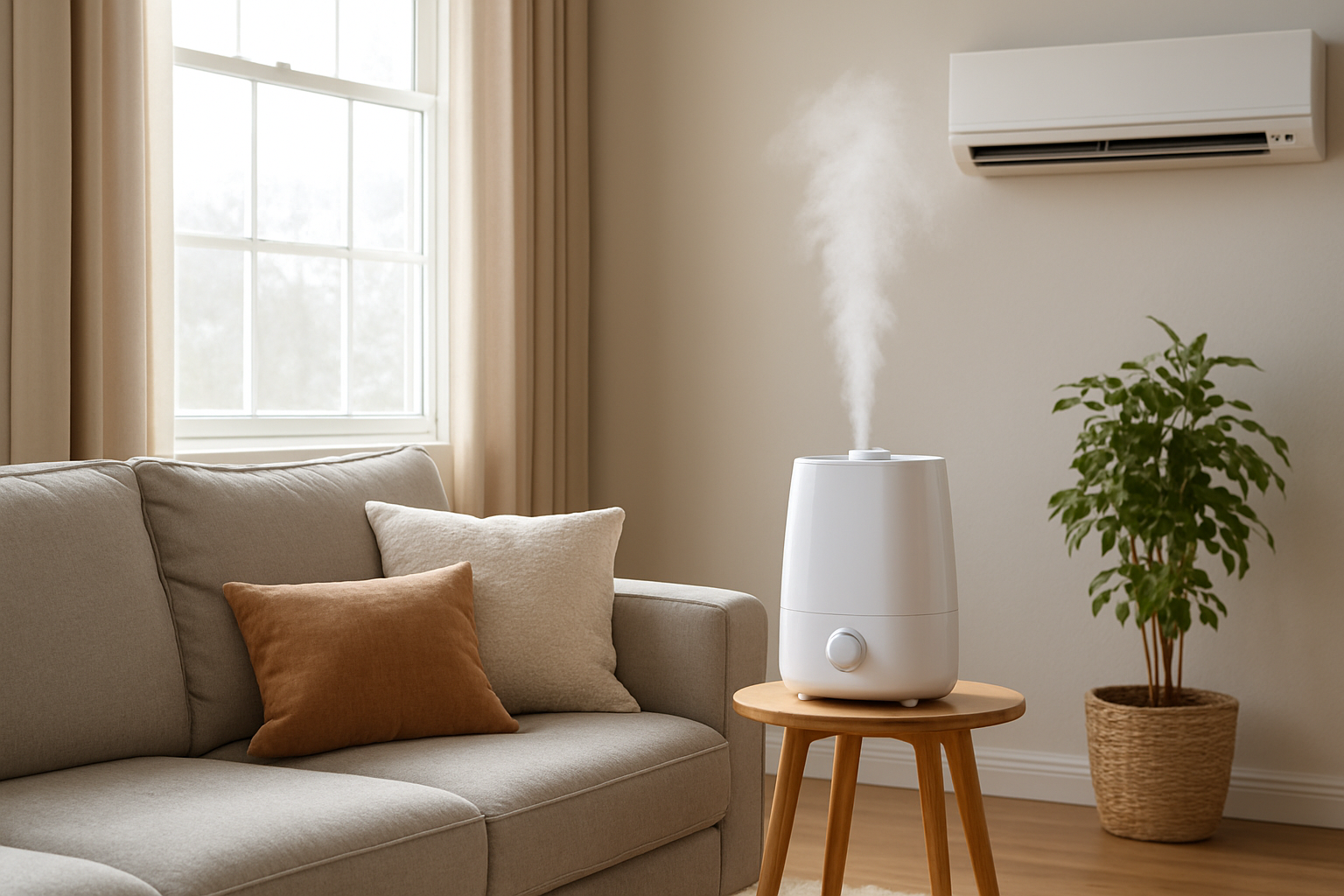
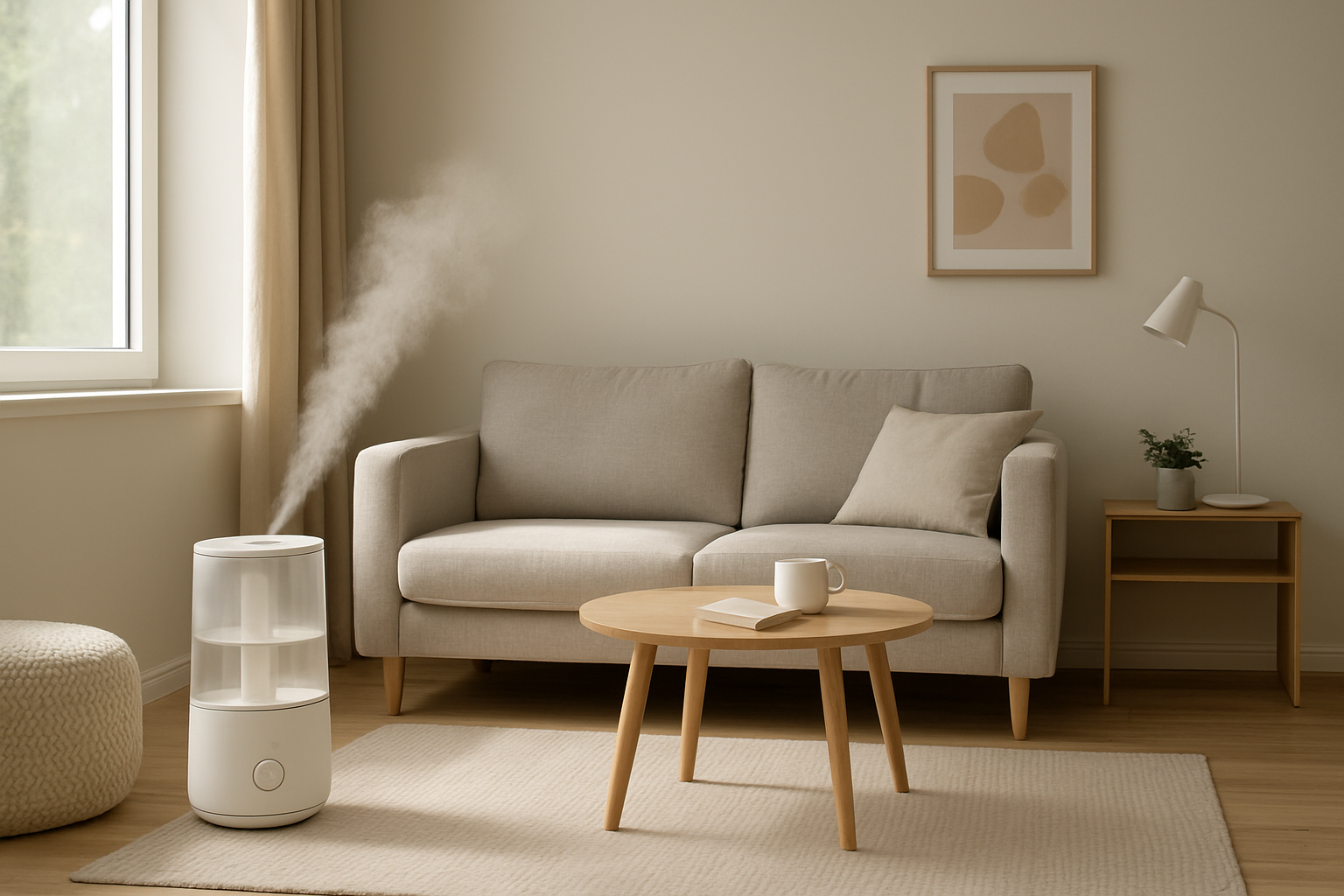
Diagnose why your home's air stays dry even with a running humidifier, including common causes like leaks, improper settings, and ways to improve indoor humidity retention.
House Air Too Dry Even With Humidifier? Moisture Escaping
Quick Answer
If your humidifier runs but indoor humidity stays low, the most likely issue is moisture loss from excessive air exchange: outside air leaking in and humidified air leaking out. First check: compare humidity on a calm day versus a windy day, and note whether the house feels draftier when the humidifier is running. Wind-driven leakage usually shows up immediately.
Identify the Comfort Pattern First
Low humidity despite humidifier operation is not one problem; it is a pattern. Use these observations to sort what is really happening in your house.
Weather dependence: Much drier on windy days or when temperatures are very low usually points to air leakage and pressure-driven exchange, not a bad humidifier.
Time-of-day pattern: Worst overnight often lines up with longer heating runtimes and stack effect pulling dry air in low and exhausting humid air out high.
Where you feel it: Dry nose and static everywhere equally suggests whole-house air exchange; one area being much drier suggests a zonal airflow/return issue.
System running vs off: If humidity drops fastest during furnace operation, suspect a powered exhaust/return leak/pressure imbalance that is increasing air changes while the blower runs.
Constant vs intermittent: Steady low readings for days usually means the home cannot retain moisture; bouncing readings can indicate control/sensor placement issues or humidifier cycling incorrectly.
Doors open vs closed: If humidity is noticeably higher with interior doors open, your return air path is restricted when doors are shut, increasing pressure imbalances and infiltration in certain rooms.
Vertical difference: Very dry upstairs with slightly better humidity downstairs often indicates stack effect leakage at attic/upper penetrations exhausting humid air.
Humidity perception vs measurement: If the house feels dry but a meter shows acceptable humidity, look for localized airflow on skin (drafts) rather than true low RH.
Airflow strength changes: Stronger supply airflow or whistling at doors can signal pressure issues that accelerate infiltration and push humidified air out through leaks.
What This Usually Means Physically
In winter, indoor humidity is mainly a balance between moisture added and moisture removed. A humidifier adds water vapor, but air exchange removes it continuously. Every time indoor air is replaced with outdoor air, the incoming air must be heated. When cold outdoor air is heated to room temperature, its relative humidity becomes very low, so it behaves like a sponge for moisture. That sponge effect is what dries out the home.
When a house is leaky or pressure-imbalanced, the humidifier may be working correctly yet never catches up because the moisture is literally leaving the building. Two building-physics drivers dominate:
Stack effect: Warm air rises and escapes through upper leaks (attic hatches, recessed lights, plumbing chases). That exhaust pulls dry outdoor air in through lower leaks (rim joists, basement doors), lowering indoor humidity even if the humidifier is adding moisture.
Wind and mechanical pressures: Wind can push and pull air through leaks. Bath fans, range hoods, dryers, and imbalanced ductwork can depressurize the house, increasing infiltration. Depressurization especially defeats a humidifier because the moist air you paid to add becomes the air you’re exhausting.
In short: the humidifier is a faucet, but infiltration is an open drain. If the drain is big enough, the indoor humidity will stay low.
Most Probable Causes (Ranked)
High infiltration from building leakage (stack effect and wind): Humidity is lowest on windy days, upstairs is driest, and you notice drafts near baseboards, rim joists, attic access, or recessed lights.
House depressurization from exhaust appliances: Humidity drops during or shortly after using the dryer, range hood, or bath fans; doors feel harder to close; cold air is drawn in around exterior doors.
Duct leakage or return-side leaks pulling in dry air: Humidity falls more when the blower runs; some rooms feel drafty even with windows closed; basement or attic smells appear when the system runs.
Humidifier operating but not delivering moisture into the airstream effectively: You hear it running but see no steady water use; supply air does not feel slightly warmer/more tempered near the humidifier takeoff; the pad/canister stays dry or water drains continuously without humidity rising.
Humidistat/thermostat sensor error or poor sensor location: Displayed RH does not match a separate meter; humidifier cycles oddly (short bursts) or shuts off while RH is still low; sensor is near a supply register or in a very drafty hallway.
Indoor moisture load is unusually low: New tight windows plus very low occupancy, no cooking, no plants, and frequent use of exhaust fans can reduce natural moisture generation, making the humidifier the only source.
How to Confirm the Cause Yourself
These checks rely on observation and simple comparisons. You do not need tools, but a basic hygrometer improves clarity.
Wind test: Record indoor RH on a calm day and again on a windy day at the same thermostat setting. A drop of about 5% RH or more during wind strongly supports infiltration as the main issue.
Exhaust fan test: Note RH before running the dryer or range hood for 30–60 minutes and again after. If humidity drops and the house feels draftier, depressurization is likely contributing.
Room/door pressure clue: With the system blower running, close a bedroom door most of the way. If the door pulls or pushes noticeably or you hear air rushing, that room likely lacks a proper return path, increasing infiltration when doors are closed.
Blower-on vs blower-off comparison: If RH declines faster while the blower runs (even with the humidifier enabled), suspect return leaks or duct leakage/pressure imbalance driving air exchange.
Water-use reality check: Without disassembling anything, listen and observe: a working bypass/fan-powered humidifier typically has a noticeable, consistent water feed when running and does not stay bone-dry for days. If it runs frequently but there is little or no water activity, it may be energizing without actually humidifying.
Simple micro-zone check: Place a hygrometer upstairs and one downstairs for a day. If upstairs is consistently much lower (often 5–10% RH lower), upper leakage and stack effect are likely dominant.
Draft mapping by comfort: Walk the perimeter walls and upper-floor ceiling areas on a cold day. Localized cold streaks, especially near attic accesses and exterior wall outlets, correlate strongly with moisture loss pathways.
Normal Behavior vs Real Problem
Normal: In very cold weather, some drop in indoor humidity is expected. Many homes will naturally settle in the 25–35% RH range in winter depending on outdoor temperature and window performance. Humidifiers also do not raise humidity instantly; they increase RH gradually and mostly during heating calls.
Likely a real problem:
RH remains below about 25% for days while the humidifier is clearly operating and you have normal occupancy.
Humidity falls rapidly with wind or exhaust use and never recovers unless weather changes.
Upstairs is consistently much drier than downstairs, suggesting a strong stack-effect leak path.
Comfort symptoms are severe (persistent static shocks, dry throat/skin, increased nighttime dryness) despite long humidifier runtime.
When Professional Service Is Needed
Humidity stays under 25% RH for more than a week during normal living conditions and the humidifier appears to be running normally.
Drafts are obvious or worsening and you cannot identify a specific source.
Humidity drops mainly when the HVAC blower runs suggesting duct leakage or return-side problems that require diagnostic testing.
You suspect combustion appliances are involved (furnace, water heater) and the home is frequently depressurized by exhaust equipment. This needs professional evaluation for safe venting and pressure conditions.
Humidifier runs constantly with minimal RH gain indicating either a delivery fault or excessive air exchange beyond what the unit can handle.
How to Prevent This in the Future
Reduce the moisture drain: Prioritize air sealing at common exit points (attic penetrations, attic hatch, top plates, plumbing/electrical chases) and entry points (rim joists, basement/crawl penetrations, weatherstripping).
Manage depressurization: Limit unnecessary exhaust runtime. Use bath fans on timers. Verify the range hood is sized appropriately for the space and not used longer than needed.
Balance airflow paths: Provide return air pathways for closed bedrooms (proper returns or adequately sized transfer paths) to reduce room pressurization and infiltration.
Verify humidifier control strategy: Use an outdoor-temperature-based humidity setting if available. Too high a setpoint can cause window condensation; too low can leave the house uncomfortable. The correct target changes with outdoor temperature.
Keep humidifier delivery consistent: Replace pads/canisters on schedule and ensure water flow is steady during calls, so the unit can deliver its rated output when the home actually needs it.
Related Home Comfort Symptoms
Static shocks even when the thermostat humidity setting is high
Dry air is worst upstairs or in bedrooms with doors closed
Humidity drops quickly on windy days or during storms
House feels drafty when bath fan, dryer, or range hood runs
Musty basement smell increases when the furnace blower runs
Window condensation appears when you raise humidity setpoint, but the home still feels dry
Conclusion
When house air stays too dry even with a humidifier running, the leading diagnosis is not humidifier failure but moisture escaping through high air exchange: leaks driven by stack effect, wind, and depressurization. Use the calm-day versus windy-day comparison and the blower-on versus blower-off observation to confirm the pattern. If RH remains under 25% with normal operation, prioritize air leakage, pressure balance, and duct integrity before replacing the humidifier.
Frequently Asked Questions
Why does my humidifier run but the humidity reading barely moves?
Most commonly, the home is exchanging air too fast. Humidified indoor air is leaking out and being replaced by cold outdoor air that becomes extremely dry once heated. If the reading drops more on windy days or during exhaust fan use, moisture loss is the main issue, not the humidifier’s ability to turn on.
Should I just increase the humidifier setting to fix dry air?
If moisture is escaping, increasing the setting often increases water use without improving comfort and can create window condensation when conditions change. A better approach is to confirm whether wind, exhaust appliances, or blower operation causes the RH to fall faster. If yes, reduce leakage and pressure imbalance first.
Is it normal for humidity to be low in winter even with a humidifier?
Somewhat. Many homes stabilize around 25–35% RH during cold weather. It becomes abnormal when RH stays below about 25% for extended periods despite regular humidifier operation and normal occupancy, especially if it tracks wind and exhaust fan operation.
Why is the upstairs drier than downstairs?
This is a classic stack-effect pattern. Warm, humid air rises and escapes through leaks at the top of the house, pulling in cold, dry outdoor air at lower levels. The upstairs often shows the lowest RH because it is closest to the main leakage and exhaust pathways.
How can I tell if the HVAC system is making the dryness worse?
Compare humidity decline during periods when the blower runs a lot versus when it barely runs. If RH drops faster with the blower on, suspect return-side duct leaks, duct leakage to an attic/basement, or room pressure imbalances from closed doors and inadequate return paths.
Need a complete overview? Visit the full troubleshooting guide here: Read the full guide for more causes and fixes.
Getting that steady, comfortable moisture you expect—without watching the air act like it’s trying to win a contest—can feel oddly personal. If things still feel dry while the humidifier runs, the disappointment lands fast, even when you swear you did everything “right.”
At that point, it’s less about chasing more settings and more about noticing what’s quietly working against you. Small losses add up, and the payoff for catching them can be surprisingly immediate: softer air, easier breath, and that “finally” moment you didn’t realize you were waiting for.