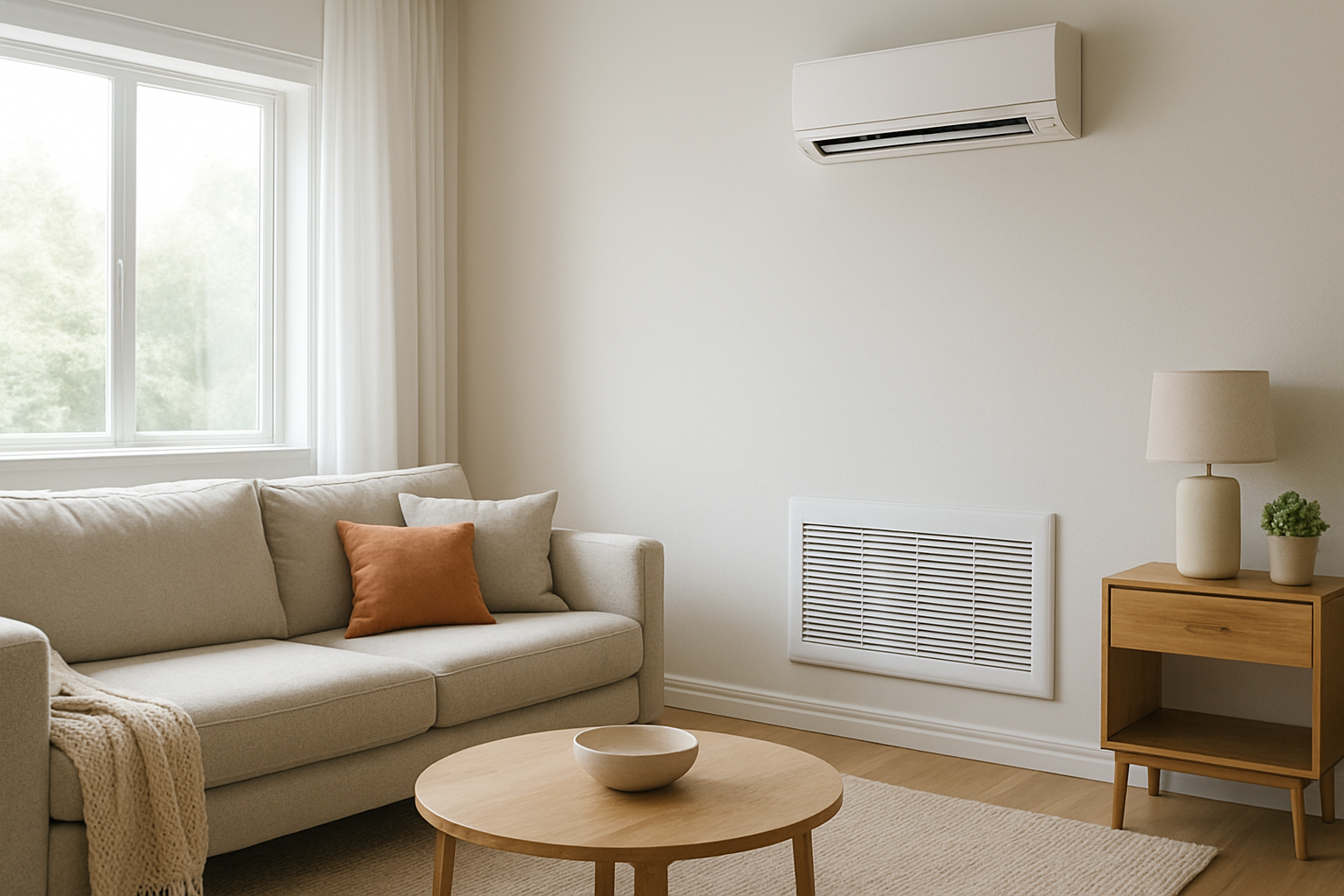
Learn how to diagnose and fix heat loss or air leaks causing your home to feel cold even when the heating system is running.
House Feels Cold Even With Heating On? Heat Loss Is Winning
Quick Answer
If the house still feels cold while the heat is running, the most common reason is heat loss from air leakage or weak insulation outpacing what the system can replace. First check: on a cold, windy day, feel for cold air at exterior doors, windows, and baseboards, and note whether the thermostat run time is long or nearly continuous.
Identify the Comfort Pattern First
Before blaming the furnace or heat pump, sort the symptom. The pattern usually points to where heat is leaving the building.
When it happens: Worse on windy days, very cold nights, or after sunset often indicates air leakage and envelope loss. Worse in early morning can indicate overnight heat soak-out through walls/attic and cold surfaces.
Where it happens: Coldest near exterior walls, windows, or over garages and crawlspaces suggests envelope loss. One or two rooms colder than the rest suggests localized leakage, missing insulation, or duct loss to that area.
System running vs off: If it feels cold even while the system is actively blowing warm air, the room surfaces may be cold from heat loss, or infiltration may be washing heat away. If it feels fine while running but drops fast when it stops, the house is not holding heat.
Constant vs intermittent: Constant chill everywhere points to whole-house leakage/insulation weakness or undersized capacity. Intermittent chill when the wind gusts or when exhaust fans run points to infiltration and pressure effects.
Changes with doors open or closed: If closing interior doors makes some rooms colder, you may be starving those rooms of return air, increasing leakage from outdoors into that room or reducing delivered airflow.
Vertical differences: If the ceiling area is warm but floors are cold, you likely have stratification plus cold floor surfaces (crawlspace/unfinished basement loss) or infiltration at the lower level. If upstairs is much warmer than downstairs, stack effect leakage is likely.
Humidity perception: Cold and clammy often means higher indoor humidity or cold surfaces causing radiant discomfort, even if the air temperature is close to setpoint.
Airflow strength: If airflow is weak in multiple rooms, you may have duct restrictions or low fan performance. If airflow is strong but the space still feels cold, envelope loss is more likely than equipment failure.
What This Usually Means Physically
Comfort is not just thermostat temperature. People feel cold mainly when their body loses heat too fast. In a leaky or under-insulated home, that happens through three dominant mechanisms.
Air leakage (infiltration): Outdoor air enters through gaps at rim joists, attic penetrations, recessed lights, window/door frames, baseboards, and fireplace assemblies. Cold air replaces warmed indoor air, and the heating system ends up heating a moving target. Wind and exhaust fans increase this.
Cold surfaces and radiant loss: Even if room air is 70°F, a cold window, exterior wall, or uninsulated floor pulls heat from your body by radiation. This is why you feel chilled near glass or on a first floor over a crawlspace.
Stack effect and pressure imbalance: Warm air rises and leaks out high (attic bypasses). That pulls cold air in low (basement, crawlspace, lower-level leaks). Closing doors without adequate returns can also create pressure differences that drive outdoor air in through cracks.
When heat loss exceeds the system’s delivered heat at the occupied zone, the thermostat may still be satisfied in another location, or the system may run long cycles without producing stable comfort. This can look like a heating problem even when the equipment is operating normally.
Most Probable Causes (Ranked)
Air leakage at the top and bottom of the house (stack effect): Cold first-floor floors, drafts near baseboards, and upstairs running warmer than downstairs; worsens with wind.
Weak attic insulation or attic bypass leaks: Large temperature drop overnight, persistent chill despite long runtime, and cold ceiling corners; ice dams can be a clue in snowy climates.
Leaky or poorly insulated ducts in attic/crawlspace: One area consistently colder, longer runtimes, and noticeable temperature difference between supply air near the furnace and at the room register.
Room pressure problems from closed doors and inadequate returns: Bedrooms get colder when doors are shut; you may feel air rushing under the door or through outlet plates.
Heating capacity mismatch during cold snaps: System runs nearly nonstop and temperature slowly drifts down only during the coldest hours, yet supply air feels appropriately warm.
Thermostat location or sensing error: Thermostat satisfies while occupied rooms feel cold, especially if the thermostat is in a warmer hallway, near a return grille, or exposed to supply airflow.
How to Confirm the Cause Yourself
These checks rely on observation and simple comparisons. Do them during a cold period when the complaint is active.
Draft mapping: With the heat running, walk exterior walls and lower-level perimeter. Use the back of your hand to feel for moving cold air at window trim, door thresholds, baseboards, and around plumbing/electrical penetrations. Moving air is the giveaway; cold surfaces alone feel different.
Wind sensitivity check: Note whether comfort gets worse on windy days without a major change in outdoor temperature. Wind-driven infiltration points strongly to leakage, not equipment output.
Runtime observation: If the system runs long cycles or nearly continuous operation yet the house still feels cold, suspect heat loss or capacity limits. If it runs short bursts and shuts off while you feel cold, suspect thermostat location/sensing or airflow/return issues.
Room-to-room temperature comparison: Compare a cold room to a central room using the same thermometer after 15–20 minutes with doors in their normal position. A consistent 3°F to 5°F difference points to localized envelope/duct/return problems rather than whole-house equipment failure.
Door position test for pressure imbalance: In a colder bedroom, run the heat, close the door for 15 minutes, then open it. If comfort improves quickly when the door is open, the room likely needs better return airflow or pressure relief.
Vertical gradient check: Compare temperature at about 6 inches above the floor versus at head height in the same room. A large difference suggests stratification and/or cold floor influence from crawlspace/basement loss.
Register feel comparison: Compare airflow strength between rooms. If the cold room has weaker airflow, the issue may be duct restriction or balancing. If airflow is strong but it still feels cold, focus on leakage and cold surfaces.
Normal Behavior vs Real Problem
Normal: Slightly cooler rooms at exterior corners, brief chills near large glass on very cold nights, and slower recovery from setback when outdoor temperatures are extreme.
Likely a real problem: Noticeable drafts you can feel on your skin, floors that stay cold all day, rooms consistently more than about 3°F to 5°F different from the thermostat area, the system running most of the hour without stabilizing comfort, or comfort that changes dramatically with wind or when exhaust fans run.
When Professional Service Is Needed
Persistence: The comfort complaint repeats across multiple cold days and does not correlate only to unusually extreme outdoor temperatures.
Comfort impact: One or more occupied rooms remain more than about 5°F below the thermostat setting, or you cannot maintain comfort without raising the thermostat significantly.
Performance decline: Heating runtime has increased noticeably compared to prior seasons, or the system cannot recover from normal setbacks.
Safety indicators: Any fuel smell, soot, unusual burner behavior, frequent system shutdowns, or carbon monoxide alarm activity requires immediate professional evaluation.
A technician or energy specialist can confirm leakage and heat loss with blower door testing, infrared imaging under the right conditions, duct leakage testing, and supply/return airflow measurement.
How to Prevent This in the Future
Air seal first, then insulate: Prioritize attic bypasses, top plates, recessed light penetrations, plumbing stacks, chimney chases, and rim joists. Insulation performs poorly when air is moving through it.
Address the lower-level boundary: Crawlspace rim joists and band areas are common leakage points, and cold floors are a frequent complaint even with adequate thermostat readings.
Reduce duct losses: Seal duct joints and ensure duct insulation is intact in attics and crawlspaces. Delivered heat at registers matters more than equipment nameplate output.
Improve room pressure balance: Provide adequate return paths for closed-door rooms through proper returns or pressure relief methods so outdoor air is not pulled in through cracks.
Use thermostat strategy that matches the house: Avoid deep temperature setbacks in leaky homes; long recovery times can amplify discomfort and make heat loss feel like poor heating performance.
Related Home Comfort Symptoms
Cold rooms near windows even when the rest of the house is warm
Upstairs too hot, downstairs too cold in winter
Furnace runs constantly but house never reaches set temperature
Cold floors in winter, especially over crawlspace or garage
Drafts that get worse when the kitchen hood or bath fan runs
Conclusion
When the house feels cold despite the heat running, the most common diagnosis is not a weak furnace but a building that is losing heat faster than it can be replaced, usually through air leakage and cold exterior surfaces. Confirm it by mapping drafts, watching wind sensitivity, and comparing room temperatures and door-open versus door-closed behavior. If the pattern is consistent or differences exceed about 5°F, schedule a professional diagnostic focused on leakage, duct delivery, and pressure balance.
Frequently Asked Questions
Why do I feel cold even when the thermostat says 70?
You are feeling heat loss from your body, not just air temperature. Cold windows, exterior walls, and floors can pull heat by radiation, and drafts increase convective heat loss. Both can occur while the thermostat reads normal because the sensor is measuring air temperature at one location, not surface temperatures or air movement where you are sitting.
My furnace runs a long time. Does that mean it is broken?
Not automatically. Long runtimes are common when outdoor temperatures drop and heat loss rises. If supply air feels warm and the system runs steadily but indoor temperature still drifts down or comfort remains poor near exterior areas, heat loss and leakage are more likely than a mechanical failure.
Why is it colder when it is windy outside?
Wind increases pressure differences across the building shell and forces outdoor air through gaps. This wind-driven infiltration can overwhelm a heating system locally, especially near lower-level leakage points, window/door openings, and attic bypasses.
Why do some rooms get colder when I close the door?
Closing the door can trap supply air with no easy return path, changing the room pressure. That can reduce delivered airflow and can pull outdoor air in through cracks to relieve the pressure imbalance. If opening the door reduces the chill within minutes, the room likely needs better return airflow or pressure relief.
How much temperature difference between rooms is considered a problem?
In a typical home, 1°F to 3°F variation is common. A consistent difference of about 3°F to 5°F indicates a correctable distribution or envelope issue. More than about 5°F in occupied rooms usually warrants professional diagnostics for leakage, insulation voids, duct loss, or pressure imbalance.
Need a complete overview? Visit the full troubleshooting guide here: Read the full guide for more causes and fixes.
There’s a strange comfort in noticing the problem clearly, even when the rest of the house insists it’s “fine.” Warmth should feel like it’s staying put, not showing up for a shift and then disappearing.
Now you can stop guessing and start living a little more normally—fewer chilly surprises, more steady evenings. Consider it the end of that low-grade battle, where the air always seemed one step ahead.