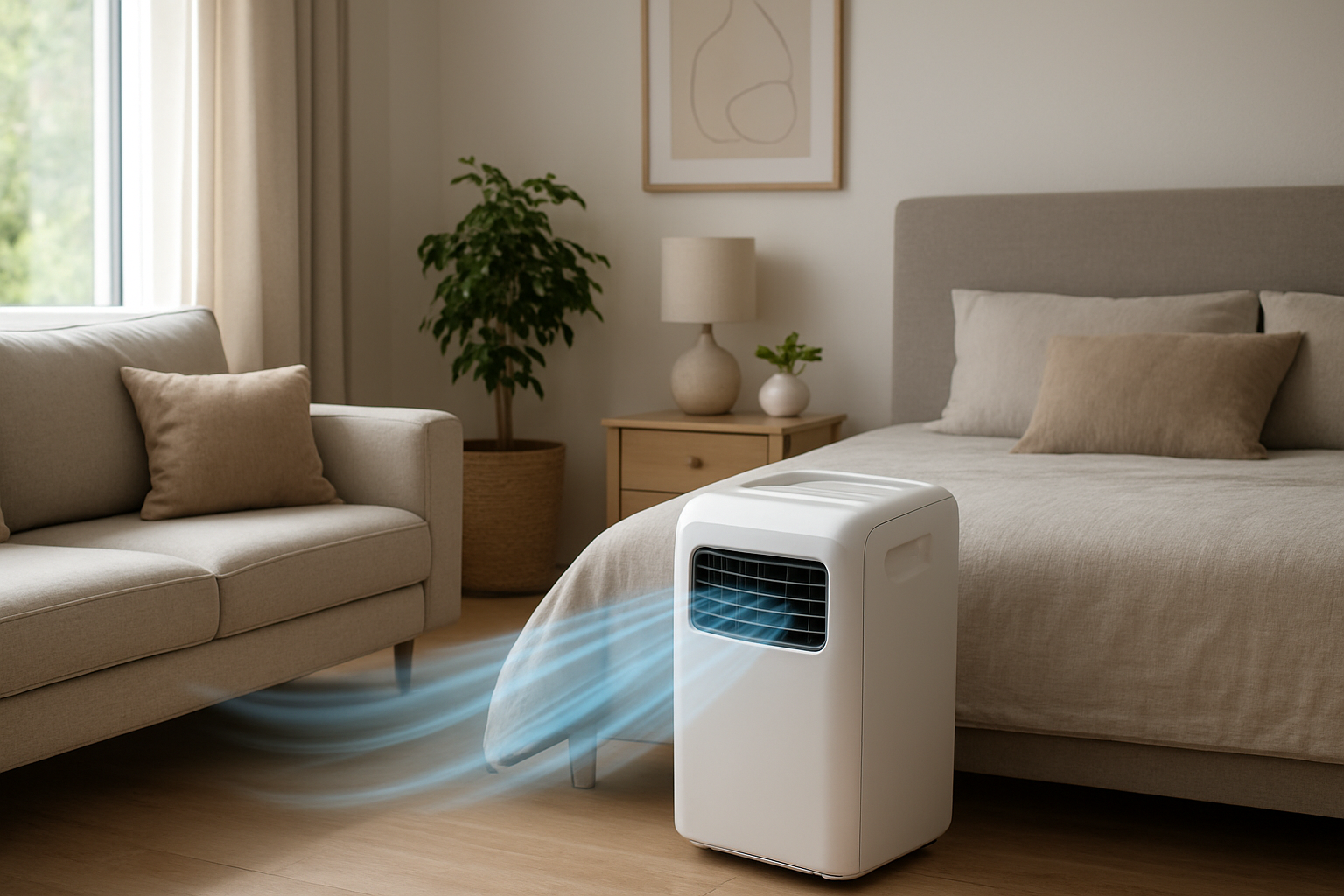
Learn how to diagnose and fix a portable air conditioner that shuts off after a few minutes due to thermal protection mode being triggered.
Portable AC Shuts Off After A Few Minutes? Protection Mode Triggered
Quick Answer
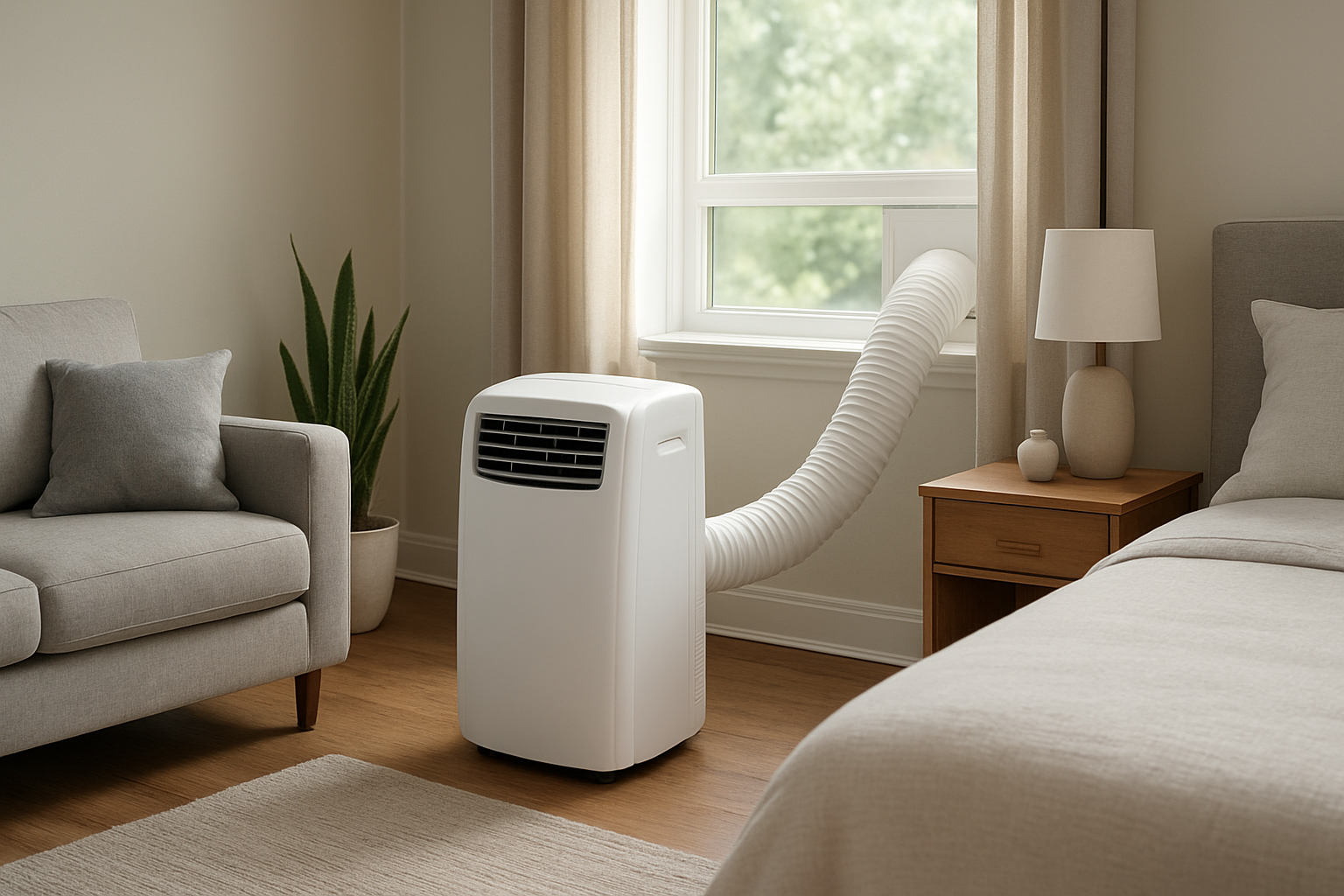
If your portable AC runs for only a few minutes and shuts off repeatedly, the most likely cause is thermal protection tripping because the unit cannot reject heat properly. First check: confirm the exhaust hose and window panel are tight, short, and not kinked, and that hot air is not spilling back into the room. A recirculating exhaust overheats the unit and forces an automatic shutdown.
Identify the Comfort Pattern First
Before changing anything, match what you see to a specific pattern. This narrows the diagnosis quickly because protection-mode shutdowns are driven by heat and airflow conditions.
When it happens: More frequent in late afternoon, on hotter days, or when the sun hits the room (solar gain). Less frequent at night often indicates a heat-rejection problem rather than an electrical fault.
Where it happens: Worst in small rooms with the door closed, or in rooms with long exhaust runs. If it only happens in one room, the setup (window kit/hose/air path) is usually the trigger.
Run time consistency: Shutting down at a similar runtime (for example 3–10 minutes) points to a temperature limit being reached, not normal cycling.
Airflow feel at the outlet: If cold air starts strong then weakens before shutdown, suspect coil freezing or fan/air restriction leading to unit overheat and protection trip.
Does opening the door change it? If opening the door extends runtime, the unit was likely starved for make-up air or the room was going strongly negative pressure, reducing exhaust performance.
Ceiling vs floor comfort: If the upper room stays hot while the unit short-cycles, the unit may be swallowing its own hot exhaust near the window area (hot layer recirculation) and overheating.
Humidity perception: If the room still feels clammy even when the unit runs, or you see frequent shutoffs with little drying, expect poor heat rejection or airflow issues that prevent stable dehumidification.
Intermittent vs constant: A unit that runs longer after being off for a while but then quickly shuts down again is classic thermal protection behavior.
What This Usually Means Physically
A portable AC must move indoor heat to the outside through its condenser section and exhaust air path. When that heat cannot leave efficiently, the condenser temperature rises. As condenser temperature rises, internal safety controls protect the compressor and electronics by stopping operation. That stop can look like a random shutdown, but it is typically a deliberate protection response to overheating.
The most common physical reasons are:
Heat rejection failure: Hot condenser air is not making it outdoors, or it is coming back into the room and back into the unit. The unit overheats and trips protection.
Airflow restriction: Dirty filters, blocked intake grills, or tight clearance reduce airflow over coils. Low airflow causes high internal temperatures and can also lead to evaporator icing, which further blocks airflow.
Negative pressure and recirculation: Single-hose units exhaust indoor air, which can pull hot outdoor air in through other leaks. This raises load and can also disrupt exhaust flow so the unit runs hotter and trips.
Sensor-driven shutdown: If the unit’s temperature sensors see unrealistic readings (due to placement, blocked sensor, or fault), they can shut the compressor down early even if the room is still warm.
Capacity mismatch: In high solar gain or large spaces, the unit runs at maximum. If the exhaust path is inefficient, the margin before overheating disappears and protection trips become frequent.
Most Probable Causes (Ranked)
1) Exhaust hose/window kit leaking or recirculating hot air back into the room Clue: The area near the window/hose feels very hot, you can feel hot air spilling indoors, or the unit runs longer when you temporarily aim the hose straight and short.
2) Exhaust hose too long, kinked, crushed, or routed with tight bends Clue: Hose is warm-to-hot along its length, airflow at the outside vent feels weak, shutdown happens faster on hot afternoons, and runtime improves when you straighten/shorten the hose.
3) Intake or filter restriction causing high internal temperature Clue: Airflow out the front is weaker than usual, unit casing feels hotter than normal, filter looks gray or dusty, shutdown happens sooner in dusty homes or with pets.
4) Evaporator coil icing from low airflow or low load conditions Clue: Strong cold air initially then fading airflow, possible frost visible behind the front grill, water output decreases, unit restarts after a longer off period.
5) High room heat load or solar gain overwhelming a marginal setup Clue: Only fails during peak sun or cooking/laundry, improves at night, room temperature barely drops before shutdown, especially in west/south-facing rooms.
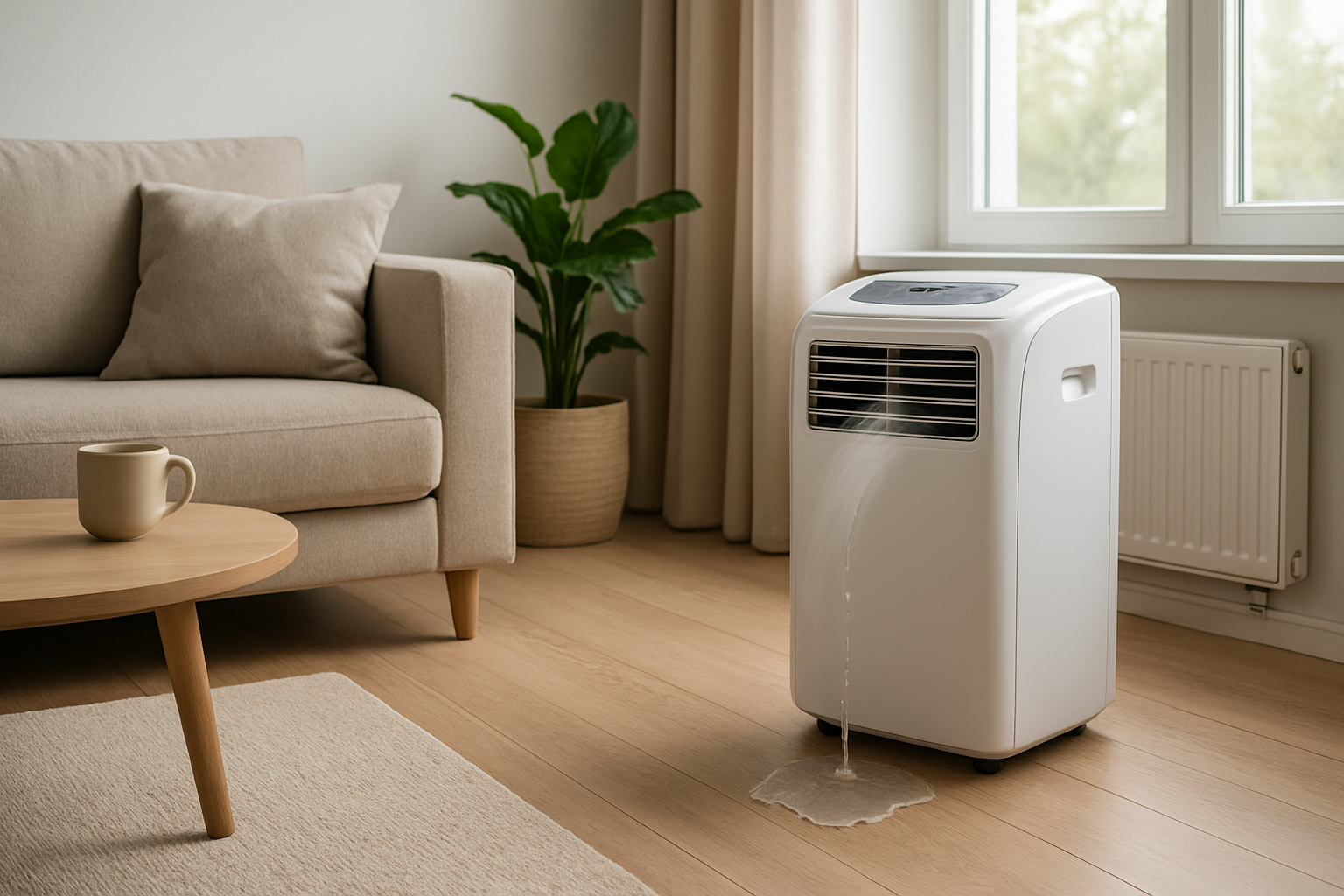
6) Drain/water management interruption (tank full or poor condensate handling) Clue: Unit stops and indicates full tank or alarms; shutdown timing depends on humidity and may be slower on dry days.
7) Faulty temperature sensor, control board, or fan motor weakness Clue: Shutdown happens even with excellent exhaust setup and clean airflow paths, fan sounds inconsistent, or the unit stops with no clear heat-related pattern.
How to Confirm the Cause Yourself
These checks rely on observation and simple comparisons. Do not open the unit or bypass safety controls.
Hose and window leak check by feel: With the unit running, place your hand around the window panel edges and hose connections. If you feel hot air blowing into the room, that leak is feeding heat back to the unit and pushing it into protection mode.
Exhaust performance check outdoors: Feel the airflow where the hose discharges outside. It should be a steady, strong warm stream. Weak flow usually means a kink, restriction, or a poor window kit seal that is short-circuiting airflow.
Shorten and straighten test: Temporarily reduce hose length and remove tight bends. If runtime increases noticeably, overheating from exhaust restriction/heat rejection is confirmed.
Clearance check: Verify the intake side has adequate space from walls, furniture, or curtains. If moving the unit 12–18 inches away from obstructions increases runtime, you had an airflow starvation problem.
Airflow fade check: Start the unit and note outlet airflow strength at minute 1, minute 5, and just before shutdown. If airflow steadily weakens, suspect filter restriction or icing rather than a simple thermostat cycle.
Door open vs closed test: Run the unit with the room door closed for 10 minutes, then repeat with the door open. If it runs longer with the door open, the unit was likely struggling with pressure balance and make-up air, which can worsen exhaust performance and increase internal temperatures.
Time-of-day pattern: Track whether shutdowns cluster during peak sun. If yes, the unit is operating near its limit, and any exhaust inefficiency triggers protection mode quickly.
Humidity correlation: On very humid days, see whether it shuts down sooner or fills its tank faster. Frequent stops paired with high humidity suggests drainage/tank interruptions or icing cycles that reduce airflow.
Normal Behavior vs Real Problem
Normal behavior: A portable AC may cycle the compressor off after the room approaches setpoint, especially overnight. The fan may continue running, and the unit should not repeatedly shut down completely every few minutes. Some units also pause the compressor briefly to protect it from rapid restarts, but this delay is typically predictable and not tied to rising cabinet heat.
Real problem indicators:
Unit consistently runs less than about 10 minutes before stopping, while the room is still clearly warm.
You feel strong heat dumping into the room near the hose/window kit.
Airflow out of the unit fades over a few minutes before shutdown.
The unit becomes unusually hot to the touch around the exhaust/condenser area.
Comfort does not improve: temperature drops slowly or not at all, and humidity stays sticky.
When Professional Service Is Needed
After setup corrections, it still shuts down within 5–10 minutes: If the hose is short/straight, seals are tight, filters are clean, and clearances are adequate, persistent thermal trips point to internal faults (fan performance, sensor error, or refrigerant-side issues).
Airflow is abnormal even with a clean filter: Weak fan output, surging fan speed, or rattling suggests a failing fan motor or obstruction that requires disassembly.
Repeated icing and poor cooling: If airflow fades and you suspect icing repeatedly, a technician should verify airflow, coil condition, and refrigerant system performance.
Electrical symptoms: Burning smell, tripping breakers, hot power cord, or the unit shuts off instantly on startup. Stop using the unit and have it evaluated.
Comfort impact is severe: If indoor temperature or humidity cannot be controlled and the unit is your primary cooling source, professional diagnosis avoids repeated compressor stress from constant protection cycling.
How to Prevent This in the Future
Keep the exhaust path efficient: Use the shortest hose length possible, avoid tight bends, and keep the hose fully expanded. Replace crushed or soft hoses that collapse when warm.
Seal the window kit tightly: Any hot-air leak back indoors increases room load and raises condenser temperature. Foam strips and tight panel fit matter more than most people think.
Maintain airflow: Clean filters on a schedule that matches dust load (often weekly in heavy-use seasons). Keep intake grills clear and maintain adequate clearance from walls and curtains.
Manage solar gain: Close blinds or curtains on sun-facing windows during peak hours to keep the unit out of the high-load zone where protection trips become more likely.
Control room pressure: For single-hose units, avoid sealing the room so tightly that make-up air cannot enter. A slightly open door or dedicated air path can reduce negative pressure and improve exhaust stability.
Drain planning: If your model uses a tank in high humidity, monitor tank behavior early in the season so full-tank stops do not masquerade as random shutdowns.
Related Home Comfort Symptoms
Portable AC blows cold then turns warm before shutting off
Portable AC exhaust hose gets extremely hot
Portable AC runs but room temperature barely drops
Portable AC airflow is weak compared to last season
Portable AC keeps filling the water tank quickly
Room feels more humid even though AC is running
Conclusion
A portable AC that shuts off after a few minutes is most often protecting itself from overheating because it cannot reject heat through the exhaust system. Confirm by checking for hot-air recirculation at the window kit, a restricted or kinked hose, and reduced intake airflow from dirty filters or blocked clearances. If the exhaust setup is correct and airflow is strong but short-cycling persists, the issue likely requires professional service to address sensors, fan performance, or internal refrigeration problems.
Frequently Asked Questions
Why does my portable AC run for 5 minutes then shut off even though the room is still hot?
That pattern most often indicates thermal protection. The unit’s condenser side is overheating because exhaust airflow is restricted or hot exhaust is leaking back into the room and back through the unit. Start by checking the hose for kinks and the window panel for leaks.
Is a hot exhaust hose normal?
Warm to hot is normal because it is carrying rejected heat. Not normal is a hose that is extremely hot combined with weak airflow outside and repeated shutdowns. That combination usually means restricted exhaust flow or significant recirculation at the window kit.
Can a dirty filter cause a portable AC to shut down?
Yes. A restricted filter reduces airflow across the coils, raising internal temperatures and sometimes causing evaporator icing. Either condition can trigger safety shutdowns or short cycling. If outlet airflow fades over several minutes, suspect airflow restriction or icing.
Does opening the door help a portable AC stop shutting off?
Sometimes. Many single-hose units create negative pressure by exhausting indoor air. If the room is too sealed, the unit may struggle to maintain stable exhaust flow, raising operating temperatures. If runtime improves with the door open, pressure balance and make-up air are part of the problem.
When should I stop troubleshooting and call for service?
Call for service if it still shuts down within 5–10 minutes after you confirm a short, straight, sealed exhaust setup and clean, unobstructed airflow. Also stop and seek help if you notice electrical burning odor, a hot cord, breaker trips, or persistent icing with poor cooling.
Need a complete overview? Visit the full troubleshooting guide here: Read the full guide for more causes and fixes.
There’s a weird little satisfaction in watching the machine do what it’s supposed to do—even if it insists on stopping right when you’re finally comfy. Protection mode has a way of turning a quick cool-down into a brief patience test.
So when it cuts out after a few minutes, it’s not the end of the story—more like the final line of a very short script. The room stays steady, the day keeps moving, and you get back to pretending the thermostat is in charge.