If your house feels clammy and heavy at night but normal by day, there are usually understandable reasons, and a few simple ways to improve comfort.
Introduction
You go to bed and the room feels wrong. Not dramatically wrong, just a little cool, a little sticky, a little heavier than it did a few hours earlier. By morning, there is moisture on the windows, the air feels stale, and you are left wondering whether you imagined it or whether something in the house is actually changing after dark.
That unsettled feeling is real. A home can seem perfectly normal during the day and then feel damp and uncomfortable at night in a way that gets under your skin. And once you notice it, it’s hard to ignore.
Why This Situation Feels So Frustrating
Part of the frustration is how personal it feels. At bedtime, when you are trying to settle down, being clammy under the sheets can make the whole room feel unwelcoming. During the day, maybe the thermostat looks normal and the house seems fine, so it is easy to second-guess yourself. Is the humidity actually rising, or are you just more aware of it when everything is quiet?
That doubt can be surprisingly stressful. One part of you wants to trust the number on the wall or the reading on a small monitor. Another part of you is standing in a stuffy bedroom with the door closed, feeling the air get heavier by the minute. Something just feels off.
Then there is the worry underneath it. If the house feels damp at night, people often jump to the bigger fear: maybe there is a leak, a mold problem, or something failing in the HVAC system. It’s not a big issue on paper. But it doesn’t feel small.
What People Usually Notice First
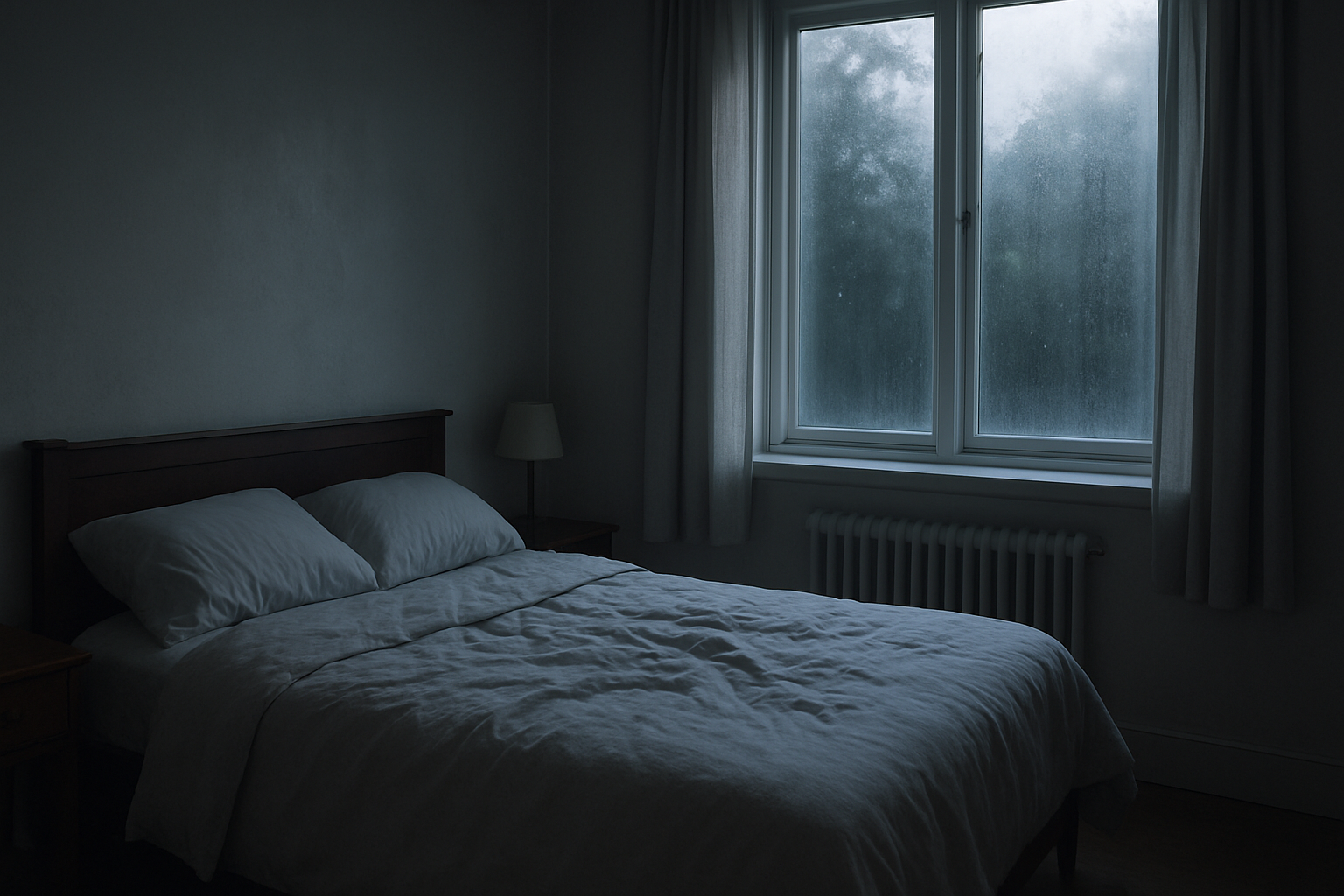
Usually it starts with comfort, not diagnostics. You wake up in a cool sticky bedroom and think the blankets are the problem. Or you notice that one room, often a bedroom on the quieter side of the house, feels worse than the rest. The hallway seems okay. The living room seems okay. But that one room feels close and damp.
Morning often makes it more obvious. There may be a light film of moisture on the windows, especially if the outdoor temperature dropped overnight. Maybe there is a faint musty smell that was not obvious the evening before. Maybe the room felt hard to sleep in, not hot exactly, just heavy.
That is the part people remember. Not the reading. The feeling.
Why It Can Be Confusing
Humidity can rise at night even when nothing dramatic appears to be happening. The house cools down, air movement changes, bedroom doors close, and people themselves add moisture just by breathing through the night. If a room already has weaker airflow, that small shift can be enough to make it feel noticeably different by 2 a.m.
One room often does feel worse than the rest, and that can make the whole thing harder to understand. A house does not always behave evenly. A bedroom with one supply vent, a closed door, older windows, thicker curtains, or an exterior wall that cools down quickly may collect that discomfort faster than the rest of the home.
And devices do not always help. A thermostat in the hall may show one humidity level, while a bedroom monitor shows another. Sometimes both are technically right because they are measuring different spots with different airflow. Sometimes one sensor is just off. If you want a fuller explanation of why overnight humidity changes can seem so random, this piece on indoor humidity spiking at night gets into the mechanics without making it feel more complicated than it needs to be.
Still, it can mess with your confidence in your own home. That is really the issue.
The Hidden Impact on Daily Comfort
When a house changes character at night, people do not just lose comfort. They lose trust. Home is supposed to feel steady, and when one bedroom starts feeling damp and strange after dark, it creates a low-grade anxiety that lingers into the next day. You start checking windows in the morning. You start thinking about smells. You start wondering whether this is the beginning of a bigger problem.
Small comfort changes can do that. They sound minor when described out loud, but they are not minor when they affect sleep and peace of mind. A room that feels sticky every night makes the whole house feel less dependable.
That is why these issues often feel bigger than the numbers suggest. The concern is not only about humidity. It is about wanting the home to feel safe, predictable, and healthy.
When It’s Probably Nothing Serious
Sometimes the explanation is fairly ordinary. If overnight temperatures drop, windows and outside-facing surfaces get cooler, and moisture in indoor air can show up there first. A little condensation on a cold morning does not automatically mean there is hidden damage somewhere.
It can also be a basic airflow problem. Closed bedroom doors, blocked return air paths, a ceiling fan that never runs, or a room that gets less circulation can all make the air feel stale and damp at night without pointing to a major defect. If the discomfort fades after you open the door in the morning or run the HVAC fan, that is a clue.
Seasonal shifts matter too. In some climates, spring and fall nights create odd indoor conditions because the system runs less consistently, so air is not being mixed or dried the same way it would be during hotter or colder stretches.
Annoying, yes. But not always alarming.
When You Should Pay More Attention
If the musty smell is getting stronger, if condensation is heavy and frequent, or if one room feels damp night after night no matter what the weather is doing, it is worth looking closer. The same goes for peeling paint, visible spotting around windows, soft drywall, or a persistent difference between one room and the rest of the house that does not improve with better airflow.
You should also pay attention if anyone in the home is waking up congested, irritated, or sleeping poorly because the air feels thick. Comfort problems are sometimes the first sign that a ventilation issue, insulation gap, duct imbalance, or moisture source needs to be addressed.
Not every damp bedroom points to something serious. But repeated patterns deserve a little respect.
Simple Ways to Improve Comfort
Start with the least dramatic fixes. Keep the bedroom door cracked open for a few nights and see whether the room feels different by morning. Run the HVAC fan setting longer if your system allows it, or use a fan to keep the air from sitting still all night. Sometimes the problem is not excess moisture alone but stagnant air holding onto it.
Check whether curtains, furniture, or bedding are covering vents or limiting circulation near the windows. If one room always feels worse, compare it to another room at the same time of night rather than relying only on a single hallway thermostat.
If you use a humidity monitor, place it away from windows, vents, and exterior walls and give it time. Cheap sensors can drift, so if the readings seem extreme or inconsistent, compare them with a second device before assuming the worst.
It may also help to look at habits that add moisture late in the day. Long hot showers, drying laundry indoors, cooking without using the range hood, and even keeping the bathroom door open after bathing can feed that overnight heaviness more than people realize. Little things stack up.
And if the room simply never feels right, a small dehumidifier or an HVAC checkup may be worth it. Not because you are overreacting, but because sleep matters and comfort matters.
Conclusion
A house that feels damp at night can be deeply unsettling, even when the daytime version of that same house seems completely fine. The discomfort is easy to dismiss from the outside, but when you are lying awake in a stuffy bedroom or wiping moisture off the windows in the morning, it feels personal and hard to shrug off.
The good news is that this kind of overnight humidity shift is often explainable. Sometimes it is airflow, sometimes cooler surfaces, sometimes a room that is just not moving air the way it should. Sometimes it is the house asking for a little attention, not sounding an alarm.
That distinction matters. A home does not have to feel perfect every hour to be healthy, but it should feel trustworthy. If the air keeps changing after dark, pay attention to the pattern, make a few simple adjustments, and take your own experience seriously. Your body usually notices the problem before the numbers tell the full story.