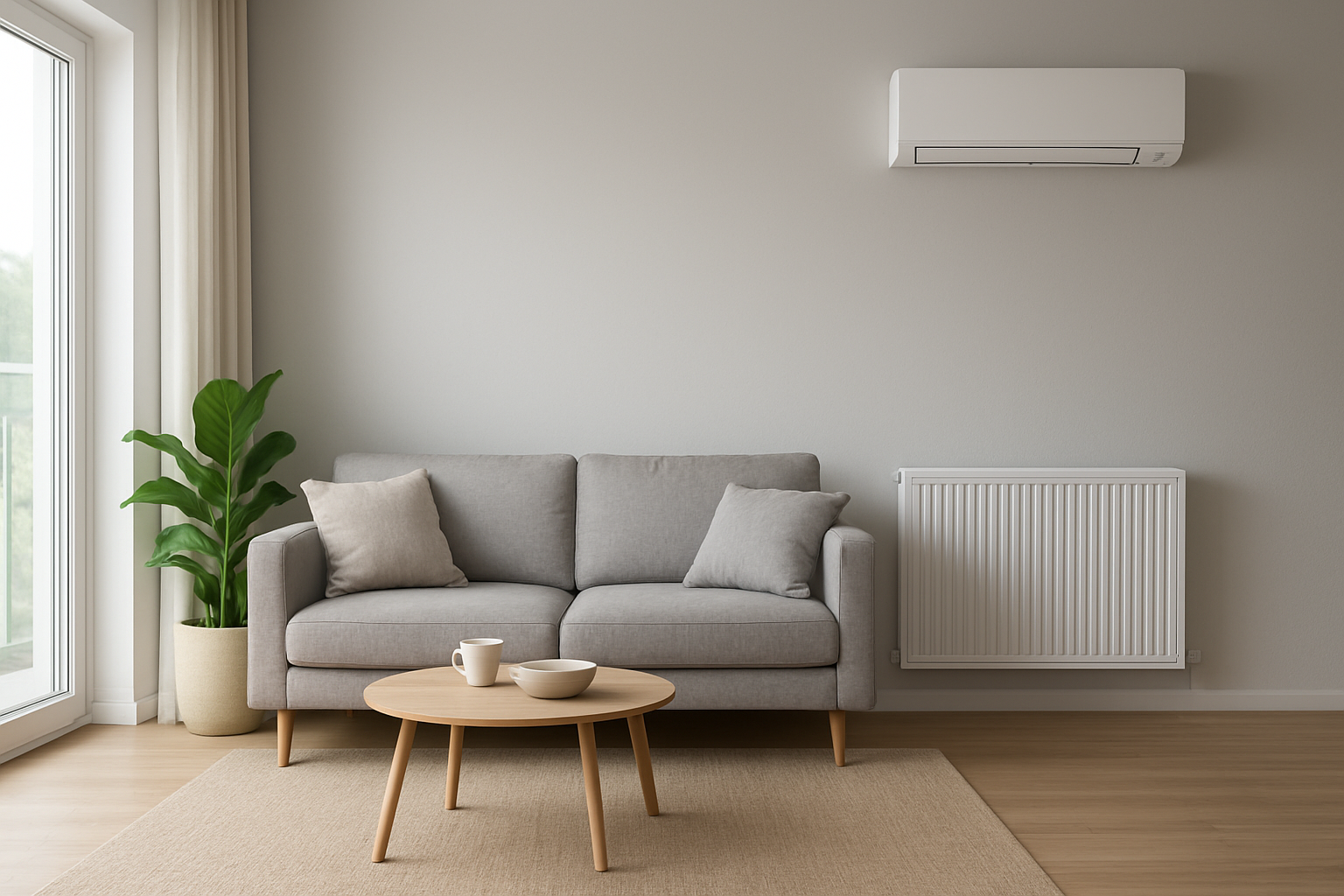
Diagnose and fix a radiator heating on only one side by identifying partial flow restrictions or air locks causing uneven heat distribution.
Radiator Heating Only One Side? Air Or Blockage
Quick Answer
If a radiator is hot on one side and cool on the other, the most likely cause is partial water/steam flow restriction: an air lock, a stuck valve, or sludge narrowing the flow path. First check: with the system calling for heat, feel the radiator from the supply side toward the return side. Then bleed the radiator if it’s a hot-water system, or verify both valves are fully open if it’s steam.
Identify the Comfort Pattern First
Before changing anything, sort the symptom. The pattern tells you whether you’re dealing with trapped air, restricted flow, or a balancing issue.
When it happens: Only at the start of a heating cycle often points to air shifting or a valve that sticks when cold. All day, every day usually points to a mechanical restriction (sludge, partially closed valve, blocked vent).
Where it happens: One radiator only suggests a local issue (that radiator’s valve, vent, bleed point, or internal blockage). Several radiators on the same floor/zone suggests a distribution or balancing issue.
System running vs off: If the cool side warms slowly and never fully catches up while the boiler is running, that’s a flow problem. If it eventually gets fully hot after a long run, that’s often marginal flow or poor balancing.
Constant vs intermittent: Intermittent one-sided heating can occur when air pockets move, or when thermostatic radiator valves intermittently pinch flow. Constant one-sided heating is more consistent with sludge buildup or a valve that is not opening.
Changes with doors open or closed: If the room still feels cold even when the radiator is partly hot, closing doors may worsen it due to stagnant air and stratification. That does not cause the one-sided radiator, but it amplifies discomfort and can mislead you into thinking the boiler is weak.
Vertical differences: If the radiator is hot at the bottom but cool at the top (especially hot-water radiators), think trapped air. If it’s hot near the valve and cool across the width, think restricted flow through the radiator.
Humidity perception: A room can feel more drafty and cool when humidity is low, but humidity does not make a radiator heat one side only. Don’t chase humidity first; treat it as a comfort amplifier, not the root cause.
Airflow strength: For convectors/cabinet radiators, blocked grilles or furniture can reduce room heat delivery. That can make the room cold, but the radiator’s internal temperature pattern still usually points to flow restriction/air first.
What This Usually Means Physically
A radiator heats evenly only when hot water (or steam) can move across the radiator and give up heat uniformly. When you get a hot side and a cool side, the radiator is acting like a partially fed heat exchanger.
Air lock (hot-water systems): Air accumulates at high points and displaces water. Water can’t occupy the top/sections beyond the air pocket, so only part of the radiator fills with hot water. Result: one area heats, the rest stays cool until the air is removed.
Partial flow restriction: Sludge, corrosion products, or mineral deposits narrow internal passages. Water enters but can’t circulate through the entire radiator. The supply side gets hot; the temperature drops sharply across the restricted path.
Valve not passing flow: A stuck thermostatic radiator valve (TRV), a partially closed hand valve, or a pin that doesn’t move freely reduces flow. Reduced flow creates a strong temperature gradient: hot near entry, cool through the remainder.
Steam-specific behavior: Steam needs air to vent out before steam can enter. If the air vent is plugged or too small, steam only fills part of the radiator, leaving the far sections cool. A radiator pitched the wrong way can also trap condensate, blocking steam from reaching the far side.
In all cases, the physical reason is the same: the radiator cannot exchange heat across its full surface area because the working fluid is not reaching all sections at the correct rate.
Most Probable Causes (Ranked)
Air trapped in a hot-water radiator: Top portion or far sections stay cool; you may hear gurgling or trickling during a call for heat.
Partially closed or sticking radiator valve/TRV: Radiator is hot near the valve body but cool across; TRV head setting changes the symptom, or the valve body feels warm but downstream stays cool.
Sludge or internal restriction in the radiator: Persistent one-sided heating that does not change after bleeding or valve adjustments; radiator may feel heavy, with a sharp hot-to-cool transition.
Steam radiator vent restriction (steam systems): Radiator heats slowly and unevenly; the vent stays cool or never hisses early in the cycle; far end stays cool.
Steam radiator pitch/condensate holdback: Radiator heats near the supply but stalls; you may hear water hammer or sloshing; far side stays cool even with a good vent.
System balancing/distribution issue: Multiple radiators show partial heating, usually those farthest from the boiler; problem is worse during short cycles.
How to Confirm the Cause Yourself
Use observation, touch, and simple comparisons. Do checks during a real call for heat, not after the system has been off for hours.
Map the temperature pattern by touch: Carefully feel along the radiator from the pipe/valve side to the opposite side. A sharp boundary from hot to cool supports restriction/air. A gradual taper can indicate low flow or balancing.
Hot-water radiator bleed check: If your radiator has a bleed screw, place a cup and cloth under it. Open slowly. If you get air first and then a steady stream of water, trapped air was present. If you get only water immediately and the radiator still heats one side, the issue is more likely flow restriction or valve performance.
Valve position verification: Confirm the hand valve is fully open (counterclockwise) on systems designed for full-open operation, especially one-pipe steam. For TRVs, change the setting from low to high and observe whether the warm area expands over the next 10–20 minutes.
Compare supply and return piping temperatures: On hot-water systems, the pipe into the radiator should be notably hotter than the return when the radiator is transferring heat. If the supply is hot but the return stays cool and the radiator is half-cold, flow through the radiator is restricted.
Listen for air or condensate symptoms: Gurgling on hot-water suggests air. On steam, a working vent often hisses early; no sound can mean a stuck vent. Loud banging suggests condensate trapped by bad pitch or valve issues.
Time-to-heat comparison: Compare the problem radiator to a similar radiator in another room during the same cycle. If the other radiator becomes evenly hot while this one stays split, it’s a local restriction/air issue rather than boiler capacity.
Room comfort confirmation: Measure room temperature at about 3–5 feet above the floor and again near the floor. If the floor is much colder while the radiator is only partially active, the radiator is not delivering enough convection to mix the room air, reinforcing that the radiator’s effective surface area is reduced.
Normal Behavior vs Real Problem
Some unevenness is normal depending on system type and cycle stage, but it should resolve as the cycle continues.
Normal: At the beginning of a heating call, the supply side warms first. A brief 5–10 minute lag before the far side catches up can be normal in mild weather or short cycles.
Likely problem: The radiator consistently stays hot on one side and cool on the other for an entire heat call, especially if the thermostat is still calling and other radiators are fully hot.
Definitely abnormal: Repeated gurgling with persistent cool sections after bleeding, or on steam systems a radiator that never heats fully even during long calls, indicating venting/flow failure.
When Professional Service Is Needed
Bleeding doesn’t restore even heat: If you bleed air successfully but the radiator still stays partially cold after two full heating cycles, the restriction/valve issue needs service.
Multiple radiators show the same symptom: This suggests system-wide circulation, balancing, or pressure issues requiring diagnostic tools and system knowledge.
Visible leakage or frequent re-airing: If you need to bleed the same radiator repeatedly, the system may be taking on air from a leak, improper fill pressure, or a faulty air eliminator.
Steam water hammer or persistent banging: This can damage piping and typically requires correcting pitch, venting, or near-boiler piping issues.
Comfort impact is significant: If the affected room cannot maintain setpoint during normal outdoor temperatures, the radiator is not delivering designed output and should be corrected rather than compensated elsewhere.
How to Prevent This in the Future
Bleed hot-water radiators at the start of the season: Do it once after the system has run and stabilized, and again a week later if needed. Repeated bleeding all season indicates a separate issue.
Keep radiator valves fully functional: Don’t force stuck knobs. If you have TRVs, confirm the valve pin moves freely before heating season.
Maintain proper system pressure (hot-water): Low pressure increases the chance of air problems and poor circulation to upper floors. If you routinely lose pressure, address the cause rather than refilling frequently.
Protect against sludge buildup: Older hot-water systems benefit from periodic professional cleaning and correct inhibitor use where appropriate. Sludge is a common cause of partial heat across radiators.
Steam vent upkeep: Replace vents that don’t vent air reliably. Proper venting prevents slow, uneven radiator fill.
Don’t block convector grilles: Cabinets need airflow to move heat into the room; blocking them can mimic an undersized radiator even if the water/steam side is correct.
Related Home Comfort Symptoms
Radiator hot at bottom but cold at top
One radiator cold while others are hot
Radiator takes a long time to heat up
Gurgling noises in radiator during heating
Steam radiator heats halfway then stops
Conclusion
A radiator heating only one side is almost always a partial flow problem: trapped air, a valve that isn’t passing flow, or an internal restriction. Confirm the temperature pattern during a heat call, bleed the radiator if it’s hot-water, and verify valves are fully open and responsive. If the split-temperature condition persists through full heating cycles or affects multiple radiators, the system needs professional diagnosis for restriction, venting, or circulation faults.
Frequently Asked Questions
How do I know if my radiator is hot-water or steam?
Hot-water radiators typically have two pipes (supply and return) and may have a bleed screw. One-pipe steam radiators usually have one pipe connection and a small air vent on the side. Two-pipe steam has two connections but still uses vents or traps rather than a standard bleed screw.
If I bleed the radiator and only water comes out, can it still be an air problem?
It’s less likely at that radiator, but air can still be trapped elsewhere and affect circulation. If you get solid water immediately and the radiator remains half-cold, focus on a restricted valve, a stuck TRV pin, or internal sludge limiting flow through the radiator.
Why is the radiator hot near the valve but cold on the far side?
That pattern strongly suggests the heat source is reaching the radiator but not moving through it. The usual reasons are a partially closed/sticking valve, a localized blockage inside the radiator, or on steam systems a venting/condensate issue preventing steam from filling the far sections.
Can low boiler temperature cause one-sided heating?
Low water temperature can reduce overall heat output, but it typically affects all radiators similarly and produces generally lukewarm radiators rather than a sharp hot-to-cool split across one radiator. A one-sided pattern is much more consistent with restricted flow or air/venting problems.
Should I keep the radiator valve partially open to make it heat more evenly?
On most one-pipe steam systems, the radiator valve should be fully open or fully closed; partially open can trap condensate and worsen uneven heating. On hot-water systems, valves can be throttled for balancing, but if throttling makes the radiator more uneven, that indicates you’re already dealing with marginal flow.
Need a complete overview? Visit the full troubleshooting guide here: Read the full guide for more causes and fixes.
It’s the sort of thing that turns an ordinary room into a moving target: one side cozy, the other side acting like it forgot about winter. When everything settles into a steady rhythm, the whole place feels less argumentative.
Best part is how quickly the problem fades once it’s finally handled—like the radiator stops freelancing. After that, the heat just does its job, quietly, without drama.