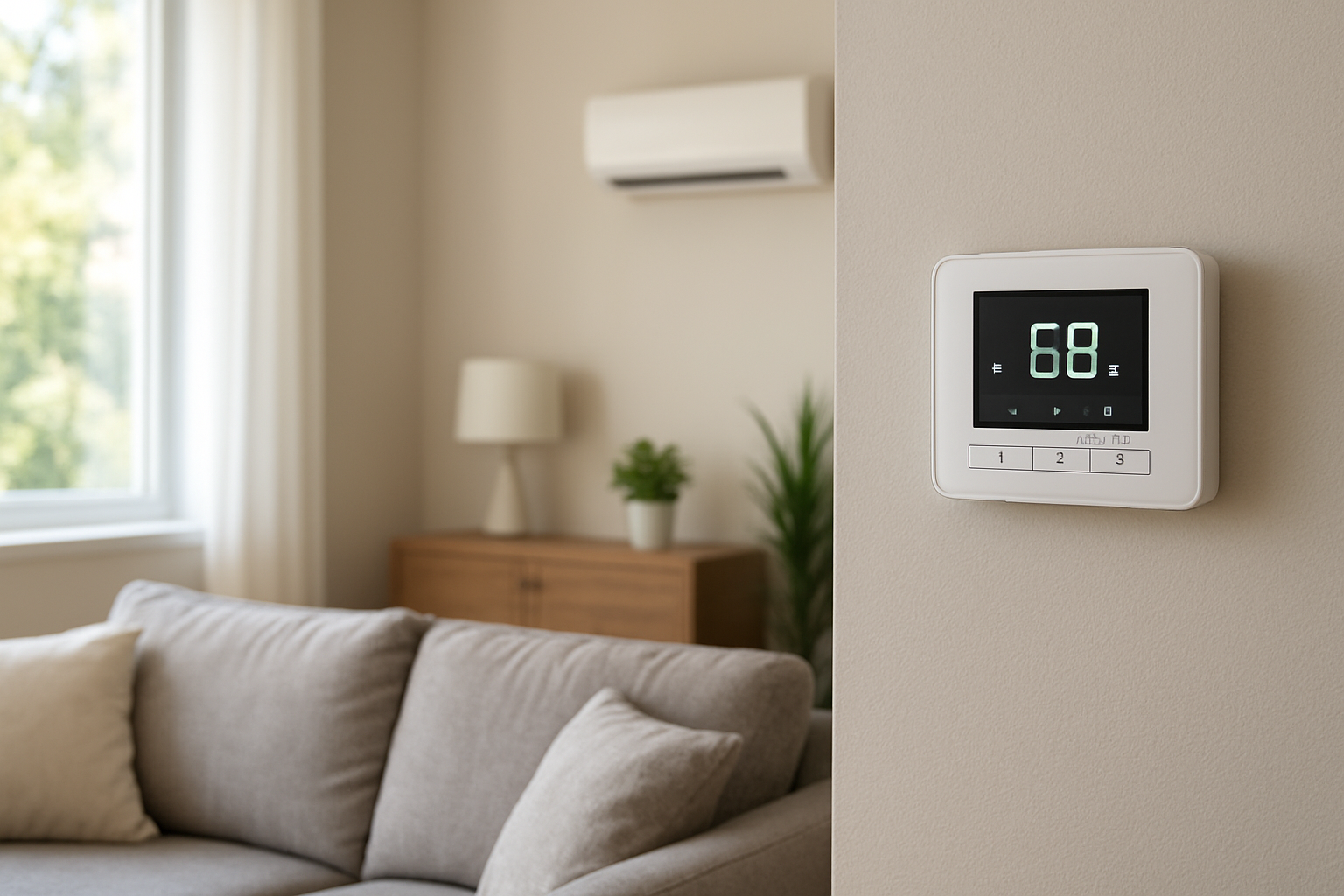
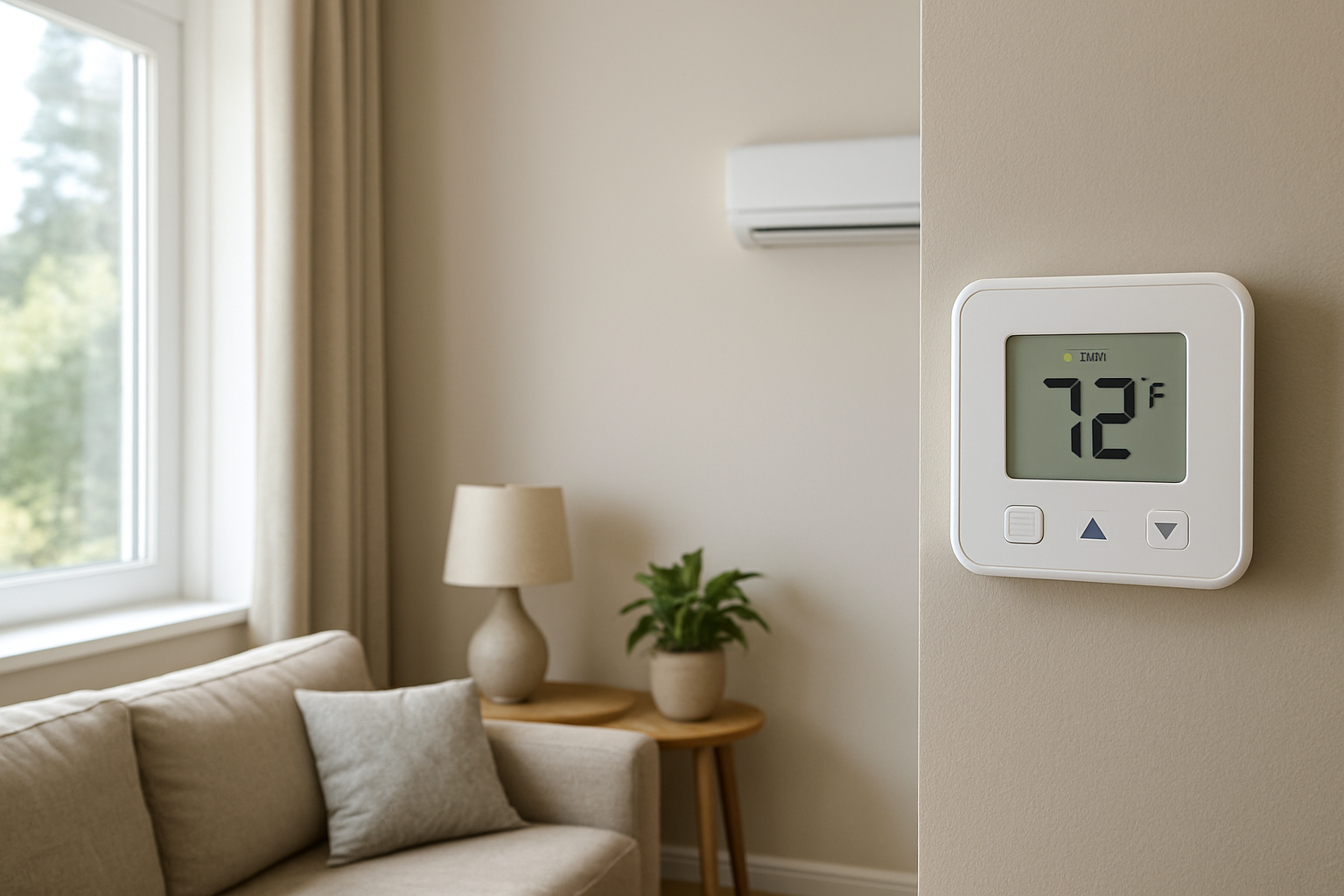
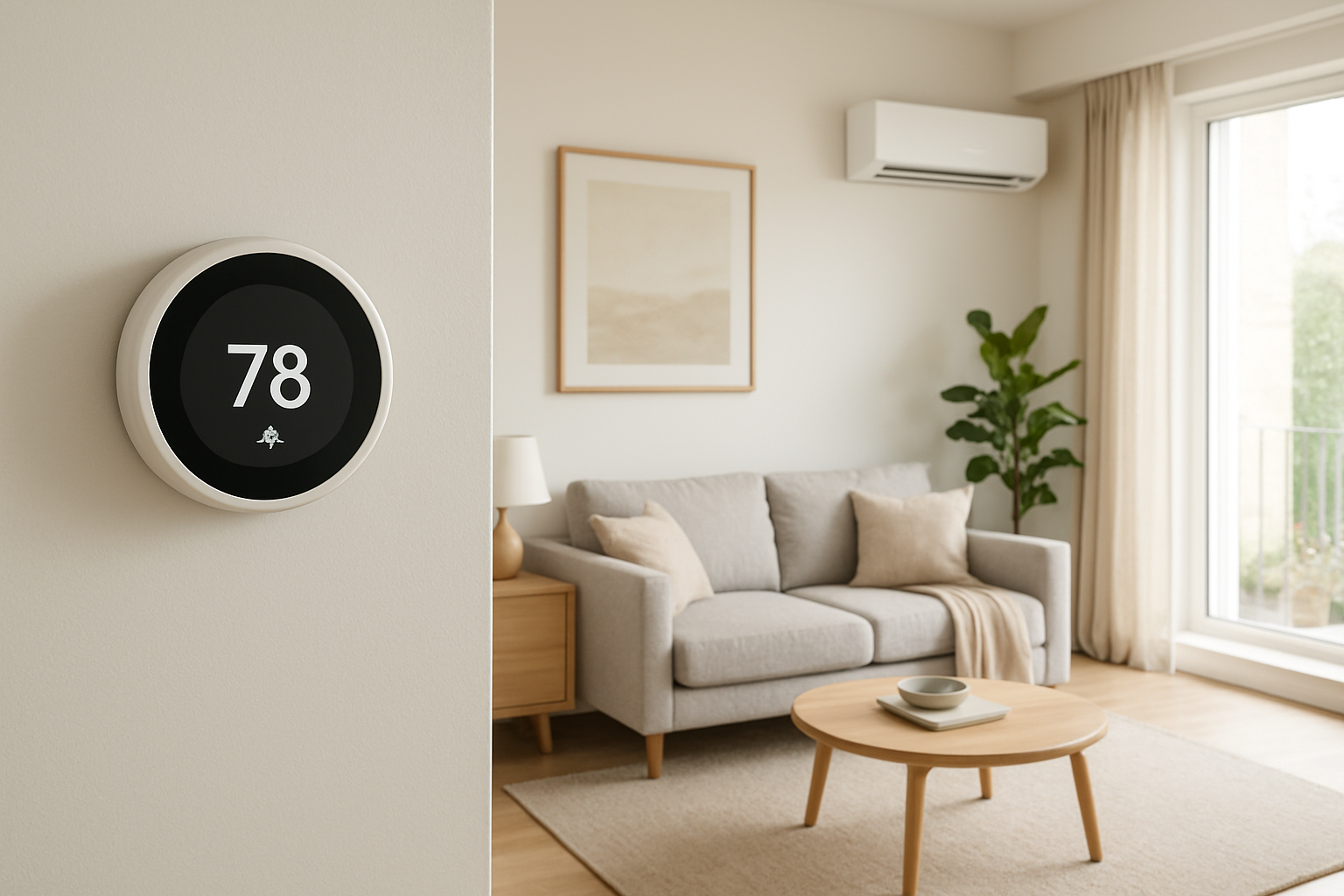
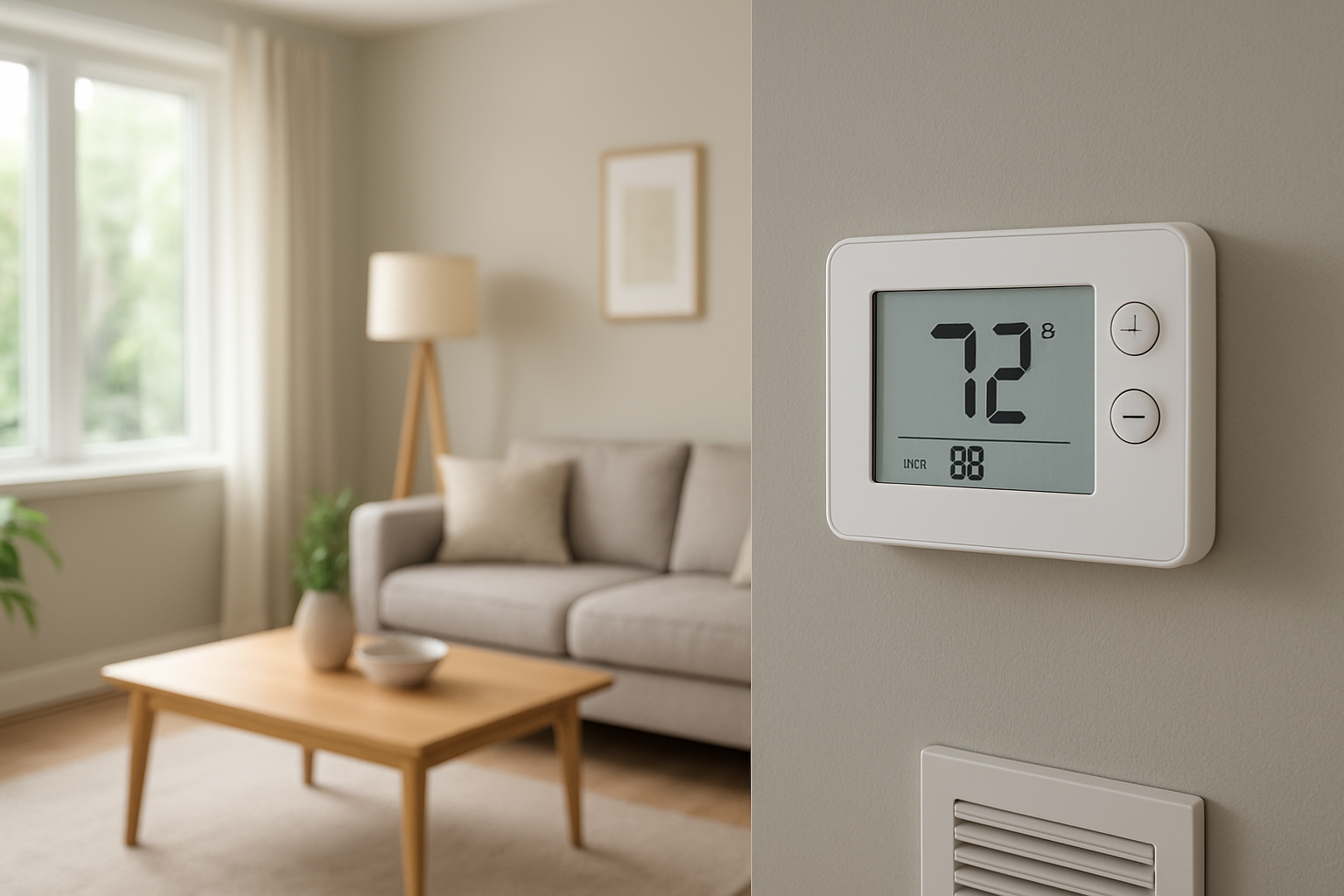
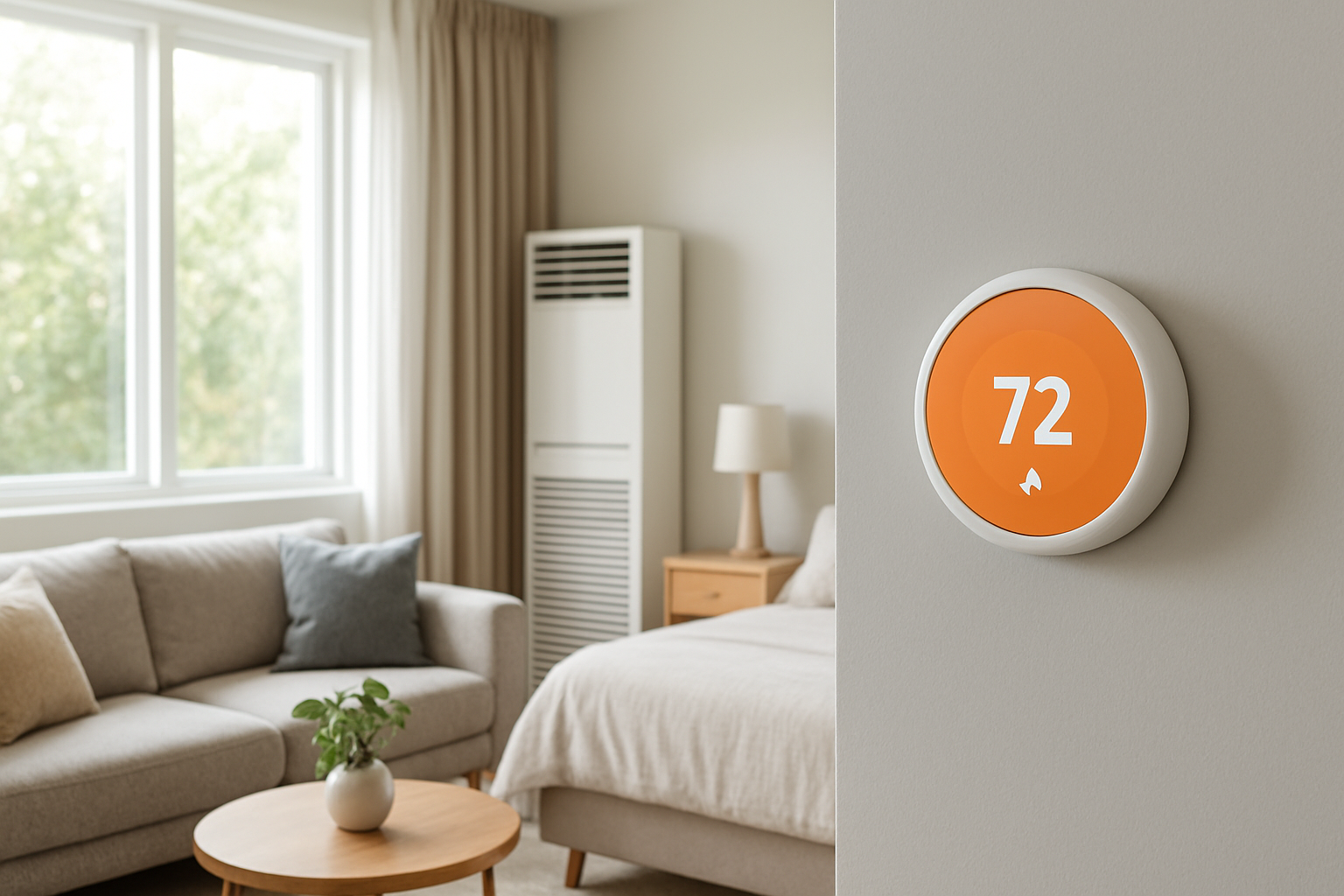
Diagnose and fix thermostat issues caused by incorrect sensor placement or calibration failure when your thermostat does not respond to temperature changes.
Thermostat Not Responding To Temperature Changes? Sensor Issue
Quick Answer
The most common reason a thermostat seems unresponsive to real room temperature changes is a sensor placement or calibration problem. The thermostat is reading a different temperature than the air you are living in, so it does not call for heating or cooling when you expect. First check: compare the thermostat reading to a reliable thermometer placed next to it for 15–20 minutes (no direct sun or drafts).
Identify the Comfort Pattern First
Before assuming the HVAC equipment is failing, isolate whether the thermostat is misreading the space or simply located in a spot that does not represent the home’s average conditions. These patterns point strongly to sensor placement or calibration failure.
Delay after a big change: You cook, shower, open an exterior door, or get afternoon sun, but the thermostat temperature barely moves while the room clearly feels hotter/colder.
Time-of-day dependence: Comfort problems peak in late afternoon (solar gain) or early morning (night setback recovery), yet the thermostat still reports a stable temperature.
Room mismatch: The thermostat area feels fine, but bedrooms or upstairs are uncomfortable. The thermostat does not react because its sensor never “sees” the problem air.
Door position changes everything: With interior doors open, the system behaves more normally; with doors closed, rooms drift but the thermostat stays satisfied.
System running vs off: When the system runs, the thermostat number changes slowly or not at all even though supply air is clearly warm/cool; or when the system is off, the room warms/cools noticeably without a matching thermostat change.
Vertical differences: Feet are cold while head level is warm (or the reverse). The thermostat may be mounted at a height or in a stratified area that is not representative.
Humidity perception shift: The air feels sticky after showers or cooking, yet the thermostat temperature remains steady. Humidity changes comfort without necessarily moving the thermostat’s sensed temperature much.
Airflow strength at the thermostat location: A nearby supply register, return grille, or a ceiling fan can wash the thermostat with mixed or conditioned air that is not the room average.
What This Usually Means Physically
A thermostat is not measuring an entire house. It measures the temperature at one small spot, then decides whether to run heating or cooling based on that local reading. If that spot is “biased,” the system’s decisions will be biased.
Two physical mechanisms dominate:
Placement bias: The thermostat sits in a microclimate created by solar gain through nearby windows, heat sources (TV, lamps, kitchen), drafts from exterior doors, or direct influence from a supply register or return grille. The thermostat can be satisfied while the rest of the house is not, or it can overreact and short-cycle because it is being artificially heated/cooled.
Sensor calibration or sampling failure: The internal temperature sensor can drift over time or respond slowly. If it reads consistently high or low, the system will stop early (or run too long), producing persistent comfort error even when airflow and equipment capacity are fine.
In real homes, air is not perfectly mixed. Stratification (warm air rising, cool air settling) and room-to-room pressure differences caused by closed doors and return air limitations create temperature pockets. A thermostat mounted in a hallway with good return air can read stable while a closed bedroom with poor return path drifts several degrees.
Most Probable Causes (Ranked)
Thermostat exposed to drafts or “short-circuit” air from supply/return: The thermostat is near a supply register, return grille, stairwell, or fan path. Diagnostic clue: the thermostat reading changes quickly when the system starts, but room comfort does not follow.
Sunlight or radiant heat influence: Afternoon sun, a nearby window, or heat from appliances warms the thermostat face or wall cavity. Diagnostic clue: problem peaks at the same time daily, often late afternoon, and improves after sunset.
Mounted on an exterior wall or poorly insulated wall cavity: The wall behind the thermostat is colder/warmer than the room air, biasing the sensor. Diagnostic clue: thermostat reading trends with outdoor temperature more than the lived-in comfort does.
Thermostat location not representative of the problem rooms: Bedrooms/upstairs drift while thermostat area stays stable. Diagnostic clue: opening doors or running a fan makes temperatures “catch up” and the system starts behaving more normally.
Sensor calibration drift or internal sensor fault: The thermostat consistently reads 2–5°F off compared to a reliable thermometer and does not correct over time. Diagnostic clue: the offset is stable day to day, regardless of weather or door positions.
Thermostat installation issue affecting sensing: Unit not level where required, mounted over a wall hole with air leakage from the wall cavity, or loose backplate. Diagnostic clue: reading jumps when you touch the thermostat or when wind/stack effect changes (cold mornings, windy days).
How to Confirm the Cause Yourself
These checks rely on observation and simple comparisons. Do not remove wiring or open electrical panels.
Side-by-side temperature verification: Place a reliable digital thermometer 1–2 inches from the thermostat (same height, away from direct sun and vents). Wait 15–20 minutes. If the thermostat differs by more than 2°F consistently, suspect calibration or placement bias.
Check for direct airflow influence: With the system running, stand at the thermostat and feel for moving air on your hand near the unit. Watch the thermostat reading over 5–10 minutes. If it shifts quickly right after the blower starts, suspect supply/return wash or a draft path.
Sun and appliance influence test: Note whether the thermostat is hit by sun at any time. Also note nearby heat sources (lamps, TV, kitchen). If the issue matches sun exposure or cooking periods, placement is the driver, not HVAC capacity.
Door position test: Keep interior doors in the problem area open for a few hours (or overnight) and compare comfort and thermostat behavior. If comfort improves without changing settings, the thermostat location is not representing closed-room conditions (return path and mixing issue).
Vertical stratification check: Compare temperature at about 6 inches above the floor and at thermostat height in the same room using the same thermometer (move it and wait a few minutes each spot). If you see 3°F+ difference, the thermostat may be reading a layer that does not match how the room is occupied.
Wall cavity leakage clue: On a cold morning (heat running) or hot afternoon (cooling running), place your hand near the thermostat edges. If you feel a cool/warm draft at the wall, the sensor can be biased by air moving through the wall cavity.
Stability test over a day: Write down thermostat reading and a nearby thermometer reading morning, afternoon, and night. If the offset stays similar all day, suspect calibration drift. If offset changes with sun, wind, or system runtime, suspect placement.
Normal Behavior vs Real Problem
Normal: The thermostat may move slowly (especially with smart thermostats that average readings). A 1°F difference from a separate thermometer is common due to sensor tolerances and placement.
Normal: Some rooms will differ 2–4°F from the thermostat area in multi-story homes or homes with closed doors and limited return air.
Real problem: The thermostat is consistently off by more than 2°F when compared side-by-side with a reliable thermometer after a 15–20 minute stabilization period.
Real problem: Comfort is repeatedly poor while the thermostat insists the setpoint is satisfied, especially if opening doors or changing airflow patterns suddenly “fixes” it.
Real problem: The thermostat reacts to sunlight, drafts, or HVAC runtime more than the occupied space does (short cycling, frequent on/off, or long periods of no call while the room feels wrong).
When Professional Service Is Needed
Persistent offset: Side-by-side comparison shows 3°F or more error across multiple times of day, even after replacing batteries (if applicable) and ensuring the thermostat is not in sun or direct airflow.
Major comfort impact: Rooms are routinely 5°F+ away from desired comfort while the thermostat remains satisfied, especially during typical weather (not extreme design conditions).
Control instability: The system short-cycles (frequent starts/stops) or runs excessively because the thermostat is being artificially heated/cooled at its location.
Signs of installation defects: Drafts from the wall cavity, loose mounting, or a thermostat placed in an obviously biased spot (by a return, supply, exterior door, or sunny window) where relocation or wall sealing is required.
Safety indicators: Any burning smell from the thermostat, screen flickering with heat, or evidence of overheating at the wall location warrants prompt evaluation.
How to Prevent This in the Future
Keep the thermostat in representative air: Avoid direct line-of-sight sun, exterior doors, kitchens, and hallways with strong return airflow. The best location is typically an interior wall in a frequently occupied area with stable airflow.
Maintain proper air mixing: Use consistent interior door positions if certain rooms lack return paths. If closing doors is required, consider improving return air pathways so temperature pockets do not form while the thermostat stays satisfied.
Reduce wall-cavity influence: Seal wall openings behind the thermostat (performed during service) so the sensor reads room air, not wall air.
Verify calibration after changes: After remodeling, register changes, new blinds, new lighting, or furniture moves near the thermostat, re-check side-by-side temperature accuracy.
Keep airflow sources consistent: Avoid aiming fans directly at the thermostat and avoid placing heat-producing electronics directly beneath it.
Related Home Comfort Symptoms
HVAC runs but house never reaches setpoint even though thermostat says it did
Short cycling after the blower starts
Upstairs too hot while downstairs feels fine
Bedrooms uncomfortable when doors are closed
Thermostat reads different than every other thermometer in the house
Conclusion
When a thermostat does not seem to respond to temperature changes, the most likely explanation is that its sensor is not reading representative room air due to placement bias or calibration drift. Confirm it by stabilizing a reliable thermometer next to the thermostat for 15–20 minutes and observing whether the error exceeds 2°F and whether sun, drafts, or HVAC airflow are influencing the reading. If the offset is 3°F+ or comfort is consistently affected, schedule service to correct placement, seal wall leakage, or address sensor calibration.
Frequently Asked Questions
How far off can a thermostat be and still be considered normal?
Up to about 1°F difference from a good digital thermometer can be normal. A consistent error greater than 2°F after a 15–20 minute side-by-side stabilization points to placement bias or a calibration issue.
Why does my thermostat say the house is 72°F but my bedroom feels much hotter or colder?
The thermostat is measuring only its location. If your bedroom has weaker airflow, limited return air with the door closed, or stronger solar gain, that room can drift several degrees while the thermostat remains satisfied in a better-mixed hallway or living area.
Can a nearby vent or return grille really make the thermostat act wrong?
Yes. If conditioned air from a supply register or strong return airflow washes over the thermostat, it can sense a temperature that is not the average room temperature. That can cause early shutoff, long run times, or short cycling depending on the direction of the bias.
Why does the problem show up at the same time every day?
A repeatable time-of-day pattern strongly suggests radiant effects like sunlight on the thermostat or the wall behind it, or routine internal loads like cooking and evening lighting. Those can heat the thermostat location without reflecting the rest of the home.
Should I use the thermostat temperature offset setting to fix this?
An offset can help if the thermostat is consistently wrong by a stable amount when measured next to a reliable thermometer. If the error changes with sun, drafts, or system operation, an offset will not solve it because the root problem is placement or airflow influence.
Need a complete overview? Visit the full troubleshooting guide here: Read the full guide for more causes and fixes.
There’s a strange kind of calm that comes with finally seeing the system do what it’s supposed to. The house feels more like your home and less like a thermostat coin toss—finally, the numbers line up with real life.
Not every hiccup is dramatic, but this one has a way of wearing on you. When it’s fixed, the day-to-day quiet wins again, and the whole setup stops feeling like it’s ignoring you on purpose.