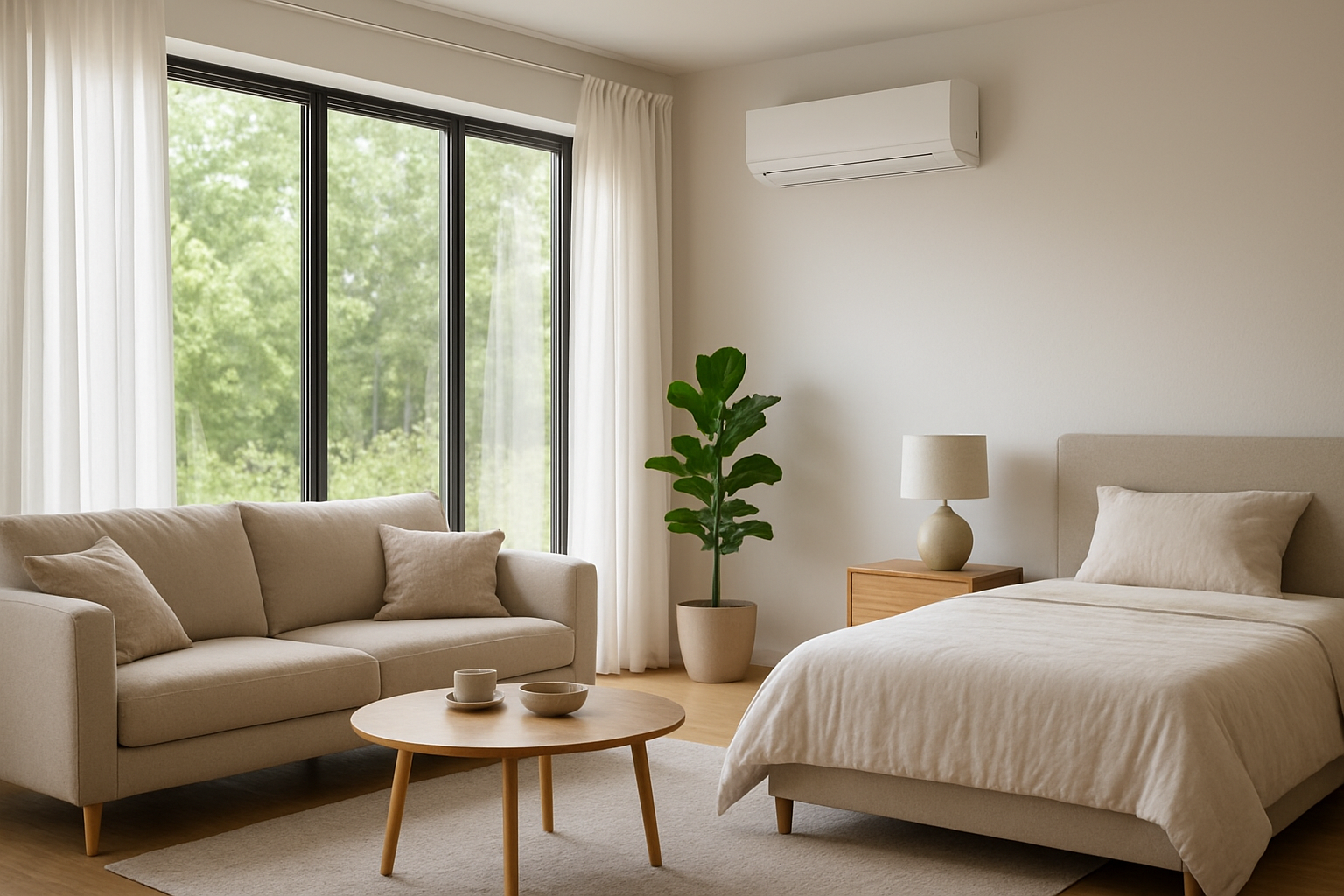
Diagnose why your AC struggles to cool rooms with large windows by understanding how high solar gain increases indoor temperatures and affects air conditioner performance.
AC Struggles To Cool Rooms With Large Windows? Solar Gain
Quick Answer
If your AC can cool most of the house but rooms with large windows stay hot, the most likely cause is high solar heat gain adding more heat than the supply air can remove. First check: compare the room temperature at peak sun vs after sunset with the same thermostat setting. A big improvement after sunset points to solar gain, not an AC failure.
Identify the Comfort Pattern First
Use these patterns to confirm you are dealing with solar-driven overheating rather than a system-wide cooling problem:
Time of day: Worst late morning through late afternoon, then noticeably better 1–3 hours after the sun leaves the windows.
Weather dependence: Happens on clear, sunny days even when outdoor temperature is moderate; less severe on cloudy days.
Where it happens: Specific rooms with large glass area, skylights, or glass doors; typically south and west exposures. Adjacent interior rooms may be normal.
System running vs off: Room warms quickly when the system cycles off; the AC may run long cycles or appear to run constantly during peak sun.
Doors open vs closed: With the door open, the room may improve slightly but still trends warmer than the rest of the home. With the door closed, it usually runs several degrees hotter.
Vertical differences: Ceiling area feels hotter than the floor, and the air near the window surface feels warmer. Higher stratification indicates heat entering faster than it is being mixed and removed.
Humidity perception: Often feels sticky or heavy in that room even if a humidity gauge reads normal, because radiant heat from hot glass and sunlit surfaces mimics humidity discomfort.
Airflow strength: Supply airflow at the vent may feel normal. The complaint is not weak air, it is the room not catching up during sun hours.
What This Usually Means Physically
Large windows can add a significant cooling load through solar gain. Sunlight passes through glass and is absorbed by floors, furniture, and interior surfaces. Those surfaces then re-radiate heat into the room and warm the air. This creates a concentrated, time-specific heat source that your AC must remove on top of the normal whole-house load.
Two details make this feel like an AC problem:
Load is localized: The extra heat is entering one room faster than the central system can deliver cool air to that one space, even if the system is correctly sized for the house overall.
Radiant discomfort: Sun-heated glass and sunlit surfaces increase mean radiant temperature. You can feel hot even if the thermostat or a wall thermometer doesn’t look extreme.
During peak sun, the room can require far more cooling than its duct supply was designed to deliver. After sunset, the heat source turns off and the same airflow suddenly seems adequate. That time-of-day recovery is a key diagnostic marker for solar gain.
Most Probable Causes (Ranked)
Direct solar gain through clear, unshaded glass(most likely): The room overheats primarily when sunlight hits the glass or the floor; improvement is quick when the sun moves off the window.
Low-performance glazing (high SHGC) or older double-pane/clear glass: Similar pattern, but more severe and longer-lasting; you may feel intense radiant heat near the window even with the AC running.
Insufficient supply air for that room’s peak load: Airflow feels steady but the room cannot hold setpoint during sun hours; door position significantly affects the temperature.
Return air limitation (room is pressure-imbalanced): With the door closed the room gets much hotter; the gap under the door is small and there is no return grille or transfer path.
Interior heat storage from sunlit thermal mass: Dark floors, stone, tile, or heavy furniture soak up solar energy and release it for hours, so the room stays warm well after sunset.
Window/door air leakage near the glass: Less common for this symptom alone, but hot air infiltration around frames can compound solar load, especially on windy afternoons.
How to Confirm the Cause Yourself
These checks rely on observation and simple comparisons. Do them on a sunny day when the problem is noticeable.
Sun on vs sun off comparison: Keep the thermostat unchanged. Note the room temperature (or comfort) at peak sun, then again 2–3 hours after the sun leaves that window. If the room begins to catch up without any other change, solar gain is driving the complaint.
Shade test: Close blinds/curtains fully or temporarily hang a light-colored sheet to block direct sun for 60–90 minutes. If the room stabilizes or the “hot glare” feeling drops quickly, the dominant factor is solar radiation through the glass.
Surface heat check by feel: Place your hand 1–2 inches from the interior glass and then on the wall away from the window. A strong temperature difference indicates radiant heat from the glazing and surrounding sunlit surfaces.
Door position test: Run the system as normal during peak sun. Compare room comfort with the door open vs closed for 30–60 minutes each. If closed-door overheating is dramatically worse, the room likely lacks a return path and cannot exchange enough air to remove the window heat.
Supply air comparison: Compare the strength of airflow from the supply vent in the sunny room to a similar-size room that stays comfortable. If airflow is similar, the problem is more likely excess heat load (solar) than a duct failure. If airflow is clearly weaker, insufficient delivery is contributing.
Late-day temperature decay: If the room stays hot long after sunset, note whether the floor or furniture that was sunlit still feels warm. This points to heat storage, not just momentary solar intensity.
Normal Behavior vs Real Problem
Normal behavior: A room with large west- or south-facing windows can run 2–4 degrees warmer during peak sun, especially with clear glass and minimal shading. Mild radiant discomfort near the window is common even when the house average temperature is controlled.
Likely a real problem:
Persistent gap: The room is consistently 5+ degrees warmer than the rest of the home during sun hours.
Recovery failure: The room does not cool down to near-house temperature within a few hours after sunset.
Comfort unusable: Occupants avoid the room due to heat despite long AC runtime.
Door sensitivity: Closing the door makes the room dramatically worse, indicating an airflow/return path issue layered on top of solar gain.
When Professional Service Is Needed
System runs nearly nonstop and still can’t hold the thermostat setpoint for the whole home on normal summer days (not just the sunny room). This may indicate a capacity or mechanical issue in addition to solar gain.
Supply airflow in the problem room is noticeably weaker than comparable rooms, suggesting duct restriction, damper position, or balancing issues requiring tools and access.
Temperature difference exceeds 5–7 degrees between the sunny room and the central area even after shading attempts, pointing to combined load and distribution shortcomings.
Humidity rises in the home while cooling performance drops (clammy air and longer cycles with poor cooling), which can indicate system performance problems that amplify the solar-gain complaint.
Comfort complaint appeared suddenly without any change in shading, furnishings, or weather patterns, warranting a check for duct disconnection, damper changes, or equipment issues.
How to Prevent This in the Future
Control the sun at the glass: Exterior shading (awnings, exterior solar screens, shutters) is typically more effective than interior blinds because it stops solar energy before it enters.
Use low-SHGC window treatments: Cellular shades or reflective-lined curtains reduce solar gain more than thin blinds, especially for west-facing exposures.
Apply window film selectively: Solar control film can cut heat gain significantly when replacement windows are not planned, but should be chosen correctly for the glazing type.
Improve air mixing and return path: If the room overheats more with the door closed, add a transfer path (jump duct, transfer grille, adequate undercut) so cooled air can circulate.
Balance airflow for peak load areas: After sun control, adjust supply balancing so the room receives more cooling during peak hours, without starving other rooms.
Manage interior heat storage: Consider lighter floor coverings or rugs in high-sun areas to reduce heat absorption if the room stays warm long after sunset.
Related Home Comfort Symptoms
West-facing room is hot every afternoon but fine at night
Sunroom or bonus room never reaches thermostat setpoint
One bedroom overheats when the door is closed
Feels hot near windows even when room temperature seems normal
AC runs long cycles on sunny days but shorter on cloudy days
Conclusion
When the AC struggles mainly in rooms with large windows and the worst overheating aligns with direct sun, high solar gain is the leading explanation. Confirm it by comparing peak-sun conditions to post-sunset recovery and by doing a short shading test. If shading improves comfort quickly, focus on solar control at the glass and then address any airflow/return limitations that keep the room from shedding that concentrated heat load.
Frequently Asked Questions
Why does the room feel hotter even if the thermostat says the house is at the right temperature?
The thermostat measures air temperature where it is located, not the radiant heat you feel near sunlit glass. Sun-warmed windows and surfaces raise mean radiant temperature, so your body gains heat faster even when the home’s average air temperature is controlled.
Should I assume my AC is undersized if one sunny room won’t cool?
Not immediately. A single room can exceed its share of the total load due to solar gain and still be underserved by its duct design. If the rest of the home holds temperature and the room improves after sunset, that points to localized solar load more than whole-house undersizing.
Why is the problem much worse when I close the door?
Closing the door can trap heat and restrict air exchange if the room lacks a proper return path. The supply air enters, but warm air cannot leave efficiently, so the room becomes pressure-imbalanced and cooling effectiveness drops during peak solar load.
Do interior blinds actually reduce solar heat gain enough?
They help, but they are usually less effective than exterior shading because most solar energy has already entered through the glass before the blind absorbs or reflects it. If the blinds become warm to the touch, they are still adding heat to the room, just more slowly.
Why does the room stay warm after sunset sometimes?
If floors, walls, or furniture absorbed direct sunlight, they store heat and release it for hours. Dark or dense materials increase this effect, so the room can lag behind the rest of the house even after the solar source is gone.
Need a complete overview? Visit the full troubleshooting guide here: Read the full guide for more causes and fixes.
For a lot of people, those big windows feel like a design win—until the day heats up and the room starts acting like it’s in on the joke. The air conditioner keeps working, but the comfort you were promised shows up late, like it’s taking the scenic route.
So you’re not imagining things, and you’re not alone in the frustration. There’s a kind of relief in finally seeing the pattern, even if the problem didn’t need another spotlight to be annoying.