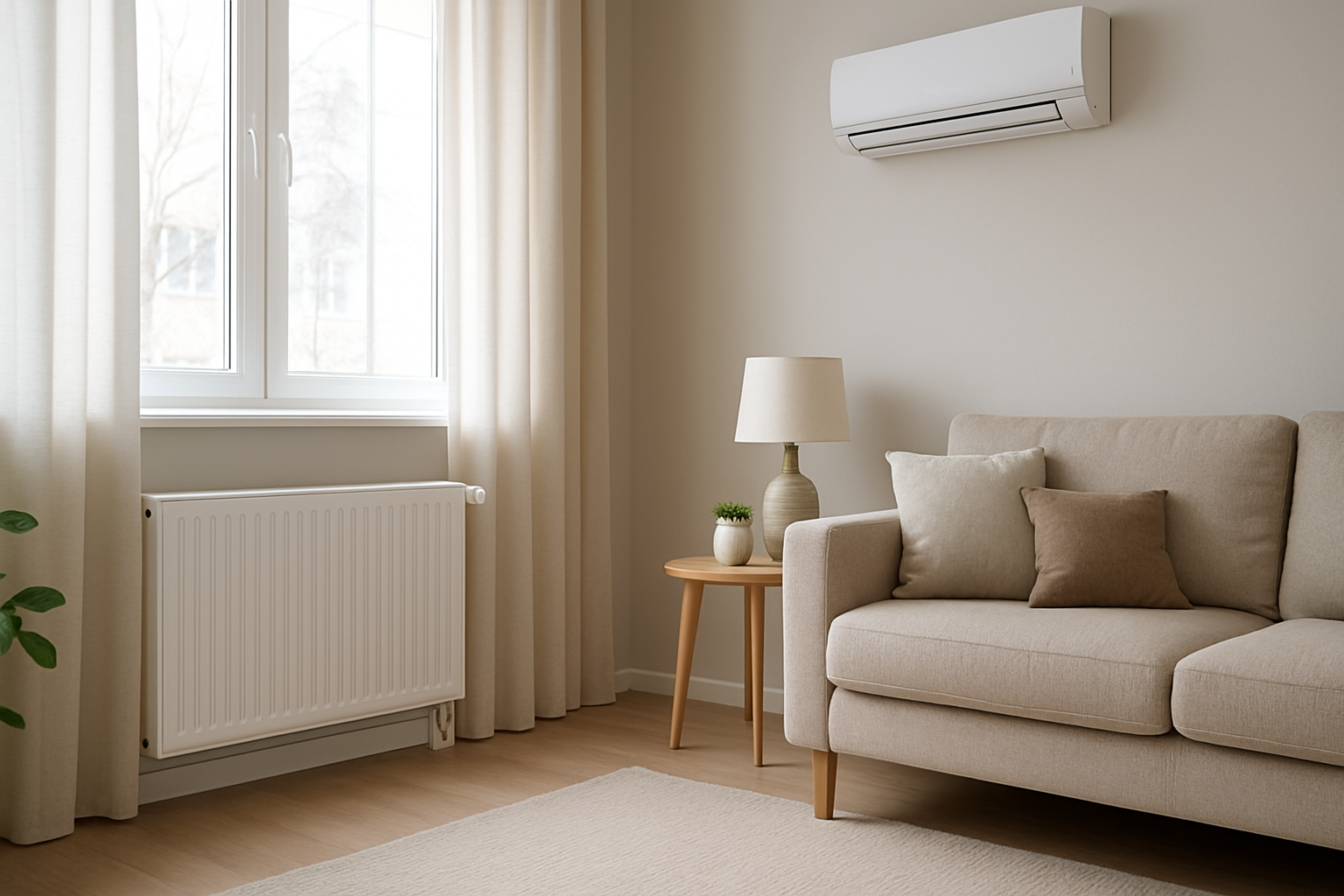
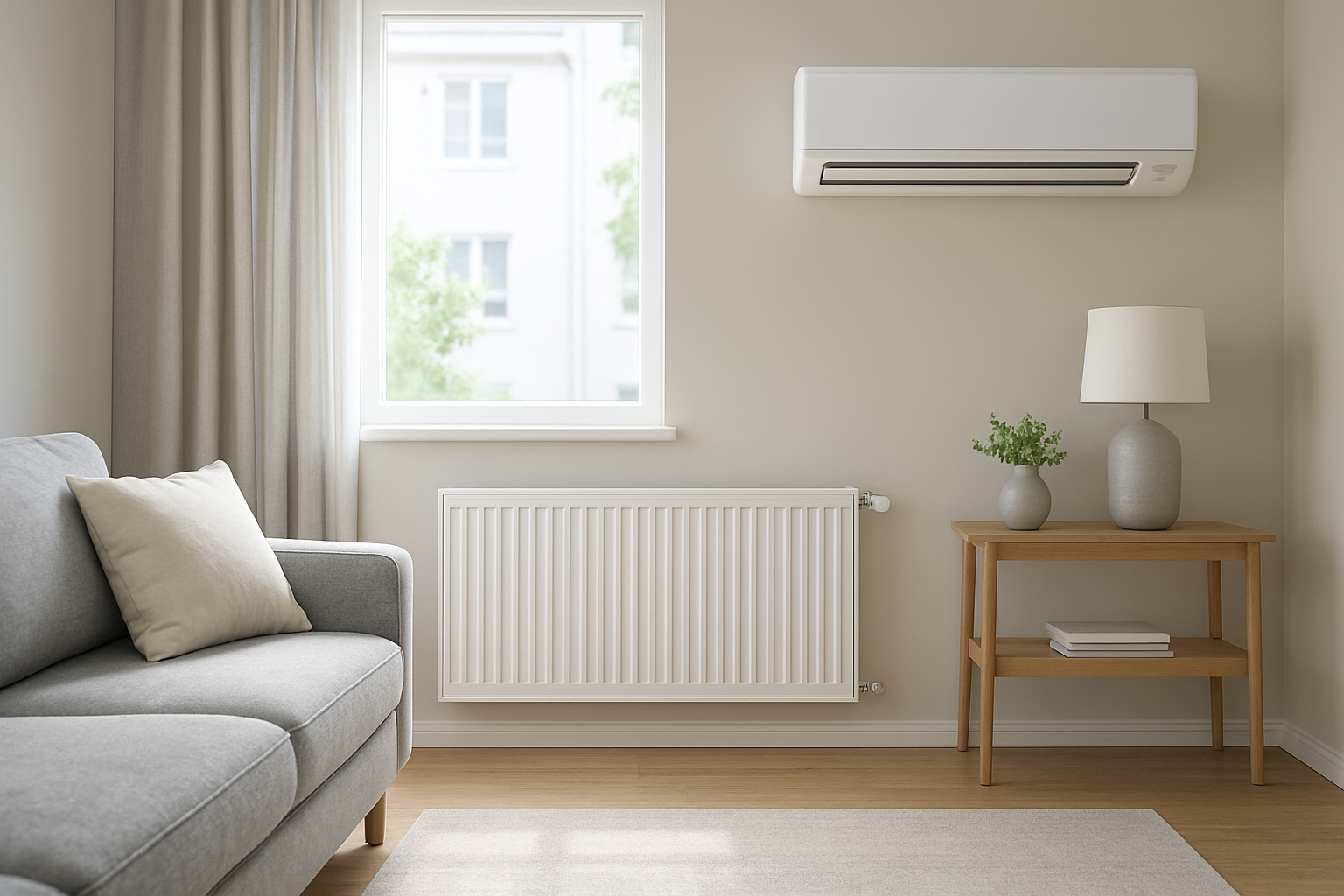
Learn why radiators often stay warm after the heating turns off, and when lingering heat is normal due to the radiator’s metal mass.
Radiator Stays Warm Long After Heating Turns Off? Normal Or Not
Quick Answer
Most of the time, a radiator staying warm after the thermostat stops calling is normal heat retention from the radiator’s metal mass and the hot water or steam still inside it. First check: note how long it stays warm and whether it continues heating the room (rising room temperature) or simply cools gradually without ongoing heat input.
Identify the Comfort Pattern First
Before assuming a control problem, sort what you are actually experiencing. These patterns separate normal stored heat from a system that is still actively feeding the radiator.
When it happens: After long heating cycles (cold mornings, windy days), radiators will stay warm longer than after a short cycle in mild weather.
Where it happens: If all radiators cool down slowly together, that points to normal thermal mass. If one radiator stays hot while others cool, suspect a local valve/air vent issue.
System running vs off: Listen near the boiler/furnace area. If the burner is off and the circulation pump (hot water systems) is off, warmth at the radiator is usually just stored heat. If you still hear flow, that suggests continued heat delivery.
Constant vs intermittent heat: A radiator that is steadily cooling is different from one that reheats or stays fully hot for an extended time with no thermostat call.
Doors open vs closed: Closed doors can trap heat in the radiator room, making it feel like the radiator is still driving temperature up even after the system shut off.
Vertical differences: Radiator rooms can stratify. If the ceiling feels much warmer than the floor after shutoff, you are feeling residual convection and stratification, not necessarily continued heating.
Humidity perception: As the air cools after a heating cycle, relative humidity rises. A room can feel less dry later even though no moisture was added. That change can be mistaken for the system continuing to run.
Airflow strength: With radiators, comfort changes are mostly convection and natural circulation. If you notice strong airflow from a fan convector unit, confirm whether its fan is running after the thermostat stops.
What This Usually Means Physically
A radiator is designed to store and release heat. Two things keep it warm after the thermostat is satisfied.
Metal mass and water/steam content: Cast iron and steel have significant thermal mass. When heating stops, the radiator doesn’t instantly drop to room temperature. It releases stored heat until it approaches the surrounding air temperature.
Heat transfer lag in the room: Warm radiator surfaces continue to drive convection currents. Even when the heat source is off, the radiator keeps warming nearby air for a while, and the room temperature may coast upward slightly depending on insulation, drafts, and how long the cycle was.
In a normal scenario, the radiator is not being fed more heat. It is simply discharging energy already stored in the metal and the hot fluid. The longer the prior burn, the longer the cool-down.
Most Probable Causes (Ranked)
Normal radiator heat retention after a long call for heat: Radiator is hottest right at shutoff, then gradually cools. Room temperature stabilizes or drifts slowly rather than climbing rapidly.
Residual circulation or thermal siphoning in a hot-water (hydronic) system: Radiator stays warm longer than others because hot water continues moving slowly after pump shutdown. Clue: one zone stays warm even though others cool, especially if piping is arranged to allow natural convection.
Partially stuck radiator valve (manual or thermostatic) letting flow continue: Radiator remains very hot and does not trend down normally. Clue: supply pipe stays hot for an unusually long time while the thermostat is not calling.
Steam system venting behavior causing late fill or slow release: Some radiators stay warmer longer due to vent rate and condensate return dynamics. Clue: that radiator heats late during the cycle and also cools late compared to others.
Control/sensor location causing overshoot: The boiler shuts off correctly, but the room continues to rise because the thermostat is in a cooler spot or influenced by drafts. Clue: the radiator cools normally, but the room overshoots setpoint by 2–4 degrees consistently.
How to Confirm the Cause Yourself
Use observation and simple comparisons. You are trying to answer one question: is the radiator cooling from stored heat, or is it still being supplied heat?
Time the cool-down trend: At shutoff, feel the radiator carefully with the back of your hand near the top, then check again at 10, 20, and 40 minutes. Normal retention feels like a steady decline. A radiator that stays fully hot with little change may still be receiving heat.
Compare to another radiator: Pick a radiator on the same floor or zone. If both cool at similar rates, it supports thermal mass as the explanation. If one stays dramatically hotter, investigate that radiator’s valve/vent.
Watch room temperature behavior: Note the thermostat temperature at shutoff and 30 minutes later with doors in the same position. A normal coast is usually small. If the room continues climbing noticeably after shutoff, the radiator room may be trapping heat or the thermostat location may be misleading.
Door test for trapped heat: If the radiator is in a small room, leave the door open for one cycle and closed for another. If closed-door cycles produce bigger overshoots and longer perceived warmth, the radiator is behaving normally but the room is storing heat.
Listen for continued system operation: After the thermostat is satisfied, listen near the boiler and near the radiator supply piping. In a hydronic system, continued pump noise or steady pipe heat well after shutoff points to continued circulation rather than just stored heat.
Check for reheating without a call: If the radiator cools, then later gets hotter again without the thermostat calling, that suggests unintended flow, control issues, or a system operating in another mode.
Normal Behavior vs Real Problem
Normal looks like this: the radiator is hot at shutoff, then it gradually cools over the next 30–90 minutes depending on radiator size, material, and cycle length. The room may coast slightly but then stabilizes. Radiators often feel warm to the touch long after they stop actively heating the room.
More likely a problem when you see any of the following:
Radiator stays fully hot for a long time with little cool-down trend, especially if other radiators are cooling.
Room temperature keeps climbing well above setpoint after shutoff and this happens repeatedly.
One room consistently overheats while others are comfortable, suggesting balancing/valve issues rather than normal heat retention.
Heat seems to return to the radiator without a thermostat call.
When Professional Service Is Needed
Comfort impact threshold: If the room overshoots setpoint by more than about 3 degrees on a regular basis and you need to open windows to sleep or use the space, have the system balanced and controls checked.
System behavior threshold: If one radiator remains hot while the thermostat is satisfied and other radiators cool normally, schedule service to evaluate valves, TRVs, zone valves, or steam vents.
Performance decline: If overheating coincides with longer runtimes, uneven heating in other rooms, or cycling problems at the boiler, professional diagnostics are warranted.
Safety indicators: Any burning smell that persists, visible leakage at radiator valves, water around piping, or signs of steam vent spitting require service.
How to Prevent This in the Future
Expect and plan for thermal lag: Radiators are slow in both directions. Avoid frequent thermostat changes that create long recovery burns and bigger post-shutoff coasting.
Keep doors consistent: If a radiator is in a small room with a thermostat elsewhere, door position changes the heat balance. Keep doors in a consistent position during cold weather to reduce overshoot.
Don’t block convection: Heavy drapes or furniture tight to the radiator can trap heat and create hotter surfaces and bigger local overheating, making the “stays warm” symptom more noticeable.
Address the worst room first: If one room overcoasts, consider balancing (hydronic), properly sized steam vents (steam), or a thermostatic radiator valve where appropriate.
Seasonal inspection: Before heating season, check that radiator valves operate smoothly and vents are not stuck or spitting.
Related Home Comfort Symptoms
One room overheats while the rest of the house is comfortable
Radiator heats late or only partially across the surface
Thermostat satisfied but room keeps getting warmer
Radiator makes pinging or ticking noises after shutoff (thermal expansion)
Steam radiator hisses constantly or spits water
Conclusion
A radiator that stays warm after the heat turns off is usually doing exactly what it was built to do: releasing stored heat from its metal mass and the hot water or steam inside. Confirm it by checking for a steady cool-down trend and comparing it to other radiators. If one radiator stays fully hot, reheats without a call, or the room repeatedly overshoots by several degrees, shift from normal thermal lag to a valve, venting, or circulation diagnosis.
Frequently Asked Questions
How long should a radiator stay warm after the thermostat turns off?
Commonly 30–90 minutes to feel warm to the touch, longer for large cast-iron radiators after long heating cycles. What matters is the trend: it should be gradually cooling, not staying fully hot indefinitely.
Can a radiator keep heating a room even when the boiler is off?
Yes, briefly. The radiator can continue transferring stored heat into the room after shutdown. That can cause a small temperature coast. Continuous overheating, however, suggests continued flow, a stuck valve, or control/balancing problems.
Why does one radiator stay warm longer than the others?
Often it is simply larger, more massive, or located in a less drafty room so it cools slower. If it stays significantly hotter than others on the same zone, suspect a valve not closing fully (hydronic) or venting/condensate differences (steam).
Does this mean my thermostat is bad?
Usually no. The thermostat can shut the system off correctly and the radiator will still radiate stored heat. Suspect thermostat issues when the room consistently overshoots well beyond setpoint or when short cycling/erratic calls occur.
Is it normal for the radiator to feel hot but the room to feel stuffy?
It can be. Radiators create gentle convection and can produce stratification, where warm air collects higher in the room. If the door is closed and the room is small, heat buildup can feel stuffy even after the system shuts off.
Need a complete overview? Visit the full troubleshooting guide here: Read the full guide for more causes and fixes.
That lingering warmth can feel like the heater forgot its cue, but it rarely means anything dramatic. There’s a kind of comfort in it, even if you’d rather the room be done with the whole performance.
Better to leave it at that: a small, normal remnant of how the house settles down. After all, not every leftover tickle of heat needs to become a mystery to solve.