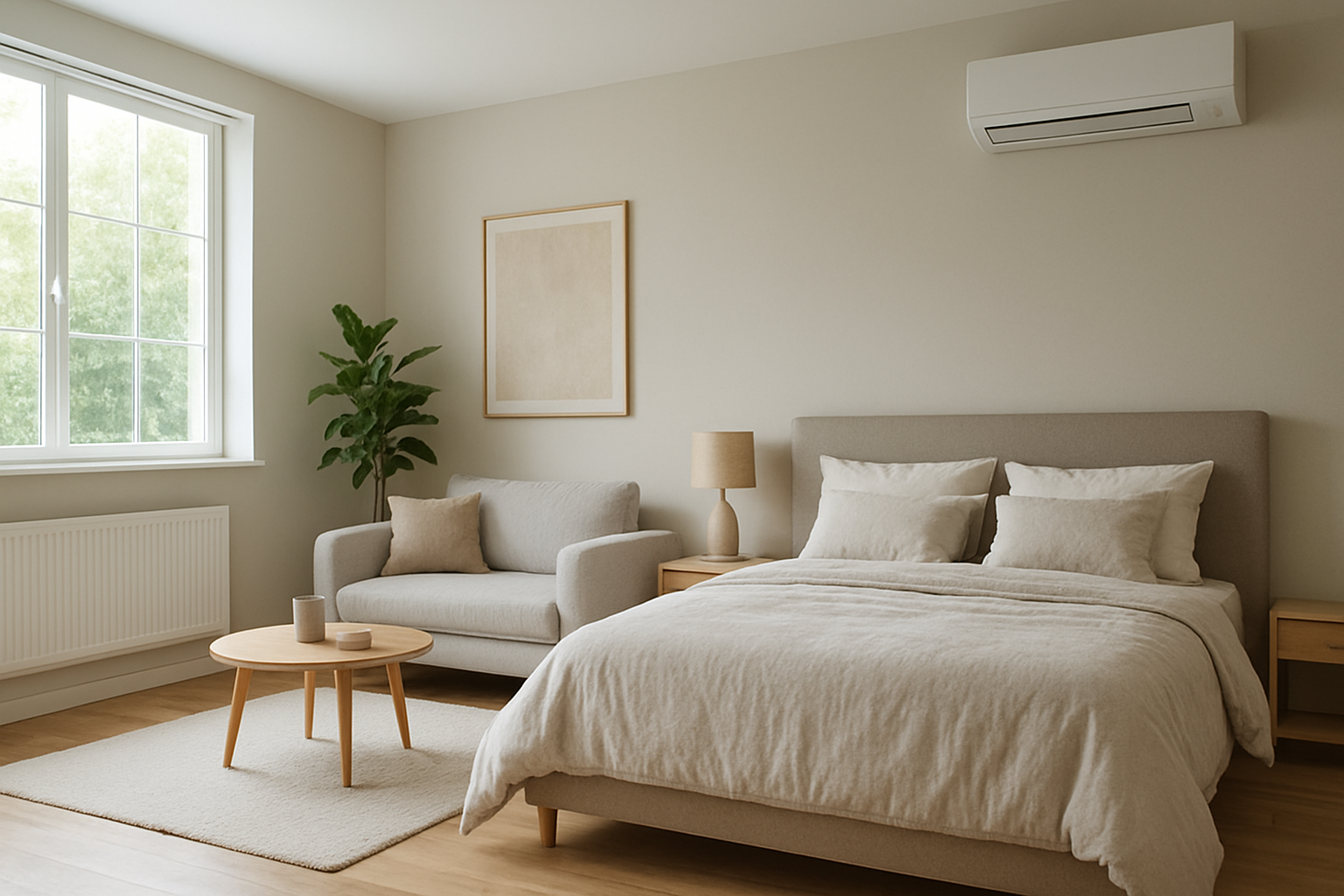
Learn how radiant surface cooling near exterior walls causes heat loss in rooms, leading to warm beds but cold walls, and discover solutions to improve comfort.
Warm Bed, Cold Walls? Your Room Is Losing Heat
Quick Answer
The most common reason a room feels fine in the middle but uncomfortably cold near the exterior walls is radiant surface cooling: the wall, window, and framing surfaces are cold enough to pull heat from your body even when the air temperature is acceptable. First check: compare air temperature at the bed vs 6–12 inches from the exterior wall and note if the wall-side reading is similar while you still feel colder near the wall.
Identify the Comfort Pattern First
Use these observations to confirm you are dealing with radiant surface cooling (cold surfaces) rather than a heating failure or a draft problem.
When it happens: most noticeable at night, early morning, and during windy weather or very cold outdoor temperatures. Often worse after sunset when exterior surfaces cool and there is no solar warming.
Where it happens: strongest within 2–4 feet of exterior walls, especially at corners, near windows, and on the wall behind/next to the bed. Interior walls usually feel neutral.
System running vs off: the room air can reach thermostat setpoint, but the wall-side comfort still feels cold. Running the heat longer may help only slightly unless surfaces warm up.
Constant vs intermittent: often constant during cold spells; may spike during wind gusts or when the sun goes down. If it comes and goes quickly, suspect wind-driven leakage around windows/trim.
Doors open vs closed: leaving the door open may reduce the cold-wall feeling only a little. If opening the door dramatically improves comfort, the issue is more likely airflow balance or a room supply/return limitation.
Vertical differences: cold sensation worse when sitting/lying down close to the wall; feet and lower body feel colder than head level. The ceiling may feel warmer while the wall feels cold.
Humidity perception: the room may feel dry or clammy near the wall even with normal humidity. Cold surfaces raise local relative humidity at the surface, sometimes leading to a chilly, damp perception.
Airflow strength: supply airflow can be normal. If the vent blows warm air but the wall-side still feels cold, that strongly supports a surface-temperature problem rather than a furnace output problem.
What This Usually Means Physically
Comfort is not controlled by air temperature alone. Your body exchanges heat with nearby surfaces by radiation. If the exterior wall, window glass, framing, or baseboard area is significantly colder than your skin, your body radiates heat toward that cold mass. You feel chilled even when a thermometer in the middle of the room reads a normal temperature.
This symptom is typical when the mean radiant temperature in the room is low on one side. Three building physics drivers usually stack together:
High conductive heat loss: weak insulation, compressed batts, missing air barriers, or thermal bridging through studs and headers keeps the interior wall surface cold.
Radiant asymmetry: one side of your body faces a cold surface (exterior wall/window) while the rest faces warmer interior surfaces. This imbalance causes discomfort even with stable room air temperature.
Localized air movement: cold surfaces cool adjacent air, which drops and spills along the floor. Even without a “draft,” this slow convective wash makes the wall-side zone feel colder.
The reason the bed can feel warm while the walls feel cold is simple: bedding reduces convective and radiant heat loss from your body, so you stay warm under covers, but exposed skin and your breathing zone still “see” the cold wall and window temperatures.
Most Probable Causes (Ranked)
1) Under-insulated or poorly sealed exterior wall cavity (most likely): the wall feels cold to the touch; discomfort is worse in corners and behind furniture; problem intensifies during cold snaps.
2) Window and framing surface temperatures too low (glass, spacer, frame, or trim leakage): cold sensation concentrates around the window zone; you may notice cold trim, slight movement of blinds/curtains, or a stronger chill when standing near the glass.
3) Thermal bridging in specific structural zones (studs, headers, rim joist, cantilever, kneewall): cold is “striped” or localized; one section of wall or a band near the floor/ceiling is much colder than adjacent areas.
4) Wind-driven air leakage into wall or around penetrations: symptoms spike on windy nights; you may feel intermittent coolness near outlets, baseboards, or window trim even when the HVAC is running normally.
5) Supply/return air distribution amplifying the radiant issue (least likely as primary cause): airflow may be weaker at the perimeter; warm supply air does not effectively wash the exterior wall, so surfaces stay cold even though the room air averages out at setpoint.
How to Confirm the Cause Yourself
These checks rely on observation and simple comparisons. You are looking for a surface-temperature-driven comfort problem, not just a low room temperature.
Air temperature comparison: place one thermometer at the bed area and another 6–12 inches from the exterior wall at about chest height. If both readings are close (within about 2–3°F) but the wall-side feels noticeably colder, radiant cooling is likely.
Stand-off test: stand facing the exterior wall from 1 foot away, then 6 feet away. If you feel a strong change without a big air temperature change, that points to radiant asymmetry from cold surfaces.
Time-of-day pattern: note if discomfort starts after sunset and peaks before sunrise. That pattern tracks surface cooling and reduced exterior wall temperatures, not a sudden HVAC malfunction.
Wind sensitivity: on a windy day/night, compare comfort near the wall to a calm day with similar outdoor temperature. If wind makes it significantly worse, air leakage or wind washing of insulation is likely.
Door position test: run the system normally for 30–60 minutes with the bedroom door closed, then repeat with the door open. If the cold-wall feeling barely changes, the primary issue is surfaces. If it improves dramatically, investigate airflow balance or missing return air path.
Furniture spacing check: if a dresser/headboard is tight against the exterior wall, pull it forward a few inches temporarily. If the surrounding wall-side comfort improves slightly (less cold “radiation” feel), the wall surface temperature is a key driver and trapped cold air behind furniture may be contributing.
Condensation indicator: look for window fogging, damp-feeling trim, or musty odor localized to the exterior wall area. That suggests the surface is cold enough to raise surface RH and can confirm significant heat loss at that boundary.
Normal Behavior vs Real Problem
Normal: in very cold weather, exterior wall surfaces can run cooler than interior walls. You may notice mild coolness near large windows, especially at night, even with a well-performing heating system.
Likely a real problem: you consistently avoid the wall-side of the room; you need a higher thermostat setting to feel comfortable only in that room; the exterior wall feels markedly colder than interior walls; discomfort is concentrated in one corner or around one window; or you see repeated condensation on the same window/wall area.
Red flag pattern: cold walls plus musty odor, visible staining, or recurring condensation. That combination indicates surfaces are staying cold enough to elevate moisture risk, not just a comfort nuisance.
When Professional Service Is Needed
Persistent discomfort: symptoms occur on most cold nights despite normal system runtime and a stable thermostat reading.
Room-to-room imbalance: the affected room needs more than about 3–5°F higher thermostat setting (or a space heater) compared to the rest of the home to feel similar.
Condensation or moisture indicators: repeated window fogging, damp trim, musty odors, or visible discoloration near exterior walls.
Performance decline indicators: the system runs unusually long yet the room remains uncomfortable at the perimeter, suggesting a combined envelope loss and distribution limitation.
Safety indicators: any suspicion of exhaust backdrafting, unusual odors from combustion appliances, or use of unvented heaters to compensate should trigger professional evaluation immediately.
How to Prevent This in the Future
Improve exterior surface temperatures: prioritize air sealing and insulation upgrades at the exact cold zones (rim joist, kneewalls, cantilevers, corners, window rough openings). Surface temperature improvement is the direct fix for radiant discomfort.
Reduce radiant asymmetry at the window: use tight-fitting insulating window treatments at night; confirm they do not block supply registers that need to wash the glass/wall area.
Manage interior airflow near the perimeter: keep supply registers open; avoid heavy curtains or furniture blocking perimeter heat delivery. The goal is to keep exterior surfaces warmer, not just the room air.
Control moisture appropriately: maintain indoor humidity at a level that does not drive condensation on cold surfaces during cold weather. If you routinely see condensation, address the cold surface and the humidity level together.
Seasonal check: during the first cold week of the year, identify the coldest wall/window zones early. Early detection prevents months of discomfort and helps target insulation/air sealing where it matters.
Related Home Comfort Symptoms
Room feels cold near windows even when thermostat reads normal
Cold floor along exterior wall baseboard line
Bedroom comfortable in center but clammy at the perimeter
One corner of the room is always colder than the rest
Recurring winter window condensation in one room
Conclusion
If your bed area feels warm but the walls feel cold, the most probable driver is radiant surface cooling from cold exterior wall and window mass. Confirm it by comparing air temperature at the wall vs the room center and by checking whether the discomfort tracks night-time cooling and windy conditions. If the pattern is consistent or you see condensation, move from thermostat adjustments to targeted envelope diagnostics and correction.
Frequently Asked Questions
Why do I feel cold near the wall if the thermometer says 70°F?
Because comfort depends on the temperature of nearby surfaces as well as the air. A cold exterior wall or window lowers mean radiant temperature and your body radiates heat to it. You can feel chilled without a big change in measured room air temperature.
Is this a furnace or heat pump problem?
Usually not. If the system reaches setpoint and other rooms feel normal, the heating equipment is likely producing heat correctly. The symptom points more strongly to cold surface temperatures from insulation/air sealing weaknesses or cold window surfaces.
Does closing the bedroom door make cold walls worse?
It can, but it usually does not create the cold-wall sensation by itself. Closing the door can reduce warm air mixing or restrict return airflow, which can amplify the perimeter discomfort. If opening the door quickly improves comfort, add airflow distribution checks to the surface-temperature diagnosis.
Why is the cold feeling worse on windy nights?
Wind increases pressure differences across the building shell. That can drive air through small leakage paths and can also reduce the effectiveness of insulation (wind washing), lowering interior surface temperatures and increasing convective cooling along the wall and floor.
Should I raise the thermostat to fix it?
Raising the thermostat can help temporarily by warming surfaces slightly, but it often wastes energy because the core issue is surface temperature at the boundary. If you need a noticeably higher setpoint to feel comfortable only near that wall, focus on locating and correcting the cold surface or leakage zone.