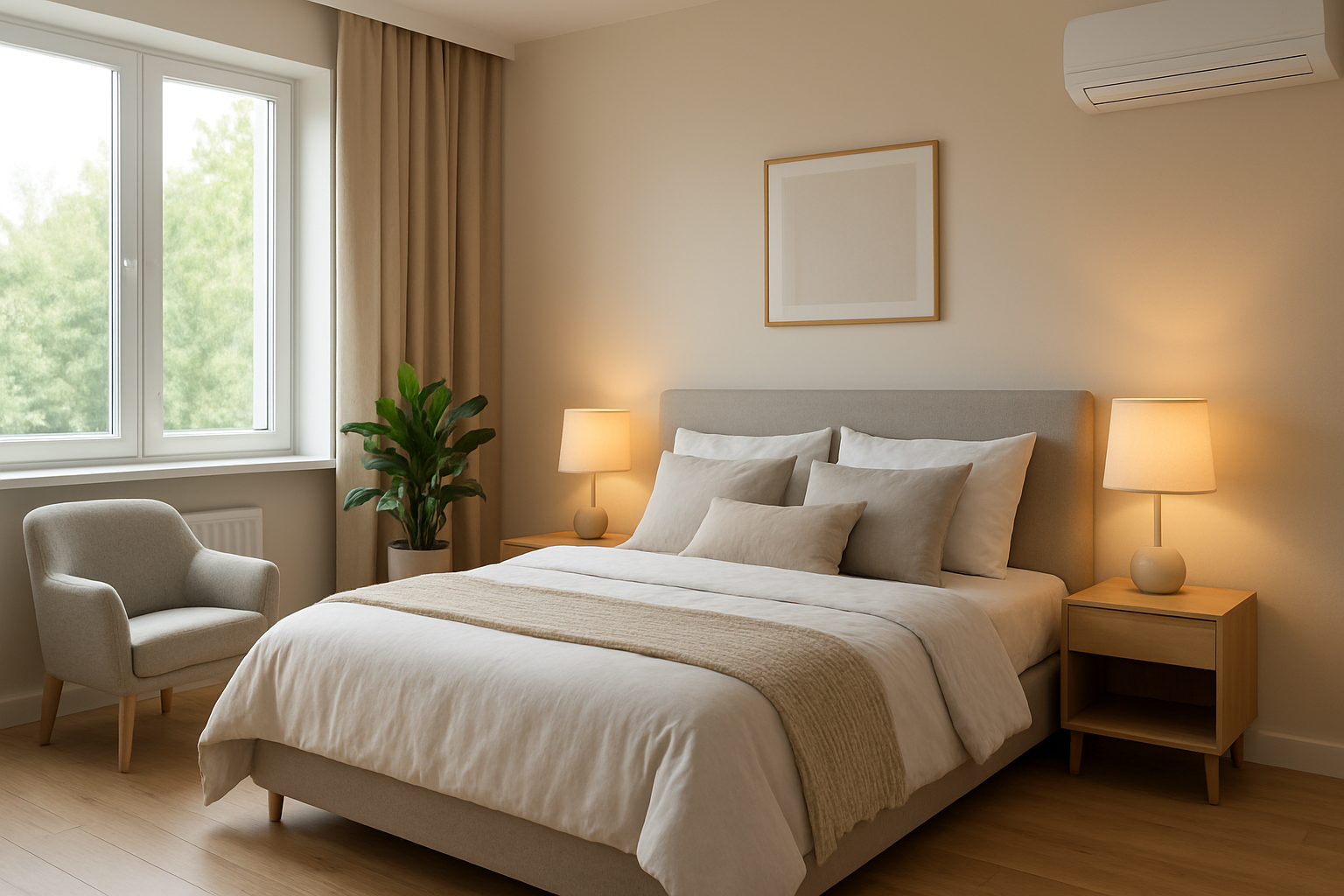
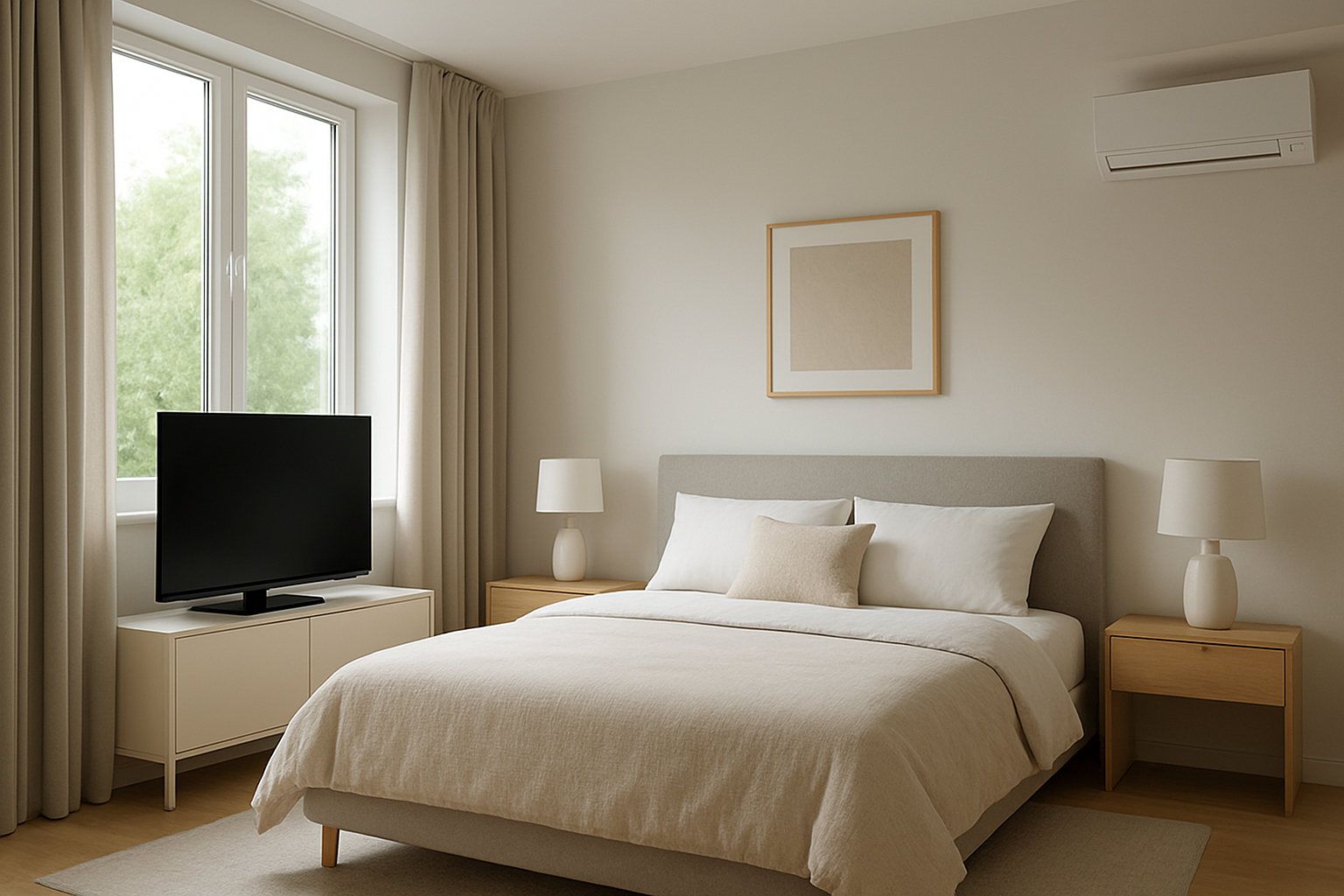
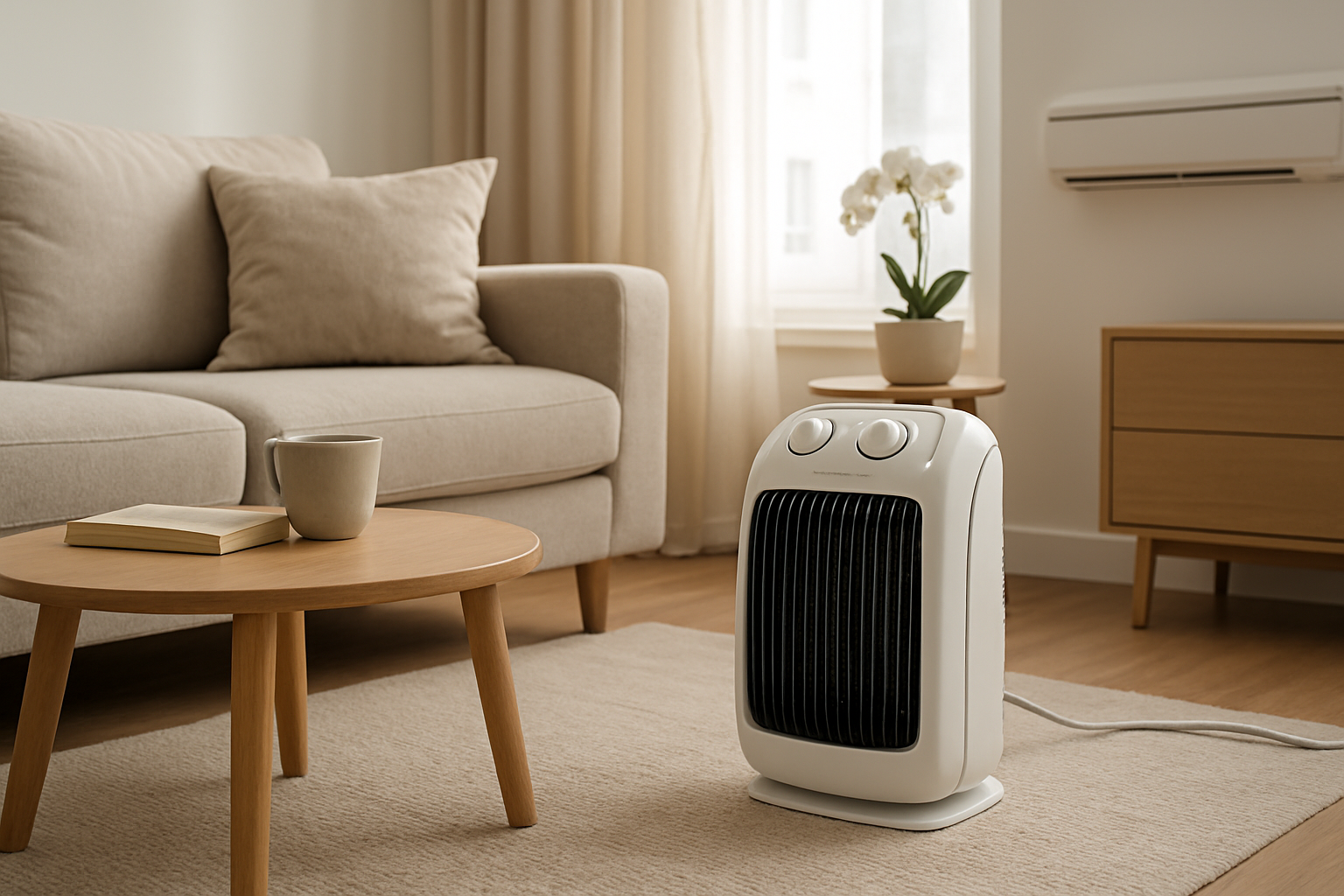
Diagnose why bedrooms feel warmer near lights than windows by identifying localized heat sources like lighting fixtures or electronic equipment that increase room temperature.
Bedroom Warmer Near Lights Than Windows? Local Heat Sources
Quick Answer
If your bedroom is noticeably warmer near the lights than near the windows, the most likely cause is localized heat gain from lighting or nearby equipment, combined with weak air mixing in that part of the room. First check: turn the lights and any nearby electronics off for 60 minutes, keep the door position the same, and compare temperatures at head height near the fixture versus near the window.
Identify the Comfort Pattern First
Before blaming the HVAC system, sort the symptom by pattern. Local heat sources create consistent, location-specific warmth that does not match the rest of the room.
When it happens: Does it appear in the evening when lights are on, or any time a TV, gaming PC, cable box, aquarium light, or charger is running? If it tracks usage, it points to local heat gain.
Where it happens: Is the warm zone directly under or around a ceiling fixture, recessed cans, a bedside lamp, or a desk with electronics? Localized warmth that stays put is a strong clue.
System running vs off: If the warm spot persists even when the HVAC cycles off, it is often a heat source issue, not supply air temperature.
Constant vs intermittent: Intermittent warmth that lines up with lights or equipment turning on is typical. Constant warmth in the same spot can also occur if recessed lights leak attic heat continuously.
Door open vs closed: With the door closed, bedrooms often have less air exchange; heat from lights/equipment builds locally. If opening the door reduces the warm zone quickly, this supports a mixing/air exchange issue plus a heat source.
Vertical differences: Check ceiling height versus sitting height. Heat from bulbs rises and collects near the ceiling; if the ceiling area is much warmer than lower levels, stratification is amplifying the effect.
Humidity perception: Local heat gain often feels like dryness or stuffiness near the warm area without a whole-house humidity change. If the entire room feels muggy, look for broader airflow or moisture issues.
Airflow strength: Weak supply air movement or no return path makes it easier for a lighted area to run warmer than the rest of the room.
What This Usually Means Physically
Most bedrooms are mixed by a combination of supply airflow, return airflow (direct return or undercut/transfer path), and natural convection. When a concentrated heat source operates in a low-mixing zone, it creates a local pocket of warmer air.
Localized heat gain: Nearly all electrical power a lamp or device consumes ends up as heat in the room. The heat is small in whole-house terms but significant in a small volume near the source.
Stratification: Warm air from a ceiling or tall fixture rises and layers near the ceiling. Without enough air movement, this warm layer stays in place instead of blending evenly through the room.
Radiant effects: Hot bulbs and fixtures radiate heat to your skin and nearby surfaces. You can feel warmer even if the average room temperature is not dramatically higher.
Air mixing limitations: Bedrooms with a single supply register, a closed door, and no dedicated return often have low circulation. That makes temperature differences within the same room more noticeable.
Attic interaction (recessed lights): Recessed cans or poorly sealed ceiling penetrations can allow attic heat to transfer into the room, especially on hot afternoons or during heating season when attic/roof assemblies run warm. This can make the area around lights warm even when the lights are off.
Most Probable Causes (Ranked)
High-wattage bulbs or heat-heavy fixtures (incandescent/halogen): The warm zone appears only when the lights are on; the ceiling area above the bed or desk becomes noticeably warmer within 15–45 minutes.
Electronics clustered under/near the warm area: A TV, receiver, game console, PC tower, modem/router, charging station, or mini fridge creates persistent heat; the warmth is strongest within a few feet of the equipment.
Poor air mixing in the bedroom (closed door, limited return path): The warm pocket is worse with the door closed and improves quickly when the door is opened or a fan is used, even without changing thermostat settings.
Recessed lights or ceiling penetrations leaking attic heat: The area around the light feels warmer even with lights off, especially on hot sunny days or when attic temperatures are high; sometimes you can feel a slight downward warmth near the trim ring.
Supply register throw pattern misses the problem area: The warm zone sits outside the airflow path; you feel good airflow at the vent but little movement where the warmth is noticed.
How to Confirm the Cause Yourself
These checks rely on observation and simple comparisons. Keep the thermostat setting unchanged during tests so you are isolating one variable at a time.
Lights-off temperature drift test: At night, run the bedroom as usual for 30 minutes with lights on. Then turn off only the lights (leave other conditions the same) for 60 minutes. If the warm zone fades significantly without any HVAC change, the fixture heat is driving the symptom.
Swap bulb type test (if safe and compatible): If you have halogen or incandescent, replace with LED of similar light output. If the warmth near the fixture drops noticeably over the next evenings, you confirmed a bulb heat issue.
Electronics isolation test: Power down and unplug nearby electronics and chargers for 1–2 hours. If the warm zone shrinks or moves away from the equipment location, you have a localized equipment load.
Door position test: Compare two evenings: one with the door closed, one with the door open 3–6 inches. If the temperature difference within the room becomes much smaller with the door open, poor air exchange is amplifying the heat source effect.
Ceiling-to-bed height comparison: Feel for a temperature change by standing under the fixture, then sit or lie where you notice the issue. A strong warm layer near the ceiling indicates stratification. If you have a thermometer, compare readings at about 5 feet and within 6–12 inches of the ceiling.
Midday attic-heat clue for recessed lights: On a hot sunny day, with lights off, check whether the area around recessed trims feels warmer than the ceiling a few feet away. If yes, attic heat transfer/air leakage is likely.
Airflow reach check: With the system running, note whether the supply air stream actually reaches the warm zone. If the airflow dies out well before that area, the room is being conditioned but not mixed evenly.
Normal Behavior vs Real Problem
Normal: A slight warmth directly under a ceiling fixture when lights are on, especially with older incandescent/halogen bulbs. A small temperature gradient near the ceiling is also normal in rooms with high ceilings or low fan use.
Likely a real problem: A persistent 3–5°F (or greater) difference between the light side and window side of the bedroom, discomfort that wakes you up, or a warm zone that remains even when lights and electronics are off.
Not typical: Warmth concentrated around recessed lights when the lights are off, or a warm draft sensation from the fixture area. That suggests attic heat leakage or ceiling air-sealing issues rather than normal bulb heat.
HVAC malfunction is less likely: If the rest of the room and the rest of the house are stable, a localized warm pocket near lights is usually a room-level heat/mixing issue, not a failing AC or furnace.
When Professional Service Is Needed
Recessed light heat leakage suspected: Warmth around trims with lights off, or temperature spikes near fixtures during hot afternoons. An HVAC or insulation/air-sealing professional should inspect attic-side sealing and fixture rating (IC/airtight) and verify safe clearances.
Large, persistent room imbalance: If the bedroom consistently runs uncomfortable compared to the rest of the home and door position changes behavior dramatically, a technician should evaluate return-air pathways, duct sizing, register placement, and static pressure.
Supply airflow concerns: If the bedroom register airflow is weak compared to other rooms, or the system noise changes when the bedroom door closes, request airflow and pressure diagnostics.
Electrical/fixture safety indicators: Flickering, buzzing, scorch marks, hot switch plates, or a burning odor near fixtures requires an electrician before comfort troubleshooting continues.
How to Prevent This in the Future
Use low-heat lighting: Choose LEDs with appropriate brightness rather than high-wattage incandescent/halogen. This directly reduces localized heat gain at the source.
Distribute electronics heat: Avoid stacking heat-producing devices in a tight corner or under shelving near the bed. Give electronics ventilation space so they do not dump heat into one stagnant pocket.
Improve mixing without changing thermostat settings: Use a ceiling fan on low speed to break up stratification. If no ceiling fan exists, a small room fan aimed to circulate (not blast) can reduce local hotspots.
Maintain a return-air path: If the bedroom door must stay closed, ensure there is an adequate undercut or transfer path so supply air can exit the room and mixing improves.
Address recessed light/ceiling leakage: When renovating, use airtight/IC-rated fixtures where appropriate and ensure attic-side air sealing is done correctly. This prevents attic heat from becoming a localized ceiling hotspot.
Related Home Comfort Symptoms
Bedroom is hotter at night even though the thermostat is satisfied
Room feels stuffy when the door is closed
Hot ceiling, cool floor in one room
One corner of a room is warmer than the rest
Temperature changes when recessed lights are installed or used
Conclusion
A bedroom that is warmer near lights than near windows is most often experiencing localized heat gain from lighting or nearby equipment, made worse by poor air mixing and natural stratification. Confirm it by turning off the suspected heat sources for an hour and comparing temperatures in the warm zone versus the window side without changing thermostat settings. If warmth persists with lights off or appears tied to recessed fixtures and attic conditions, move to attic/ceiling leakage and airflow pathway diagnostics.
Frequently Asked Questions
Can a light fixture really heat up part of a bedroom that much?
Yes. The heat is concentrated in a small area and rises to the ceiling, so it creates a local warm layer and a radiant heat effect. This is most noticeable with halogen or incandescent bulbs and in bedrooms with limited air circulation.
Why is it warmer near the lights but cooler near the windows if windows usually cause heat loss?
The window side may feel cooler from surface temperature and downdraft effects, while the light side gains heat directly from the fixture and stratification. You can have both at once: a localized warm zone near the ceiling fixture and a cooler sensation near glass.
If the HVAC is working, why does opening the bedroom door help?
Opening the door improves air exchange, which increases mixing and reduces temperature pockets. With the door closed, supply air can become trapped and the room may not circulate well, allowing heat from lights or electronics to build locally.
My recessed lights feel warm even when they are off. What does that indicate?
That often indicates heat transfer or air leakage from the attic through the fixture housing or ceiling penetrations. It is not typical behavior for a room that is otherwise stable and usually requires attic-side inspection for sealing and fixture type.
Should I adjust the thermostat to fix a warm spot near the lights?
Usually no. Adjusting the thermostat treats the whole house for a localized issue and can overcool/overheat other rooms. Confirm and reduce the local heat source first, then address air mixing or return-path limitations if the hotspot persists.
Need a complete overview? Visit the full troubleshooting guide here: Read the full guide for more causes and fixes.
So the next time the bedroom feels like it’s judging you from across the room, it helps to remember what’s actually pulling its weight. The glow isn’t just for mood; it comes with baggage, and that baggage likes to hang out nearby.
Windows can look like the obvious culprit, but they rarely put in the same effort. Meanwhile, the usual offenders quietly crank up comfort without making a big show of it—at least not until you notice.