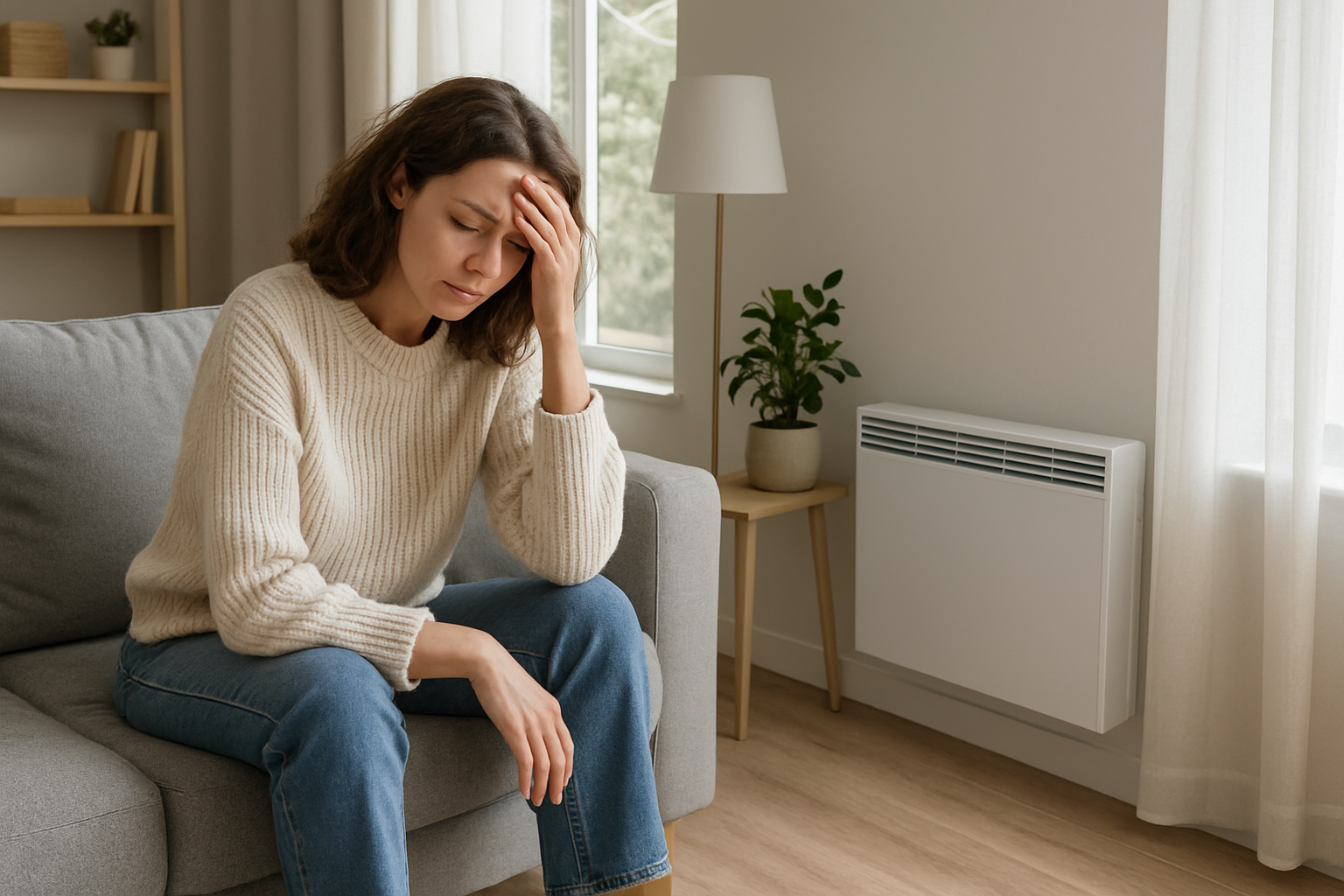
Learn how building thermal mass and heat loss can cause your heater to warm the house slowly, and discover solutions to improve heating efficiency and comfort.
Why Your Heater Takes Forever To Warm The House
Quick Answer
The most common reason a heater takes a long time to warm a house is not a broken furnace, but a building that is absorbing heat (high thermal mass) while simultaneously losing heat faster than the system can raise indoor temperature quickly. First check: note how long the system runs to gain 2°F on a cold morning, and whether the temperature stalls near the setpoint.
Identify the Comfort Pattern First
Before blaming the heater, sort the symptom. Warm-up complaints follow recognizable patterns that point to thermal mass and heat loss.
When it happens: Worst after overnight setback and on the coldest, windiest mornings. Often improves mid-afternoon without any change to thermostat settings.
Where it happens: Feels slow everywhere, not just one room. If only one wing or one floor lags, the issue may be distribution instead of whole-house thermal mass.
System running vs off: The thermostat calls for heat and the system runs continuously or in long cycles, yet the house warms slowly.
Constant vs intermittent: Consistently slow recovery after a setback points to the house soaking up heat. Random slow days point more toward equipment or control issues.
Doors open vs closed: If closing bedroom doors makes those rooms much colder during recovery, airflow balancing or return-air pathways are adding to the warm-up delay.
Vertical differences: Warm air at the ceiling while floors stay cold suggests stratification and cold surfaces pulling heat from occupants, typical during warm-up in high heat-loss homes.
Humidity perception: In winter, slow warm-up often feels drafty and dry. The dryness is usually a side effect of heating cold outside air leaking in, not a primary cause.
Airflow strength: Strong, steady airflow at registers with slow temperature rise points away from a blower problem and toward the building load.
What This Usually Means Physically
Heating a house is not only heating the air. During recovery, the system must also heat the building materials and contents that were cooled overnight. That is the thermal mass: drywall, framing, flooring, tile, plaster, cabinets, furniture, and especially concrete basements and slab floors. Those surfaces act like a heat sponge.
At the same time, the house is losing heat continuously through the envelope and air leakage. In a leaky or under-insulated home, the heat you add is immediately being pulled back out through:
Conduction: heat moving through walls, attic, windows, and floors to the colder outdoors
Infiltration: cold outdoor air leaking in and warm indoor air leaking out, increasing the load the heater must overcome
Radiant comfort effects: even if the thermostat reads warmer, cold walls and floors absorb body heat, so people still feel cold and interpret it as slow warm-up
The result is predictable: temperature increases quickly for the first degree or two if the system has enough output, then the rise slows as the building mass warms and heat loss ramps up with the indoor-outdoor temperature difference. A heater can be working normally and still take a long time to recover when the house is heavy and leaky.
Most Probable Causes (Ranked)
High building thermal mass with an overnight setback that is too deep
Diagnostic clue: slow recovery mainly after nights or long unoccupied periods; once the home is up to temperature, it maintains normally.
Above-normal heat loss from attic, windows, or air leakage
Diagnostic clue: noticeable drafts, cold exterior walls, and the warm-up rate is much slower on windy days at the same outdoor temperature.
Basement/slab/floor mass absorbing heat (cold floors)
Diagnostic clue: floors stay cold for hours, especially over garages, cantilevers, or slab-on-grade; ceiling feels warmer than the occupied zone.
Thermostat location sensing warmer/colder than the living space
Diagnostic clue: rooms feel cold but thermostat reaches setpoint, or thermostat stays low while a nearby room feels much warmer.
System capacity is marginal for the home’s peak heat loss
Diagnostic clue: on coldest days the system runs nearly nonstop and never fully catches up after setback, yet it does fine in mild weather.
Air distribution issues elongating recovery (secondary to the primary angle)
Diagnostic clue: some rooms heat quickly while others lag badly; closing doors changes behavior dramatically.
How to Confirm the Cause Yourself
These checks rely on observation and simple comparisons. Do them on a cold morning when the problem is easy to reproduce.
Measure recovery rate: Starting from a stable setback temperature, time how long it takes to gain 2°F. If the first 1°F happens faster than the second 1°F, the home is likely warming surfaces while fighting increasing heat loss.
Compare cold calm vs cold windy: On two days with similar outdoor temperature, note if warm-up is much slower on the windier day. A strong wind penalty points to infiltration and envelope leakage.
Check floor-to-ceiling comfort: If your feet feel cold while your head feels warm during warm-up, the air is stratifying and the surfaces are cold. That pattern supports high thermal mass and/or high heat loss.
Door test for distribution impact: During recovery, leave interior doors open for 30–60 minutes, then repeat on another morning with doors closed. If open doors significantly speed perceived warm-up, pressure/return paths are limiting heat delivery to closed rooms.
Thermostat vicinity check: Stand near the thermostat location and then in the coldest main living area. If the thermostat area warms faster or is less drafty, the system may satisfy the thermostat before the larger thermal mass areas feel comfortable.
Observe run behavior at steady-state: After the home has been at setpoint for a few hours, see if it maintains with normal cycling. Good steady-state control but slow recovery strongly favors thermal mass plus heat loss rather than equipment failure.
Normal Behavior vs Real Problem
Normal: In many homes, especially older or heavier construction, a 5–8°F overnight setback can take 1–3 hours to recover on cold mornings. Floors and exterior walls may feel cold for a while even when air temperature rises. Longer run cycles during recovery are expected.
Likely a real problem: Any of the following suggests heat loss is excessive or the system is underperforming, not just normal thermal mass behavior.
Temperature stalls: the house climbs a couple degrees, then stops rising for long periods while the system runs.
Cannot recover on normal winter days: not just extreme cold, but typical seasonal mornings.
Comfort is poor even at setpoint: persistent drafts, cold walls, and cold floors long after the thermostat is satisfied.
Recovery time suddenly got worse: a sharp change points to new leakage, a control issue, or equipment output reduction rather than building mass.
When Professional Service Is Needed
Recovery exceeds about 3 hours for a 3–4°F increase on typical winter mornings, and this is consistent week to week.
The system runs continuously for 4+ hours and still cannot reach setpoint when outdoor temperatures are not at local design extremes.
Warm-up performance has noticeably declined compared to prior winters with no change in thermostat habits.
Uneven heating is severe (one area comfortable, another unusable) suggesting duct/airflow faults layered on top of the building load.
Safety or abnormal operation indicators such as unusual odors beyond brief start-up dust burn-off, frequent burner short-cycling, or loud air movement changes.
A technician should verify delivered heat output and airflow first, then evaluate whether the house load and thermal mass are driving the complaint. Only after confirming equipment performance does it make sense to label it a building problem.
How to Prevent This in the Future
Use a smaller setback: reducing the setback by even 2–3°F can dramatically shorten recovery in high thermal mass homes because you are reheating less material.
Start recovery earlier: schedule the thermostat to begin warming before occupancy so the thermal mass is already climbing when you need comfort.
Reduce infiltration: prioritize weatherstripping at exterior doors, sealing obvious leakage points, and addressing attic bypasses. Wind-driven leakage is a major warm-up killer.
Improve the top of the house first: attic insulation and air sealing typically reduce both warm-up time and drafting more than window upgrades per dollar.
Manage stratification: run ceiling fans on low (winter direction) if available to move warm air down during recovery, especially in tall spaces.
Keep supply and return pathways open: avoid closing many registers; keep interior doors cracked if rooms lack adequate returns to reduce pressure-related comfort delays.
Related Home Comfort Symptoms
House warms up, then cools quickly when the heat stops
Floors stay cold even though the thermostat shows the correct temperature
Drafts increase when it is windy
Upstairs overheats while downstairs stays chilly
Heat runs nonstop on cold days and barely reaches setpoint
Conclusion
If your heater takes forever to warm the house, the most likely explanation is the house itself: cooled building materials absorb a large amount of heat while ongoing heat loss through insulation gaps and air leakage fights the temperature rise. Confirm it by timing the 2°F recovery, comparing windy versus calm days, and noting cold-surface and stratification patterns. If recovery is excessive or has recently worsened, verify equipment output and airflow professionally, then address envelope heat loss to improve warm-up time.
Frequently Asked Questions
How long should it take to raise the temperature 1 degree in winter?
In a typical house with a properly sized system, 1°F might take 10–30 minutes under moderate conditions, but recovery slows on colder mornings and in heavier, leakier homes. If 1°F takes 45–60+ minutes repeatedly on normal winter days, it points to high heat loss, very high thermal mass, or reduced system output.
Why does the heater run a long time but the house still feels cold?
During recovery, the heater is warming surfaces and contents, not just air. Cold walls and floors absorb heat and also make occupants feel colder through radiant heat transfer, even when the air temperature is rising. Drafts from infiltration amplify that effect.
Is a bigger furnace the solution to slow warm-up?
Not automatically. Oversizing can create short cycling and uneven temperatures once the home is warm. Slow recovery is often a symptom of high heat loss and thermal mass, which is better addressed by reducing leakage and improving insulation. Capacity should be evaluated only after confirming the current system is delivering its rated heat and airflow.
Why is warm-up much slower only on windy days?
Wind increases pressure differences around the house and drives infiltration. That adds a large hidden heating load because the system must heat incoming cold air while losing conditioned air. A strong wind sensitivity is a classic sign of air leakage rather than a furnace failure.
Why do the upstairs rooms warm faster than downstairs during recovery?
Warm air rises and stratifies, especially in tall spaces and homes with open stairwells. Meanwhile, downstairs floors and exterior surfaces may be colder and absorb more heat. This combination makes upstairs feel warm sooner even when the thermostat is still calling for heat.
Need a complete overview? Visit the full troubleshooting guide here: Read the full guide for more causes and fixes.
After you’ve wrestled with that slow, stubborn ramp-up, it helps to feel your frustration settle into something more useful: perspective. The house isn’t being dramatic—it’s just taking its time, like a cat that decides halfway through a yawn that it’s ready to move.
What lingers isn’t the problem itself, but the way it changes the day. Mornings feel a little longer, evenings a little quieter, and comfort starts to arrive on its own schedule—until you notice you’re no longer waiting quite as hard.