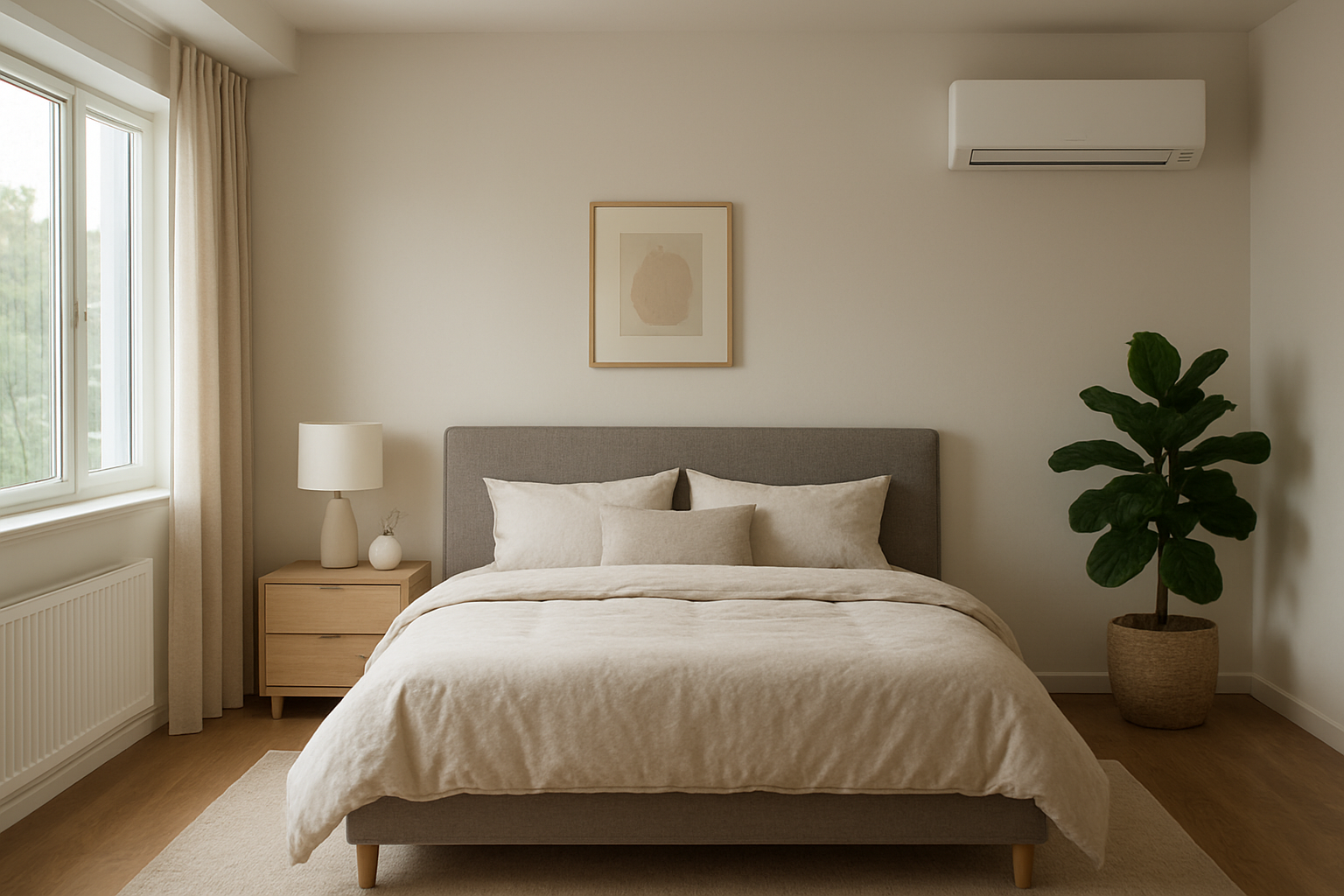
Diagnose and fix issues causing your bedroom to feel warm and heavy, including poor air circulation and elevated humidity affecting indoor air quality.
Bedroom Feels Warm But The Air Feels Heavy? Something Is Off
Quick Answer
A bedroom that feels warm and heavy usually points to poor air circulation, elevated humidity, or both. The fastest first check is to compare airflow at the bedroom supply vent to a nearby room with the door in both positions: open vs closed. If the room improves quickly with the door open, you likely have an air movement or pressure imbalance problem.
Identify the Comfort Pattern First
Before assuming the HVAC is failing, pin down the exact pattern. Heavy air complaints are often about moisture and stagnant air, not simply temperature.
Time of day: Worse at night often points to doors closed, reduced air mixing, and higher indoor humidity from showers/laundry/cooking earlier. Worse mid-afternoon often points to solar gain plus weak circulation.
Weather dependence: Heavy air during humid or rainy weather suggests moisture load and insufficient dehumidification. Heavy air mainly during mild weather suggests short run times and poor mixing.
Room specificity: Only the bedroom points to a localized airflow or return-path issue. Multiple rooms suggests whole-house humidity or system airflow problems.
System running vs off: If it feels heavier when the system turns off, air mixing stops and humidity equalizes upward. If it feels heavy while running, airflow may be restricted or supply air may not be reaching the room effectively.
Constant vs intermittent: Intermittent heaviness often tracks with HVAC cycling, exhaust fan use, or door position changes.
Door open vs closed: If the bedroom gets noticeably less heavy with the door open, that is a strong indicator of poor return airflow (pressure imbalance) or insufficient air exchange.
Floor-to-ceiling difference: Warm upper air with cooler lower air indicates stratification and weak circulation. A heavy feeling often increases when air is stratified and stagnant.
Humidity perception: Sticky skin, slow-drying towels, musty odor, or clammy sheets point to elevated humidity. Heavy air can happen even with normal temperature.
Airflow strength at the supply vent: If the bedroom vent feels weaker than others, the room is likely under-supplied or the duct run is restricted.
What This Usually Means Physically
Heavy air in a warm bedroom is usually the result of two physical effects happening together: weak air exchange and moisture that is not being removed fast enough.
Reduced air circulation causes stagnation and stratification. Warm air naturally rises and can pool near the ceiling. If the supply air is weak, blocked, or short-circuits somewhere else, the room does not mix. Your body senses this as stale, heavy air because heat and moisture are not being carried away from your skin effectively.
Elevated humidity increases the heavy feeling. When indoor relative humidity is high, your sweat does not evaporate as well. Even at the same temperature, the room feels warmer and heavier because your body cannot shed heat. Bedrooms often show this first because doors are closed, returns are limited, and the room accumulates moisture from occupants overnight.
Pressure imbalance can prevent proper airflow. If the bedroom has a supply register but no effective return path (no return grille, restricted undercut, door closed), the supply air pressurizes the room. That pressure resists more supply flow and reduces overall air exchange. The room becomes warm and heavy even though the HVAC is running.
Short run times reduce dehumidification. During mild weather, an oversized system or aggressive thermostat setbacks can satisfy temperature quickly and shut off before removing enough moisture. The house hits the temperature target but stays humid, especially in rooms with weak circulation.
Most Probable Causes (Ranked)
Bedroom door closed with inadequate return path (pressure imbalance): The room improves quickly when the door is opened; airflow at the supply register feels stronger with the door open.
Restricted or underperforming bedroom supply airflow (duct/register issue): Bedroom vent airflow is noticeably weaker than similar-size rooms; the register may be partially blocked by furniture, a closed damper, or a collapsed/kinked flex duct.
Whole-house humidity running high due to short cycling or limited dehumidification: The home reaches the thermostat setpoint quickly but still feels sticky; heavy air is worse on humid days and improves after longer HVAC run periods.
Imbalanced distribution (one room consistently under-served): Bedroom is always warmer/heavier than the rest, especially when other rooms feel fine; nearby rooms may be overcooled/overconditioned.
Return grille restrictions or filtration causing low system airflow: Multiple rooms feel stuffy; airflow at many supplies feels weak; the system may sound strained at the return.
Exhaust-driven negative pressure pulling humid air in: Heaviness increases when bath fans, range hood, or dryer runs; the bedroom feels more stagnant and warmer afterward.
How to Confirm the Cause Yourself
These checks rely on observation and simple comparisons. Do them when the problem is present.
Door position test (fastest indicator): With the HVAC running, close the bedroom door for 10–15 minutes. Note heaviness and temperature. Then open the door for 10–15 minutes. If comfort improves noticeably with the door open, you likely have a return-path or pressure imbalance issue.
Airflow comparison at registers: Compare airflow by feel between the bedroom supply register and a nearby room. A large difference suggests a duct restriction, closed damper, disconnected duct, or poor balancing.
Paper strip check at the door undercut: With the door closed and HVAC running, hold a thin strip of tissue or paper near the gap under the door. Little to no movement suggests minimal return airflow path. Strong movement only in one direction can indicate pressure imbalance.
Ceiling vs floor temperature check: Stand in the bedroom and note whether the air near the ceiling feels significantly warmer than at standing height. Strong stratification points to poor mixing and low effective airflow.
Humidity clue check: Look for slow drying of towels, a persistent musty odor, or clammy bedding. If these coincide with the heavy feeling, elevated humidity is likely a contributor even if the thermostat reads normal.
Runtime observation: On a humid day, if the system turns on for short bursts and shuts off frequently while the home still feels heavy, dehumidification is likely insufficient due to short run times or airflow issues.
Exhaust appliance correlation: If the heaviness increases after showers, cooking with the range hood, or running the dryer, you may be adding humidity or changing house pressure enough to reduce circulation and pull humid air inward.
Normal Behavior vs Real Problem
Normal: A bedroom can feel slightly warmer than the hallway at night because doors are closed, body heat accumulates, and airflow mixing is reduced. A mild difference that resolves quickly after the system runs and with the door open is common in many homes.
Likely a real problem: The bedroom consistently feels heavy or sticky, sleep comfort is affected, and the room does not recover even after the HVAC runs. A strong door open vs closed difference, notably weak vent airflow, or persistent humidity clues indicates a correctable airflow/return-path or humidity control issue rather than normal variation.
When Professional Service Is Needed
Persistent comfort problem: The bedroom remains warm and heavy most nights for more than 1–2 weeks despite basic checks (register open, clear airflow path, door test).
Room-to-room imbalance is large: Bedroom is consistently several degrees warmer than adjacent rooms, or the door position dramatically changes comfort.
System airflow seems broadly weak: Multiple rooms have low airflow, or the system sounds louder at the return than usual, suggesting restriction or blower issues.
Humidity indicators persist: Musty odor, condensation on windows, or clammy conditions continue even when temperature is controlled.
Performance decline: Longer run times with poorer comfort, or the system cycles rapidly without improving the heavy feeling.
How to Prevent This in the Future
Keep supply airflow unobstructed: Ensure the bedroom register is fully open and not blocked by rugs, furniture, or curtains that kill throw and mixing.
Maintain a return air path: When sleeping with the door closed, consider solutions that maintain air exchange (adequate door undercut, transfer pathway) so the room can actually circulate air.
Use exhaust fans correctly: Run bath fans during showers and for a short period afterward to reduce moisture spikes, but avoid creating long periods of negative pressure if the home already struggles with air balance.
Manage moisture sources: Limit drying clothes indoors and address any damp closets or adjacent bathroom moisture migration that feeds the heavy-air sensation.
Filter and return area upkeep: Keep return grilles clear and filters changed on schedule so the system can move the designed airflow needed for mixing and humidity removal.
Related Home Comfort Symptoms
Bedroom hotter than the rest of the house at night
Air feels stale or stuffy when doors are closed
High indoor humidity but thermostat temperature seems correct
Weak airflow from one vent compared to others
Musty odor in a bedroom or closet that gets worse overnight
Conclusion
A warm bedroom with heavy-feeling air most often comes from poor air exchange: the room is not moving enough conditioned air in and out, and humidity builds or lingers. Start with the door open vs closed test while the system runs and compare vent airflow to other rooms. If the room improves quickly with the door open or airflow is clearly weaker, the issue is likely air circulation/return-path related and worth correcting for stable temperature and humidity comfort.
Frequently Asked Questions
Why does my bedroom feel heavy even when the thermostat says the temperature is fine?
The thermostat only reports temperature at its location. Heavy air is commonly a humidity and circulation issue localized to the bedroom. If the room has weak supply airflow or a poor return path when the door is closed, moisture and heat are not carried away effectively, so comfort feels worse than the thermostat number suggests.
If opening the bedroom door fixes it, what does that indicate?
That pattern strongly indicates a return-air path or pressure imbalance problem. With the door closed, the room cannot easily send air back to the system, so supply airflow drops and mixing stalls. Opening the door relieves the pressure difference and restores air exchange.
Can a dirty air filter cause heavy air in just one bedroom?
A restrictive filter more often reduces airflow across the whole house, but a weak room can show it first. If several rooms feel stuffy and overall airflow seems reduced, check whether the filter and return grille area are restricting airflow. If only the bedroom is affected, a local duct/return-path issue is more likely.
Why is the heavy feeling worse on mild, humid days?
On mild days the system may run shorter cycles. Short run times often remove less moisture, so indoor humidity stays higher even though the temperature target is met. If the bedroom also has limited circulation, that humidity and stale air sensation concentrates there.
Is heavier air always a humidity problem?
No. Elevated humidity commonly causes it, but poor circulation alone can create a heavy, stagnant feeling through stratification and lack of air exchange. The quickest way to separate them is pattern testing: door open vs closed, vent airflow comparison, and whether the symptom tracks with humid weather and short system run times.
Need a complete overview? Visit the full troubleshooting guide here: Read the full guide for more causes and fixes.
When the room finally stops feeling weighed down, you notice it fast—like your shoulders can unclench without you asking them to. The warmth is still there, but it feels livable now, not suspicious.
And that heavy air? It gives up its grip. Small comfort, sure, but it lingers in a good way, long after the day is done.