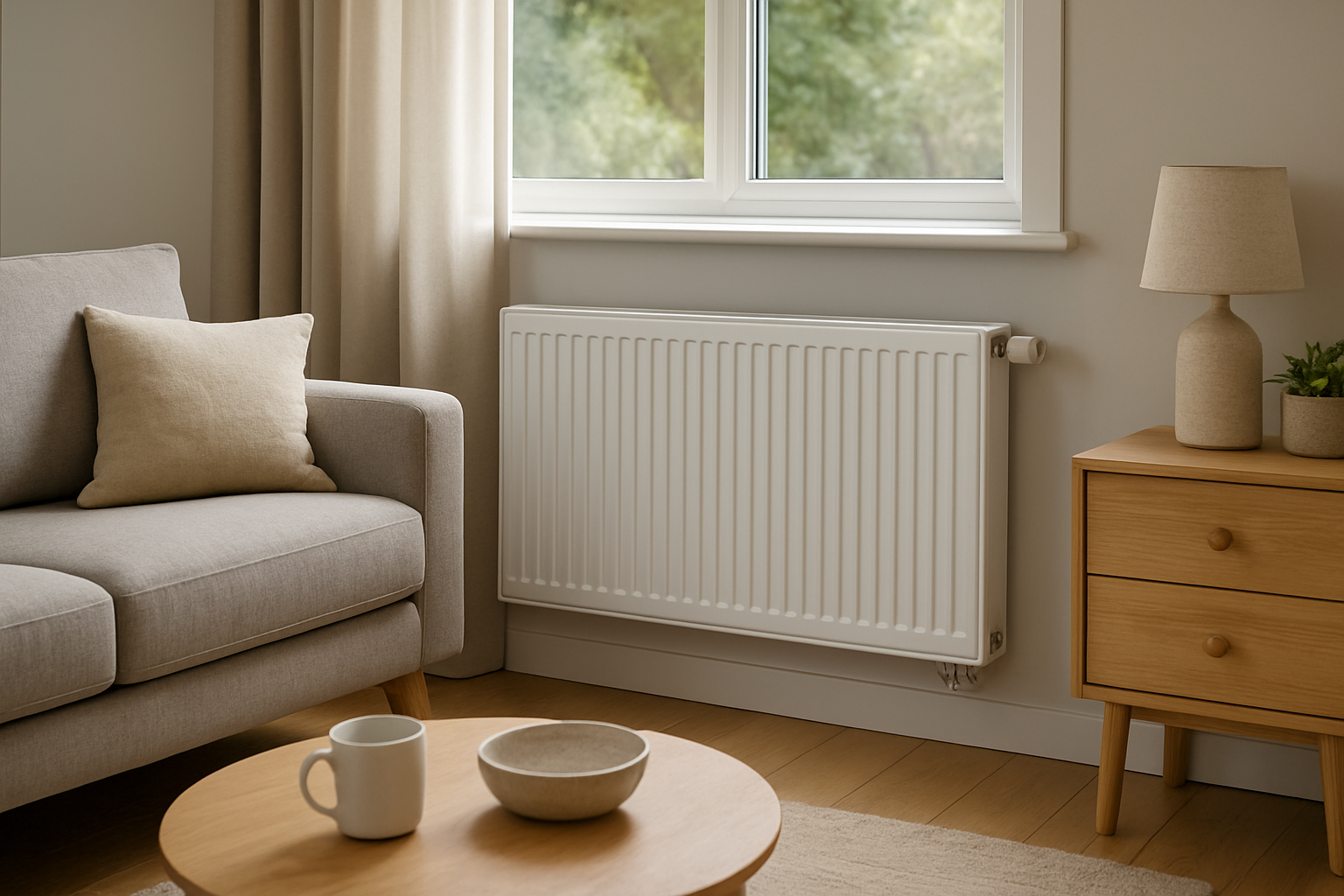
Diagnose why a radiator heats up then cools quickly, focusing on issues with limited water flow affecting thermal mass and consistent heating.
Radiator Gets Hot… Then Suddenly Doesn’t — Here’s The Reason
Quick Answer
The most common reason a radiator heats up fast and then goes lukewarm is limited hot-water flow. The radiator’s metal mass warms quickly, then cools because fresh hot water is not moving through it at a steady rate. First check: feel the radiator from the inlet side to the outlet side during a call for heat. A big temperature drop points to restricted flow.
Identify the Comfort Pattern First
This symptom can look similar across different problems, so sort it by pattern before assuming parts are bad. Use these observations to narrow it down.
When it happens: Most noticeable during colder weather or first thing in the morning when the system runs longer. If it only happens on mild days with short cycles, it may be normal cooldown between calls rather than a flow problem.
Where it happens: If one radiator does it while others stay consistently hot, the issue is usually local to that radiator or its branch piping. If many radiators do it, suspect a system-wide flow limitation or control behavior.
System running vs off: Stand near the radiator while the boiler is actively firing (or the circulator is running). If the boiler is on but the radiator cools anyway, that strongly suggests the radiator is not getting flow.
Constant vs intermittent: A repeating pattern of hot for a few minutes, then noticeably cooler while heat is still being called for, fits restricted flow more than a sizing issue.
Changes with doors open or closed: If the room warms briefly then drifts cooler even with the door closed, heat delivery is unstable. If opening the door fixes comfort but the radiator still cools, you likely have room heat loss/air mixing issues plus unstable radiator output.
Vertical differences: If the room has warm ceiling air but cool floor air, the radiator may not be delivering steady radiant/convective output. Intermittent radiator heat amplifies stratification.
Humidity perception: When a room stays cooler due to reduced radiator output, it often feels more damp even if the actual humidity is unchanged. That damp-feel is a temperature effect, not proof of a humidity problem.
Airflow strength: Radiator-heated rooms rely on natural convection. If the radiator output drops suddenly, you may feel the room air become still and cool because that convective loop collapses.
What This Usually Means Physically
A hot-water radiator is a heat exchanger with thermal mass. When hot water first enters, the metal heats quickly and you feel a strong heat surge. For the radiator to stay hot, hot water must keep moving through it so the returning cooler water is continuously replaced.
With limited flow, the radiator behaves like this:
Hot water enters and warms the near-side sections fast.
Flow slows or stops due to a restriction or control limiting circulation.
The radiator metal then gives up its stored heat to the room air and nearby surfaces.
Because little new hot water arrives, the average radiator temperature drops quickly and the room stops gaining heat even though the heating system is still “on.”
This is why the symptom feels sudden. The radiator is not failing to heat up; it is failing to stay supplied with heat.
In real homes, this shows up as uneven radiator surface temperatures and unstable room comfort. The room may never reach setpoint on colder days because the radiator’s output becomes intermittent instead of steady.
Most Probable Causes (Ranked)
Partially closed or sticking radiator valve (TRV or manual valve): Radiator heats initially, then fades as the valve throttles too far or the pin sticks. Clue: valve position changes behavior, or the thermostat head acts inconsistent.
Balance valve or lockshield on return partially closed: Flow is restricted even though the supply gets hot. Clue: supply pipe is hot, return pipe stays much cooler than other radiators’ returns.
Air trapped in the radiator or branch line: Air blocks water movement, so you get a brief warm-up then reduced circulation. Clue: top of radiator stays cooler than bottom, or you hear trickling/gurgling.
Sludge/debris restriction in radiator or valve body: Sediment reduces the effective water path, causing rapid warm-up near the inlet and weak output afterward. Clue: radiator has persistent cool sections and doesn’t respond much to valve adjustments.
Circulator/zone flow issue affecting that loop: Pump weak, incorrect speed, or a zone valve not fully opening. Clue: several radiators on the same zone share the same hot-then-cool behavior.
Boiler short-cycling or control logic limiting run time: Radiator cools because the heat source stops, not because flow stops. Clue: boiler turns off at the same time multiple radiators start cooling.
How to Confirm the Cause Yourself
These checks are observation-based and don’t require tools or disassembly. Do them during a steady call for heat, not when the system is idle.
Do a supply vs return touch test: Carefully feel the pipe feeding the radiator and the pipe leaving it. Limited flow typically shows a hot supply and a noticeably cooler return while the room still needs heat.
Map the radiator temperature pattern: Feel across the radiator from the valve end outward. With restricted flow, the first sections near the inlet get hot first, but the far end fails to stay hot or never fully catches up.
Compare to another radiator on the same heating cycle: Pick a radiator that performs well. If that one stays evenly hot while the problem radiator fades, the issue is local (valve, air, restriction, balancing).
Watch timing against boiler operation: When the radiator cools, listen for the boiler. If the boiler is still firing and other radiators stay hot, suspect a flow restriction in that radiator/branch. If the boiler also shut down, you are looking at cycling/control rather than localized flow.
TRV behavior check: If you have a TRV, set it to a higher setting than normal and keep the room cooler than setpoint (door open briefly). If the radiator still heats then fades while other radiators continue, the TRV/valve pin may be sticking or restricting.
Room response check: Close the door to that room for 30–60 minutes during a heating call. If the room temperature drifts down while the rest of the home stabilizes, heat delivery is not continuous enough to match heat loss.
Decision clue: If the radiator cools while the system is actively calling for heat and other radiators keep producing steady heat, the most probable explanation remains limited water flow through that radiator.
Normal Behavior vs Real Problem
Normal: A radiator can feel very hot at the start of a heating call, then gradually cool between boiler cycles. In mild weather, longer off-times make radiators feel like they “suddenly” cooled, but the space temperature remains stable and the radiator reheats predictably on the next call.
Real problem:
The radiator repeatedly heats up then goes lukewarm during the same call for heat.
The radiator surface is hot near the inlet but stays cool elsewhere, even after extended run time.
The room temperature lags behind the rest of the home or never reaches setpoint on colder days.
You hear frequent air noises, or the radiator needs frequent bleeding to work temporarily.
When Professional Service Is Needed
Comfort impact: The room stays 3°F or more below the rest of the home for multiple days in similar outdoor conditions.
Persistence: The hot-then-cool behavior happens on most heating cycles, not just once after a long off period.
System-wide signs: Multiple radiators on the same zone fluctuate together, suggesting pump, zone valve, or system balancing issues.
Air or sludge symptoms: Recurring air noises, frequent bleeding needs, or consistently cold sections that do not improve indicate underlying fill/pressure, air elimination, or contamination problems.
Any safety indicators: Boiler lockouts, unusual noises at the boiler, water leaks, or pressure problems require a qualified technician.
How to Prevent This in the Future
Keep valves fully functional: If you have TRVs, exercise them seasonally so the pin doesn’t stick after long off periods.
Avoid unintentional throttling: Don’t partially close return-side lockshields unless you are intentionally balancing and know the target temperature drop behavior.
Maintain system water quality: Sludge and debris are flow killers. If your system has a history of cold spots and dirty water, ask for a water-quality evaluation and appropriate cleaning/filtration strategy.
Address recurring air: If you repeatedly need to bleed radiators, the root cause is usually improper pressure, a failing air separator, or an air entry point. Fixing the cause stabilizes flow.
Keep heat loss predictable: Drafts or missing insulation make rooms cool faster, making intermittent radiator output more noticeable. Seal major drafts so the radiator’s required output is steadier and lower.
Related Home Comfort Symptoms
Radiator hot at the valve end but cold at the far end
One room colder than the rest of the house even when the thermostat is satisfied
Gurgling or trickling sounds in radiators
Radiators upstairs heat, downstairs lag or vice versa
Boiler runs but certain radiators stay lukewarm
Conclusion
A radiator that gets hot and then quickly doesn’t is most often doing exactly what limited flow causes: it heats its thermal mass fast, then cools because hot water is not continuously moving through it. Confirm it by comparing supply vs return temperature by touch and by checking whether other radiators stay hot during the same call for heat. If the pattern is repeatable and localized, focus on valves, air, and restrictions before assuming the boiler is the problem.
Frequently Asked Questions
Why does my radiator get hot for a few minutes and then go cold while the heating is still on?
That pattern usually means the radiator is not getting steady water flow. The metal heats quickly, then cools as it gives up stored heat to the room. Check if the supply pipe stays hot while the return stays much cooler during the same heating call.
Does a cold return pipe always mean a problem?
No. A return will be cooler than the supply in any working system. It becomes a diagnostic flag when the return is dramatically cooler than other radiators’ returns or stays cool while the radiator loses heat during an active call for heat, suggesting restricted flow.
If I bleed the radiator and it works briefly, what does that indicate?
Temporary improvement after bleeding points toward air interfering with circulation. If air keeps coming back, the underlying issue is usually system pressure, air elimination performance, or air being introduced somewhere in the system.
Could the thermostat be causing the radiator to cool?
If the thermostat ends the call for heat, radiators will cool normally afterward. But if the radiator cools while other radiators stay hot and the thermostat is still calling, the problem is more likely restricted flow at that radiator or its branch.
Is this more likely a radiator problem or a boiler problem?
If only one radiator shows the hot-then-cool behavior while others heat steadily, it is usually local to that radiator: a valve restriction, trapped air, or internal debris. If many radiators fluctuate together, then system-wide flow or boiler cycling becomes more likely.