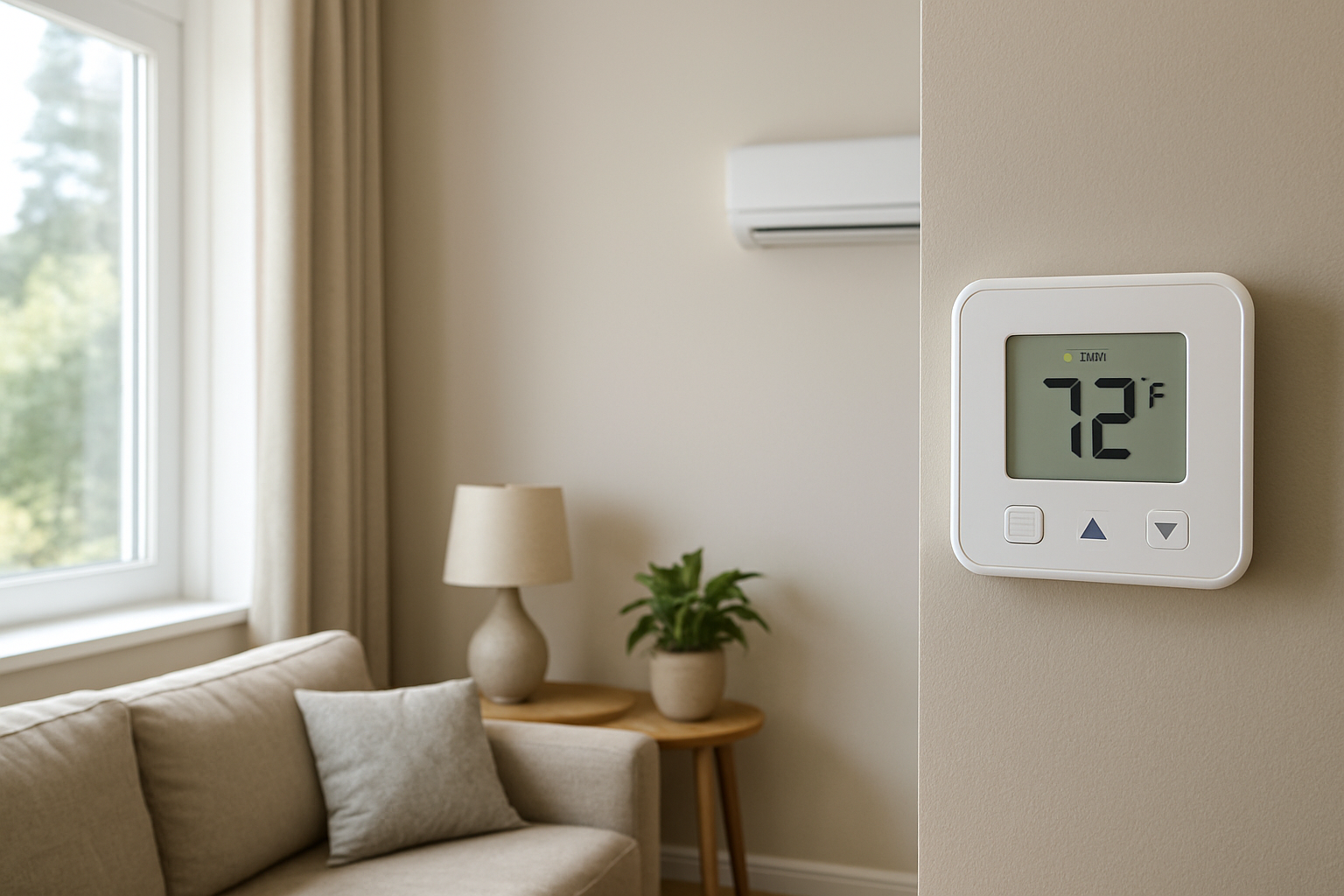
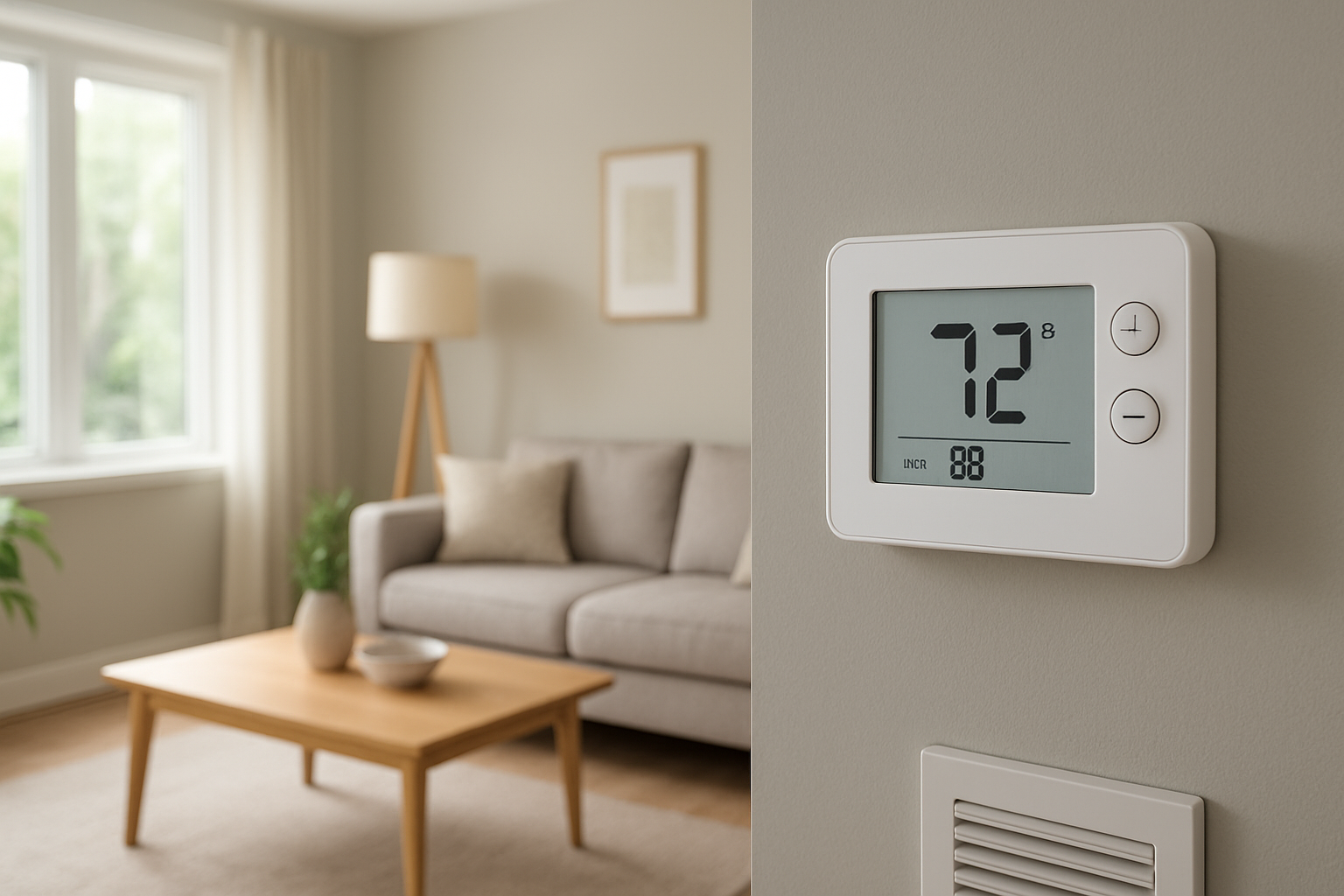
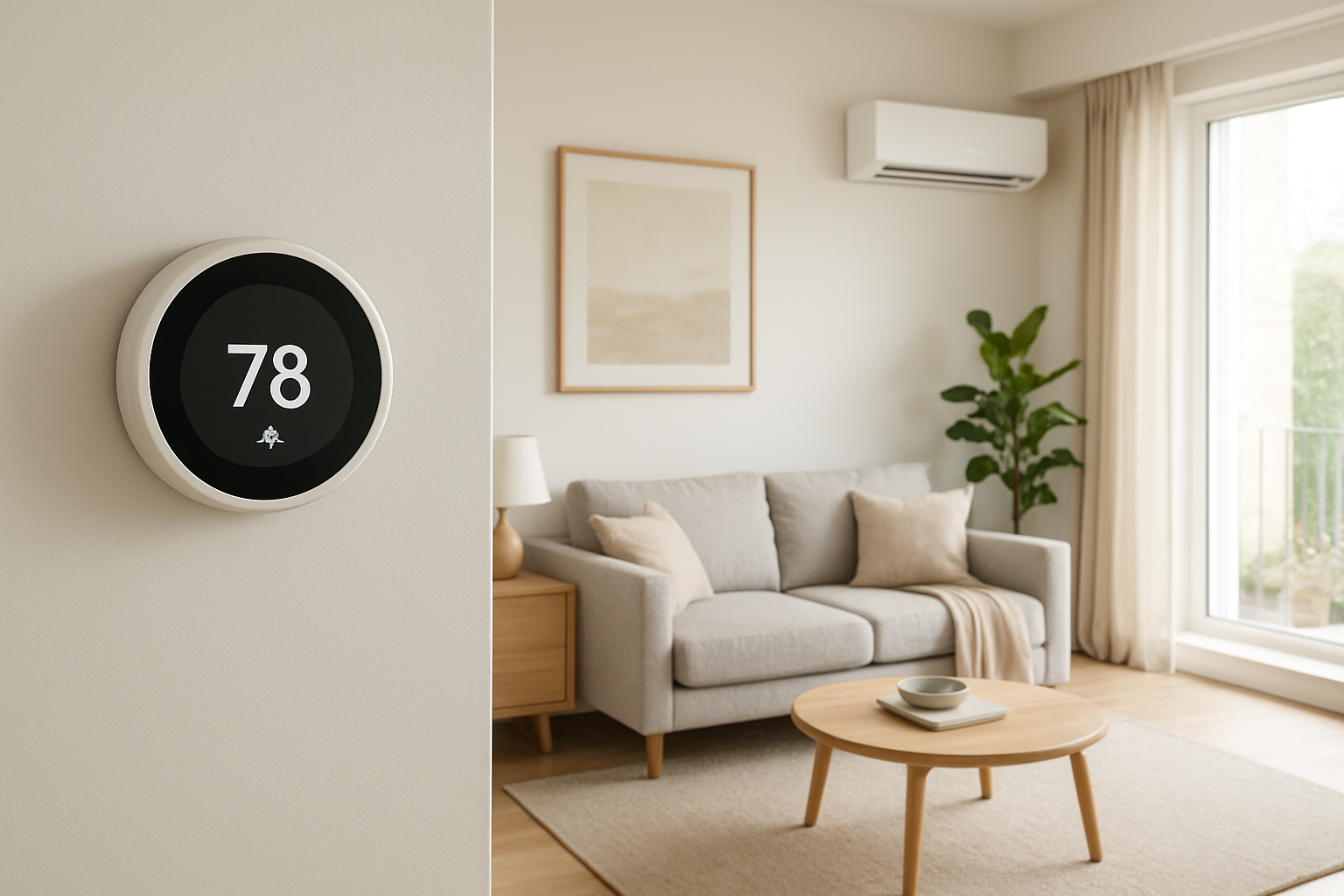
Diagnose and fix thermostat sensor delays that cause slow response to dropping temperatures, helping your heating system maintain comfort and efficiency during cold weather.
Why Your Thermostat Is Always Late When The Temperature Drops
Quick Answer
The most common reason a thermostat feels late on temperature drops is sensor response lag: the thermostat is insulated from the colder room air, so its sensor cools slowly and calls for heat after you already feel the chill. First check: place a separate thermometer next to the thermostat and compare both readings while the home cools for 15–30 minutes.
Identify the Comfort Pattern First
Before assuming the furnace is weak, identify the specific pattern. Thermostat lag problems show up as a mismatch between what you feel and what the thermostat believes.
When it happens: Most noticeable on fast outdoor temperature drops, windy evenings, after sunset, or during morning setback recovery if the house cooled quickly overnight.
Where it happens: You feel cold in the occupied area, but the thermostat area feels more stable. The cold sensation is often worse near exterior walls, windows, or in rooms down a hallway from the thermostat.
System status: The system is off longer than you expect even though you feel cold, then it runs normally once it finally starts.
Constant vs intermittent: Intermittent. It is tied to rapid room cooling events, not an all-day inability to maintain temperature.
Doors open vs closed: With interior doors closed, bedrooms often cool faster than the thermostat hallway. With doors open, the complaint often improves because temperature equalizes faster.
Vertical differences: You feel cold at seating level or on the floor, but air near the thermostat (often higher on the wall) stays warmer longer. This is stronger in homes with high ceilings or open stairwells.
Humidity perception: During a temperature drop, air can feel drier and cooler even when humidity is unchanged. If you only notice discomfort during cooling swings (not steady low humidity all day), it supports a sensor/air-mixing timing issue.
Airflow strength: Supply airflow feels normal once the heat is running. If airflow is weak all the time, you may have an airflow or capacity issue instead of thermostat lag.
What This Usually Means Physically
A thermostat does not measure your whole house. It measures the temperature at one sensor that is influenced by its immediate surroundings. When the house starts losing heat quickly, the room air can cool faster than the thermostat sensor changes temperature.
The lag happens because the thermostat sensor is partly thermally buffered:
Wall cavity influence: The thermostat is mounted to a wall. If the wall cavity behind it is warmer (interior wall near a return chase) or colder (exterior wall, draft), the sensor is exposed to a different heat flow than the room air. The sensor then tracks wall temperature as much as air temperature.
Low air movement at the thermostat: If the thermostat sits in a dead-air spot (recessed hallway, behind a door swing, in an alcove), air mixing is slow. The rest of the home can cool while the small pocket of air around the thermostat stays warmer longer.
Stratification: Warm air stays higher. A thermostat mounted at a typical height can remain in warmer air while occupants feel the cooler lower air first, especially after the system shuts off and the floor cools toward basement/slab temperatures.
Sensor averaging and smart thermostat filtering: Many digital thermostats intentionally smooth temperature readings to prevent short cycling. That filtering can delay the displayed drop and delay the heat call even though the air has already cooled.
Result: the thermostat does not call for heat until its sensor finally crosses the setpoint threshold, which can be later than the actual comfort drop you experience in the living zone.
Most Probable Causes (Ranked)
1) Thermostat is in a thermally buffered location (dead-air pocket or obstructed airflow)
Diagnostic clue: The thermostat reading stays stable while nearby rooms feel colder, and opening doors or running the fan improves comfort timing.
2) Wall temperature is influencing the sensor (wall cavity leakage, exterior wall, or unsealed hole behind the thermostat)
Diagnostic clue: The thermostat area feels different when you place your hand on the wall plate; lag is worse on windy days or when the attic/basement is much colder than the living space.
3) Smart thermostat temperature filtering or slow sample rate
Diagnostic clue: The displayed temperature changes slowly in 0.5 to 1 degree steps and seems to resist quick drops; the equipment runs fine once it finally calls.
4) Stratification and floor-level cooling making occupants feel cold before the thermostat does
Diagnostic clue: The room feels much colder at ankle height than at head height; discomfort is strongest with high ceilings, open staircases, or supply registers high on walls/ceilings.
5) Return air path or pressure issues causing uneven mixing (thermostat zone stays warm, bedrooms cool fast)
Diagnostic clue: With bedroom doors closed, those rooms cool quickly and the thermostat does not respond; with doors open, the problem reduces.
6) Heating system short cycling or low output (less likely if the complaint is mainly delayed start)
Diagnostic clue: The thermostat does call, but the temperature still drops or takes too long to recover, and run cycles are frequent and short or excessively long with poor rise at vents.
How to Confirm the Cause Yourself
These checks use observation and simple comparison. Do them during a typical temperature drop event (evening cool-down or a windy day).
Side-by-side thermometer test (most useful):
Place a known accurate digital thermometer 1–2 inches from the thermostat body, not directly in a draft or in sun.
Let it sit 15 minutes.
If the thermostat and the thermometer disagree by more than 1.5°F consistently, or if the thermometer drops faster than the thermostat during a cool-down, you are seeing sensor lag or location bias.
Air mixing test with the fan:
When you feel the house cooling but the thermostat has not called, switch the system fan to ON for 10 minutes (no heat needed).
If the thermostat temperature drops faster or the heat call starts sooner, the thermostat area was not seeing the same air temperature as the living zone.
Door-position test (return path clue):
Compare bedroom temperatures with doors closed vs open for one evening.
If closed doors make rooms colder and the thermostat still reads warm, you have a mixing/return path imbalance that exaggerates thermostat lag.
Vertical temperature check (stratification clue):
Use the same thermometer to measure at about 6 inches above the floor and at thermostat height in the same room.
A difference greater than 3°F indicates stratification or floor cooling. You may feel cold long before the thermostat does.
Quick draft check at the thermostat:
On a windy day, stand near the thermostat and check for noticeable cool air movement or a sudden temperature dip only near that wall.
If the wall area feels drafty or the reading fluctuates with wind, the cavity behind the thermostat may be pulling air from an unconditioned space.
Runtime pattern check:
Note whether the system runs normally once it starts (steady run until near setpoint) or struggles to recover.
Normal performance after a delayed start points back to sensing/air mixing rather than equipment capacity.
Normal Behavior vs Real Problem
Normal: A small delay is expected because thermostats have a control band and may average readings to prevent rapid cycling. It is normal to feel a slight chill near windows or exterior walls before the thermostat calls, especially during a fast outdoor drop.
Likely a real problem:
The thermostat regularly lets the home drift 2–4°F below setpoint before heat starts.
You can reproduce a consistent mismatch between the thermostat reading and a nearby thermometer (greater than 1.5°F) during cool-down.
Comfort complaints are concentrated in rooms away from the thermostat and improve noticeably with doors open or the fan running.
The thermostat reading changes unusually slowly compared to what you feel and compared to a separate thermometer.
When Professional Service Is Needed
Persistent control error: After basic checks, the thermostat still lags and the home routinely overshoots below setpoint by more than 2°F.
Comfort impact: Occupied rooms are consistently uncomfortable during evening or overnight drops even though the system is otherwise functional.
Evidence of wall cavity problems: Drafts at the thermostat, temperature swings tied to wind, or suspicion the thermostat is on an exterior wall or over an unconditioned chase.
System performance decline: If the heat runs but supply air feels weak, or recovery takes excessively long, a technician should verify airflow, temperature rise, staging, and equipment operation in addition to thermostat behavior.
Safety indicators: Any fuel smell, soot, unusual burner behavior, or repeated shutdowns requires immediate professional evaluation, regardless of thermostat timing complaints.
How to Prevent This in the Future
Improve air representativeness at the thermostat: Keep the thermostat area open to normal air circulation. Avoid furniture, thick wall hangings, or door swings that isolate it in a stagnant pocket.
Seal wall cavity pathways: If the thermostat is affected by drafts, a technician can seal openings in the wall behind the thermostat and confirm it is not reading a wall cavity temperature.
Use fan circulation strategically: During rapid outdoor drops, periodic fan operation can reduce stratification and help the thermostat sense the true space temperature sooner.
Address return air path imbalances: If closed doors make rooms cold quickly, improve return paths (transfer grilles, undercut verification, or duct modifications) so the thermostat zone and bedrooms track together.
Verify thermostat configuration: Ensure the thermostat is set for the correct system type and staging, and that any smart features that heavily smooth temperature swings are not set too aggressively.
Related Home Comfort Symptoms
Thermostat says 70 but the room feels cold
Heat does not turn on until it is already uncomfortable
Bedrooms are colder than the hallway thermostat reading
Feels cold near the floor but warm near the ceiling
Temperature drops quickly after the heat shuts off
Conclusion
When a thermostat feels late during temperature drops, the most likely explanation is sensor response lag caused by location bias and slow air mixing around the thermostat, not a furnace that suddenly became too small. Confirm it by comparing the thermostat to a nearby thermometer during a cool-down and by testing whether fan circulation or door position changes the timing. If the lag is consistent beyond about 2°F or tied to drafts and room-to-room imbalance, schedule service to correct placement, sealing, or airflow mixing issues.
Frequently Asked Questions
Why does my thermostat respond slower when the temperature is falling than when it is rising?
During a fall, the thermostat can be insulated by its wall, a warmer air pocket, or stratified warm air at thermostat height, so the sensor cools slowly. On a rise, warm supply air and improved mixing during a heating cycle can reach the thermostat faster, making it appear more responsive.
How far off is too far for a thermostat reading?
In most homes, a consistent difference greater than 1.5°F between the thermostat and a reliable thermometer placed next to it suggests a sensing or placement issue. A repeated comfort drift of more than 2°F below setpoint before heat starts is usually worth correcting.
Will turning the fan to ON fix the late thermostat problem?
It can reduce the symptom by mixing air so the thermostat senses the same temperature you feel, especially in hallways and two-story spaces. If fan ON noticeably improves timing, that is a strong clue the problem is air mixing or stratification rather than heating capacity.
Could the thermostat be fine but the house is just losing heat too fast?
Yes, but fast heat loss usually shows up as long runtimes and difficulty recovering even after the heat turns on. With pure thermostat lag, the system usually heats normally once it starts; the main issue is that the call for heat starts later than your comfort drop.
Should I move the thermostat?
Move it only after you confirm the thermostat location is not representative and simpler corrections will not help. A professional can verify whether the current location is influenced by wall cavity temperature, drafts, sunlight, supply air wash, or return effects before relocating.