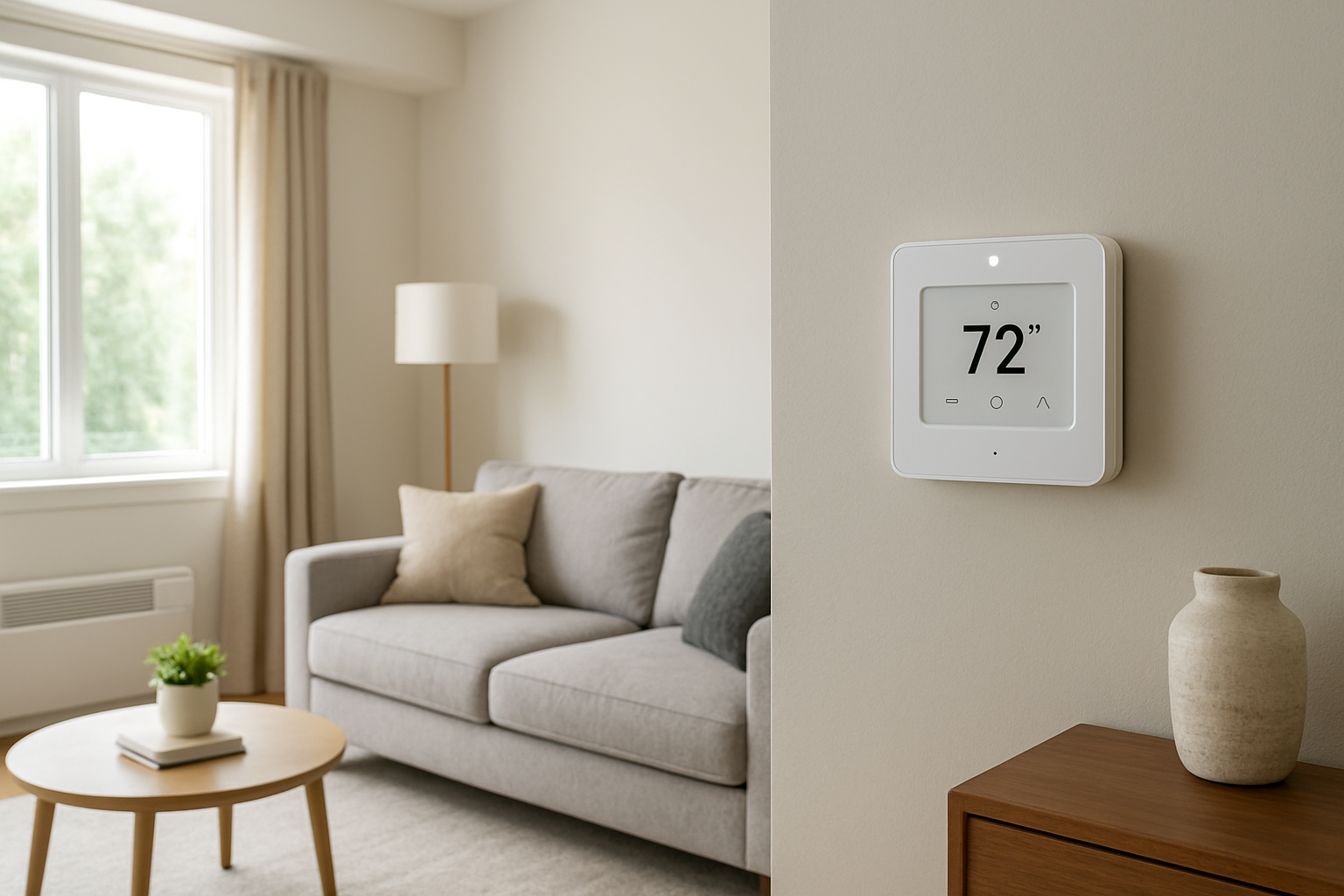
Diagnose why your thermostat loses scheduled settings, covering power interruptions, memory failures, and steps to restore reliable operation.
Thermostat Keeps Forgetting Scheduled Settings? Something’s Resetting It
Quick Answer
If your thermostat loses its schedule, the most likely cause is a power interruption or failing thermostat memory (often from weak batteries or unstable 24V power). First check: look at the thermostat clock. If the time is wrong or defaults after the problem happens, it is resetting and wiping or reverting its programmed schedule.
Identify the Comfort Pattern First
Before blaming the thermostat, sort the pattern. A true schedule loss has a specific signature: the thermostat stops following programmed setbacks and behaves like it was just restarted.
When it happens: After storms, utility work, evenings when outdoor temps drop (more heating runtime), or hot afternoons (more cooling runtime). Note whether it happens at the exact same time each day (schedule issue) versus random times (power or memory issue).
Where it happens: The whole home temperature runs off-schedule, not just one room. If only one room is uncomfortable, that points to airflow or insulation, not a schedule being erased.
System running vs off: If the thermostat reboots while the equipment starts or stops, suspect low-voltage power instability (transformer, wiring, safety switch) rather than a programming mistake.
Constant vs intermittent: Intermittent loss (works for days, then forgets) strongly suggests intermittent power drop or marginal batteries. Constant loss (every time power blips) suggests no battery backup or bad internal memory.
Door open vs closed changes: If comfort changes with doors, it is airflow balancing. If the thermostat itself resets regardless of doors, it is electrical/memory.
Vertical differences (floor vs ceiling): Stratification discomfort (warm upstairs, cool downstairs) can mimic a schedule problem, but the thermostat clock and settings remain intact. If the time and schedule are still correct, the thermostat is not forgetting.
Humidity perception: If the fan is forced on after the reset, the home may feel clammy in cooling season because continuous airflow re-evaporates moisture from the coil. That is a reset symptom, not a dehumidification failure.
Airflow strength: Reset-related issues don’t reduce airflow at vents by themselves. Weak airflow points to filter/duct/blower issues and is separate from schedule loss.
What This Usually Means Physically
A programmable thermostat is a small computer that must keep two things stable: power and memory. When either one fails, the thermostat can revert to defaults, lose time, or drop its programmed schedule.
Power interruption: If the thermostat loses its 24V power even briefly, it may reboot. Some models keep schedules in non-volatile memory; others rely on battery backup or a capacitor that only bridges short outages. A longer dip can erase the clock and sometimes the schedule, causing the system to run at a default temperature that does not match your comfort plan.
Memory failure: A failing thermostat can accept programming but not retain it. Internally, the memory chip or solder connections degrade, especially after voltage spikes or age. The symptom is repeated loss of schedules even when house power seems stable.
Why comfort changes are noticeable: Schedules are designed around building heat loss and heat gain. If a nighttime setback is lost, the home may stay warmer than expected in summer or cooler than expected in winter while you sleep. If a morning recovery schedule is lost, the home may lag behind because the building mass (walls, floors, furniture) takes time to reheat/recool.
Why it may coincide with equipment operation: If low-voltage power is marginal, the inrush of contactors, relays, or blower controls can momentarily pull voltage down. That short dip can reboot the thermostat without tripping a breaker, so nothing else in the house looks wrong.
Most Probable Causes (Ranked)
Weak or missing thermostat batteries (if the model uses them): Clock resets, blank screen, or schedule disappears after a short outage. Often worse in cold weather or after 1–2 years of use.
Intermittent 24V power loss from the HVAC system: Thermostat reboots when heating/cooling starts or stops. You may also see the outdoor unit or furnace stop unexpectedly.
Condensate overflow safety switch opening (cooling season): Thermostat goes dead or resets during humid weather or long AC runs. Often happens after several hours of cooling.
Loose low-voltage wiring at thermostat or equipment: Tapping the wall near the thermostat or closing a nearby door changes the display or causes a reboot. Schedule loss follows the reboot.
Thermostat internal memory failure or firmware corruption: Time may stay correct yet schedules revert, or schedules cannot be saved reliably. Happens repeatedly without any obvious power event.
Transformer overheating or failing: Resets occur after long runtime, especially in extreme heat or cold. The system may recover after a cool-down period.
Voltage spikes or electrical noise: Resets coincide with large appliances starting. Less common, but it can affect sensitive smart thermostats.
How to Confirm the Cause Yourself
These checks are observation-based and do not require opening electrical panels or touching wiring.
Check the clock after the next event: If the time is wrong, the thermostat lost power long enough to reset. If the time is correct but the schedule is gone, suspect memory failure or partial reset behavior.
Look for a reboot signature: Many thermostats briefly show a startup screen, loading message, or go blank then return. If you notice this around the time comfort changes, it is a reset, not a temperature control error.
Correlate with weather and runtime: If it happens on the most humid days (AC running a lot), suspect a condensate safety switch interruption. If it happens on the coldest nights (furnace running a lot), suspect transformer or low-voltage issues under load.
Check if other devices reset: If microwave clocks or other plug-in clocks also reset, you likely have a home power interruption. If only the thermostat resets, it is localized to thermostat power, batteries, or low-voltage supply.
Observe equipment behavior when the schedule is lost: If the system stops heating/cooling entirely at the same time the thermostat loses settings, that supports a power interruption. If the system still runs but at an unexpected setpoint, that supports a firmware/memory or programming retention issue.
Battery confirmation (no tools beyond access): If the thermostat has batteries, replace them with fresh name-brand alkaline batteries and monitor for two weeks. If the problem stops, the issue was battery-related or power-bridging related.
Condensate clue (cooling season): If the reset happens after hours of AC and you notice higher indoor humidity or a musty feel afterward, the AC may have shut off due to a drain safety switch, letting humidity rise. That interruption can also drop thermostat power on some systems.
Normal Behavior vs Real Problem
Normal: After a deliberate power shutoff (breaker off, service switch off, thermostat removed), some thermostats may lose the clock if batteries are dead or not installed. Re-entering the time once and having it remain stable is typical.
Normal: Smart thermostats receiving an app update may briefly restart, but schedules should remain intact and the clock should not revert.
Real problem: Schedule loss more than once per season, especially if you did not change settings.
Real problem: Clock drift or clock resetting, blank screen events, or repeated reboots.
Real problem: Comfort swings that align with the schedule being erased, such as waking up to a house that never recovered to daytime temperature or staying at an unintended default all day.
When Professional Service Is Needed
Immediate service: Thermostat screen goes blank repeatedly, the system shuts off unexpectedly, or you lose heating/cooling during extreme weather.
Service soon: The thermostat forgets schedules more than once after battery replacement, or the clock is repeatedly wrong.
Service soon: Resets occur mostly during long cooling runs in humid weather (possible condensate drain/safety switch issue) because that can also indicate a water management problem.
Service soon: Resets are triggered by equipment operation (start/stop). That points to low-voltage power stability, transformer output, control board issues, or wiring faults that require instrumented testing.
How to Prevent This in the Future
Replace thermostat batteries annually if your model uses them, even if the low-battery icon is not on. Weak batteries can maintain the display but fail during a brief power dip.
Keep the condensate drain functioning by having the drain line inspected and cleared before peak cooling season. Preventing float-switch trips prevents many intermittent shutdowns that look like thermostat issues.
Secure thermostat mounting so it is not flexing on the wall. Movement can stress terminals and create intermittent low-voltage contact on some installations.
After any outage, verify time and program once and document it (photo of schedule screen). If it disappears again, you have evidence of a retention failure rather than a one-time event.
Consider a thermostat with true non-volatile memory if your current model repeatedly loses programs after confirmed power events.
Related Home Comfort Symptoms
Thermostat screen randomly goes blank then comes back
HVAC turns off during long AC cycles and then restarts later
House too warm at night because programmed setback did not happen
House too cold in the morning because recovery schedule did not run
Indoor humidity suddenly increases even though AC was running earlier
Conclusion
A thermostat that forgets scheduled settings is usually not a programming mistake. It is most often a reset caused by power interruption (batteries or 24V supply) or a thermostat memory retention failure. Use the clock as your primary indicator: wrong time strongly confirms a reset. If fresh batteries and stable house power do not stop it, schedule loss is likely coming from intermittent low-voltage power or a failing thermostat that needs professional diagnosis or replacement.
Frequently Asked Questions
Why is my thermostat still showing the right temperature but the schedule is gone?
The temperature display can be correct even when the programmable schedule has reverted to defaults. If the clock time is still correct, suspect memory retention failure or a software/firmware issue rather than a full power loss.
If the power went out for a few seconds, should my thermostat lose its schedule?
Many thermostats should retain schedules through outages, but some rely on batteries or limited backup power to preserve time and settings. If your schedule disappears after short outages, either the backup power is weak (batteries) or the thermostat is not retaining memory properly.
Can a clogged AC drain line make my thermostat reset?
Yes, indirectly. In many systems the condensate float switch can interrupt 24V control power to stop cooling when water backs up. Depending on wiring, that interruption can also remove power from the thermostat, causing a reboot and lost settings.
Why does it happen more when the heat or AC is running a lot?
Long runtimes increase the chance of a marginal transformer overheating, a loose low-voltage connection opening with vibration/temperature changes, or a condensate safety switch tripping in cooling season. Any of those can briefly drop thermostat power and trigger a reset.
Should I replace the thermostat first or call for service?
If your thermostat uses batteries, replace them first and monitor. If the clock still resets, or the issue happens when the system starts/stops, schedule a service call to check 24V power stability, safeties, and wiring. Replace the thermostat first only when power is confirmed stable and the schedule still will not persist.
Need a complete overview? Visit the full troubleshooting guide here: Read the full guide for more causes and fixes.
After chasing this little glitch through the usual suspects, it starts to feel less like a mystery and more like bad timing. The settings don’t vanish because you forgot—they slip away on their own schedule.
There’s a quiet confidence in having it behave again, even if it never explains itself. For a few minutes each day, you get your routines back where they belong, and the thermostat finally stops acting like it’s starting from scratch.