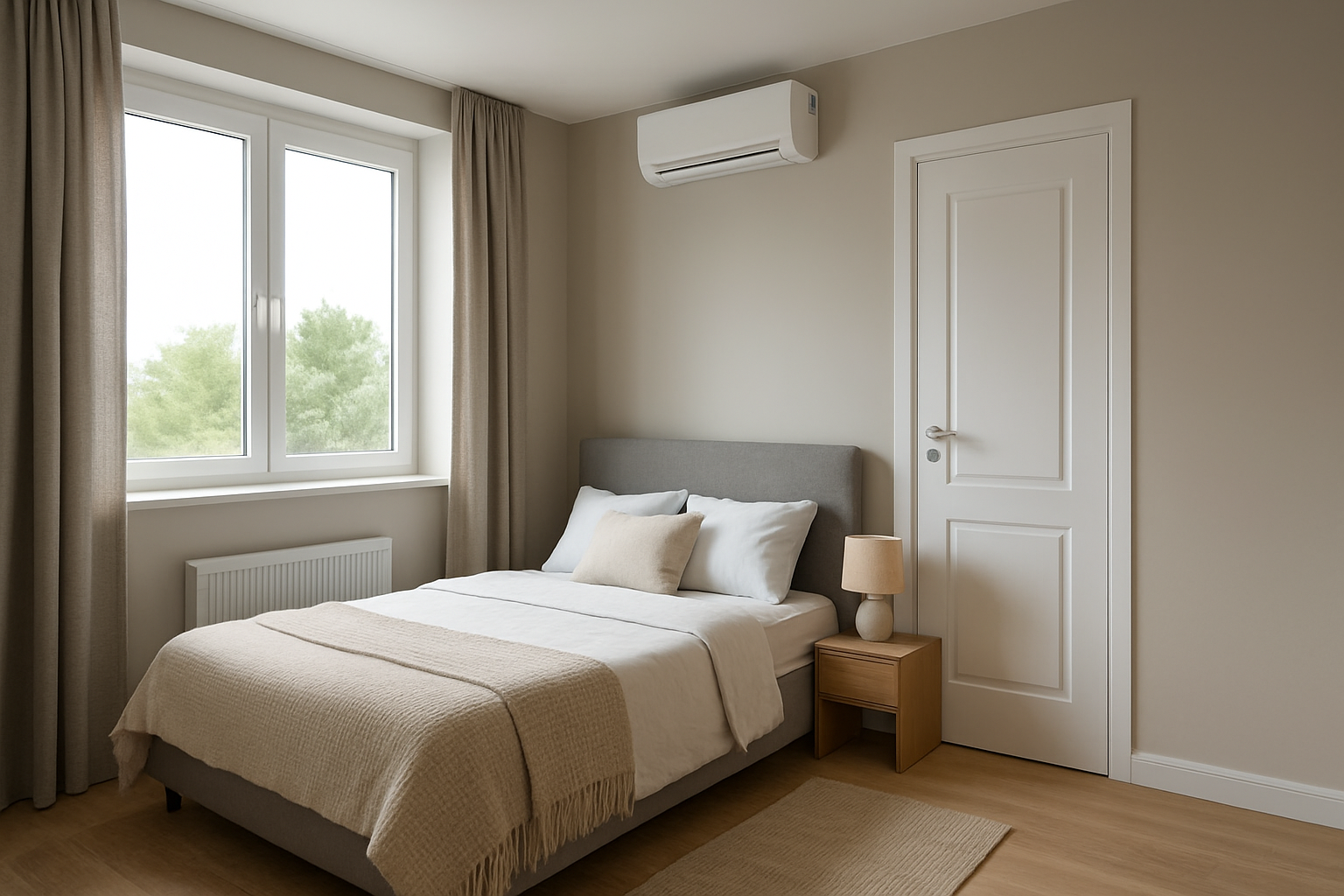
Learn how to diagnose and fix heat loss along exterior bedroom walls, addressing cold spots and improving overall room warmth and energy efficiency.
Bedroom Feels Colder Near Exterior Walls? Heat Escaping There
Quick Answer
If the bedroom is coldest along exterior walls, the most likely cause is concentrated heat loss through that wall section from weak insulation, air leaks, or a cold surface creating a downdraft. First check: on a cold, windy evening, hold the back of your hand along the baseboard and around the window trim on the exterior wall to feel for moving cold air.
Identify the Comfort Pattern First
Before blaming the furnace or thermostat, confirm the pattern. Exterior-wall heat loss leaves a specific signature inside the room.
When it happens: Worst at night, early morning, or during wind; improves on sunny afternoons if that wall gets sun.
Weather sensitivity: Gets noticeably worse when outdoor temperature drops quickly or when wind picks up. If the discomfort tracks wind, air leakage is likely, not just insulation value.
Where it happens: Cold zone is a strip within 1–4 feet of the exterior wall, especially under windows, at corners, and behind/under furniture placed against the wall.
System running vs off: Feels cold even while heat is running, because the wall surface stays cold and continues pulling heat from the room air and your body.
Constant vs intermittent: Usually constant in cold weather, but can feel intermittent when wind-driven leakage comes and goes.
Door open vs closed: With the bedroom door closed, the chilly perimeter feels more intense. With the door open, mixing improves and the cold zone may shrink, even though the wall surface is still cold.
Vertical differences: Coldest at floor level near the exterior wall. You may feel warm at head height but cold feet, especially near windows.
Humidity perception: Air can feel drier and sharper near the exterior wall; cold surfaces reduce local comfort even if humidity is normal. If you also notice window condensation, the surface is colder than the room air’s dew point.
Airflow strength: Supply airflow may feel normal at the vent, yet the room still feels cold near the wall. That points away from a duct failure and toward a building-envelope loss at that location.
What This Usually Means Physically
When an exterior wall section loses heat faster than the rest of the room, it creates two problems at once: a cold surface and a local air movement pattern.
Cold surface effect: Exterior walls and windows conduct heat outdoors. If insulation is missing, compressed, wet, or bypassed by air leakage, the inside surface temperature drops. Your body loses heat faster near that cold surface through radiation and convection, so you feel colder there even if the thermostat reads normal.
Downdraft and floor chill: Air touching the cold wall cools, becomes denser, and falls. That produces a slow, persistent downdraft along the wall and a pool of colder air near the floor. This is why the discomfort concentrates at the wall and at your feet, and why it persists while the heater runs.
Wind washing and infiltration: Wind pressure drives outdoor air through gaps at rim joists, electrical boxes, window frames, baseboards, and siding-to-framing connections. Even small leakage can dominate comfort because it creates moving cold air plus accelerates heat loss through the wall cavity.
Why the rest of the house can feel fine: The HVAC system can be operating normally and still lose the comfort battle locally. This symptom is typically a building-envelope failure localized to that bedroom wall, corner, or window bay, not a whole-system capacity issue.
Most Probable Causes (Ranked)
Air leakage at the exterior wall (trims, outlets, baseboards, rim joist): Strongest clue is comfort changing with wind and a faint moving-air feeling near trim or at the floor/wall joint.
Insulation voids or poor installation in that wall cavity: Clue is a consistently cold wall surface in one stud bay area, worst in sustained cold, not just windy conditions.
Window-related losses (poor seals, single-pane, failed glazing, leaky sash): Clue is cold concentrated under/around the window with downdraft you can feel when standing near it.
Thermal bridging at corners, headers, and framing concentration: Clue is coldest at corners and along studs, with a stripe pattern on cold days (often subtle but consistent).
Furniture placement blocking heat mixing near the perimeter: Clue is the cold zone is worse behind a bed/dresser placed tight to the exterior wall where warm air cannot wash the surface.
Supply register location not countering perimeter loss: Clue is the room warms overall but the exterior wall zone stays cold because supply air does not reach the perimeter or is short-circuiting back to the return.
Closed room and return-air restriction amplifying stratification: Clue is the room feels stuffy when the door is closed and improves significantly when the door is open, even though the wall remains the coldest surface.
How to Confirm the Cause Yourself
Use observation, touch, and simple comparisons. Do checks during the coldest part of the day or on a windy evening, when the pattern is strongest.
Hand test for infiltration: Slowly move the back of your hand along window trim, baseboards on the exterior wall, and around electrical outlets on that wall. Moving cold air indicates leakage.
Tissue drift test: Hold a thin tissue near suspected gaps (window corners, casing joints, baseboard ends). If it flutters or pulls, you have air movement, which is not normal for a finished interior surface.
Surface temperature comparison by touch: Place your palm on the exterior wall and then on an interior wall in the same room. A much colder exterior wall surface points to insulation weakness or thermal bridging. If a specific patch feels colder than the rest of the exterior wall, suspect a void or wind washing in that cavity.
Floor-level vs head-level comfort check: Stand near the exterior wall and then walk to the room center. If your feet feel significantly colder near the wall while your upper body feels similar, that supports downdraft and cold-air pooling caused by a cold surface.
Door position test: Run the heat, leave the bedroom door closed for 30 minutes, then open it for 15 minutes. If the room feels markedly better with the door open but the perimeter still feels cold, you likely have both perimeter heat loss and weak air mixing/return path.
Supply throw observation: With the system running, feel if warm air from the supply register reaches the exterior wall zone. If the supply air never washes the cold wall (especially under a window), the room can be warm on average but uncomfortable where you sleep or sit.
Time-of-day pattern check: If discomfort reduces on sunny days when that wall gets sun, the wall temperature is driving the symptom more than the thermostat reading.
Normal Behavior vs Real Problem
Normal: Exterior walls are typically a bit cooler than interior walls in winter. A slight temperature gradient near windows is common, especially in older homes. You may notice mild coolness within a foot of the glass on very cold nights.
Not normal: A distinct cold band along the exterior wall that makes the bed area uncomfortable, cold feet in that zone while the rest of the room is acceptable, noticeable drafts at trim or outlets, or a problem that worsens sharply with wind. Those point to concentrated heat loss that the HVAC system cannot offset locally.
When Professional Service Is Needed
Persistent comfort failure: The exterior-wall zone remains uncomfortably cold across multiple cold days despite normal thermostat settings.
Drafts you can feel: Any consistent moving cold air from outlets, baseboards, or window trim warrants an air-sealing evaluation.
Moisture indicators: Repeated window condensation, damp trim, or musty odor near the exterior wall suggests cold surfaces and potential moisture risk that should be addressed.
HVAC performance decline: If the system runs unusually long, struggles to reach setpoint, or multiple rooms show similar perimeter chill, have a technician verify airflow, supply temperatures, and overall capacity while also checking envelope loss drivers.
Comfort depends on door position: Large temperature swings or pressure-related issues when the door is closed often indicate missing return path or duct/room pressure imbalance that a pro can measure and correct.
How to Prevent This in the Future
Prioritize air sealing at the exterior wall line: Typical high-impact areas are window/door casings, baseboards at exterior walls, outlet boxes on exterior walls, and the rim joist area below the room.
Improve insulation continuity: Insulation works best when it fully fills the cavity and is not bypassed by air movement. Address known voids, compressed batts, and uninsulated headers/corners where feasible.
Manage the perimeter airflow pattern: Keep large furniture slightly off exterior walls so room air can circulate and warm the wall surface.
Use targeted distribution improvements: If the supply register cannot wash the perimeter, a technician can evaluate register type/direction, balancing, or adding a return path to improve mixing without over-heating the rest of the house.
Track changes with weather: Note wind direction and outdoor temperature when the issue is worst. That information helps quickly locate leakage-driven problems.
Related Home Comfort Symptoms
Cold feet in one room while the thermostat reads normal
Drafts felt near windows even when closed
Bedroom comfortable only with the door open
One corner of a room always feels colder in winter
Window condensation only in one bedroom
Conclusion
A bedroom that feels colder specifically near exterior walls is most often a localized heat-loss problem: air leakage, insulation weakness, or cold window surfaces lowering wall temperature and creating downdrafts. Confirm it by checking for moving air at trim/baseboards/outlets and by comparing exterior-wall surface coldness to interior walls. If drafts are present or the discomfort persists through cold weather, focus on air sealing and insulation continuity first, then address airflow mixing and return-path limitations.
Frequently Asked Questions
Why does it feel colder near the wall even when the thermostat says 70?
Because comfort depends on surface temperatures and air movement, not just the thermostat reading. A cold exterior wall lowers the mean radiant temperature around you and creates a downdraft that pools colder air at the floor. You can feel chilled near the wall even if the average room air temperature is correct.
Is a cold exterior wall always an insulation problem?
No. Air leakage can make a properly insulated wall perform like it is under-insulated by moving cold air through or around the insulation. If the cold feeling gets much worse with wind, leakage is often the primary driver.
Why is the problem worse at night?
Outdoor temperatures are lower and solar warming is gone, so the exterior wall surface gets colder. The larger indoor-outdoor temperature difference increases heat loss and strengthens downdraft currents along cold walls and windows.
Why does opening the bedroom door help?
Opening the door improves air mixing with the rest of the house and can reduce room pressure imbalances that pull outdoor air through leaks. It does not fix the cold wall, but it can reduce stratification and lessen how intense the cold zone feels.
What is the fastest way to tell if it is a draft versus just a cold surface?
If you can feel moving air at trim, outlets, baseboards, or window corners, it is a draft (infiltration). If there is no air movement but the wall feels much colder to the touch than other walls, it is more likely insulation weakness or thermal bridging creating a cold surface and downdraft.
Need a complete overview? Visit the full troubleshooting guide here: Read the full guide for more causes and fixes.
That faint chill along the outside walls can be weirdly persistent, like it pays rent. But when it finally settles, the room feels less temperamental and more like it belongs to you again.
It’s the kind of change you notice in small, everyday ways—blankets feel cozier, mornings don’t start with an extra sigh, and the whole space just holds steady. Comfort stops being a negotiation and becomes normal.