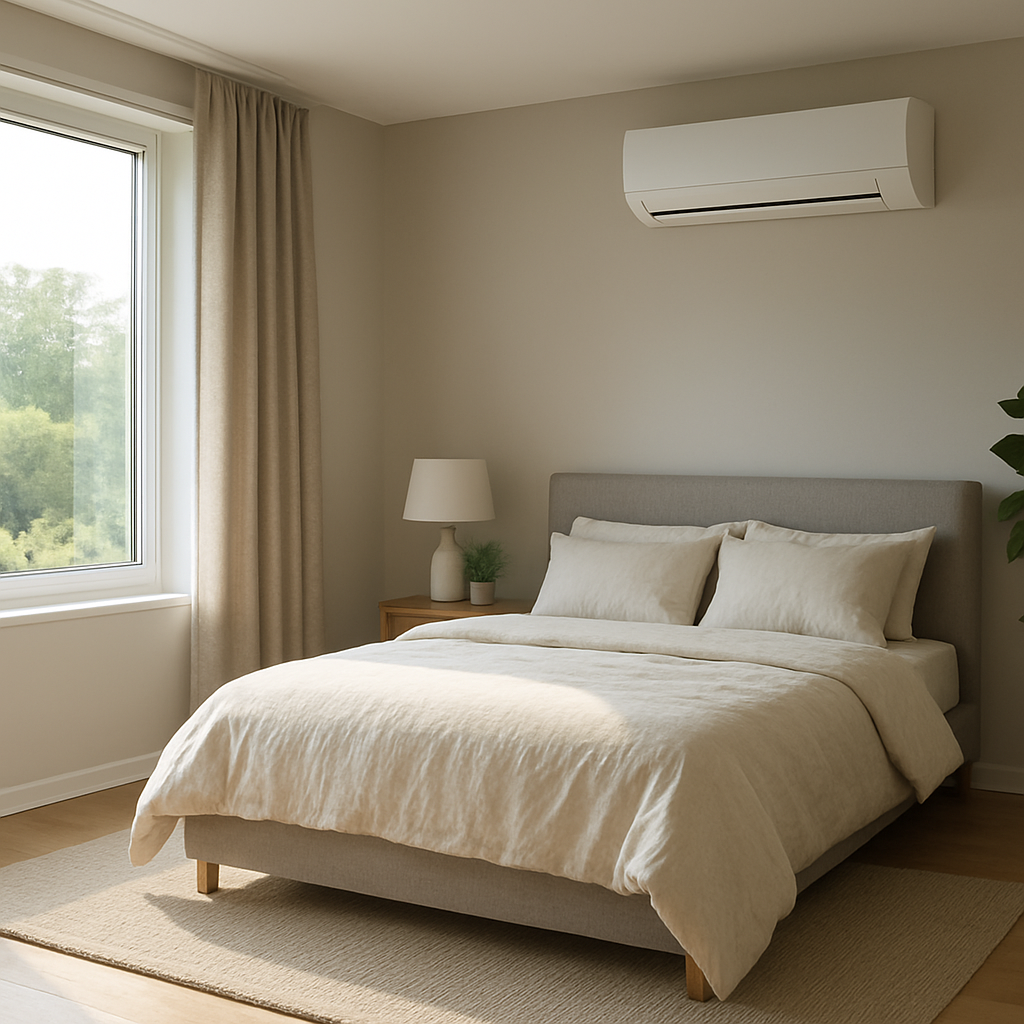
Diagnose why your living room air feels stuffy in the afternoon by identifying causes of reduced ventilation and learning effective solutions to improve airflow.
Living Room Air Feels Stuffy In The Afternoon? Ventilation Drop
Quick Answer
Afternoon stuffiness in a living room is most often caused by a drop in effective ventilation: less fresh air exchange and weaker mixing just when heat and indoor moisture rise. First check: in mid-afternoon, compare airflow at a living room supply vent to a morning reading using a tissue test and note whether opening an exterior door briefly improves the feeling within 2–5 minutes.
Identify the Comfort Pattern First
Before assuming an equipment failure, sort the complaint into a repeatable pattern. The pattern points directly to whether this is a ventilation reduction problem or something else.
Time of day: Does it start reliably after about 1–3 pm, especially on sunny days or when outdoor temperature is highest?
Weather dependence: Worse on hot, humid afternoons or when outdoor air is still (no wind)?
Location: Mainly the living room area or also nearby open spaces (kitchen/dining)? Bedrooms often feel different because doors reduce air exchange.
System status: Does it happen while the HVAC is running normally, or when it cycles off for longer periods?
Intermittent vs constant: Does it clear up in the evening without changing thermostat settings?
Door effect: Does opening the living room door to the hallway or opening a nearby window slightly make it noticeably better within minutes?
Vertical difference: Is the air more stale at sitting height while the ceiling feels warmer? That combination points to poor air mixing and stratification.
Humidity perception: Does it feel heavy or muggy rather than simply warm? Stuffy is often perceived CO2/odor buildup plus higher humidity.
Airflow strength: Is supply airflow noticeably weaker in the afternoon compared to morning, even though the thermostat calls for cooling?
What This Usually Means Physically
Afternoon is when many homes experience the lowest effective ventilation even if no fan has “failed.” As outdoor temperature rises, solar gain warms the building shell and interior surfaces. People and activities add moisture and odors. If the HVAC cycles off more (because the thermostat is satisfied in a cooler hallway or shaded area), the fan runs less, so the house gets less air mixing and any mechanical fresh air intake runs less or becomes less effective.
At the same time, stack effect and pressure relationships change. As the house warms, air tends to stratify: warmer, lighter air collects near the ceiling and can trap pollutants and humidity in a poorly mixed zone. If return air paths are restricted (closed doors, furniture, dirty filter, crushed flex duct), the living room can become slightly pressurized relative to adjacent areas. That reduces infiltration in some locations and increases it in others, but overall can reduce the amount of fresh outdoor air reaching the occupied zone where you’re sitting.
The result is a living room that feels stale even when temperature looks acceptable. This is not primarily a temperature problem; it is usually an air exchange and mixing problem that becomes noticeable when afternoon loads peak and ventilation effectiveness drops.
Most Probable Causes (Ranked)
Reduced air mixing from longer off-cycles in the afternoon (thermostat satisfied elsewhere or oversized system). Clue: Air feels stale most when the system has been off 15–30 minutes; improves during long continuous runs.
Return air restriction affecting the living room zone (closed interior doors, blocked return grille, undersized return, filter loading). Clue: Supply register has airflow but room still feels stagnant; doors changing position noticeably changes the feeling.
Mechanical ventilation not operating consistently (ERV/HRV off, fresh air damper stuck, timer mis-set, bath fan mistakenly used as “ventilation” then off). Clue: Home feels better when a window is cracked; worse after gatherings or cooking even with normal cooling.
Afternoon pressure shift from exhaust appliances (kitchen hood, dryer, bath fans) pulling air from undesirable pathways and reducing effective fresh air where you need it. Clue: Stuffiness spikes during or after cooking/drying; odors linger longer in the living room than in the morning.
Supply airflow drop as attic/duct temperatures peak (flex duct kinks, dampers drifting, ducts expanding, blower/coil starting to load with debris/ice). Clue: Living room supply air volume is measurably lower late day; other rooms may still feel normal.
Localized pollutant/moisture load peaking in afternoon (plants, damp basement air mixing up, large rug/sofa off-gassing when warmed by sun). Clue: Stuffiness is tied to sun hitting the room; distinct odor or heavy feeling without major airflow change.
How to Confirm the Cause Yourself
These checks use observation and simple comparisons. Do them once in the morning and once during the worst afternoon period.
Airflow comparison at the same vent: Hold a single sheet of tissue 1–2 inches from the living room supply register during a cooling call. Note how strongly it deflects in the morning vs afternoon. A clear drop suggests delivery or blower/return path issues rather than “just humidity.”
Mixing test during a long run: When the living room feels stuffy, lower the thermostat 1–2 degrees for 20 minutes to force a continuous run. If stuffiness noticeably improves before temperature changes much, the problem is ventilation/mixing, not capacity.
Door position test: With the system running, close the living room door (if applicable) for 10 minutes, then open it. If the room feels immediately better with the door open, you likely have a return air path/pressure balance issue.
Quick fresh-air influence check: Open an exterior door 1–2 inches for 2 minutes (do not do this in unsafe outdoor air conditions). If the room feels less stale quickly, the symptom is consistent with low fresh air exchange or trapped pollutants.
Exhaust appliance correlation: Note whether the worst stuffiness follows kitchen hood use, showering, or dryer operation. If yes, treat it as a house pressure/ventilation balance problem, not an AC problem.
Ceiling-to-sitting level feel: Stand on a stable step stool and compare the air sensation at head height near the ceiling vs seated height. A warmer, more stagnant upper layer suggests stratification and insufficient mixing in the afternoon.
Odor persistence check: Time how long cooking odors linger in the living room in morning vs afternoon with similar activity. Longer persistence points to reduced ventilation effectiveness.
Normal Behavior vs Real Problem
Often normal: A slight late-day stale feeling in a closed-up home with minimal fresh air, especially during humid weather, when windows stay shut and the system cycles off more. Some afternoon stratification is common in rooms with high ceilings or strong sun exposure.
More likely a problem: The living room becomes noticeably uncomfortable or “heavy” most afternoons, improves quickly with door/window changes, or coincides with weaker vent airflow. If there is a clear morning-to-afternoon change in airflow, odor persistence, or the room feels pressurized/suffocated, that is not just normal daily variation.
When Professional Service Is Needed
Persistent pattern: Happens most days for more than 2 weeks and affects normal living activities.
Measurable airflow drop: Living room vent airflow is consistently weaker in the afternoon compared to morning during similar thermostat calls.
System behavior change: New short-cycling, unusually long off periods, or the fan is not running when expected.
Humidity control decline: Muggy feel increases and does not improve during long cooling runs.
Pressure/combustion safety concern: If you notice backdrafting odors near gas appliances, headaches, or a strong exhaust-related pull when doors are closed, stop DIY testing and call for professional evaluation of ventilation and combustion safety.
How to Prevent This in the Future
Maintain consistent air mixing: Use a thermostat fan circulation setting if available (scheduled or intermittent) to prevent afternoon stagnation when the system would otherwise be off.
Keep return paths open: Avoid blocking return grilles with furniture. If the living room relies on door undercuts or transfer paths, keep doors positioned to allow return airflow during peak hours.
Control solar load to reduce stratification drivers: Close blinds on sun-facing windows before the room heats up; this reduces buoyancy-driven stratification and the perceived stale layer near the ceiling.
Use exhaust fans strategically: Run the kitchen hood while cooking and briefly after, but avoid creating long periods of excessive negative pressure without a fresh air source.
Replace filters on pressure drop, not just time: If filters load quickly, the afternoon symptom often appears earlier. Use the correct filter type and verify it is not overly restrictive for the system.
Verify mechanical ventilation settings: If you have an ERV/HRV or fresh air intake, ensure schedules match occupancy and afternoon load, not just a fixed timer that may be off when you need it most.
Related Home Comfort Symptoms
Living room feels fine in the morning but stale and heavy after lunch
Better comfort with doors open, worse with doors closed
Odors linger longer in the afternoon than at night
High ceiling rooms feel warm on top and stagnant at seating level
Afternoon headaches or fatigue that improve with brief fresh air
Conclusion
Afternoon living room stuffiness most commonly tracks back to a reduction in effective ventilation and air mixing during peak heat and humidity conditions. Confirm it by comparing morning vs afternoon vent airflow, forcing a 20-minute continuous run, and testing door position impact. If airflow drops, odors persist unusually long, or the issue is daily and disruptive, schedule a professional evaluation focusing on return air paths, ventilation operation, and duct/pressure balance.
Frequently Asked Questions
Why does my living room feel stuffy even when the temperature is correct?
Because stuffy is often a ventilation and mixing complaint, not a temperature complaint. If the system cycles off more in the afternoon or the room has a weak return path, pollutants, moisture, and warm stratified air build up at seating level even while the thermostat reads normal.
Should I just run the fan all day to fix afternoon stuffiness?
Intermittent circulation often helps because it restores mixing when cooling calls are short. Continuous fan can help in some homes but can also increase indoor humidity if the system tends to re-evaporate moisture from a wet coil. A better test is scheduled circulation during the afternoon peak and verifying return airflow is not restricted.
How can I tell if this is a ventilation issue or an AC capacity issue?
Force a continuous run for 20 minutes by lowering the thermostat slightly. If the stale feeling improves quickly without a major temperature change, it points to ventilation/mixing. If the room is simply getting hotter and never recovers, that points more toward load/capacity or distribution problems.
Why is it worse when interior doors are closed?
Closed doors can isolate the living room and restrict the return air path. Supply air enters but cannot leave efficiently, reducing circulation through the space and lowering the effective air exchange rate in the occupied zone.
Can kitchen exhaust or the dryer make my living room feel stale?
Yes. Strong exhaust can change house pressures and pull replacement air from unintended paths, sometimes reducing fresh air to the living area and increasing odor persistence. If stuffiness correlates with cooking or laundry, treat it as a ventilation balance issue.
Need a complete overview? Visit the full troubleshooting guide here: Read the full guide for more causes and fixes.
By late afternoon, that closed-in feeling usually doesn’t mean anything dramatic—just that the room isn’t getting the same kind of refresh it had earlier. It’s the kind of small daily annoyance you notice only when the sun starts doing its thing.
After all, air can’t “feel” neglected forever without you feeling it back. Once the flow rights itself, the whole living room seems to exhale—subtle, but unmistakably better.