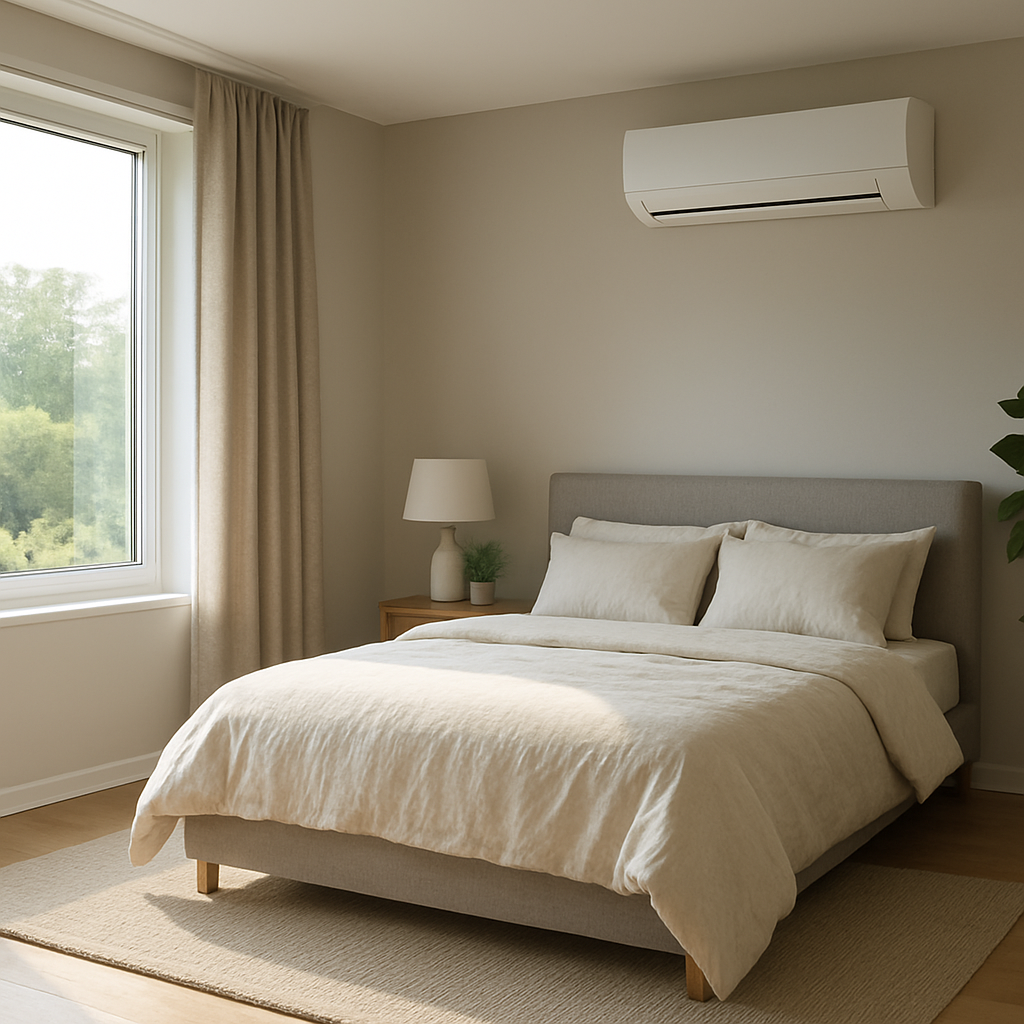
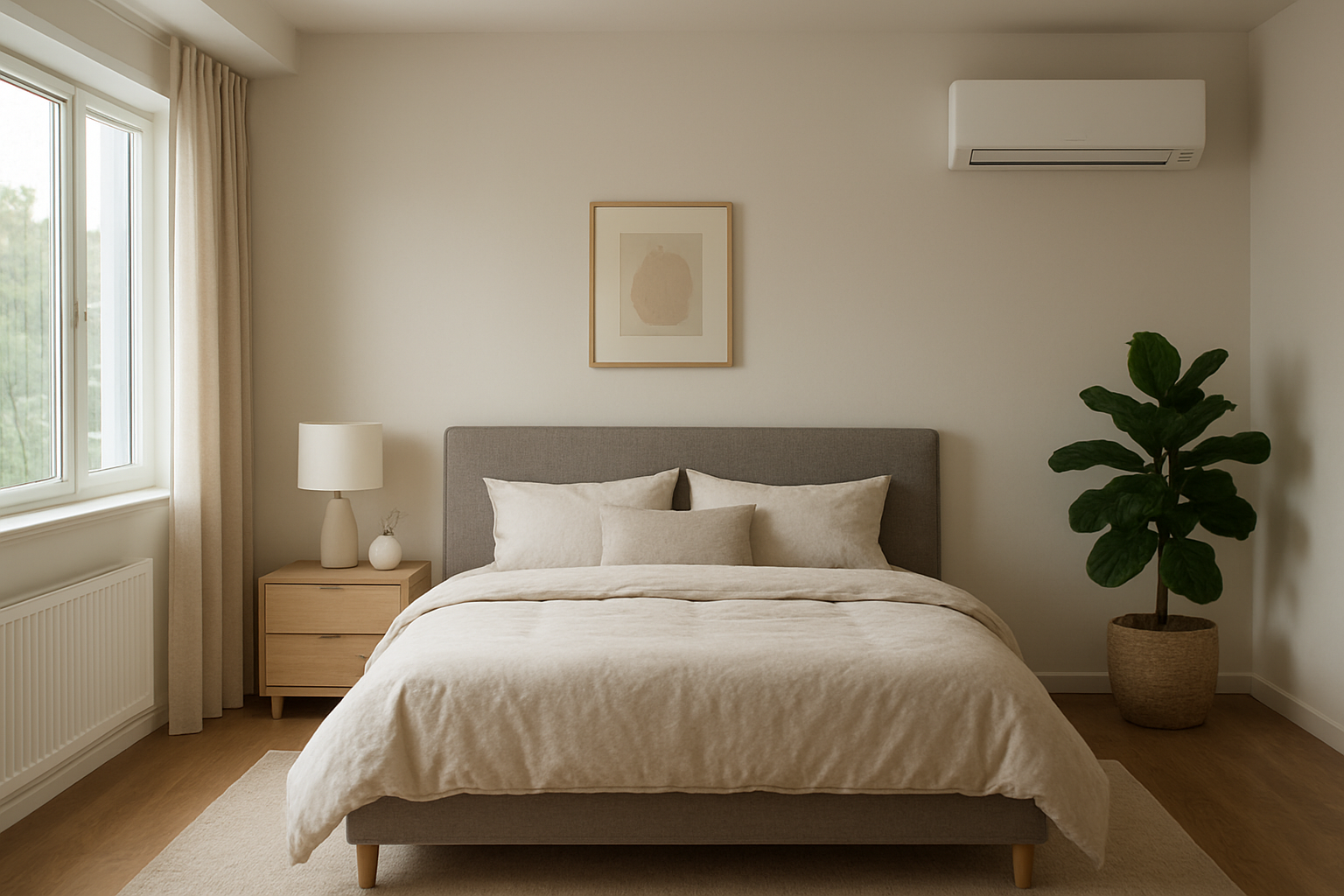
Diagnose why bedroom air feels stale overnight despite ventilation, including causes like blocked vents, poor airflow, and tips to improve air circulation for fresher air.
Bedroom Air Feels Stale Even With Ventilation? Air Isn’t Circulating
Quick Answer
The most common reason a bedroom feels stale overnight even with ventilation is insufficient air exchange when the door is closed, usually from poor return-air pathways and low supply airflow during long off-cycles. First check: sleep one night with the bedroom door cracked 1–2 inches and compare morning stuffiness. If it improves, the room is air-starved when closed.
Identify the Comfort Pattern First
Stale air complaints are easiest to diagnose when you pin down the pattern. Use these observations to sort what is actually happening in your bedroom.
Time of day: Worse in the morning after sleeping points to low overnight air exchange. If it’s only stale in the afternoon, think heat/solar gain and stratification more than ventilation.
Weather sensitivity: If the stale feeling is worse on mild nights (spring/fall), the system may not run enough to move air. If worse on extreme hot/cold nights, airflow may be restricted or imbalanced.
Door position: If cracking the door improves the room quickly, the issue is almost always a return path problem (the room cannot trade air with the rest of the house).
Where it happens: A single bedroom problem usually indicates room-level airflow imbalance. Whole-house stuffiness points to ventilation rate, filtration restriction, or oversized equipment short-cycling.
System running vs off: If the room feels fresher when the HVAC is actively running and gets stale during long off periods, the limitation is air movement and mixing, not a constant odor source.
Constant vs intermittent: Intermittent stuffiness tied to fan cycles suggests air exchange is dependent on blower operation. Constant stuffiness suggests a persistent return blockage, weak supply, or pressure imbalance.
Vertical differences: If the air feels heavy near the bed but warmer or fresher near the ceiling, stratification and low mixing are contributing.
Humidity perception: If it feels muggy in the morning but humidity elsewhere is fine, the room is not exchanging enough air to dilute overnight moisture from breathing.
Airflow strength at the supply vent: If the supply register feels weak compared to other rooms, the room may simply not be receiving enough fresh conditioned air to support exchange.
What This Usually Means Physically
Overnight, a closed bedroom becomes a small zone with its own air quality and moisture load. Two adults can add a meaningful amount of water vapor and CO2 through breathing. In a room with good air exchange, that load is diluted by continuous or frequent mixing with the rest of the house air and/or outdoor air.
The problem occurs when the bedroom cannot move enough air out and pull enough air in. In most homes, the HVAC supply pushes air into the room, and the air must leave through a return grille or an undercut door/tansfer pathway back to a central return. If the door is closed and the only return is in the hallway, the bedroom can become pressure-isolated:
Supply air enters but cannot easily escape the room.
Room pressure rises slightly, which quickly reduces how much supply air can actually enter.
Air exchange slows to a trickle through small leaks, leading to stale feeling, higher humidity, and sometimes noticeable temperature drift.
This is why the room can feel stale even though the house has ventilation. The ventilation air may be entering elsewhere, but it is not being delivered through the bedroom at a useful rate during the night, especially when the HVAC runs less (common on mild nights) and the bedroom door stays closed for hours.
Most Probable Causes (Ranked)
1) No effective return path when the bedroom door is closed
Diagnostic clue: Staleness improves noticeably with the door cracked open; the supply vent may sound louder or airflow changes when the door position changes.
2) Low supply airflow to the bedroom (duct restriction, damper partially closed, crushed flex, dirty boot/register)
Diagnostic clue: The bedroom register airflow feels weaker than similar-sized rooms, and the room is also slower to heat/cool.
3) Long overnight HVAC off-cycles from mild weather or oversized equipment
Diagnostic clue: The air feels freshest right after the system runs, then becomes stale during extended periods of no blower operation.
4) Bedroom becomes pressure-imbalanced by exhaust elsewhere (bath fan, kitchen hood, dryer) pulling air from under the door
Diagnostic clue: Staleness is worse when exhaust fans run late or early; the bedroom door is harder to close or you feel air movement at the door crack.
5) Supply/return short-circuiting outside the bedroom
Diagnostic clue: You feel strong airflow at hallway returns while bedroom feels stagnant, suggesting the system is moving air but not through the room.
How to Confirm the Cause Yourself
These checks use observation only and can be done in a day or two without tools.
Door crack test (most revealing): Sleep with the bedroom door cracked 1–2 inches. If morning air feels significantly fresher, the bedroom lacks a return-air pathway when closed.
Door position airflow check: With the system fan running, stand at the bedroom supply register. Close the door fully, then open it. If airflow sound or feel changes, the room is being pressurized and the supply is being throttled by poor air escape.
Compare register feel: Compare the bedroom vent airflow to a nearby room with similar vent size and similar distance from the air handler. If the bedroom is noticeably weaker, suspect a duct restriction or balancing issue.
Morning humidity clue: If the bedroom feels clammy or bedding feels slightly damp even when the rest of the house feels normal, that is consistent with low air exchange during sleep.
Run-cycle correlation: Note whether the stale feeling is worst on nights when the HVAC hardly runs. If yes, you are relying on HVAC runtime for mixing, and the room is not getting enough air exchange on its own.
Exhaust fan correlation: If someone showers late and runs a bath fan, or a dryer runs overnight, see if the bedroom becomes stuffier. This can worsen pressure imbalance and reduce bedroom-to-hallway air transfer.
Normal Behavior vs Real Problem
Normal: A closed bedroom can feel slightly warmer, slightly cooler, or slightly less fresh by morning, especially with multiple occupants. Mild overnight odors from linens or normal human occupancy can be present but should dissipate quickly after the door opens or the system runs.
Likely a real problem: The room consistently feels heavy, stale, or muggy by morning, improves quickly with the door open, and repeats regardless of cleaning or bedding changes. Another warning sign is a bedroom that also lags in heating/cooling, indicating airflow delivery and air exchange are both insufficient.
When Professional Service Is Needed
Persistent comfort impact: Stale, muggy morning conditions occur most nights and do not improve with a door crack test or improved fan runtime.
Evidence of airflow defect: Bedroom supply airflow is clearly weaker than other rooms, or comfort is noticeably worse than adjacent rooms.
System performance decline: Rising energy use, poor temperature control, or frequent cycling accompanies the complaint.
Pressure/ventilation concerns: Whole-house stuffiness, musty odor, or backdraft-like odor events should be evaluated for ventilation balance and combustion safety where applicable.
A technician should verify room airflow, static pressure, duct condition, and return pathway adequacy, and confirm that any mechanical ventilation is actually distributing to the bedroom zone during typical overnight operation.
How to Prevent This in the Future
Maintain a return-air pathway: Do not block door undercuts with thick rugs/draft blockers; if privacy requires closed doors, consider transfer pathways (as evaluated by a professional) so the room can exchange air reliably.
Keep supply registers unobstructed: Furniture, heavy curtains, or deflectors that trap air against windows can reduce delivered airflow and mixing.
Use airflow intentionally on mild nights: If your system allows it, scheduled fan circulation during sleeping hours can improve air exchange when the heating/cooling demand is low.
Replace filters on schedule: A heavily loaded filter reduces total airflow available to all rooms and makes marginal bedrooms worse first.
Manage overnight moisture sources: Avoid running long hot showers with the bedroom door closed and no follow-up circulation, and limit humidifier output if the bedroom is already prone to stuffiness.
Related Home Comfort Symptoms
Bedroom hotter than the rest of the house at night with the door closed
Bedroom colder than the rest of the house overnight despite the vent being open
Weak airflow from one bedroom register compared to other rooms
Musty or sweaty smell that clears quickly when the door opens
High indoor humidity in the morning but normal humidity midday
Conclusion
When a bedroom feels stale overnight even with ventilation, the most probable explanation is insufficient air exchange while the door is closed. The room becomes pressure-isolated, supply airflow is reduced, and overnight humidity and occupant-generated contaminants are not diluted. Start with the door crack test and compare how the room feels in the morning. If it improves, focus on restoring a reliable return-air pathway and adequate bedroom airflow.
Frequently Asked Questions
Why does my bedroom feel stale only when the door is closed?
A closed door often cuts off the return-air route to the central return. The supply air has nowhere to go, pressure builds slightly, and the supply flow into the room drops. Air exchange slows, so overnight moisture and CO2 accumulate and the room feels stagnant by morning.
If my house has fresh air ventilation, why isn’t my bedroom getting it?
Ventilation air usually enters at one or a few locations and relies on mixing and pressure pathways to distribute. If your bedroom is isolated and the HVAC does not run much overnight, the ventilation air may not circulate through the bedroom at a meaningful rate.
Will running the HVAC fan all night fix the stale air?
It often improves it because it increases mixing and encourages air movement through small pathways. If the room has a severely restricted return path, fan operation may only partly help. If the door crack test shows a big improvement, the underlying issue is still the air pathway, not just runtime.
Is weak airflow at the bedroom vent part of the same problem?
Yes. Low supply airflow reduces how much conditioned air enters the room and also reduces how fast the room can exchange air with the rest of the house. A bedroom with both a weak supply and no return path will be the first to feel stale.
How fast should the air feel fresher after opening the door in the morning?
If air exchange is the issue, you should notice improvement within minutes of opening the door or when the system starts running. If the room stays stale for a long time even with the door open, look for a separate odor/moisture source or broader whole-house ventilation problems.
Need a complete overview? Visit the full troubleshooting guide here: Read the full guide for more causes and fixes.
At night, the room can feel like it’s holding its breath. Even when ventilation is “on,” the air can stay oddly locked in place, turning a few hours into a slow, familiar irritation.
The good part is that this isn’t mystery—more like a mismatch between what we expect and what’s actually happening in the corner of the room we rarely notice. It’s a small daily annoyance, sure, but it’s also the kind that makes you want to open a window just to prove you can.