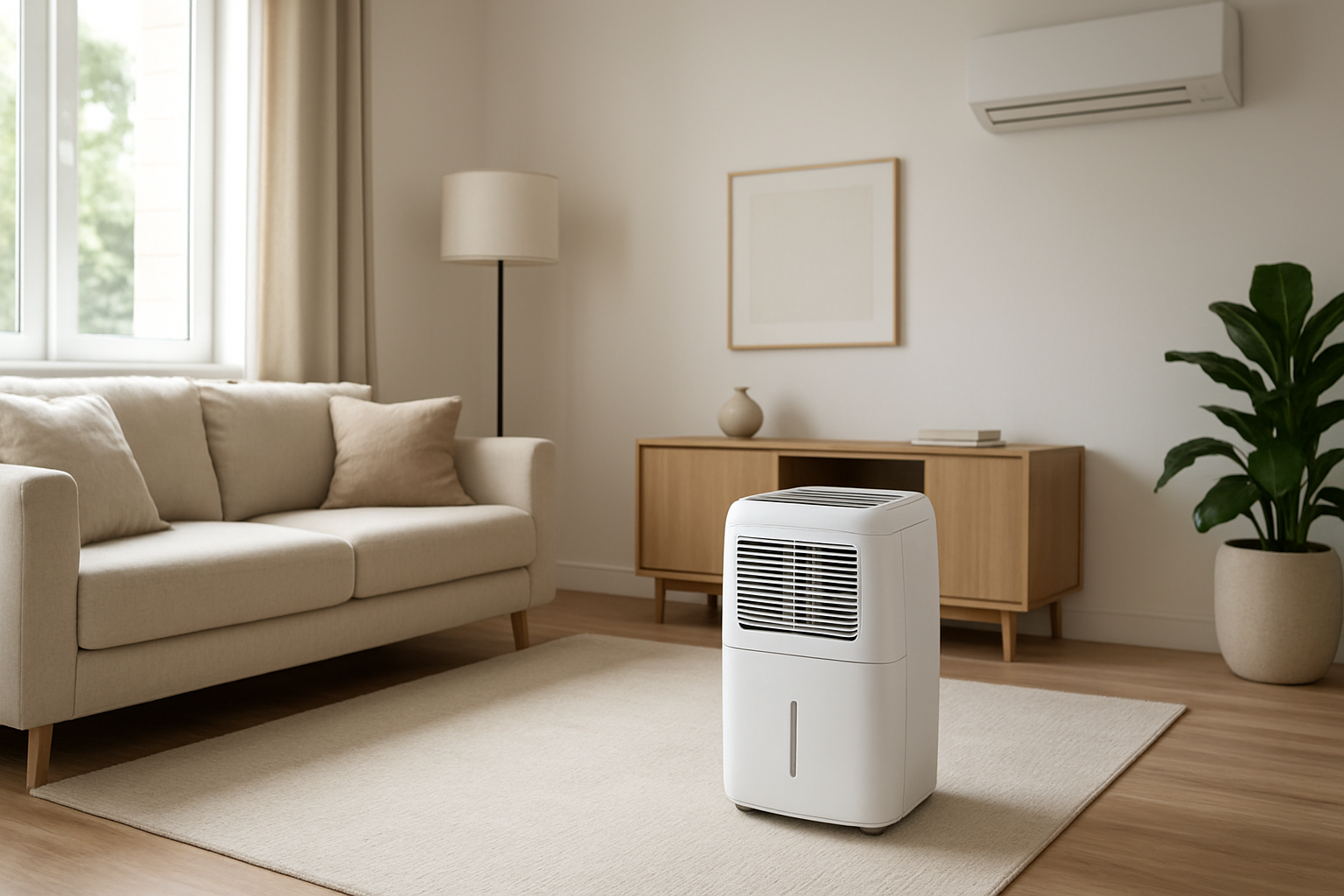
Diagnose why your dehumidifier runs continuously but fails to lower humidity, focusing on issues with unit capacity, airflow, or excessive moisture load in the space.
Dehumidifier Runs Nonstop But Humidity Stays High? It’s Overwhelmed
Quick Answer
If your dehumidifier runs continuously but indoor humidity will not drop, the most likely issue is that the moisture load is higher than the unit’s effective capacity, often made worse by poor airflow through the unit or the room. First check: verify the measured humidity with a separate hygrometer placed near the dehumidifier and in the dampest room, then compare results after 2–3 hours of closed-door operation.
Identify the Comfort Pattern First
Before assuming the dehumidifier is bad, lock down the pattern. The pattern tells you whether you have a capacity problem (overwhelmed) or a malfunction/sensor problem.
When it happens: Humidity stays high mainly during rainy days, spring/fall mild weather, or after showers/cooking points to high moisture load with weak drying support from AC.
Time of day behavior: If readings climb at night (cooler temperatures) and improve slightly in the afternoon, the unit may be operating in cooler air where extraction rate drops.
Where it happens: One floor or one room stays humid while the dehumidifier room is only slightly better suggests poor air mixing or the unit is too far from the moisture source.
System running vs off: If the central AC is off most of the day and humidity rises, the dehumidifier is carrying the entire latent load alone.
Constant vs intermittent: A unit that never cycles off and the humidity number barely moves is classic overwhelmed behavior, especially if the bucket is filling but the space does not dry out.
Doors open vs closed: If closing the door to the dehumidifier room drops humidity there but the rest of the home stays high, you have an air distribution/mixing problem, not a dehumidifier failure.
Vertical differences: Basement air often feels cool and clammy while upper levels feel sticky. Cool air holds less moisture, so relative humidity stays high even when the absolute moisture removal is modest.
Humidity perception: Sticky air with musty odor and slow-drying towels points to sustained high humidity throughout the air volume, not just a brief spike.
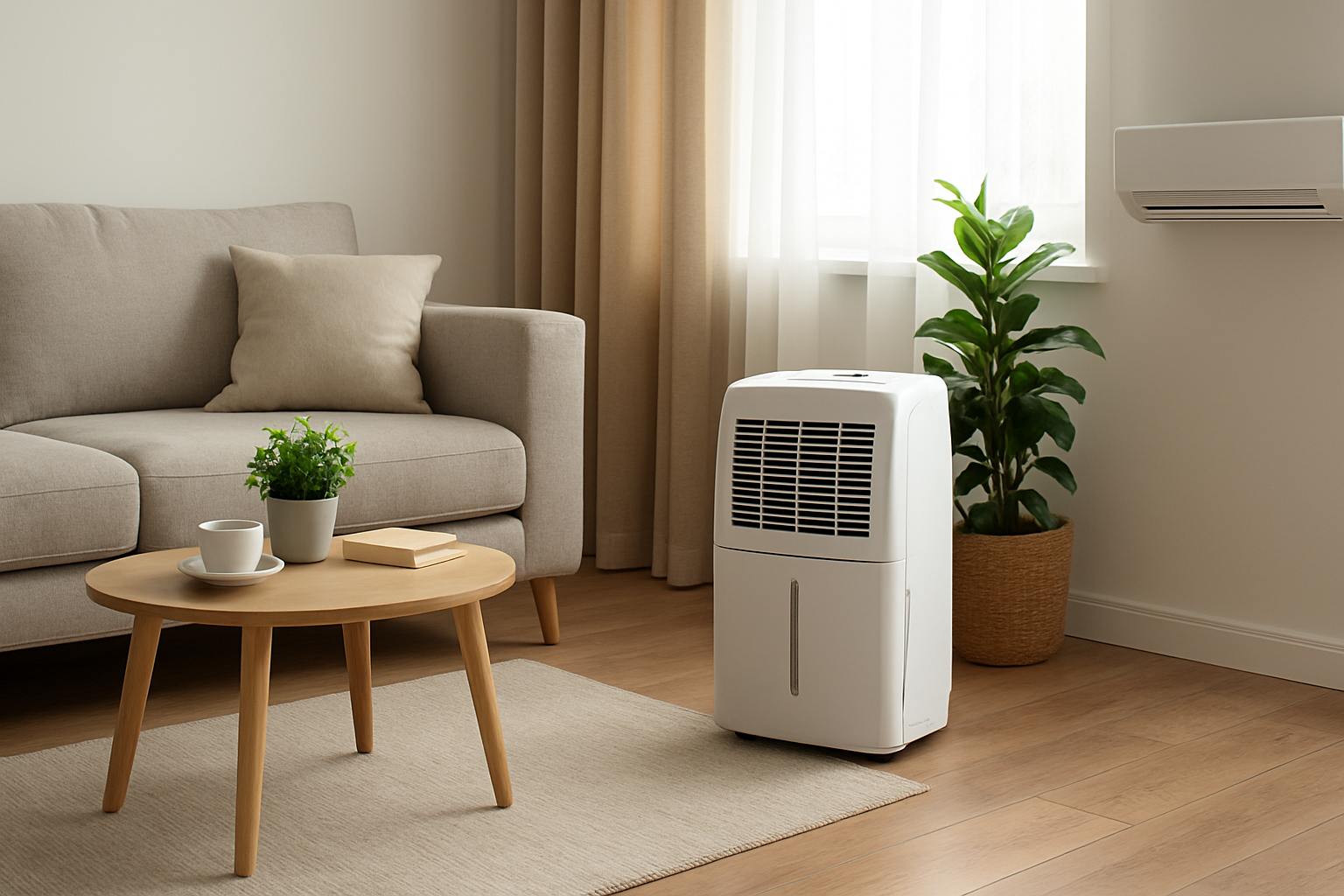
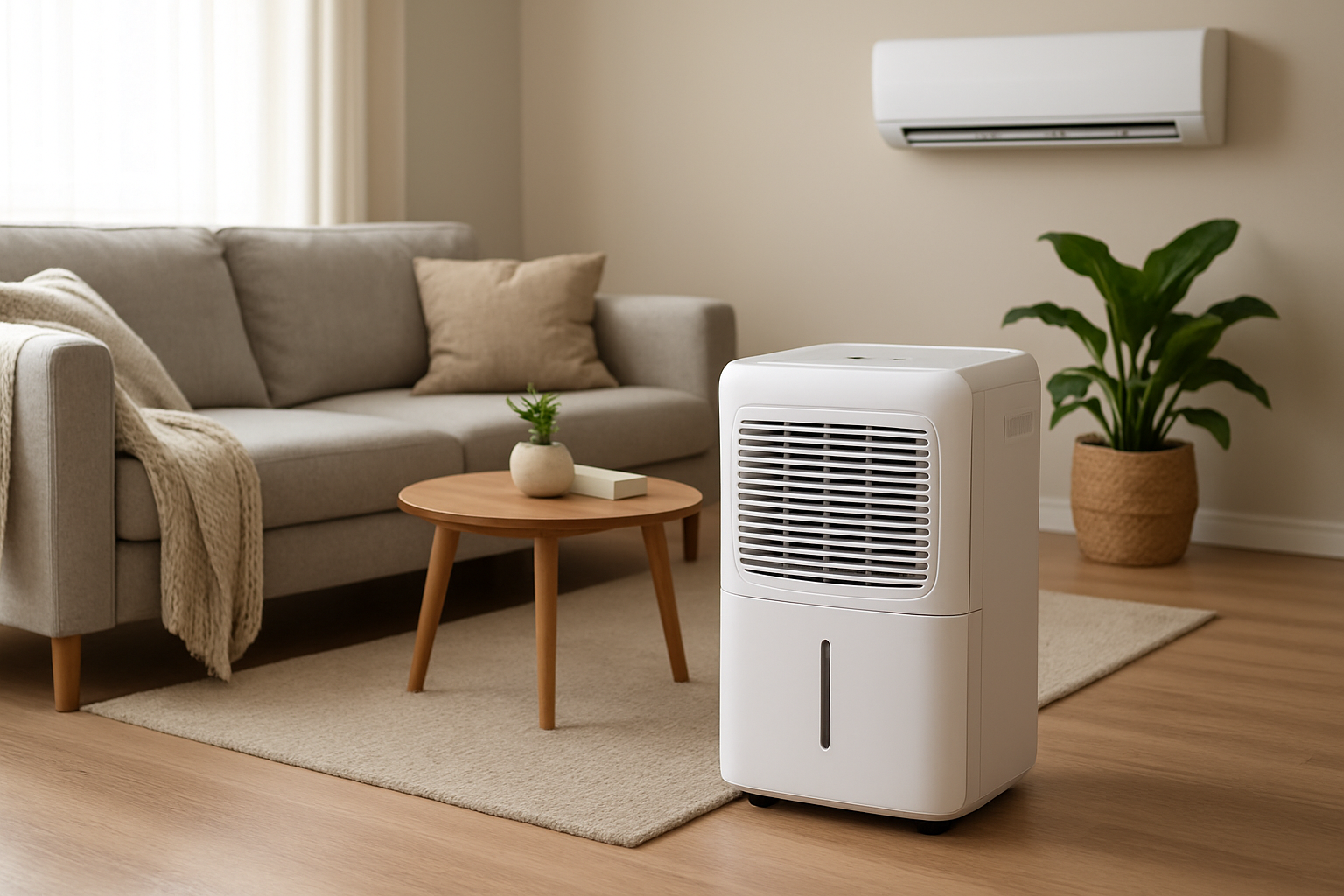
Airflow strength at the unit: Weak discharge air, blocked intake, or the unit tucked in a corner/closet indicates the machine cannot process enough room air per hour to impact the whole space.
What This Usually Means Physically
A dehumidifier lowers indoor humidity by pulling room air across a cold coil, condensing water, then reheating the air slightly before releasing it back into the space. The key limitation is not that it is running, but how much water it can actually remove per day under your real conditions.
Capacity ratings are typically based on warm, humid test air. In real homes, especially basements and shoulder seasons, the air is cooler and the dehumidifier removes less moisture per hour even when it runs nonstop. At the same time, the moisture load can be continuous: infiltration of humid outdoor air, damp foundation evaporation, crawlspace/basement moisture, frequent showers, cooking, aquariums, or clothes drying indoors.
If the rate of moisture entering the air (load) exceeds the dehumidifier’s effective removal rate (capacity), the unit will run continuously and relative humidity will stall at a high number. Airflow matters because the unit must repeatedly process the entire air volume. Poor circulation, blocked filters/coils, or a bad placement creates a situation where the machine dries a small pocket of air while the rest of the home keeps feeding it humid air.
Most Probable Causes (Ranked)
1) Unit capacity is too small for the moisture load: Bucket fills regularly (or drain runs steadily) yet RH won’t drop below a plateau, especially during wet weather or when AC is not running much.
2) Dehumidifier is operating in cool air where output drops sharply: Basements around the low-to-mid 60s or lower often cause long runtimes with limited moisture removal; you may also see little water collected even though it runs.
3) Airflow through the unit is restricted: Intake filter loaded with dust, coil matted, or discharge blocked by furniture/walls; air coming out feels weak and the unit’s immediate area feels warmer but not drier.
4) Poor air mixing or wrong location relative to the moisture source: The room with the unit improves but adjacent rooms remain humid; closing doors changes readings dramatically.
5) Continuous humidity intrusion (outside air leak or internal moisture source): RH rises quickly after the unit stops, or never falls despite decent water collection; musty odors near foundation walls or sump area point to ongoing evaporation.
6) Humidity reading error or control behavior: Built-in humidistat reads lower than a separate hygrometer, or the unit is located where its sensor is biased (near discharge air or in a stagnant corner).
How to Confirm the Cause Yourself
These checks rely on observation and simple comparisons. Do them in a controlled way so the results mean something.
Confirm the humidity number: Place a separate hygrometer in the same room, away from the dehumidifier discharge. Then place it for 30–60 minutes in the dampest room. If the dehumidifier display differs by more than about 5% RH from the hygrometer, trust the hygrometer for diagnosis.
Run a closed-door zone test: Close doors to isolate the dehumidifier in one area for 2–3 hours. If RH drops meaningfully in that closed zone but not in the rest of the home, the unit is not moving enough air through the whole house or it is poorly located.
Check moisture removal indirectly: Without measuring pints, observe whether the bucket/drain shows steady production over several hours. If it is producing water consistently but RH stays high, the load is likely exceeding capacity or humid outdoor air is continuously entering.
Look for a plateau: Track RH every hour for 4–6 hours with the same hygrometer. Overwhelmed systems commonly drop a few points then flatten (for example, stuck in the high 50s to mid 60s) even with nonstop runtime.
Airflow reality check: Feel intake suction and discharge flow. Weak discharge, noticeably hot cabinet, or the unit jammed into a tight corner indicates low effective airflow and low air exchanges through the coil.
Temperature dependency clue: Note room temperature where the unit runs. If the space is cool and clammy and RH is high, the dehumidifier may be fighting a temperature-limited environment where extraction rate is poor.
Door position test for mixing: Run with doors open for 2–3 hours, then closed for 2–3 hours. Big swings between rooms indicate distribution/mixing limits rather than pure equipment failure.
Moisture source sweep: On a humid day, sniff and feel near basement walls, sump pit, crawlspace access, laundry area, and bathrooms. If odors and dampness are stronger near one area, the dehumidifier may be undersized for that local source or placed too far away.
Normal Behavior vs Real Problem
Normal: During very humid weather, it is normal for a dehumidifier to run long cycles. You may see it run most of the day to hold a target humidity, especially in basements. A normal system also shows progress: RH trends downward over hours, or it stabilizes near the setpoint, and the unit periodically cycles off once the goal is met.
Real problem indicators: The unit runs 24/7 with little or no RH improvement, RH stalls well above the setpoint (for example, set to 50% but stuck above 60%), or the dampest areas never improve even after a full day. Another strong indicator is a unit that runs constantly but produces very little water in a space that feels persistently clammy, suggesting conditions are limiting removal or airflow is compromised.
When Professional Service Is Needed
Humidity stays above 60% RH for more than 48–72 hours despite nonstop operation and basic placement/airflow corrections, indicating load exceeds capacity or a building moisture problem.
Visible condensation, recurring musty odor, or damp surfaces that persist even with continuous dehumidifier runtime, suggesting uncontrolled moisture entry.
No meaningful water removal while the unit runs continuously in a clearly humid area, after confirming the hygrometer readings, suggesting equipment performance decline (coil/fan/refrigeration issue).
Basement/crawlspace moisture signs such as efflorescence, damp foundation edges, or wet sump activity that aligns with humidity spikes, indicating the moisture source needs correction, not just more runtime.
Comfort impact across the whole home where multiple rooms remain sticky and the central HVAC is also struggling to control humidity, suggesting a broader capacity/ventilation imbalance.
How to Prevent This in the Future
Match capacity to real conditions: If your unit runs nonstop and humidity plateaus above target, you typically need more effective removal per day or better distribution, not just a lower setpoint.
Improve air mixing: Place the unit where air can circulate freely (not in a closet or tight corner) and keep interior doors positioned to allow return air paths from damp areas to the unit.
Keep airflow clean: Maintain the intake filter and keep the coil face clear so the fan can move full airflow through the dehumidifier.
Reduce the moisture load: Use bath exhaust during and after showers, vent dryers outdoors, cover sump pits, and address known damp foundation or crawlspace issues so the unit is not fighting continuous evaporation.
Control infiltration during humid weather: Limit open windows/doors when outdoor dew point is high; a dehumidifier cannot keep up if the house is being intentionally ventilated with humid air.
Related Home Comfort Symptoms
Basement feels clammy even though the dehumidifier is on
Humidity is fine in one room but high elsewhere
Musty smell returns quickly after the unit shuts off
AC cools the house but it still feels sticky
Condensation on supply vents or cool surfaces
Conclusion
A dehumidifier that runs nonstop while humidity stays high is usually not broken; it is being asked to remove more moisture than it can under your home’s real temperature, airflow, and moisture-entry conditions. Confirm with an independent hygrometer, then use closed-door and room-to-room comparisons to separate capacity limits from mixing and airflow restrictions. If RH cannot be held under 60% after 2–3 days of continuous operation, the next step is correcting the moisture source or upgrading effective dehumidification capacity.
Frequently Asked Questions
Why does my dehumidifier run constantly but only lowers humidity a few percent?
That pattern usually means you are seeing the initial easy reduction, then the unit hits a load-capacity balance point. Ongoing moisture entry or generation is matching what the unit can remove, so RH plateaus even though the machine never stops.
Is it normal for a dehumidifier to run 24/7 in a basement?
Long runtimes can be normal in wet seasons or in basements with continuous moisture coming through the slab/walls. What is not normal is failing to reach a reasonable control level. If you cannot maintain under about 60% RH, the unit is effectively undersized, poorly distributed, airflow-restricted, or the moisture source is too large.
Does a cooler room make a dehumidifier less effective?
Yes. In cooler air, the unit typically removes less water per hour, even if it runs nonstop. That is why basements often need higher-capacity units or better moisture-source control to achieve the same RH target as a warmer floor.
How can I tell if it is a sensor problem instead of real high humidity?
Use a separate hygrometer and compare readings in the same location after 30 minutes. If the dehumidifier display is off by more than about 5% RH, the control may be misleading you. Also, if the air feels noticeably drier and towels dry faster, but the display stays high, verify with independent measurement.
Should I move the dehumidifier to the dampest room?
Usually yes, unless that room has very poor circulation or the door is often closed. The unit performs best when it can process the dampest air and when air can flow freely back to the unit. If moving it helps that room but the rest of the home stays humid, you likely need better air pathways or additional capacity in other zones.
Need a complete overview? Visit the full troubleshooting guide here: Read the full guide for more causes and fixes.
When it keeps humming along but the air won’t budge, it can feel like the room is playing dumb. The truth is less mysterious than it seems—your place is simply more than the unit can comfortably handle.
There’s a certain comfort in finally putting a name to that frustration. Not everything is “broken,” and not every run cycle means progress—sometimes it just means you’ve reached the limit of what’s being asked.