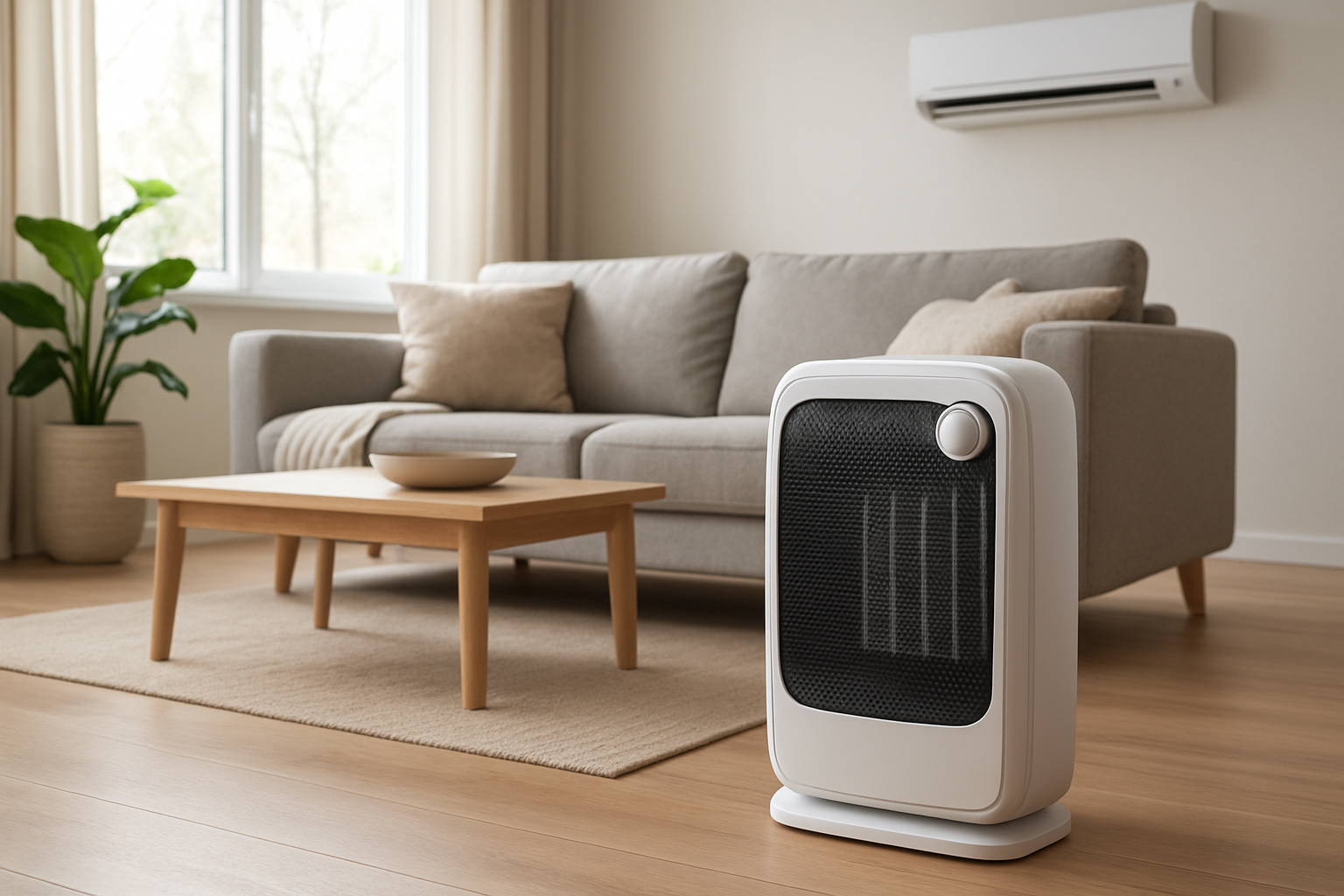
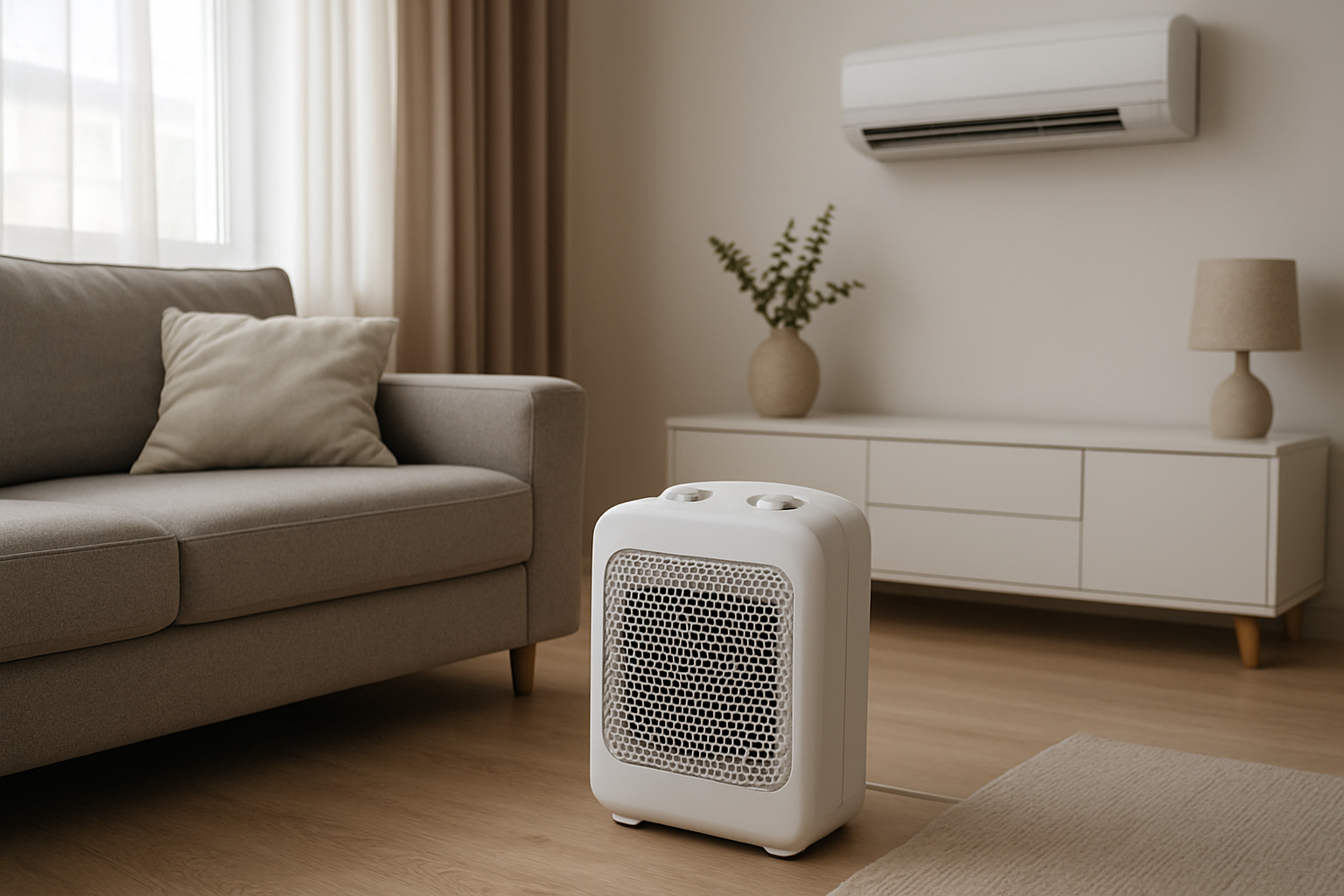
Diagnose why your portable heater heats slowly or has low output, including issues with room size, heater wattage, airflow, and possible internal faults.
Portable Heater Raises Temperature Very Slowly? Output Too Low
Quick Answer
The most common reason a portable heater warms a room very slowly is simple capacity mismatch: the heater’s watts (BTU per hour) can’t keep up with the room’s heat loss and air volume. First check: confirm the heater is on its highest heat setting and note the nameplate wattage, then compare performance in a smaller room with the door closed.
Identify the Comfort Pattern First
Sort the symptom before assuming the heater is defective. These patterns point strongly toward low heating capacity relative to the space.
When it happens: Slow warming is worst on colder days, at night, or during windy weather. It improves on milder days without changing anything else.
Where it happens: The heater feels effective within 3–6 feet, but the far side of the room stays cool. Corners and exterior-wall areas lag behind.
Running vs off: The heater runs continuously (or nearly continuously) yet the room temperature creeps up slowly or plateaus short of the setpoint.
Constant vs intermittent: It’s consistently underwhelming rather than randomly failing. If it cycles on and off frequently while the room stays cold, that points more to thermostat placement or airflow short-circuiting, but capacity can still be the root.
Doors open vs closed: With the door open, the room barely improves. With the door closed, the room warms faster and reaches a higher stable temperature.
Vertical differences: The ceiling area feels warmer while the seating level stays cool, especially with fan-forced heaters aimed upward or placed near a cold exterior wall. Stratification wastes usable heat.
Humidity perception: The air may feel drier after extended run time, but dryness does not mean the heater is producing “more heat.” It often reflects longer runtime and reduced relative humidity as air warms slightly.
Airflow strength: Air leaving the heater feels hot, but the overall room still doesn’t recover. Strong discharge heat with weak room change is a classic capacity-versus-load mismatch.
What This Usually Means Physically
A portable electric heater is a fixed-capacity device. A typical unit is 1500 watts, which is about 5100 BTU per hour. It can only add heat to the room at that rate, and only some of that ends up as useful, mixed heating at occupant level.
If the room’s heat loss plus air exchange is near or above the heater’s output, the temperature rise will be slow and may stall. Heat loss rises sharply when:
Outdoor temperature drops: More heat flows through walls, windows, and ceilings.
Doors are open: You are effectively heating a much larger zone, often the entire floor.
Ceilings are high: The heater must warm more air volume, and warm air collects above you (stratification) unless mixed.
Exterior surfaces dominate: Big windows, uninsulated walls, and cold floors absorb the heat first, delaying a noticeable air temperature rise.
In plain terms: the heater may be working normally, but the room is losing heat (or expanding in effective size) as fast as the heater can supply it. That creates the exact symptom: very slow temperature increase and low “net” output felt in the living zone.
Most Probable Causes (Ranked)
Heater wattage too low for the room and conditions: Runs constantly, air at the heater is hot, but room temperature changes slowly and never reaches target during cold weather.
You are unintentionally heating connected spaces: Open doorways, stairwells, or open-plan layouts allow heat to spill into larger volumes; closing doors makes an immediate difference.
High heat loss through windows/exterior envelope near the heater: Placing the heater by a large window or exterior wall results in heat being “soaked up” by cold surfaces and drafts; the room warms unevenly.
Air stratification wasting heat at ceiling level: Ceiling is noticeably warmer than the couch/floor area; the heater is warming the top of the room first.
Heater not actually operating at full capacity: “High” setting doesn’t feel stronger than “low,” or the unit cycles off early due to internal thermostat location, but this is less common than simple size mismatch.
How to Confirm the Cause Yourself
These checks rely on observation and simple comparisons. The goal is to prove whether the heater is under-sized for the current load.
Closed-door test: Run the heater on its highest setting in a smaller room with the door shut for 30–60 minutes. If the smaller room becomes clearly comfortable while the larger target room does not, the heater capacity is the limiting factor.
Plateau test: Leave conditions unchanged (same room, same door position) and watch whether the temperature rises then levels off below your setpoint. A stable plateau with continuous runtime indicates the heater output roughly matches the heat loss at that outdoor condition.
Doorway spill test: Stand near the doorway after the heater has run for 20 minutes. If you feel a warm outflow into the hall and the hall warms slightly, the heater is heating more than the intended space.
Vertical temperature feel check: After 30 minutes, compare how warm it feels at head height versus ankle height. If your head feels warmer than your feet by a noticeable margin, stratification is stealing comfort even if the heater is producing heat.
Window and draft check: Without touching the heater, simply move to seating near windows/exterior walls. If comfort drops sharply near glass or you feel a cool “wash” down the window, envelope loss is dominating and the heater is being outpaced.
Time-of-day correlation: If the heater seems adequate in the afternoon but not after sunset, that’s consistent with increased heat loss (outdoor temp drop and loss of solar gain), not a heater malfunction.
Normal Behavior vs Real Problem
Normal behavior: A 1500-watt portable heater will not rapidly raise the temperature of a large, leaky, open-plan area in cold weather. It is normal for the area near the heater to feel warm while the far side stays cool, and it is normal for temperature rise to slow as the room approaches a new equilibrium.
A real problem is more likely when: the heater used to heat the same room acceptably and now cannot (with similar outdoor conditions), the heater output at the grille is only mildly warm on high, or the unit shuts off early while the room is still cold and then restarts repeatedly without improvement. Those patterns suggest control issues, internal overheat protection triggering, or reduced electrical supply to the heater.
When Professional Service Is Needed
Repeated breaker trips, scorching odor, or plug/outlet heat: Stop using the heater and have the electrical circuit inspected. Comfort diagnosis ends when electrical safety is in question.
No meaningful heat on high: If discharge air is lukewarm and the heater never produces a strong warm stream even briefly, the unit may be failing and should be evaluated or replaced.
Comfort failure across multiple rooms: If the portable heater is being used to compensate for a central heating shortfall, and several rooms are cold, a whole-home heat loss or HVAC performance issue likely exists and needs HVAC diagnostics.
Persistent inability to maintain temperature with reasonable runtime: If the heater runs nearly nonstop and you still cannot maintain basic comfort in the intended room, the practical fix is capacity and heat-loss reduction planning rather than continued operation.
How to Prevent This in the Future
Match heater capacity to the space you can actually isolate: Use it in a room that can be closed off. The most effective “upgrade” is reducing the zone size.
Reduce immediate heat loss where you sit: Position seating away from large windows and exterior corners so the heater’s limited capacity isn’t spent offsetting radiant cooling at your body.
Improve mixing to fight stratification: If the ceiling is warm but the floor is cold, gentle air circulation (without creating drafts) helps move heat to occupant level.
Control the infiltration path: If you consistently feel drafts, address weatherstripping and obvious air leaks. This directly reduces the load the heater is fighting.
Use realistic setpoints: In high-loss rooms, aiming for a modest temperature rise may be achievable; expecting whole-room rapid recovery often is not with portable electric capacity limits.
Related Home Comfort Symptoms
Portable heater runs constantly but room never reaches set temperature
Warm near the heater, cold across the room
Feet cold, head warm in winter (stratification)
Room warms in daytime but not at night
Cold drafts near windows cancel out heat
Conclusion
A portable heater that raises temperature very slowly is most often not “weak” or broken; it is under-sized for the heat loss and effective area you are trying to heat. Confirm it by testing in a smaller closed room and watching for a temperature plateau during continuous runtime. If it performs well in a small room but not in the target space, the fix is reducing the zone size, reducing heat loss, improving mixing, or increasing installed heating capacity.
Frequently Asked Questions
How big of a room can a 1500-watt portable heater realistically heat?
It depends on heat loss, not just square footage. In a tight, interior room with the door closed, it can maintain comfort well. In a large room with exterior walls, big windows, high ceilings, or an open doorway, it may only create a warm “bubble” near the unit and never raise the whole-room temperature quickly.
Why does the heater feel hot but the room stays cold?
The heater can have normal hot discharge air while the room’s heat loss (through windows, walls, drafts, and connected spaces) consumes that heat as fast as it’s produced. The result is low net temperature gain and a slow rise that may stop short of the target.
Why is the room warmer near the ceiling than at the floor?
Warm air rises and collects at the top of the room. If the space isn’t mixing well, the heater’s limited capacity warms the upper air first while the occupied zone remains cool. This is common in rooms with higher ceilings or when the heater air stream points upward.
Should I keep the door open so heat can spread through the house?
Not if the goal is to warm the original room. An open door increases the volume you are heating and usually slows the temperature rise dramatically. If you want that room to warm faster, isolate it by closing the door and limiting airflow to adjacent spaces.
How can I tell if it’s a heater problem or just an under-sized heater?
Use the closed-door small-room test. If the heater can make a smaller room clearly comfortable in under an hour on high, it is likely operating normally. If it struggles even in a small room and the discharge air is only mildly warm, the heater may not be producing full output.
Need a complete overview? Visit the full troubleshooting guide here: Read the full guide for more causes and fixes.