Diagnose why your bedroom is hotter at night by identifying heat buildup from occupancy, poor ventilation, and airflow issues, with tips to improve comfort and cooling.
Bedroom Hotter Than The Rest At Night? Heat Is Rising And Staying
Quick Answer
The most common reason a bedroom runs hotter at night is heat accumulation from people and electronics combined with poor ventilation once the door is closed. The room keeps adding heat but is not exchanging air fast enough to remove it. First check: with the system running, compare airflow at the bedroom supply vent with the door open versus closed.
Identify the Comfort Pattern First
Before chasing equipment problems, sort the pattern. This symptom is usually about what changes at night: doors close, bodies add heat, and airflow paths get restricted.
When it happens: Does the bedroom feel fine in late afternoon but gets stuffy or hot 1–3 hours after bedtime? That timing strongly points to occupancy heat and limited air exchange.
Weather sensitivity: If it occurs year-round (heating season and cooling season), it is more likely a ventilation/airflow path issue than solar gain or insulation alone.
Where it happens: Is it mainly the bedroom with the door closed while hallways or other rooms remain comfortable? Single-room behavior is typical of room-level air exchange problems.
System running vs off: If the room warms up even while the HVAC is running, suspect low delivered airflow to the room or no return-air path when the door is shut.
Constant vs intermittent: If the room is worst during long continuous sleep periods and improves quickly in the morning with the door open, that supports heat buildup rather than a thermostat problem.
Door open vs closed: If cracking the door opens improves comfort within 10–20 minutes, the primary problem is usually trapped air and pressure imbalance, not system capacity.
Vertical differences: If the ceiling area feels notably warmer than the bed level, you are seeing stratification. If the bed level itself feels warmer and stale, you are seeing insufficient air changes (poor mixing/ventilation).
Humidity perception: If the room feels muggy at night even when the rest of the house feels normal, that usually means moisture from breathing is accumulating due to low air exchange.
Airflow strength: Weak supply airflow at the bedroom register relative to other rooms is a direct clue. If supply feels strong but the room still overheats with the door closed, the likely issue is the return path and pressure, not the supply duct.
What This Usually Means Physically
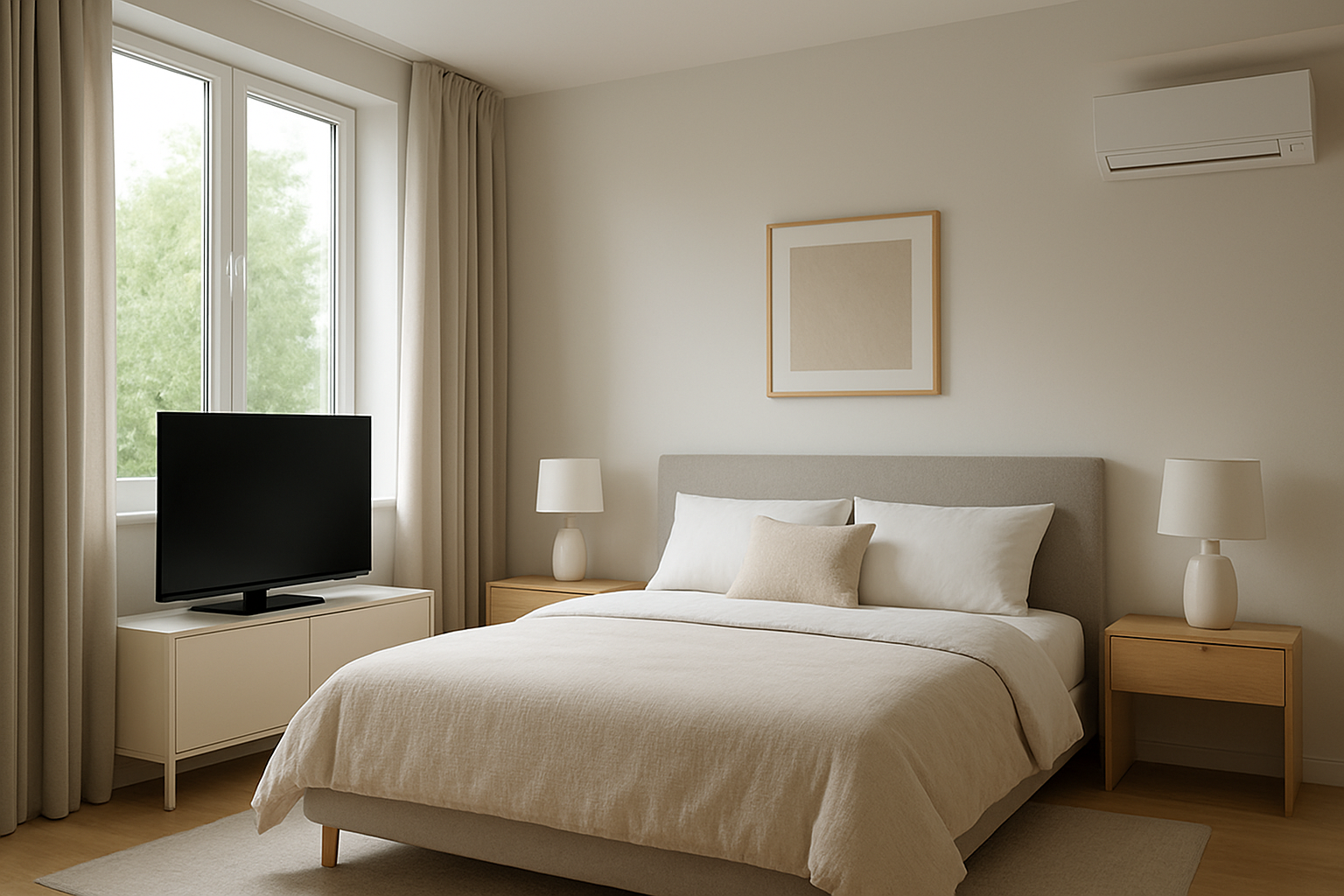
A closed bedroom is a small air volume. Two adults can add several hundred watts of heat continuously through metabolic heat, plus additional heat from electronics, chargers, and lamps. That heat must leave the room through one of three paths: supply/return airflow, conduction through walls/ceiling, or leakage under the door and through cracks.
At night, two things commonly change:
The door closes: If the bedroom has a supply vent but no dedicated return, the room must push air out through a pressure relief path (door undercut, transfer grille, jump duct). If that path is too small, the supply airflow drops and the air change rate collapses. Heat and humidity from occupancy accumulate.
Stratification increases: Warm air naturally rises and can pool near the ceiling, especially when airflow is low. If the supply is low and the return path is restricted, mixing is poor and the hottest air stays trapped where it is generated and rises.
This is why the complaint is often specific: hotter at night, worse with door closed, and better when the door is opened or a fan is used. It is a ventilation and air movement problem first, and an equipment problem only if the entire home cannot maintain temperature.
Most Probable Causes (Ranked)
Blocked return-air path when the bedroom door is closed (most common): Bedroom has a supply register but no return, or a return that is blocked. Diagnostic clue: the room improves quickly with the door cracked open.
Low delivered supply airflow to the bedroom: Duct restriction, crushed flex, closed or partially closed damper, dirty register grille, or long undersized run. Diagnostic clue: the bedroom register airflow feels noticeably weaker than nearby rooms when the system is on.
Occupancy and plug-load heat buildup: Multiple sleepers, computers, TVs, chargers, aquarium/terrarium equipment. Diagnostic clue: the room is only problematic when occupied and is normal when empty for several hours.
Supply/return imbalance creating pressure that changes airflow: Supply pressurizes the room; without relief, the blower favors other paths. Diagnostic clue: the door is harder to close or you feel air pushing at the door gap when the system runs.
Stratification from ceiling height and poor mixing: Vaulted ceilings, high supply placement, or low fan use. Diagnostic clue: ceiling is hot while the lower part is less affected; comfort improves when a ceiling fan is used on low speed.
Thermostat location and cycling pattern: The main thermostat satisfies based on a cooler hallway or lower level while the bedroom remains warm. Diagnostic clue: HVAC cycles off while the bedroom is still warming and other areas feel fine.
How to Confirm the Cause Yourself
These checks use observation only and can be done in one evening.
Door position test: With the system running, close the bedroom door for 15 minutes, then crack it open 1–2 inches. If comfort improves quickly or the air feels less stale, the room likely lacks an adequate return/transfer path.
Airflow comparison at the register: Feel the air at the bedroom supply and at a nearby room supply. If the bedroom is clearly weaker, suspect a duct restriction, damper position, or balancing issue.
Paper-at-the-door-gap check: Hold a thin tissue or strip of paper near the bottom door gap with the system running and the door closed. If it is pushed strongly outward or sucked inward, the room is pressure-imbalanced and airflow is being restricted by the lack of a relief path.
Temperature split check between bedroom and hallway: Place a basic thermometer in the bedroom and another in the hallway outside. If the bedroom is consistently more than 3°F warmer after an hour of occupancy while the hallway stays stable, that is consistent with heat accumulation plus low air exchange.
Ceiling-to-bed stratification check: Compare how the air feels at standing head height versus seated/bed height. A noticeable warmth increase higher up points to stratification driven by low mixing rather than only duct capacity.
Occupancy load check: On a night with the same outdoor conditions, compare one sleeper versus two (or turn off nonessential electronics). If the problem scales with people and devices, the room is not clearing the added heat and humidity.
Normal Behavior vs Real Problem
Normal behavior: Bedrooms can run slightly warmer at night because doors close, airflow patterns change, and people add heat. A 1–2°F difference from the rest of the home is common, especially in two-story homes or rooms with higher ceilings.
Likely a real problem: Any of the following point to inadequate air exchange or a significant airflow imbalance:
Bedroom is 3°F or more warmer than the hallway or adjacent rooms for most nights.
Room becomes stuffy or muggy within 1–2 hours of sleeping, especially with the door closed.
Comfort changes dramatically with door position (closed is hot, cracked is acceptable).
Supply airflow feels weak compared to other rooms, even when the system is clearly running.
When Professional Service Is Needed
Persistent temperature difference: Bedroom remains more than 3–4°F warmer than the rest of the home after basic checks and door-position testing.
Airflow is obviously low: Bedroom supply is much weaker than other rooms, suggesting a duct, damper, or leakage problem that needs inspection.
Whole-home performance decline: The system runs long cycles and the entire home struggles; this shifts the issue toward capacity, refrigerant/combustion performance, or broader duct losses.
Humidity and air quality complaints: Regular nighttime stuffiness, headaches on waking, or strong condensation on windows can indicate very low air exchange that should be evaluated for ventilation and pressure balance.
Safety indicators: If you notice backdrafting smells, soot, or unusual combustion odors near a furnace or water heater, stop using the equipment and call for service. Pressure imbalances can worsen combustion venting problems.
How to Prevent This in the Future
Maintain a return-air/transfer path: Keep an adequate door undercut clear of rugs and thick carpet near the door. If the home relies on return through the hallway, avoid fully sealing the bedroom from airflow.
Use low-speed mixing: Run a ceiling fan on low to reduce stratification without creating a draft.
Reduce nighttime internal heat: Turn off unnecessary electronics, use LED lighting, and avoid charging multiple devices on the bed stand if the room already runs hot.
Do not close supply registers to force air elsewhere: That often increases static pressure and can reduce total airflow, making room-to-room balance worse.
Keep registers and grilles clear: Furniture, curtains, and dust buildup directly reduce delivered airflow and mixing in a room that already has limited air exchange.
Related Home Comfort Symptoms
Bedroom gets stuffy only when the door is closed
Upstairs rooms warmer than downstairs at night
One room is humid while the rest of the house feels dry
Weak airflow from one vent compared to others
Room temperature swings that match HVAC cycle timing
Conclusion
A bedroom that gets hotter at night is most often accumulating heat and humidity from occupants because the room cannot exchange air effectively once the door is closed. The fastest diagnostic separator is the door-open versus door-closed test combined with a supply airflow comparison. If the room improves quickly when opened, focus on the return/transfer path and airflow balance rather than thermostat settings or equipment size.
Frequently Asked Questions
Why does my bedroom feel hotter only after I go to bed?
People add continuous heat and moisture through breathing and body heat. If the door is closed and the room has limited return airflow or relief, the heat and humidity stay in the room and build over 1–3 hours.
Is a bedroom without a return vent a problem?
Not automatically. It can work if there is a good air path back to the return, usually through a sufficient door undercut or a dedicated transfer path. If the room overheats with the door closed and improves when cracked open, the return path is not adequate.
Why does cracking the door instantly help?
It relieves pressure and increases air exchange. With a better path for air to leave the room and reach the main return, supply airflow becomes more effective and the room can shed the heat and humidity being generated inside.
Should I close other vents to push more air into the bedroom?
Usually no. Closing vents often increases system static pressure and can reduce total airflow, which may make the bedroom hotter. It also increases imbalance between rooms. The better fix is restoring proper airflow pathways and balancing.
How much warmer than the rest of the house is considered abnormal?
About 1–2°F can be normal. If the bedroom is repeatedly 3°F or more warmer than the hallway or adjacent rooms after an hour of occupancy, especially with a stuffy feeling, that points to inadequate air exchange or a significant airflow imbalance.
Need a complete overview? Visit the full troubleshooting guide here: Read the full guide for more causes and fixes.
After all the fuss, it’s hard not to notice how that one room keeps its own schedule—warm long after the rest of the house has cooled down. The pattern is familiar, a little stubborn, and honestly kind of impressive in its consistency.
But there’s something satisfying about seeing the reason laid bare, even if it doesn’t fix itself overnight. For now, at least the heat feels less random, more like a known character in the evening routine.