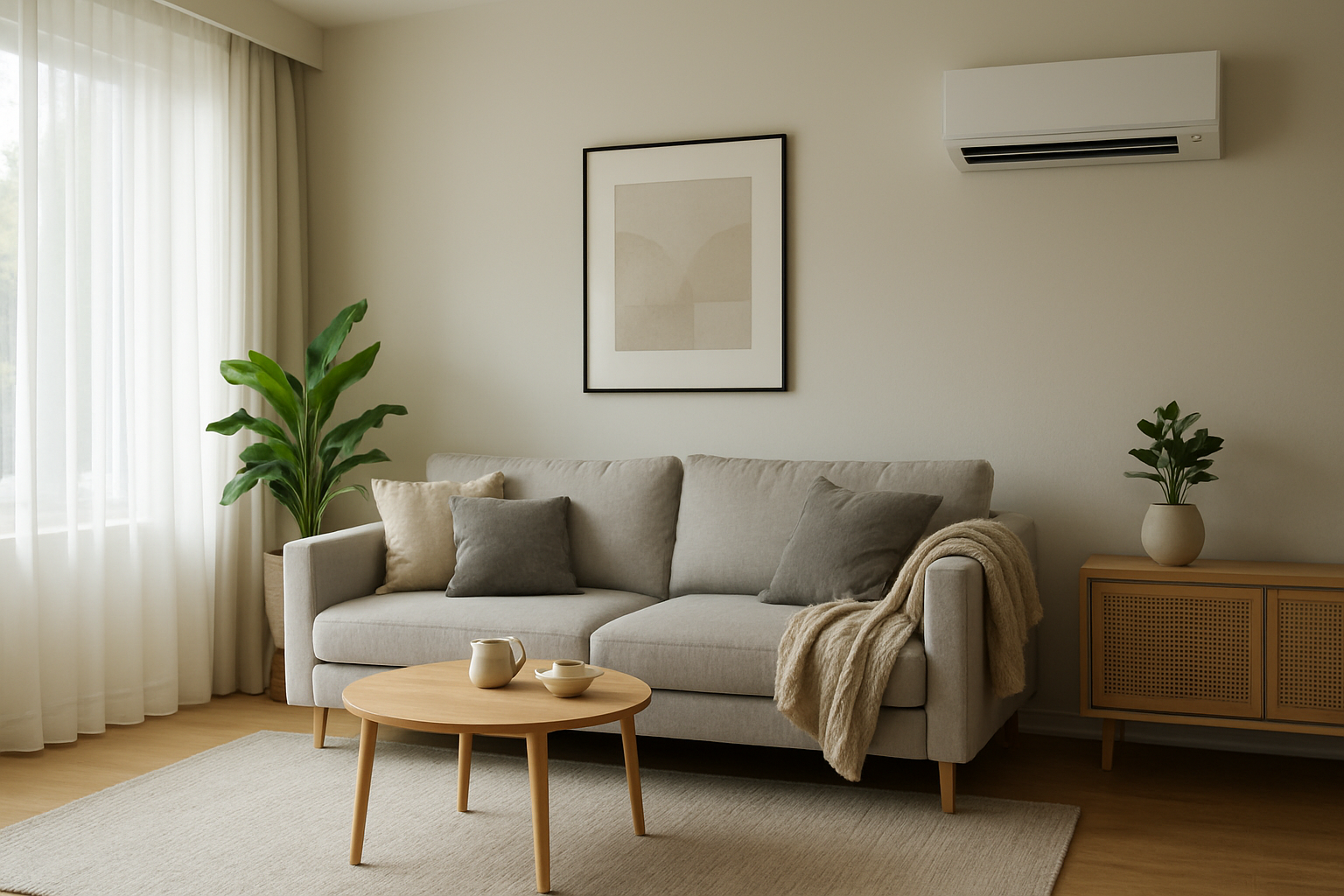
Learn how to diagnose and fix nighttime air stagnation and poor ventilation in bedrooms, addressing causes of thick, stuffy air for better sleep quality.
Bedroom Air Feels Thick At Night? It’s Not Just In Your Head
Quick Answer
Thick-feeling bedroom air at night is most often caused by nighttime air stagnation: the bedroom becomes a closed zone with low ventilation and weak air mixing once doors close and the HVAC fan cycles off. First check: with the door closed, hold a tissue at the supply vent when the system is running and again when it’s off. If movement drops to near zero between cycles, stagnation is the driver.
Identify the Comfort Pattern First
Before blaming humidity or the equipment, sort the pattern. Thick air complaints have a repeatable profile when ventilation and mixing drop overnight.
Time of day: Worse after bedtime and during long sleep periods, especially 1–4 hours after the system last ran steadily.
Weather trigger: More noticeable on mild nights (HVAC runs less) and on very cold or very hot nights (bedroom door stays shut and pressure imbalance shows up).
Where it happens: Primarily in the bedroom with the door closed; the rest of the home may feel normal.
System running vs off: Feels stuffiest when the system is not actively moving air. Often improves temporarily when heating/cooling turns on.
Door open vs closed: A strong diagnostic tell. If thick air improves within 5–15 minutes of opening the door, the bedroom is acting like a semi-sealed zone.
Constant vs intermittent: Intermittent stuffiness that lines up with long off-cycles points to low air exchange, not a constant contaminant source.
Vertical differences: Warm, heavy feeling near the headboard or upper room level can indicate stratification (warm air trapped near ceiling with minimal mixing).
Humidity perception: Thick air is often reported as humid even when humidity is not actually high. Stagnant air, occupant moisture, and warm boundary layers around the body can mimic humidity.
Airflow strength: Supply airflow may feel acceptable with the door open and weak with it closed. That change matters.
What This Usually Means Physically
A bedroom at night often becomes a low-ventilation micro-zone. When the door closes, three things happen that make air feel thick even if temperature is acceptable:
Reduced air exchange: Most bedrooms are not designed as dedicated ventilation zones. If the HVAC fan cycles off for long periods, fresh air (outdoor air or filtered mixed air from the rest of the house) stops being delivered at a meaningful rate.
Pressure imbalance when the door is closed: Supply air enters the bedroom through a duct, but return air may not have an easy path back to the system. Without a return grille in the bedroom or an adequate undercut at the door, the room becomes pressurized. Pressurization reduces supply flow, increases leakage to outdoors or wall cavities, and reduces overall circulation.
Air stratification and poor mixing: At night, internal heat sources are small and localized (sleepers, electronics), and there is minimal natural convection. The air mass separates by temperature layers. Without mixing, the room can feel stale, warm at the breathing zone, and stagnant at the bed level.
Moisture and CO2 rise locally: Two sleeping adults add moisture through respiration and can raise CO2 in a closed room. You may interpret this as thick air. This is a ventilation problem first, not a capacity problem.
The common thread is reduced airflow and reduced ventilation during long off-cycles, amplified by closed doors and inadequate return paths.
Most Probable Causes (Ranked)
1) Closed bedroom door + no effective return air path
Diagnostic clue: The room feels noticeably better within minutes of opening the door; supply airflow feels stronger with the door open.
2) Long HVAC off-cycles at night (low mixing)
Diagnostic clue: Thick air peaks on mild nights or when the thermostat is satisfied early and the fan rarely runs.
3) Supply register delivers air, but it cannot circulate (short-circuiting or poor throw)
Diagnostic clue: You feel air right at the vent but the rest of the room stays stagnant; corners and bed area feel stale.
4) Dirty filter or restrictive grille increasing system static pressure
Diagnostic clue: Airflow is weak in multiple rooms, not just the bedroom, and worsens over weeks. Bedroom symptoms are simply the first you notice at night.
5) Bedroom duct issues (damper partially closed, crushed flex, disconnected run)
Diagnostic clue: Bedroom supply is consistently weaker than similar-size rooms regardless of door position.
6) Local moisture load in the bedroom
Diagnostic clue: Thick air correlates with a humidifier, drying laundry nearby, showering with door open, or a basement humidity spike that migrates upward overnight.
How to Confirm the Cause Yourself
These checks require only observation and simple comparisons. Do them on a night when the problem usually occurs.
Door position test (most important): With the bedroom door closed, note the air feel for 10 minutes. Then open the door 3–6 inches and wait 10–15 minutes. If the thick feeling clearly fades, you have a return-path or circulation limitation.
Supply airflow comparison: When the system is running, hold a tissue at the bedroom supply register and then at a nearby room’s register. If the bedroom is significantly weaker, suspect a duct/damper issue or a pressure imbalance when the door is closed.
On-cycle vs off-cycle feel: Pay attention to how fast the room feels better once heating/cooling starts. If it improves quickly during runtime and deteriorates during long off-cycles, the issue is reduced mixing/ventilation, not necessarily temperature control.
Under-door gap check: With the door closed, look at the gap above the flooring. If carpet nearly seals the bottom or the gap is very small, return airflow is often restricted. A quick indicator is whether the door is hard to close or “pushes back” when the system is running.
Room-to-hallway temperature check: Compare bedroom temperature to the hallway just outside after the door has been closed for an hour. A difference greater than about 3°F suggests poor air exchange; thick air commonly rides along with that isolation.
Night-to-night pattern check: Note whether the symptom is worse on nights when the system barely runs. If yes, runtime and mixing are the main contributors.
Humidity perception check: If the air feels humid but towels, bedding, and surfaces do not feel damp and there is no window condensation, the thick feeling is more likely stagnation than true high humidity.
Normal Behavior vs Real Problem
Normal: A closed bedroom will always feel slightly different than open living areas, especially on mild nights when the system cycles less. A brief stale feeling that clears quickly when the system runs or the door opens is common in homes without dedicated bedroom returns or ventilation.
Real problem indicators:
Strong door-effect: The room consistently feels significantly better with the door cracked open, implying the bedroom is not getting adequate air exchange when used normally.
Measurable isolation: Bedroom temperature drifts more than about 3–5°F away from the hallway overnight.
Weak supply in that room: Airflow is visibly weaker than similar rooms, or the register has little throw.
Sleep impact: Repeated waking due to stuffiness despite comfortable thermostat settings.
Persistent nightly discomfort for more than 2 weeks despite door-position testing and basic filter replacement.
Bedroom is consistently 5°F or more different from adjacent areas overnight with the door closed.
Very low airflow at the bedroom register compared to other rooms when the system is running, suggesting duct restriction, damper issue, or high static pressure.
System performance decline: Longer run times, new noise, frequent cycling, or reduced comfort in multiple rooms.
Safety indicators: Headaches, dizziness, or nausea that improves quickly when leaving the room warrants immediate evaluation of ventilation and any combustion-related equipment by a qualified professional.
How to Prevent This in the Future
Maintain a return path from the bedroom: Keep an adequate under-door gap, avoid thick carpet sealing the door bottom, or use approved transfer methods (such as a properly sized transfer grille) when appropriate for your home layout and privacy needs.
Improve nighttime air mixing intentionally: If your system allows it, use a low continuous fan setting or scheduled fan circulation overnight to reduce stagnation during long off-cycles.
Keep filters and grilles clean: A restrictive filter or clogged grille reduces total airflow, making closed-room stagnation worse first.
Balance supply airflow: Avoid closing too many registers in other rooms. That increases static pressure and can reduce flow to the rooms that already struggle, like bedrooms at the end of long duct runs.
Reduce localized moisture sources: If you use a humidifier, verify it is not oversized or set too high for nighttime conditions.
Related Home Comfort Symptoms
Bedroom hotter than the rest of the house at night with the door closed
Bedroom colder than the rest of the house at night in heating season
Weak airflow from one bedroom vent compared to other rooms
Room feels stuffy only when HVAC is not running
Air feels humid but there is no condensation or measured humidity increase
Conclusion
Thick-feeling bedroom air at night most commonly tracks back to reduced ventilation and poor air mixing once the door is closed and the HVAC blower stops moving air. Use the door-position test and on-cycle vs off-cycle observations to confirm stagnation. If the room consistently isolates by several degrees or the supply airflow is notably weaker than other rooms, a technician should evaluate return-path limitations, duct restrictions, and system static pressure.
Frequently Asked Questions
Why does the bedroom feel thick even when the temperature is fine?
Temperature control and ventilation are different. A bedroom can hit the thermostat setpoint while still having low air exchange and poor mixing. When the door is closed and the fan is off, CO2 and moisture from breathing accumulate and the air becomes stagnant, which many people perceive as thick.
Does cracking a window fix thick air at night?
Sometimes, but it is not a reliable diagnostic fix. A cracked window can increase air exchange, or it can worsen comfort by creating drafts and changing room pressure. If cracking the bedroom door improves the problem more predictably than a window, the issue is usually internal circulation and return-path restriction.
If my bedroom has a supply vent, why would it still be under-ventilated?
Because supply air needs a path back out of the room. If the only return is in a hallway and the door seals tightly, the supply cannot deliver its designed airflow. The room pressurizes, supply flow drops, and air movement in the breathing zone becomes minimal between system cycles.
Is thick air at night always high humidity?
No. Stagnant air commonly feels humid even at normal indoor humidity levels. True humidity issues usually show additional signs like window condensation, musty odor, damp surfaces, or a persistent humid feel throughout the home rather than just one closed bedroom.
What is the simplest test to prove it is a circulation issue?
Run the door-position test: keep the bedroom door closed until the thick feeling is present, then open it slightly for 10–15 minutes. If comfort improves quickly without any other change, the most likely cause is reduced air exchange due to a restricted return path and low mixing overnight.
Need a complete overview? Visit the full troubleshooting guide here: Read the full guide for more causes and fixes.
Night air that feels heavier than it should is one of those annoyances you only notice when it’s gone, and you’ll recognize the difference fast. The room stops feeling like it’s holding its breath, and sleep gets to do its actual job.
Good ventilation isn’t glamorous, but it’s quietly generous—like opening a window on a better version of the same evening. After a few nights, the stuffiness becomes less of a mystery and more of a problem you don’t have to think about.