Diagnose and fix dehumidifiers that shut off before reaching the target humidity, focusing on sensor malfunctions or control board issues causing premature cycle endings.
Dehumidifier Stops Before Target? Sensor Ending Cycle
Quick Answer
If your dehumidifier shuts off well before the set humidity is reached, the most common cause is the unit sensing falsely low humidity at its sensor due to placement, short-cycling airflow, or a drifting humidity sensor/control. First check: place an accurate portable hygrometer 3–6 feet away at breathing height and compare readings when the unit stops.
Identify the Comfort Pattern First
Before assuming the dehumidifier is failing, pin down the exact pattern. The pattern usually identifies whether the sensor is being fooled or the machine is actually removing less moisture than you think.
When it happens: Does it stop early mostly during mild, cooler weather or overnight? Premature shutoff is more common when room temperature drops and the unit’s local air gets drier than the rest of the space.
Where it happens: Is the dehumidifier in a basement corner, laundry room, closet-like area, or near stairs? Units in dead-air areas often read a pocket of dry air and quit while the main area stays humid.
Whole area vs local area: Does the room feel sticky even though the display claims the target is met? That gap points to a sensing/location problem more than a capacity problem.
Intermittent vs consistent: If it sometimes runs correctly and sometimes quits early, suspect air movement around the sensor (door position, supply registers turning on, fans) rather than a hard failure.
Door open vs closed: If it behaves better with doors open, the unit was likely controlling the humidity in its small pocket, not the whole space.
Vertical differences: If the basement floor area feels damp but the air near the dehumidifier feels acceptable, stratification and poor mixing can cause an early stop.
Humidity perception: Do windows/floors still feel damp or musty odor persists after it shuts off? Those are real moisture indicators and should not match a low RH reading.
Airflow strength: If discharge airflow feels weak or changes right before shutdown, the control may be reacting to coil conditions or restricted airflow that alters what the sensor reads.
What This Usually Means Physically
A dehumidifier does not measure the entire house. It controls based on the humidity at its sensor, which is heavily influenced by the air immediately surrounding the unit.
Two physical effects drive premature shutdown from a sensor/control issue:
Local dry pocket at the sensor: The unit dries the air it is pulling in. If that dried discharge air short-circulates back to the intake (common when the unit is near a wall, in a corner, or blocked by furniture), the sensor samples air that is already dehumidified. The controller thinks the target is reached and ends the cycle, while the rest of the room remains humid due to poor mixing.
Sensor bias or control drift: Humidity sensors can read low as they age or if contaminated by dust, smoke residue, or cleaning aerosols. A sensor that reads 8–15% RH lower than reality will stop the compressor early every cycle, creating the exact complaint: the display looks good, the house does not.
Temperature also matters. Cooler air holds less moisture, so a sensor placed in a cooler microclimate (near a cold foundation wall, near an AC supply, or on a cold concrete floor) may interpret conditions as dry enough sooner than the warmer, more humid air elsewhere. That is not a refrigeration problem first; it is a measurement and control problem.
Most Probable Causes (Ranked)
Short-cycling air recirculation near the sensor: Unit is in a corner or tight spot; it shuts off early but nearby air feels drier than the rest of the space.
Bad location or poor air mixing: Doors closed, stagnant room, or unit placed against a cold wall; humidity is uneven room-to-room and improves when doors/fans are used.
Humidity sensor reading low (sensor drift/contamination): Display RH is consistently lower than an independent hygrometer by more than about 5–7%.
Control logic ending on temperature or coil condition that mimics a humidity stop: Unit stops even when room RH is high, especially in cool basements; behavior changes with room temperature more than with weather moisture load.
Airflow restriction changing what the sensor sees: Dirty filter, blocked intake/exhaust, or clogged coil reduces mixing and increases local dry-pocket effects; airflow feels weaker and cycles get shorter.
How to Confirm the Cause Yourself
These checks use observation and simple measurements. No tools beyond a basic hygrometer and your senses.
Run a two-point humidity comparison: Place a reliable hygrometer 3–6 feet away from the unit at about 4–5 feet high. Compare it to the dehumidifier’s display when the unit shuts off. If the room hygrometer is higher by more than 5–7% RH, suspect sensor bias or localized sensing.
Check for dry-pocket behavior: When it turns off, stand next to the unit for 2 minutes, then walk 10–20 feet away. If the air feels noticeably less sticky near the dehumidifier but still damp elsewhere, the unit is controlling its own micro-zone.
Move the unit for one full day: Pull it at least 12–18 inches off walls, avoid corners, and keep the discharge aimed into open space. If premature stop improves immediately, the sensor was being fed recirculated dry air.
Door-position test: Run the unit with interior doors open for 6–12 hours. If it runs longer and humidity becomes more uniform, the issue is air mixing and sensor location, not removal capability.
Temperature pattern check: Note room temperature when it stops early. If early stopping happens mainly below about 65°F, the unit’s sensing/control may be reacting to cool-air conditions, and the installed location may be too cool or too close to cold surfaces.
Airflow feel check: With the unit running, confirm strong, steady discharge airflow. A noticeable drop in airflow compared to normal often means the sensor is being exposed to abnormal internal airflow or the unit is restricted, which can cause false cycle endings.
Normal Behavior vs Real Problem
Normal behavior: It is normal for a dehumidifier to cycle off when the air near the unit reaches the setpoint, then restart later as humidity equalizes. Short off-cycles are common when the humidity load is light, doors are open, or the space is small and well mixed.
Likely malfunction or control error:
The display claims target is met but a separate hygrometer stays above target by 8–15% RH for multiple cycles.
Stopping happens very quickly (for example, within 5–15 minutes) in a space that is clearly humid, suggesting the sensor is being hit with recirculated dry discharge air or the sensor reading is wrong.
Behavior is location-dependent: runs normally in one spot but stops early in another, pointing to sensing environment rather than dehumidification capacity.
When Professional Service Is Needed
Confirmed sensor error: If your hygrometer consistently disagrees with the unit by more than 7% RH and relocation does not fix it, the sensor/control likely needs calibration or replacement.
Premature shutdown persists after placement and airflow corrections: Unit is 12–18 inches from walls, intake/exhaust clear, filter/coil clean, yet it still stops far above the setpoint.
Comfort impact is significant: Basement stays musty, occupants notice persistent clamminess, or there is recurring surface moisture even though the unit claims low RH.
Performance is declining over time: Run time keeps getting shorter while the house feels wetter, a classic sign of sensor drift or control problems.
Electrical/control anomalies: Erratic display behavior, unresponsive controls, or frequent stopping that does not correlate to humidity readings.
How to Prevent This in the Future
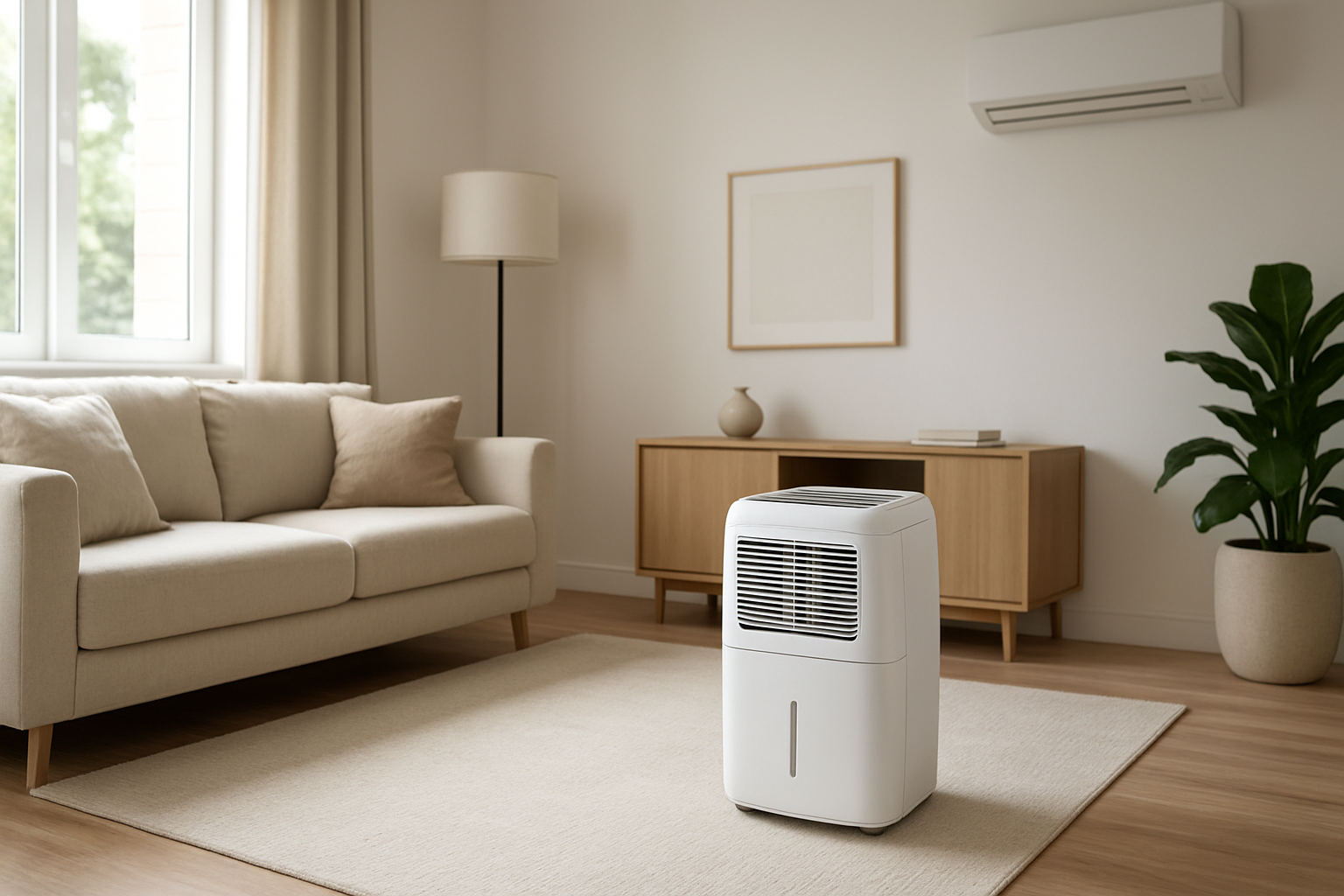
Place for accurate sensing: Keep the unit out of corners and at least 12–18 inches from walls. Aim discharge into open air so the intake does not sample its own dried air.
Promote mixing: Use open doorways or a low-speed fan to prevent humidity pockets, especially in basements with multiple rooms.
Verify readings seasonally: Compare the unit’s RH to a known-good hygrometer a few times per year. Catching a 5–10% drift early avoids months of false satisfied cycles.
Keep sensor area clean: Avoid spraying cleaners, aerosols, or fragrances near the unit. Fine residues can bias humidity sensors low.
Maintain airflow consistency: Keep intake and discharge clear; clean filters as the manufacturer recommends. Restricted airflow increases localized sensing errors.
Related Home Comfort Symptoms
Basement still feels damp but dehumidifier display shows low RH
Dehumidifier short cycles every 10–20 minutes
Humidity is fine near the unit but high in adjacent rooms
Musty odor persists even when RH reading looks normal
Dehumidifier behavior changes noticeably with door position or fan use
Conclusion
A dehumidifier that stops before reaching the target is most often being told to stop by a misleading humidity measurement, not because the house is actually dry. Start by verifying RH with a separate hygrometer and eliminating short-circuit airflow by repositioning the unit into open space. If the RH mismatch remains consistent after improving placement and mixing, the humidity sensor or control is likely ending cycles prematurely and should be serviced or replaced.
Frequently Asked Questions
Why does my dehumidifier say 45% but the room still feels humid?
Most often the unit is reading a local pocket of drier air near its sensor while the rest of the room remains humid. This happens when discharge air recirculates to the intake or when the unit is in a corner or dead-air area. Confirm by comparing to a separate hygrometer placed several feet away.
How far off can a dehumidifier humidity reading be and still be normal?
A small difference is common because sensors and hygrometers vary and humidity is not perfectly uniform. If the dehumidifier display is consistently more than about 5–7% RH lower than a reliable hygrometer in the same general area, treat it as a likely sensor/control bias affecting cycling.
Can placement alone make it shut off early?
Yes. If the unit is close to walls, furniture, or in a corner, it can pull its own dried discharge air back into the intake. That drives the sensed RH down quickly and ends the cycle early even though the room average RH is still high.
Why does it stop early mostly at night or during cooler weather?
Cooler air conditions and cooler surfaces create stronger humidity variation within a space. The dehumidifier may sit in a cooler microclimate and read lower RH sooner, or its control strategy may react differently as temperatures drop. If the issue is temperature-dependent, focus on location and sensor accuracy first.
Should I lower the setpoint to force longer run time?
Lowering the setpoint can mask a sensing error but does not fix it. If the sensor is reading low, you may end up overdrying the air near the unit while still not correcting humidity in the rest of the space. Verify with an independent hygrometer and correct placement/mixing before adjusting targets.
Need a complete overview? Visit the full troubleshooting guide here: Read the full guide for more causes and fixes.
When the unit quits early, it’s easy to assume the problem is bigger than it is, but the pattern is oddly familiar—like a promise that gets cut off mid-sentence. The cycle may end, the room may feel mostly fine, and yet the target never quite makes it.
That’s the twist: the fix isn’t heroic, it’s just precise in a way that finally lets the machine do what it already wants to do. After that, the quiet hum settles into something steadier, and you can stop watching the humidity like it’s a suspense plot.