Portable AC Dripping Water Indoors? That Shouldn’t Happen
Quick Answer
Indoor dripping from a portable AC is almost always a condensation drainage problem: the unit is making water normally, but it is not getting to the right place. First check the simplest failure point: is the unit level and is the drain plug/cap seated properly with no cracks or kinks in the drain hose (if used)? Then check the exhaust hose and window kit for warm air leaks driving excess condensation.
Identify the Comfort Pattern First
Before you assume a defect, pin down the pattern. Water on the floor can be a normal condensate load handled incorrectly, or a true overflow. Use these observations to sort which one you have.
- When it happens: Drips during the hottest, most humid afternoons usually point to heavy condensation production overwhelming a drain path. Drips overnight in Dry mode can point to a loose drain cap or a unit that is slightly tipped forward.
- Weather link: If dripping only shows up on humid/rainy days, the unit is likely producing more condensate than your current setup can evaporate or drain.
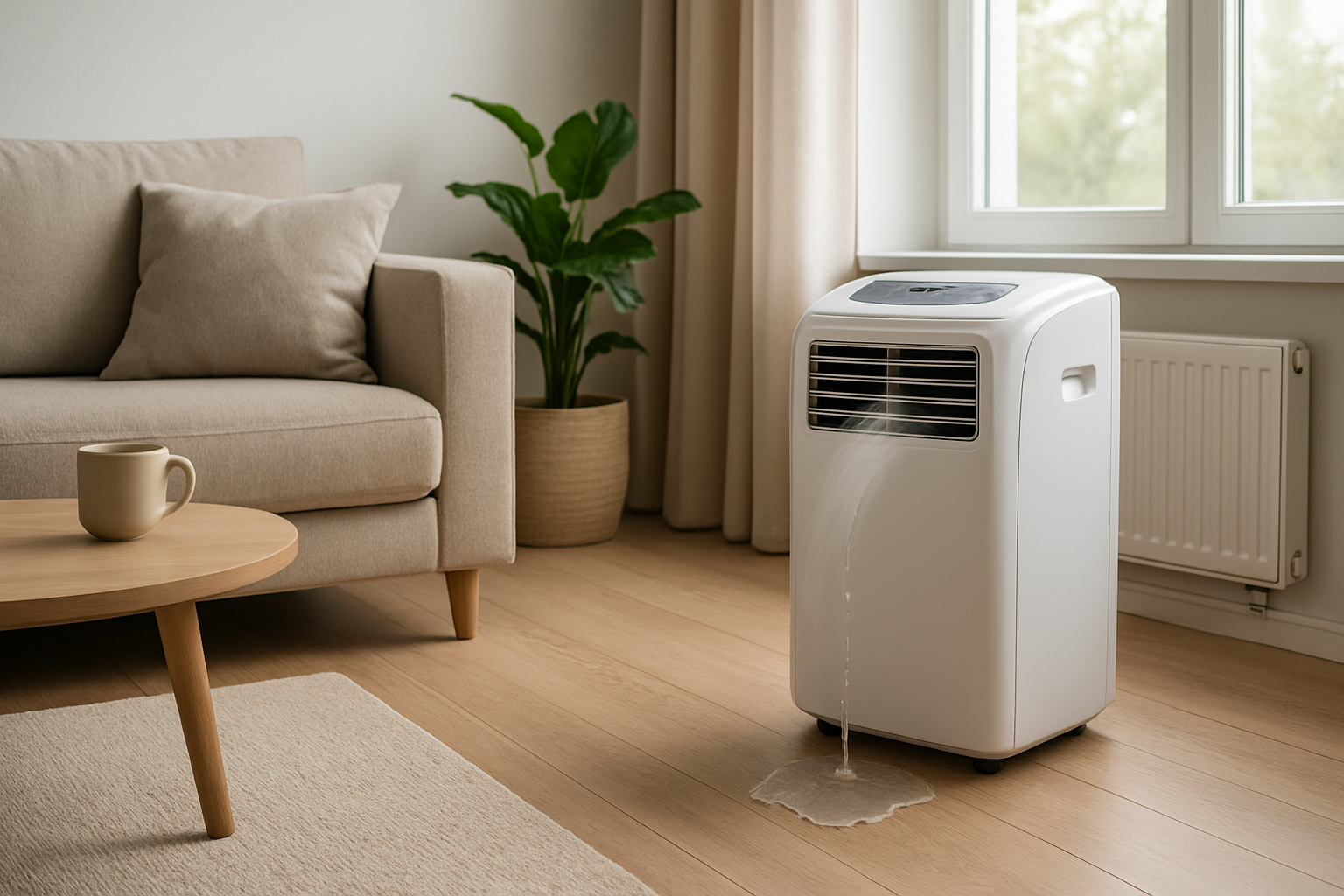
- Where it happens: Water directly under the unit is typically drain overflow or a leaking drain fitting. Water at the window or along the exhaust hose points to warm humid air leaking back into the room and condensing on cooler surfaces.
- Running vs off: Dripping while running suggests active condensate generation with poor drainage. Dripping after shutoff suggests water trapped in the base pan sloshing or slowly leaking through a loose plug/cap.
- Constant vs intermittent: Steady dripping often indicates a persistent drain restriction or continuous high humidity load. Intermittent puddles often happen when the internal pan fills to a threshold and then spills or when the unit is moved.
- Doors open vs closed: If dripping gets worse with the door open, you are likely pulling humid air into the room faster than the unit can manage, increasing condensate volume and pushing the unit toward overflow.
- Humidity perception: If the room still feels clammy while the unit runs, the portable AC may be short-cycling or reintroducing humid air through leaks, both of which increase condensate issues.
- Airflow strength: Weak airflow from the supply grille (front) or restricted exhaust flow (hose/window kit) commonly correlates with higher coil temperature differences and liquid water accumulation in the pan.
What This Usually Means Physically
A portable AC removes moisture by cooling indoor air below its dew point. Water forms on the evaporator coil and drains into an internal pan. In many portable units, that water is either:
- collected and periodically drained through a hose or lower drain port, or
- partially re-evaporated and sent out with the exhaust air, depending on mode and model.
Indoor dripping means the water is being produced (normal) but the pathway from coil to pan to drain outlet is failing (not normal). The most common triggers are an unlevel unit, a loose drain cap, a kinked or elevated drain hose, or the base pan filling faster than the design expects because humidity load is high. Leaky window kits and poorly sealed exhaust hoses also matter because they pull hot, humid outdoor/attic air into the room. That extra moisture becomes extra condensate, filling the pan and forcing an overflow.
This is not primarily a refrigerant problem or a mysterious defect. It is usually a basic condensation management failure: too much water for the current drain strategy, or a leak at the lowest point of the system.
Most Probable Causes (Ranked)
- Unit not level, causing pan overflow at the wrong edge: Dripping appears on one side of the base, often after the unit is bumped or rolled. The unit may be slightly forward-leaning toward the front grille.
- Drain plug/cap not seated, cracked, or cross-threaded: Water shows up directly under the drain port location. Dripping may continue for a while after shutdown as the pan slowly empties.
- Drain hose routing problem (kinked, uphill, too high, or partially blocked): Water accumulates until it spills. Clue: dripping stops when you temporarily lower the hose into a bucket on the floor.
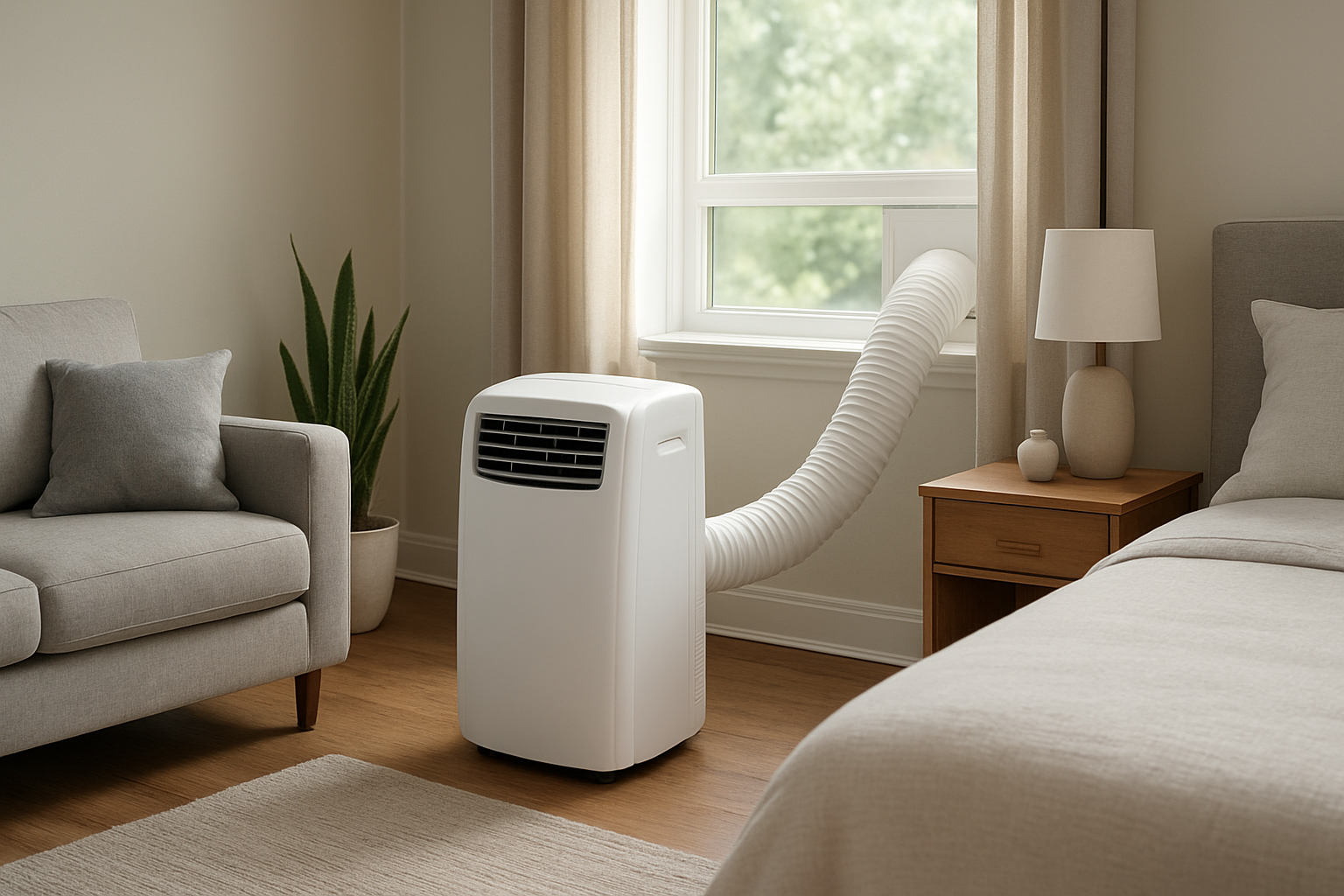
- Window kit or exhaust hose leaks causing higher humidity load: Room feels sticky, unit runs constantly, and drip volume increases on humid days. You may feel warm air coming in around the window panel or at hose connections.
- Airflow restriction increasing condensate retention and pan flooding: Weak supply airflow, dusty filter, or a crushed exhaust hose. Clue: the unit sounds strained, exhaust airflow is weak at the window, and water shows up sooner in a run cycle.
- Ice formation and melt overflow (less common, but important): Cooling performance becomes inconsistent, airflow weakens, then you get a sudden puddle as the coil thaws. Often tied to dirty filters, restricted exhaust, or very low setpoints.
How to Confirm the Cause Yourself
These checks use observation and simple setup changes. Do not open the cabinet or work on electrical components.
- Level check: Place the unit where it normally runs and check if it rocks. Look at the gap to the floor at each corner. If it rolls easily, lock casters if available. If the drip location changes when you rotate the unit slightly, leveling is likely the driver.
- Locate the drip origin: Dry the floor and place a few paper towels under the front edge, rear edge, and the side with the drain port. Run the unit 20–40 minutes. The first towel that wets identifies the exit point (port leak vs base overflow vs hose/window).
- Drain port integrity check: With the unit off, inspect the drain cap/plug and gasket area. If it is loose, reseat it firmly. If you see hairline cracks or a distorted rubber cap, expect a slow leak that worsens as the pan fills.
- Drain hose gravity test: If you use a continuous drain hose, temporarily route it straight down into a shallow pan or bucket placed lower than the drain outlet. If dripping at the base stops and water flows into the bucket, your normal hose routing is too high, kinked, or restricted.
- Humidity load and leakage check: With the unit running, put your hand near the window kit edges and hose connections. If you feel warm air being pulled into the room, seal leaks temporarily (tape or foam) and observe whether dripping frequency drops over the next 1–2 hours.
- Airflow comparison: Compare supply airflow at the front grille now versus right after you cleaned the filter (if you remember). Weak airflow plus higher dripping points to restriction. Also check the exhaust hose for crushing, sharp bends, or excessive length.
- Ice/melt pattern check: If you notice reduced airflow and cooling, then later a sudden puddle, look for frost signs: unusually cold supply air followed by warmer periods, or a “wet rush” sound inside after the compressor cycles off. This suggests intermittent icing and thaw runoff.
Normal Behavior vs Real Problem
Normal (depends on model and mode):
- Some portable ACs generate a lot of condensate in humid weather and require frequent manual draining.
- A small amount of moisture inside the unit and occasional gurgling is normal during active dehumidification.
- In certain designs, little or no external draining is needed in mild humidity because condensate is re-evaporated and exhausted.
Not normal:
- Any recurring puddle on the floor under or near the unit during normal operation.
- Dripping that persists even after confirming the unit is level and the drain cap is properly seated.
- Water appearing at the window kit or along the exhaust hose, indicating leakage and unintended condensation surfaces.
- Sudden large releases of water following weak airflow or reduced cooling, suggesting icing and thaw overflow.
When Professional Service Is Needed
- Dripping continues after basic corrections: Unit level verified, drain cap reseated, hose routed downhill, and leaks sealed, yet puddles still form.
- Performance decline accompanies the water: Noticeably weaker cooling, short cycling, or airflow that keeps dropping over a run cycle.
- Repeated icing symptoms: Airflow collapse followed by water dumps, especially if filter and exhaust path are clean and unrestricted.
- Electrical or safety indicators: Water reaching power cords, outlets, or internal electronics areas, or any tripping of a GFCI/outlet associated with operation. Power off and have it inspected.
- Structural leak points: Cracked base pan, broken drain fitting, or casing damage from tipping or impact.
How to Prevent This in the Future
- Keep the unit level and stable: Lock casters if available and avoid moving the unit while water is in the pan.
- Seal the window kit and hose connections: Reduce humid infiltration that drives condensate volume. Confirm the exhaust hose is tight at both ends.
- Maintain unrestricted airflow: Clean the air filter on schedule, keep intake/exhaust clear, and avoid crushed or overly long exhaust hose runs.
- Use the right drain strategy for your humidity: In high humidity, plan for continuous drain setup (proper downhill routing) or frequent manual draining before the pan reaches its limit.
- Avoid extreme setpoints in marginal conditions: Very low thermostat settings can increase coil icing risk if airflow or exhaust is marginal, leading to melt overflow.
Related Home Comfort Symptoms
- Portable AC blows cool air but the room still feels humid
- Water collecting in the window track near the portable AC vent
- Portable AC short cycles and does not remove humidity
- Weak airflow from portable AC and reduced cooling
- Musty odor after portable AC runs, especially in humid weather
Conclusion
A portable AC dripping indoors is almost always normal condensate being handled incorrectly: the pan is filling and leaking or the drain path is compromised. Start by identifying exactly where the water exits and whether it happens only during high humidity. Level the unit, verify the drain cap and hose routing, and eliminate window kit and exhaust hose leaks. If dripping persists with stable airflow and correct setup, the unit likely has a damaged pan, drain fitting issue, or icing-related problem requiring service.
Frequently Asked Questions
Why does my portable AC drip only on very humid days?
High outdoor humidity increases indoor moisture infiltration and raises the dew point of the air the unit is processing. That produces more condensate on the evaporator coil. If your unit relies on partial re-evaporation or a limited internal pan, the added water volume can exceed its handling capacity and overflow unless you drain more often or use continuous drainage.
Should a portable AC ever leak water from the bottom?
No. Condensate should stay contained and either drain through the intended port/hose or be managed internally per the design. Bottom leakage usually means the unit is not level, the drain cap is leaking, the hose is routed incorrectly, or the pan is overflowing due to excessive condensate volume.
Can a bad exhaust setup cause indoor dripping?
Yes. If the window kit or hose connections leak, the unit can pull warm humid air into the room. That increases the moisture load the coil must remove, raising condensate production and the chance of pan overflow. Leaks can also create cool surfaces where moisture condenses externally near the hose or window panel.
My portable AC stopped cooling well and then made a big puddle. What happened?
This pattern often fits evaporator coil icing followed by thaw. When the coil ices, airflow and cooling drop. When the compressor cycles off or conditions change, the ice melts quickly and can overwhelm the drain path or pan, resulting in a sudden puddle. Check for airflow restriction and exhaust problems first.
Is it better to use a continuous drain hose or manually drain?
In consistently humid conditions, continuous drainage is usually more reliable, but only if the hose runs continuously downhill with no kinks and the destination container is lower than the drain outlet. Manual draining can work in moderate humidity, but you must drain before the pan reaches its limit to avoid overflow.
Need a complete overview? Visit the full troubleshooting guide here: Read the full guide for more causes and fixes.
There’s something deeply satisfying about hearing that last quiet drip fade out, like the room can finally breathe again. Nobody wants their comfort appliance freelancing as a tiny indoor faucet.
What’s left is just the steady hum—reliable, ordinary, and appropriately boring. After all, climate control should never feel like a suspense novel you have to solve by the end of the day.