Diagnose and fix loud gurgling noises in portable air conditioners caused by condensate or refrigerant flow, with tips for identifying and resolving common sources of the sound.
Portable AC Loud Gurgling? Condensate Movement
Quick Answer
A loud gurgling portable AC is most often condensate water sloshing through the base pan or drain path, especially after the unit is moved, tilted, or run in high humidity. First check: confirm the unit is level front-to-back and side-to-side and inspect the drain port or internal tank indicator for partial blockage or a full reservoir.
Identify the Comfort Pattern First
Use the sound pattern to sort what is moving: water (condensate) vs refrigerant. The timing and conditions tell you which one it is.
When it happens: If gurgling increases on humid/rainy days or right after the unit starts cooling, suspect condensate production and movement. If it happens immediately at compressor start every time, refrigerant flow noise is possible but usually brief.
Where it happens: Noise low near the floor and base of the unit points to condensate in the pan/tank. Noise higher near the coil section can be refrigerant line/evaporator related.
Running vs off: Gurgling that continues for a minute after shutoff is commonly water draining back through internal channels. Noise only while the compressor runs can be either refrigerant movement or condensate being picked up by a sling ring (model dependent).
Constant vs intermittent: Intermittent slosh-gurgle (every few seconds/minutes) points to water reaching a tipping point and shifting in the pan. A steady rushing/soft gurgle right after startup that fades is more consistent with refrigerant equalization.
Changes with doors open or closed: If closing doors increases gurgling over time, the unit may be seeing higher humidity load due to poor air circulation or negative pressure pulling humid air in from adjacent spaces.
Vertical differences: If the room feels cool near the unit but muggy near the ceiling, the portable AC may be cooling air without effectively removing moisture, increasing condensate cycling and noise.
Humidity perception: If the room feels clammy even at a low thermostat setting, the unit is processing a heavy latent load; more condensate means more chances for audible water movement.
Airflow strength: Weak discharge airflow often accompanies coil icing or restricted intake filter, both of which alter condensate behavior (water production changes, drains can freeze, then suddenly dump water when thawing).
What This Usually Means Physically
A portable AC removes heat and moisture from room air at the evaporator coil. Moisture condenses into liquid water and must be managed inside a compact cabinet. Many portable units do not continuously drain by gravity; they store condensate in a base pan or internal tank, or they re-evaporate it using condenser heat and airflow.
That design makes condensate movement audible. When the unit is slightly out of level, when drain passages are partially restricted, or when humidity load is high, water can pool and then surge, creating a gurgling or sloshing sound. Some models use a sling ring or pickup system that throws condensate onto the hot condenser coil to improve efficiency; that process can sound like gurgling when water level is high or shifting.
Refrigerant can also make a brief gurgle when the compressor starts or stops as pressures equalize. However, persistent loud gurgling in a portable unit is more commonly water moving through the pan, check valves, or drain channel than a refrigerant fault.
Most Probable Causes (Ranked)
Unit not level causing condensate to pool and surgeClue: gurgling changes when you nudge or rotate the unit slightly; noise is strongest at the base and after the unit has run 15–60 minutes.
High indoor humidity load creating heavy condensate volumeClue: louder gurgling on muggy days, after cooking/showering, or when windows/doors are frequently opened; room feels cool but damp.
Partial blockage at drain port, cap, hose, or internal tank pathClue: full-tank light cycles, water smell, gurgle followed by reduced cooling or sudden shutoff; little or no water drains when you expect it to.
Condensate re-evaporation/sling system operating with high pan level (normal for some models)Clue: gurgle is present during normal cooling, no error lights, cooling performance is normal, and sound is more like water agitation than a harsh rattle.
Evaporator coil icing then thawing, dumping water into the panClue: airflow gradually weakens, then gurgling increases later; you may see frost through the intake or feel unusually cold air followed by warmer air.
Refrigerant equalization noise at startup/shutoff (usually normal)Clue: brief gurgle or hiss 5–30 seconds at compressor start/stop, not a continuous loud slosh and not tied to humidity.
How to Confirm the Cause Yourself
Level check: With the unit in its normal spot, verify it sits flat and does not rock. If you have a small level, check top surface both directions. If the sound reduces noticeably after leveling, condensate pooling was the driver.
Sound mapping: While it gurgles, listen close (without blocking airflow). Base-pan gurgle is lower and more hollow. Refrigerant gurgle is typically higher and shorter-lived during compressor transitions.
Humidity correlation: Note whether gurgling is worse after showers, cooking, laundry, or on rainy days. If yes, you are hearing higher condensate throughput rather than a mechanical failure.
Drain/tank behavior observation: If your model has a tank indicator or full light, see if it triggers more often than before. If it has a gravity drain option, observe whether water flow is steady or stops and starts. Stop-and-start draining often indicates a kinked hose, partially blocked port, or the unit being out of level.
Airflow and coil-icing check: Compare airflow at the grille at minute 5 versus minute 45. If airflow drops significantly and the unit sounds wetter later, icing and thawing may be cycling. Also watch for the unit running long periods with poor room temperature improvement.
Simple door test: Run the unit with the door to the space open for 20 minutes, then closed for 20 minutes. If closing the door increases humidity feel and gurgling, the room may be trapping moisture or the unit is influencing pressure and pulling humid air from adjacent areas.
Normal Behavior vs Real Problem
Usually normal: brief gurgle at compressor start/stop; light water agitation sounds during cooling on humid days; occasional slosh when the unit is moved and then restarted; gurgle that does not change cooling output or cause shutoffs.
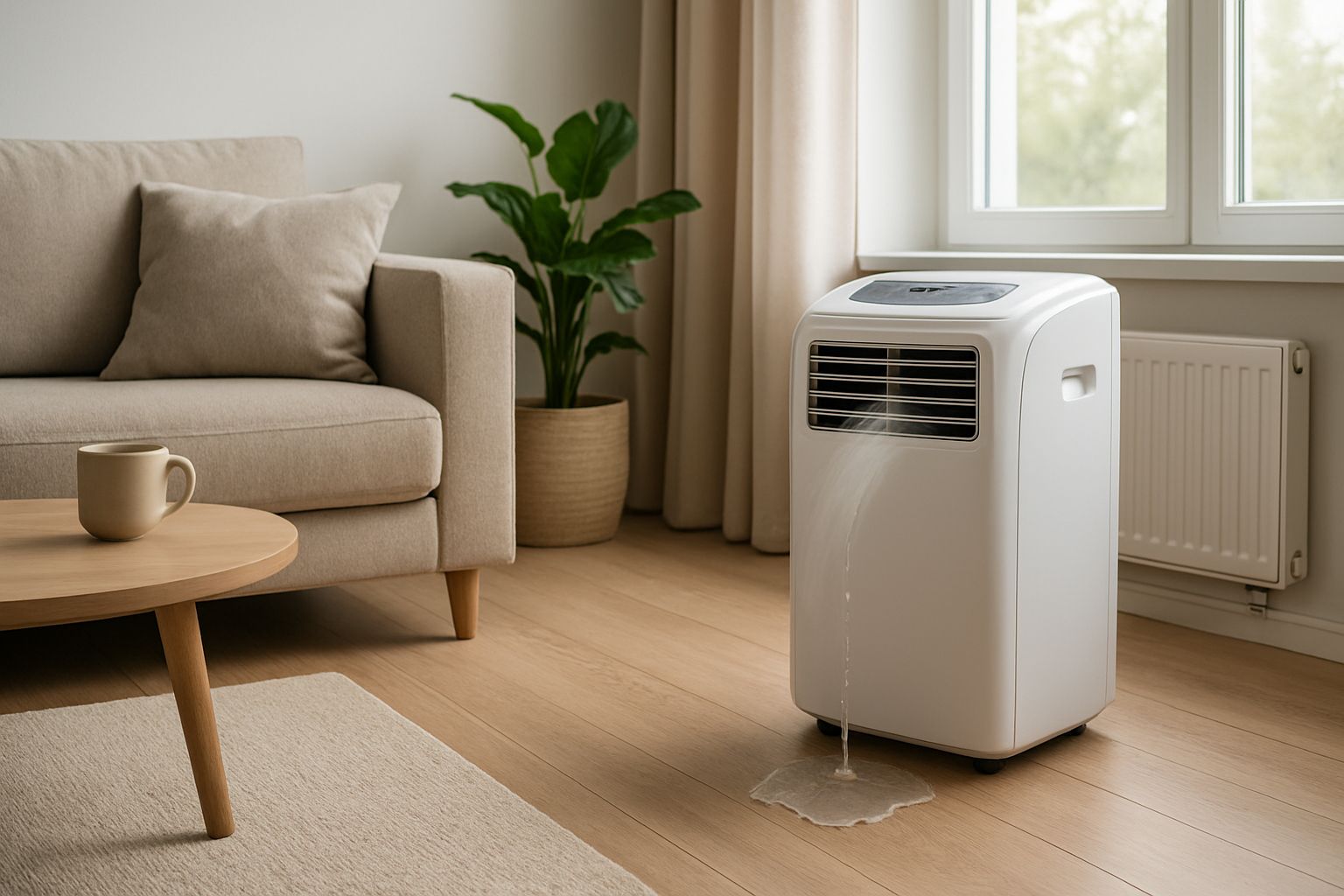
More likely a problem: loud persistent gurgling that grows over time, frequent tank-full shutdowns, water leaking onto the floor, damp musty odor from the unit, cooling that has clearly weakened, or airflow that declines during a run (possible icing or drainage restriction).
When Professional Service Is Needed
Persistent loud gurgling plus performance decline: room temperature no longer drops as it used to, or runtime becomes nearly continuous without comfort improvement.
Repeated shutoffs or error codes: full-tank light triggers soon after emptying, or the unit cycles off unexpectedly.
Evidence of icing: repeated low airflow episodes with suspected frost formation and thaw dumping water into the base.
Water where it should not be: leaking from cabinet seams, wet electrical area, or pooling that returns immediately after emptying.
Suspected sealed-system issue: gurgling is accompanied by abnormally warm discharge air, short-cycling compressor, or inability to maintain setpoint despite clean filters and proper venting. Sealed-system checks require proper tools and certification.
How to Prevent This in the Future
Keep the unit level and stationary: Avoid tilting or rolling it while it has water in the pan; if moved, let it sit upright before running so liquids settle.
Manage condensate intentionally: In very humid conditions, use the continuous drain option if your model supports it and ensure the hose runs downhill without kinks.
Maintain airflow: Clean the intake filter on schedule so the evaporator stays above freezing and condensate drains predictably rather than freezing and dumping later.
Reduce indoor moisture spikes: Use exhaust fans for showers and cooking. Lower moisture load reduces condensate volume and the intensity of water movement sounds.
Verify exhaust setup: A poorly sealed exhaust hose can pull humid air into the room, increasing latent load and condensate production, which increases gurgling frequency.
Related Home Comfort Symptoms
Portable AC not cooling well but sounds wet inside
Portable AC full-tank light keeps coming on
Portable AC leaking water onto the floor
Room feels clammy even though temperature is lower
Airflow gets weaker the longer the unit runs
Conclusion
In most homes, a portable AC loud gurgling complaint is condensate water moving through the base pan, drain channel, or re-evaporation system, amplified by high humidity or a unit that is slightly out of level. Start by leveling the unit and observing drain/tank behavior during a humid run. If gurgling is paired with leaking, shutdowns, icing symptoms, or a clear drop in cooling, escalate to service.
Frequently Asked Questions
Why does my portable AC gurgle more at night?
Nighttime often brings higher indoor relative humidity due to cooler outdoor air, reduced ventilation, and moisture released from occupants and activities earlier in the day. Higher humidity means more condensate. More condensate increases water movement in the base pan and makes gurgling more noticeable in a quieter house.
Is gurgling a sign of low refrigerant in a portable AC?
Usually no. Portable units can make brief refrigerant equalization sounds at compressor start/stop even when charge is normal. Persistent loud gurgling is more often condensate sloshing or draining issues. If cooling capacity is clearly reduced and airflow is normal, a sealed-system problem is possible and requires professional diagnosis.
My unit gurgles and then shuts off with a full-tank light. What does that indicate?
That pattern strongly suggests condensate is not leaving the unit as intended. Common reasons are a full internal reservoir, a partially blocked drain port, a kinked drain hose, or the unit being out of level so water cannot reach the drain pickup. Correct drainage first; the noise is often water shifting right before shutdown.
Can a dirty filter cause gurgling?
Indirectly, yes. Restricted airflow can drop evaporator temperature enough to create icing. When the ice later melts, it dumps a larger amount of water into the pan at once, which can create a louder gurgle or slosh. If you notice airflow weakening during a run, address the filter and intake pathways.
Should I run a continuous drain hose even if the manual says self-evaporating?
If the room humidity is high and the unit gurgles frequently or fills its tank, a continuous drain can stabilize condensate handling and reduce sloshing noise. The hose must run continuously downhill with no kinks. If your model is designed to re-evaporate most condensate, you may still see some drainage in very humid conditions.
Need a complete overview? Visit the full troubleshooting guide here: Read the full guide for more causes and fixes.
The gurgling isn’t a mystery so much as a soundtrack—an oddly needy little reminder that the machine is moving water like it has somewhere to be. When the noise settles, it’s surprising how quickly you stop noticing it, like the room finally gets its background back.
Call it perspective: the thing that sounded broken usually isn’t. It just needs to be allowed to do its job without drawing attention to itself, and you get your quiet back—no drama, no lingering doubt.