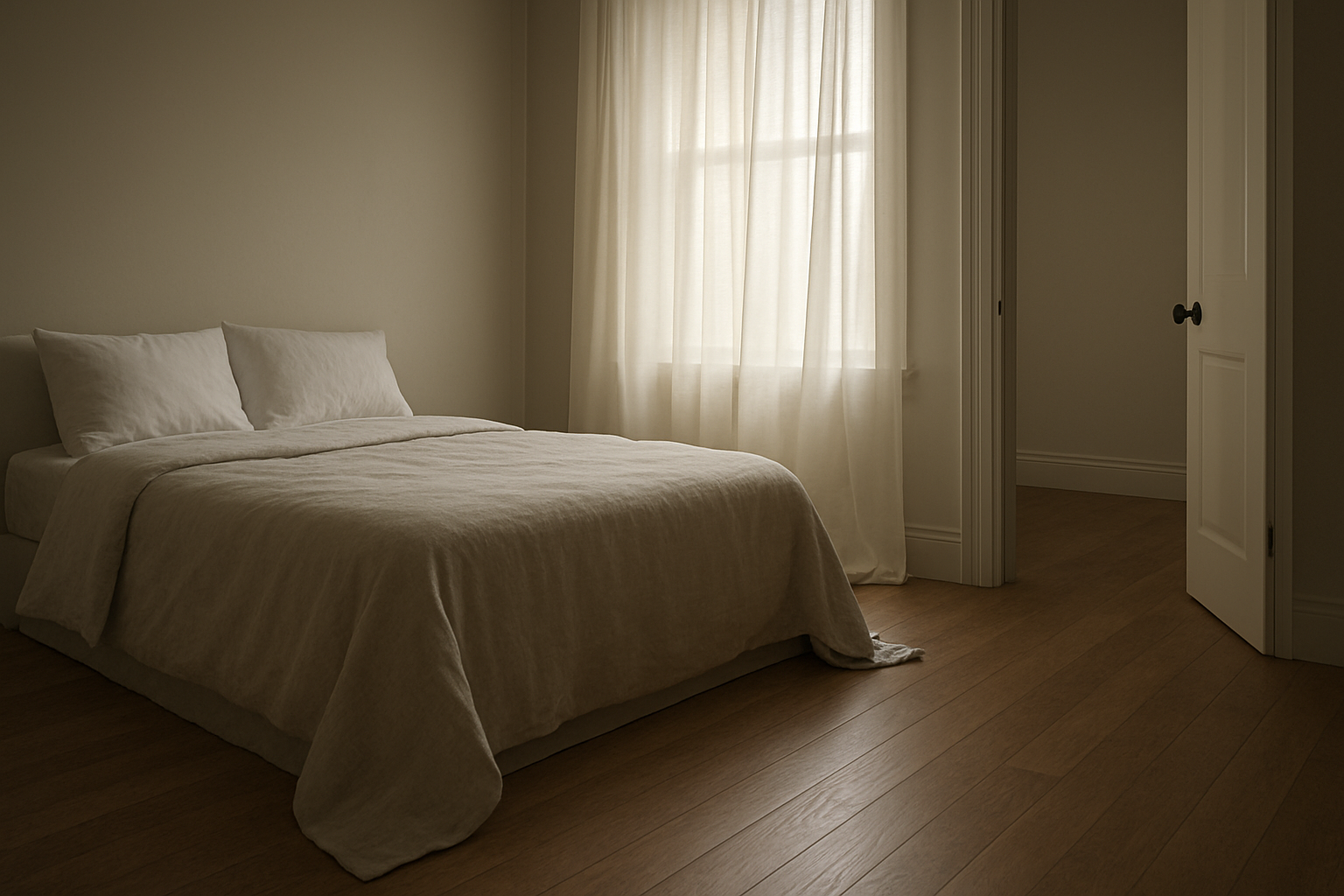
A bedroom can feel normal on the thermostat but still feel chilly near the floor, especially at night when uneven comfort becomes hard to ignore.
Introduction
You wake up in the middle of the night and your upper body feels fine, maybe even warm enough under the blanket, but your legs or feet feel strangely cold. Then you step out of bed and the floor-level air feels even chillier. The thermostat says the house is at a normal temperature, so technically nothing seems wrong. But something just feels off.
That kind of uneven bedroom comfort can be surprisingly hard to shrug off. It is not dramatic, and it may not look like a real heating problem from the outside, but when you are trying to sleep, small discomforts stop feeling small very quickly. And once you notice it, it’s hard to ignore.
Why This Situation Feels So Frustrating
Part of the frustration is how specific it is. The room can feel okay in one spot and uncomfortable in another. You may be fine when you are lying in bed, then feel chilly as soon as you stand up. Or the opposite happens: your face feels cool while your legs are oddly cold under the covers. It makes the room feel inconsistent, and that can be more annoying than a room that is simply too cold overall.
There is also the strange disconnect between what your body says and what the thermostat says. If the display reads a normal temperature, it is easy to wonder if you are imagining it. Usually, you are not. Bodies notice drafts, floor-level cold, and uneven airflow in ways a single temperature reading just does not capture.
Even the bedroom door can become part of the routine. Some people sleep better with it open because the room feels less stuffy or less cold near the floor. Others close it for quiet or privacy, then notice the room changes in a way they cannot quite explain. That back-and-forth gets tiring after a while.
What People Usually Notice First
The first sign is often simple: cold feet in bed. Not freezing, just uncomfortable enough to keep you shifting around. You might wake up with cold legs even though the blanket is tucked in and the rest of you feels mostly comfortable. It seems minor, but nighttime comfort is sensitive. A small cold patch can interrupt sleep more than people expect.
Another common moment happens in the morning. You feel decent while still in bed, then the second you stand up, the air lower in the room feels colder. That contrast makes the bedroom feel uneven, almost layered. Warm-ish above, chilly below.
Sometimes one bedroom feels worse than the rest of the house, which can make the whole thing feel more confusing. The living room is fine. The hallway is fine. But that one room feels off, especially at night. Not every problem shows up house-wide.
And sometimes the fix people stumble into is not really a fix at all. They leave the bedroom door open because somehow the room feels more comfortable that way, even if they would rather close it. That is often a clue that airflow, pressure, or heat movement is different in that room than elsewhere.
Why It Can Be Confusing
Cold air naturally settles lower, so one basic reason a bedroom feels cooler near the floor is that the room air is not mixing evenly. Warm air rises. Cooler air sinks. In a bedroom with weak airflow, high ceilings, drafty windows, or supply vents that do not circulate air well, that separation becomes much more noticeable.
Night can make it feel worse. Outdoor temperatures drop, the heating system may cycle differently, and your body becomes more aware of discomfort when you are trying to rest. There is less noise and less distraction. You notice everything.
The thermostat adds another layer of confusion because it only measures the temperature where it is located, not how the whole room feels. If it sits in a hallway, or higher up on a wall, or in a part of the house with steadier airflow, it may report a number that is technically accurate but still not representative of the bedroom floor area. That is one reason people find themselves searching for explanations like why a bedroom feels cooler near the floor than the bed even when the heat seems to be working.
It sounds small. But it does not feel small at 2 a.m.
The Hidden Impact on Daily Comfort
These little comfort problems can quietly wear on you. Sleep is one of those things that depends on the room feeling right, not just acceptable. If your body keeps noticing that the room feels uneven, or your legs feel cold even when the thermostat says everything is normal, your rest can become lighter and more interrupted without an obvious cause.
People tend to trust what they physically feel over what devices say, and honestly, that makes sense. A thermostat is useful, but it is not lying in bed with cold feet. It is not standing on the floor first thing in the morning. The house can seem fine overall while one room still feels wrong in daily life.
That mismatch can also make you second-guess yourself. Maybe it is the blanket. Maybe it is the pajamas. Maybe you are just tired. But when the same discomfort keeps showing up in the same room, usually there is a reason, even if it is not a serious one.
When It’s Probably Nothing Serious
Often, the cause is pretty ordinary. Bedrooms on exterior walls can run cooler near the floor, especially in winter. Older windows may let in a subtle draft that is hard to notice during the day. Poor air circulation can leave warm air hanging higher while the lower part of the room stays cooler. Even furniture placement can affect how heat moves.
If the room only feels a bit colder at floor level, if the rest of the home feels normal, and if the heating system is otherwise keeping up, it may just be one of those comfort quirks that shows up more at night. Not ideal, but not necessarily a warning sign.
Sometimes it is seasonal. Sometimes it is just that room.
When You Should Pay More Attention
If the bedroom feels much colder than nearby rooms, if the discomfort is getting worse, or if opening and closing the door changes the room dramatically, it is worth paying closer attention. Those patterns can point to airflow imbalance, blocked or weak vents, return air problems, insulation gaps, or drafts around windows and baseboards.
You should also take it more seriously if there are bigger signs attached to it. Rooms that are consistently hard to heat, floors that feel very cold, noticeable drafts, or family members regularly waking up uncomfortable can all suggest the room is not getting conditioned air the way it should. The thermostat may still read fine. The room may still not be fine.
That difference matters.
Simple Ways to Improve Comfort
Start with the easy things. Check that supply vents are open and not blocked by a bed, dresser, or curtains. If the bedroom door changes comfort noticeably, try paying attention to whether airflow from the hallway seems to help. That can offer a clue about circulation inside the room.
A ceiling fan on a low winter setting can help push warm air down gently without making the room feel windy. Thick curtains, especially over older windows, can reduce nighttime chill. A rug can also make a room feel more comfortable, not because it changes the air temperature much, but because it cuts that immediate cold sensation when you stand up.
It is also worth checking for small drafts around windows, trim, and outlets on exterior walls. These are easy to miss in daylight and much easier to feel on a cold evening. If one bedroom seems consistently worse than the rest, a small indoor thermometer placed low in the room for a night or two can help confirm whether the temperature really is different near the floor.
And if none of that changes much, it may be time to have the airflow or insulation in that room looked at. Sometimes a small adjustment makes a surprisingly big difference.
Conclusion
A bedroom that feels colder near the floor than the bed is not unusual, but that does not make it imaginary. If your body keeps noticing that the room feels uneven, there is probably a real comfort issue behind it, even if the thermostat never shows anything dramatic.
The good news is that this kind of problem is often fixable, or at least improvable, once you stop treating it like a mystery and start noticing the patterns. Where the cold shows up matters. When it happens matters. The room may look fine on paper. But comfort is lived, not measured from one spot on a wall.