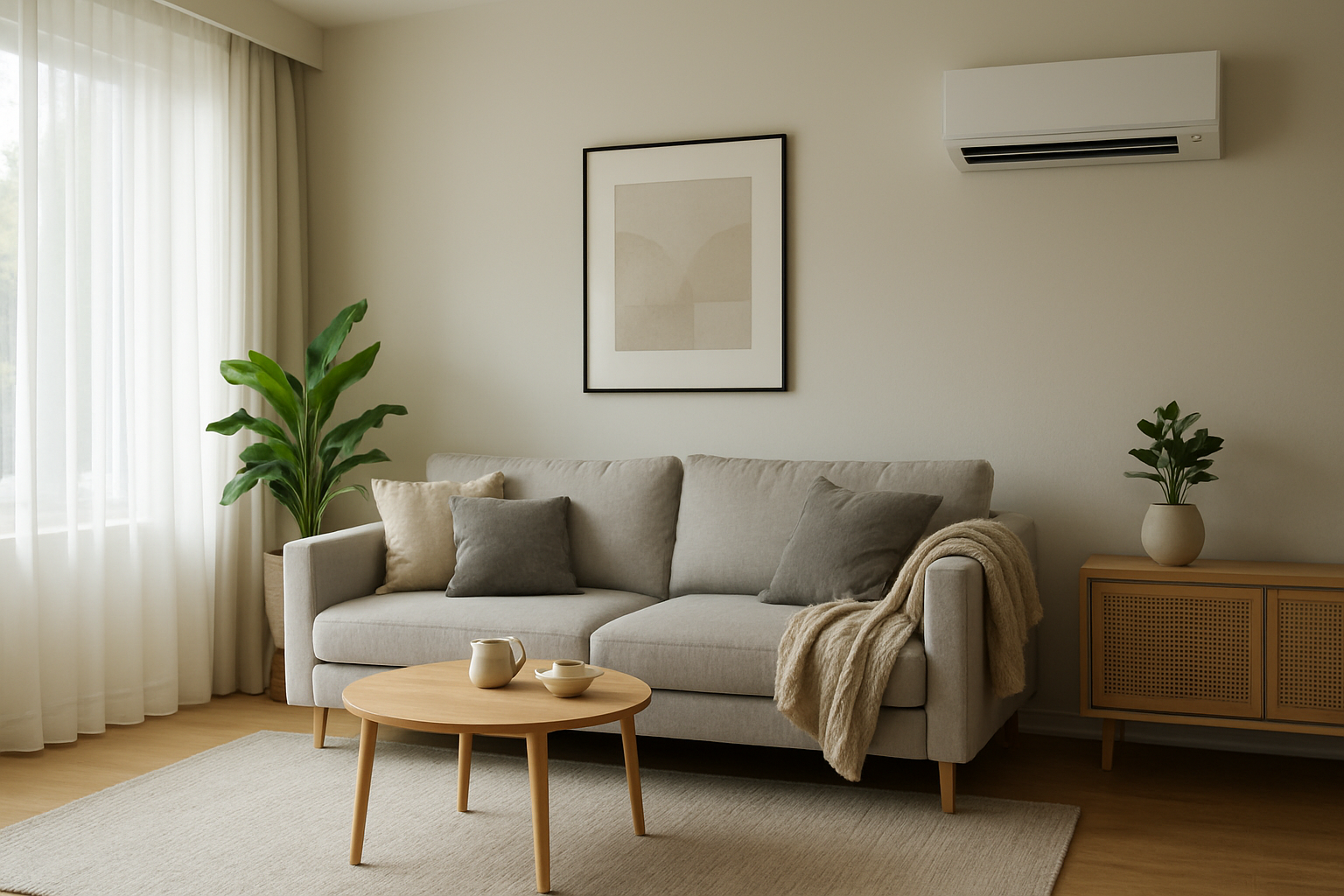
Learn how nighttime air stagnation and poor bedroom ventilation cause thick, stuffy air, and discover practical solutions to improve airflow and nighttime comfort.
Bedroom Air Feels Thick At Night? Here’s Why It Happens
Quick Answer
Thick-feeling bedroom air at night is most often caused by air stagnation from a closed room with weak supply airflow and little return or exhaust path. The first diagnostic check is simple: with the door closed, hold a tissue at the supply register and note airflow, then repeat with the door cracked 2 inches. If the feel improves quickly, ventilation is the problem.
Identify the Comfort Pattern First
Before chasing equipment problems, sort the pattern. Thick air complaints are usually about ventilation dynamics, not HVAC capacity.
Time of day: Worse after bedtime and strongest around 2–6 hours after the room has been closed up typically points to reduced air exchange once doors are shut and the house settles.
Weather sensitivity: If it is worse on mild nights when the system runs less, that supports stagnation. If it is worse on rainy nights, that adds a humidity component on top of stagnation.
Room specificity: If only the bedroom feels thick while adjoining areas feel normal, that indicates a room-level air movement/return-path issue rather than whole-house humidity control.
System running vs off: If the air feels thick mainly when the HVAC is not running (long off cycles), that strongly suggests low mixing and low ventilation rate. If it feels thick even with steady runtime and strong airflow, look harder at humidity and return restrictions.
Door open vs closed: If the room feels noticeably better within 5–15 minutes of opening the door, the room is not getting enough fresh/mixed air when closed.
Supply airflow strength: A weak throw at the bedroom register compared to other rooms indicates the room is under-supplied, so it cannot dilute odors and humidity overnight.
Vertical differences: If the air near the ceiling feels warmer/stuffier than at the floor, stratification and poor mixing are involved (common with low airflow and closed doors).
Humidity perception: Thick often means slightly elevated humidity plus still air. If sheets feel clammy or the room smells musty by morning, humidity and low air exchange are both likely.
Intermittent vs constant: If it happens only on certain nights, note what changes: door position, number of occupants, bathroom fan use, and whether the HVAC runs much during those hours.
What This Usually Means Physically
A bedroom can become a small, mostly closed air zone at night. When the door is closed, two things commonly happen:
The supply air cannot move enough air through the room. Many bedrooms have a supply register but no dedicated return. Supply air enters, but without an easy path out (under-door gap, transfer grille, jump duct), pressure builds and actual airflow drops. Less airflow means less mixing with the rest of the home.
Contaminants and moisture build faster than they are diluted. People add moisture through breathing and can raise room humidity overnight. Odors, CO2, and fine particles also increase. With weak air exchange, the air feels heavier and less fresh even if the thermostat temperature is technically correct.
At night, HVAC operation often decreases because outdoor temperatures are steadier and internal gains drop. Longer off cycles reduce air mixing. That combination of closed door plus reduced runtime is the classic setup for nighttime stagnation.
Stratification makes it worse. Warm, slightly humid air tends to pool higher in a low-mixing room, especially if supply air is not reaching the occupied zone. The result is a stuffy sensation without a dramatic temperature reading at the thermostat.
Most Probable Causes (Ranked)
Closed bedroom with no effective return air path: Door closed makes the room feel thick; cracking the door improves it quickly; airflow at the supply feels weaker with the door fully shut.
Low supply airflow to the bedroom (balancing or restriction): Bedroom register has noticeably less airflow than nearby rooms; “thick” feeling aligns with weak throw and poor mixing.
Long HVAC off-cycles at night causing low mixing: Worst on mild nights; improves when the system runs continuously (cold snap/heat wave) even with the door closed.
Bathroom exhaust not used or not moving air: Morning stuffiness and lingering humidity after evening showers; thick air is worse when the bedroom is near a bathroom and the fan is rarely run.
Humidity load is modestly high and perceived more in still air: Air feels sticky or clammy in the bedroom while the rest of the house seems acceptable; improves with air movement (door open, fan on).
How to Confirm the Cause Yourself
Use observation and simple comparisons to identify whether you have a ventilation path problem, a supply airflow problem, or both.
Door crack test (fastest indicator): With the room feeling thick, crack the bedroom door 2 inches for 10–15 minutes. If the air feels noticeably fresher or less heavy, the room is not exchanging air well when closed.
Register tissue test: Hold a tissue at the bedroom supply register with the HVAC fan running. Compare the pull/deflection to a register in a nearby room. A much weaker result in the bedroom supports a supply restriction or balancing issue.
Same-room, two-condition airflow check: Repeat the tissue test in the bedroom with the door open, then closed. If airflow drops when the door closes, the room is pressure-bound and lacks a return path.
Under-door gap check: With the door closed, look at the gap to the floor. If thick carpet or a door sweep nearly seals it, the room may have almost no transfer air path.
Morning smell and humidity cue: Note whether the room smells stale in the morning and whether bedding feels slightly damp. That combination commonly tracks to low air exchange overnight.
Runtime correlation: On a night when the HVAC runs more (colder or hotter weather), note if the thick-air sensation is reduced. Improvement with increased runtime supports a mixing/ventilation issue rather than a one-time contaminant source.
Ceiling vs bed level check: Stand, then sit or lie down. If it feels warmer and heavier higher up, stratification is present, which is usually a mixing and airflow rate problem.
Normal Behavior vs Real Problem
Normal: A closed bedroom can feel slightly less fresh by morning, especially with two sleepers and a tight house. Mild stuffiness that clears within a few minutes of opening the door is common and mostly a ventilation balance limitation.
Likely a real comfort problem:
Air feels thick every night and disrupts sleep or causes persistent morning headaches or grogginess that improves when leaving the room.
The bedroom is consistently the stalest room in the home despite similar temperature settings.
Airflow from the bedroom register is clearly weaker than other rooms, or worsens when the door is closed.
The room feels clammy even when the rest of the house does not, suggesting localized humidity retention due to poor exchange.
When Professional Service Is Needed
Persistent nightly issue for more than 2 weeks after confirming door-position sensitivity and basic airflow differences.
Measurable comfort imbalance: bedroom consistently feels stuffy while other rooms are fine, indicating room-level design or balancing correction is needed.
Airflow is weak across multiple rooms or worsens over time, suggesting duct restriction, filter issues, blower performance problems, or duct leakage.
Humidity signs: frequent condensation on bedroom windows, musty odor that does not clear quickly, or visible moisture issues.
Any combustion appliance concerns: if you notice exhaust odors, backdrafting signs, or unusual smells, stop and get professional evaluation immediately.
How to Prevent This in the Future
Maintain a return/transfer path when doors are closed: Ensure an adequate under-door gap is not blocked by carpet or sweeps. If the room has chronic pressure issues, a technician can recommend a transfer grille or jump duct solution to move air without leaving doors open.
Improve bedroom supply balance: If airflow is low, have ducts checked for crushed flex, closed dampers, or poor balancing. Correct airflow reduces stagnation and improves dilution overnight.
Use controlled mixing at night: If your system supports it, modest fan circulation during sleeping hours can reduce stratification and stale-air pockets without changing temperature settings.
Use bathroom exhaust correctly: Run the bath fan during evening showers and for a reasonable period after to prevent humidity migration into bedrooms.
Keep filters and returns clear: A restricted filter or blocked return reduces total airflow, which is the fuel for good mixing and ventilation distribution.
Related Home Comfort Symptoms
Bedroom feels stuffy only when the door is closed
One bedroom is always warmer or cooler than the rest of the house
Weak airflow from one specific register
Musty smell in bedroom by morning
Humidity feels higher at night even when temperature is comfortable
Conclusion
Thick-feeling bedroom air at night most commonly comes from a closed room that cannot exchange air well with the rest of the home. The practical diagnostic divider is whether the air improves quickly when the door is cracked and whether supply airflow changes with the door position. Confirm that pattern first, then focus on restoring a proper return/transfer path and adequate bedroom airflow to prevent nightly stagnation.
Frequently Asked Questions
Why does my bedroom feel thick only at night and not during the day?
At night the door is usually closed and the HVAC often runs less, so the room gets less mixing and less air exchange. Moisture and stale air byproducts from occupants build up for hours, and without a good return/transfer path the room cannot dilute them efficiently.
Does thick air mean my HVAC system is too small?
Usually no. An undersized system more often shows up as inability to hold temperature during extreme weather. Thick air in a single bedroom at night is more consistent with low room airflow, a missing return path, or reduced nighttime mixing.
If opening the door fixes it, what does that prove?
It strongly indicates the bedroom is pressure-bound when closed and cannot move enough air out of the room. Opening the door creates an easy return path, increasing air exchange and quickly reducing stagnation.
Can humidity alone cause the thick-air feeling?
Humidity can intensify the sensation, but it is commonly noticed most in still air. If the room feels better with more air movement (door cracked, fan on) even when temperature does not change, poor ventilation and mixing are a primary driver.
Why is airflow weaker at the bedroom vent when the door is closed?
If the room has no return and little under-door gap, closing the door increases room pressure as supply air enters. That pressure reduces how much air the supply can deliver, lowering actual airflow and making the room more stagnant over time.
Need a complete overview? Visit the full troubleshooting guide here: Read the full guide for more causes and fixes.
There’s a certain kind of night where the air just feels heavier, like it’s missed its cue. Once you know what’s going on, it stops being a mystery and starts being something you can mentally file away.
And honestly, that’s a relief. The next time it happens, it won’t feel quite as personal or strange—just another small, explainable moment in an otherwise normal bedroom.