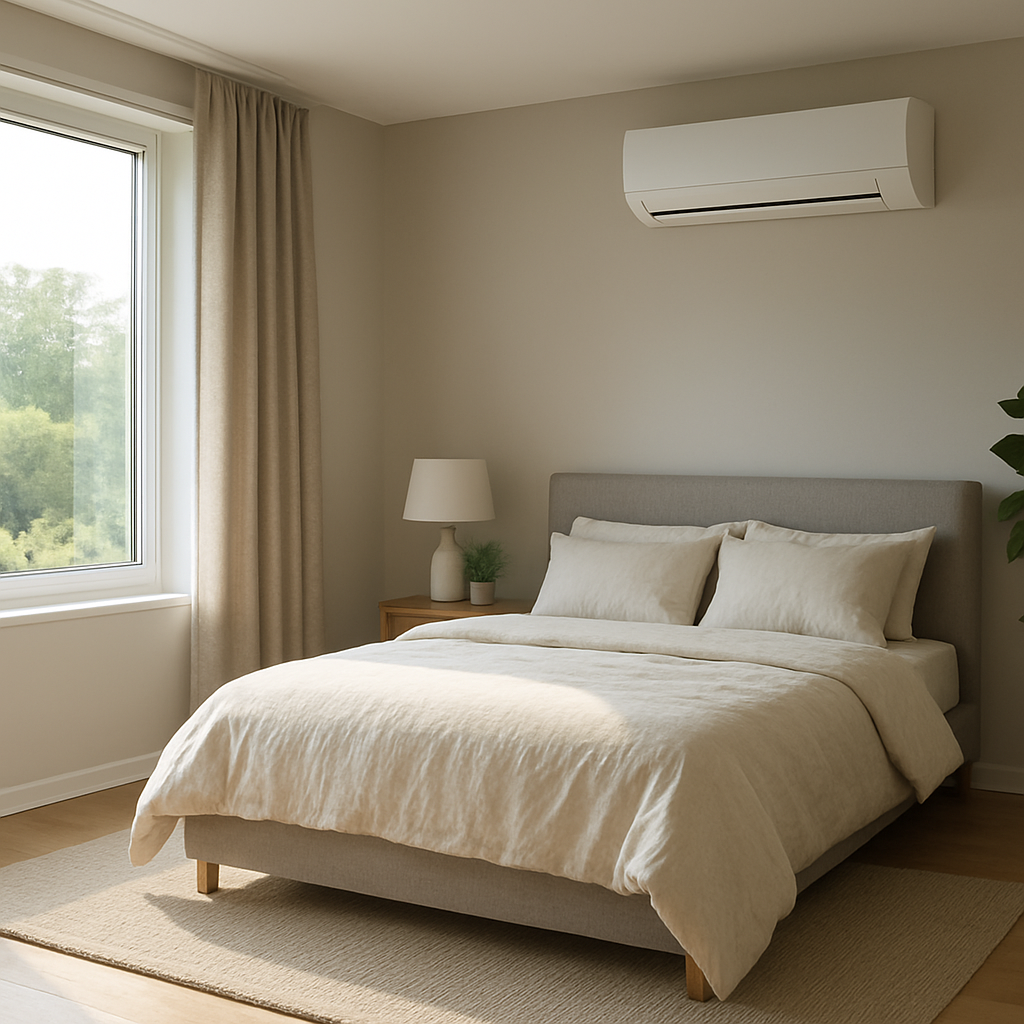
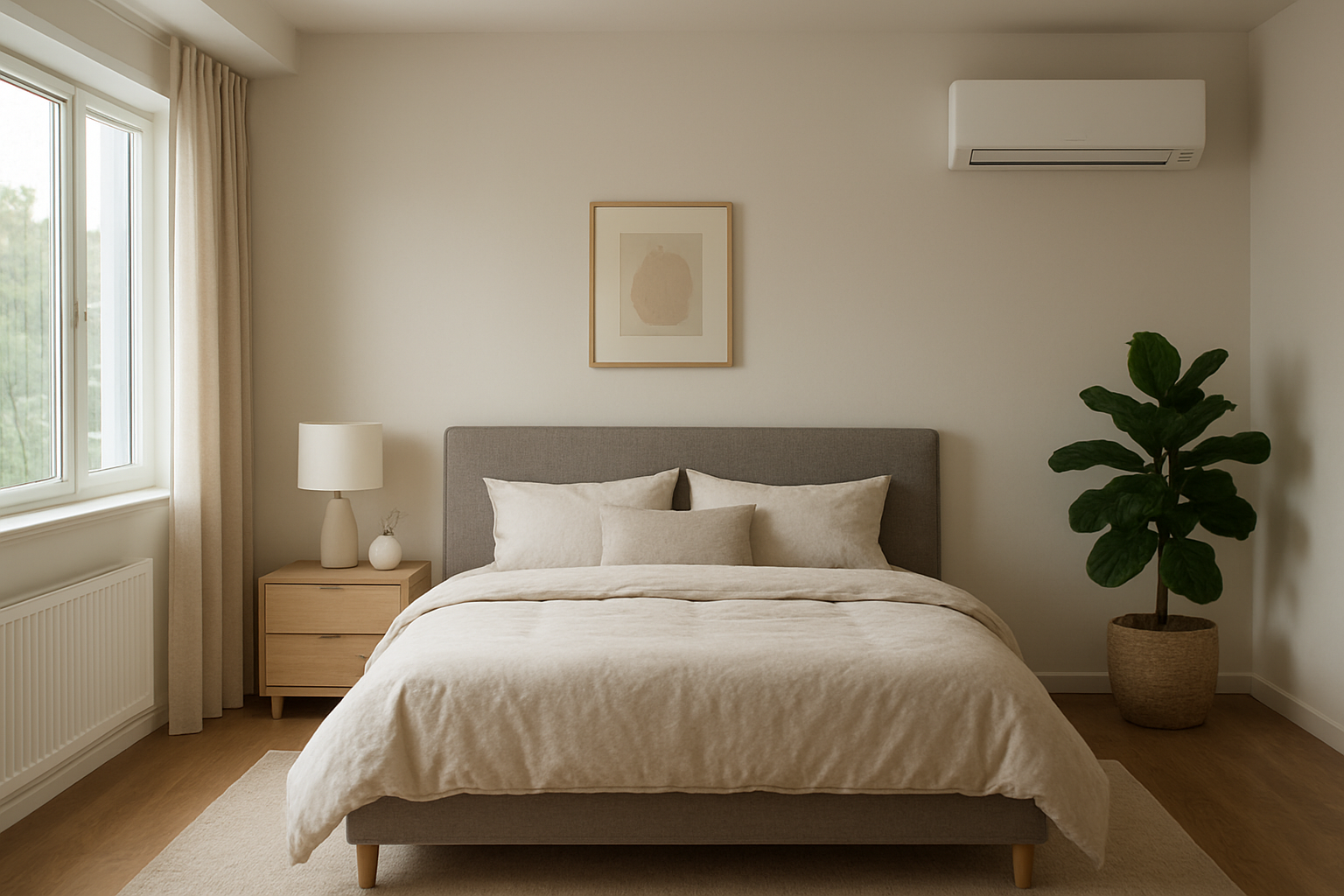
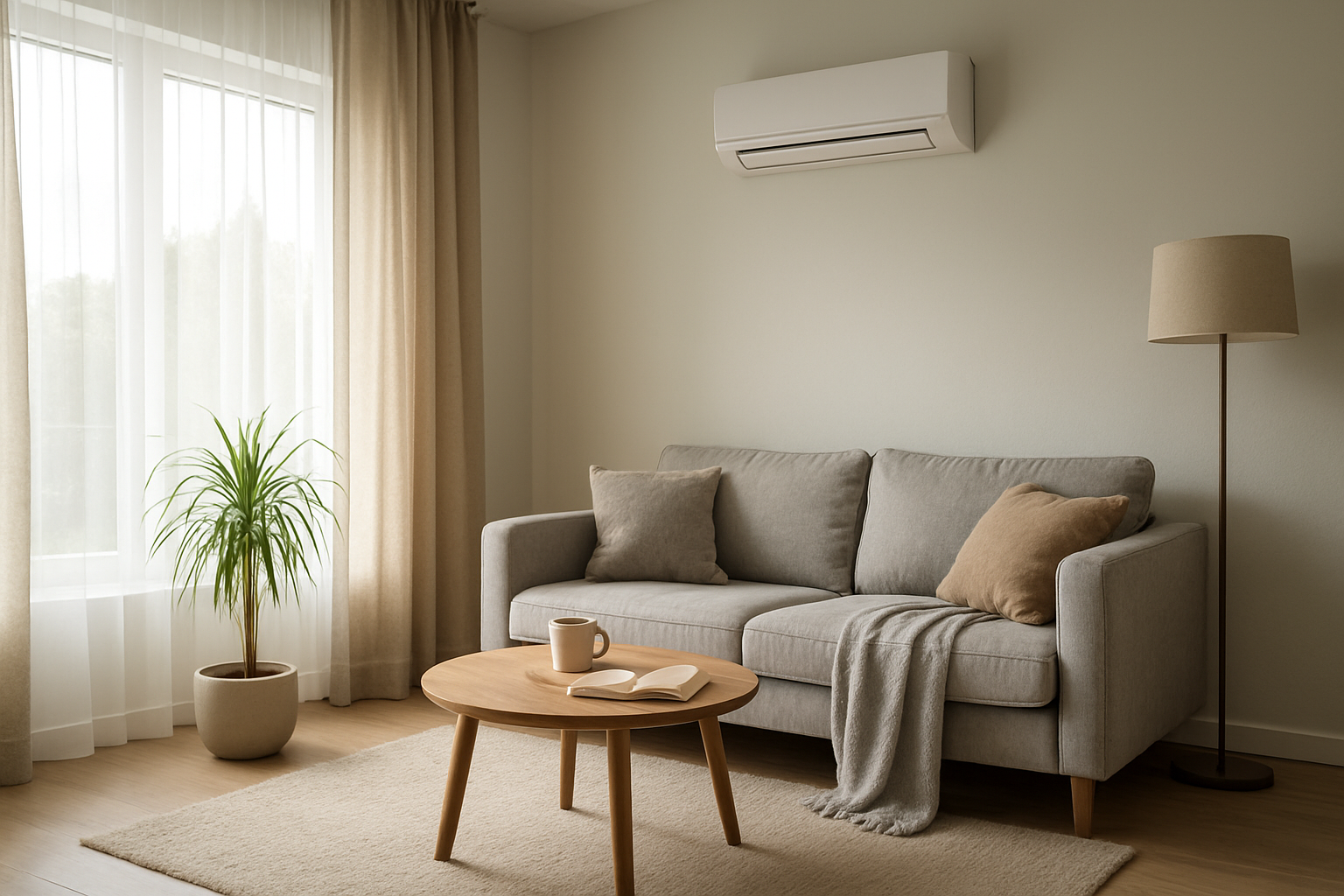
Learn how to diagnose and fix overnight air stagnation and CO₂ buildup in bedrooms, addressing heavy air and poor air quality after sleeping.
Bedroom Air Feels Heavy After Sleeping? Overnight Air Quality Problem
Quick Answer
The most common reason bedroom air feels heavy after sleeping is overnight air stagnation: the door is closed, supply airflow is low, and CO₂ from breathing builds up faster than it can dilute. First check: sleep one night with the bedroom door open 2–4 inches (or fully open) and note whether the heavy, stuffy feeling noticeably decreases by morning.
Identify the Comfort Pattern First
Before blaming the HVAC system, sort the symptom by pattern. This helps separate normal overnight air changes from a real ventilation or airflow limitation.
Time of day: Worst on waking, improves within 5–20 minutes after getting up or opening the door/window.
Weather dependence: Often stronger on mild nights when the HVAC runs less and air exchange is lower; can also worsen on very cold/hot nights if the bedroom door stays closed and airflow is weak.
Location: Typically limited to one bedroom (especially smaller rooms) rather than the whole house.
Door position: Much worse with the bedroom door fully closed; noticeably better with the door cracked or open.
System running vs off: If the HVAC barely runs overnight, the room tends to feel more stagnant by morning. If the system runs but the room still feels heavy, suspect poor air delivery or poor return path from that room.
Constant vs intermittent: Usually intermittent and predictable: builds overnight, clears quickly after air mixing begins.
Vertical differences: If the air feels warmer and more stale near the bed height but fresher near the doorway/hall, that points to low air change in the room rather than whole-home issues.
Humidity perception: Many people describe elevated CO₂ and low oxygen freshness as humid or heavy even when humidity is normal. Compare to a real humidity signal like clammy sheets, window condensation, or damp-feeling walls.
Airflow strength: Weak supply air at the bedroom register, or strong supply but no good return path (no return in the room, tight undercut door), commonly matches the complaint.
What This Usually Means Physically
When one or two people sleep in a closed bedroom, they continuously exhale CO₂ and water vapor. If the room does not exchange enough air with the rest of the house (or outdoors), CO₂ concentration rises and the air feels stale, heavy, or hard to breathe. This is not primarily an equipment capacity issue; it is an air change and mixing issue.
In many homes, bedrooms are supply-only zones. Air is pushed in through a supply register and is supposed to leave the room through a return grille in the hallway or another area. With the door closed and a tight door undercut, the return path becomes restricted. The supply register may still blow, but the room cannot move air out efficiently, so actual air exchange drops. This allows CO₂ to accumulate while temperature may remain acceptable.
Overnight conditions amplify the effect:
Lower HVAC runtime: On mild nights the system cycles less, reducing forced mixing between rooms.
Reduced natural leakage: In a tighter home, infiltration that could dilute CO₂ is lower.
Stratification: With little air movement, exhaled air and body heat can form a stagnant layer near the sleeping zone.
Humidity load: Humidity may rise slightly from breathing, adding to the sensation of heaviness, but CO₂ accumulation is often the main driver of the morning stale feeling.
Most Probable Causes (Ranked)
Closed bedroom door with inadequate return air path: Diagnostic clue: symptom improves quickly when the door is cracked at night; airflow at the supply may feel okay but the room still feels stale.
Low supply airflow to the bedroom: Diagnostic clue: weak airflow at the bedroom register compared to nearby rooms; the room may also drift warmer or cooler than the rest of the house.
HVAC not running enough overnight to mix air: Diagnostic clue: symptom is worst on mild nights when the system barely runs; improves on nights with longer runtime.
High occupancy for the room size: Diagnostic clue: worse with two people (or a person plus a pet) than with one; improves when only one person sleeps there.
Imbalanced house pressure or closed interior doors limiting whole-house circulation: Diagnostic clue: multiple bedrooms feel stale when doors are closed; hallway feels relatively fresher.
True humidity issue misidentified as heavy air: Diagnostic clue: persistent clammy feeling, window condensation, musty odor, or damp textiles that do not clear quickly after opening the door.
How to Confirm the Cause Yourself
These checks use observation only, no tools required. Do one change at a time so the pattern is clear.
Door test (best first step): For two nights, keep everything the same except door position. Night 1: door fully closed. Night 2: door open or cracked 2–4 inches. If the heavy-air feeling drops noticeably on Night 2, the main issue is insufficient return path and air exchange.
Vent comparison test: With the system running, compare airflow at the bedroom register to a nearby room of similar size. If the bedroom airflow is clearly weaker, suspect a supply restriction, damper position, or duct issue affecting air change and CO₂ dilution.
Morning clearance time: When you wake up, note how quickly the room feels normal after opening the door. If it clears within 5–20 minutes without changing thermostat settings, that points to stagnation and CO₂ buildup rather than heating/cooling capacity.
Occupancy test: If possible, compare a night with one sleeper versus two. A clear difference supports CO₂ accumulation as the driver, especially in smaller bedrooms.
Hallway comparison: Step into the hallway immediately on waking. If the hallway air feels noticeably fresher while the bedroom feels heavy, the problem is room-level air exchange, not whole-house air quality.
System runtime correlation: Recall whether the symptom is worse on nights when you did not hear the system run much. A strong correlation indicates the home relies on HVAC-driven mixing and the room is under-ventilated during low runtime periods.
Normal Behavior vs Real Problem
Normal: A slight overnight staleness in a closed bedroom that clears quickly when the door opens, especially in a tight home during mild weather. Minor changes in perceived freshness are expected because people are a continuous CO₂ source and nighttime airflow is often lower.
Likely a real problem:
Heavy or stale air is strong and consistent every morning, not just occasional.
The bedroom feels noticeably worse than other rooms even when the HVAC is running.
The feeling does not clear within about 20 minutes of opening the door and moving air.
There are additional comfort signs: the bedroom is regularly warmer/cooler than the rest of the house, or airflow at the register is clearly weak.
You must sleep with a window open to feel normal, even in comfortable outdoor conditions.
When Professional Service Is Needed
Persistent comfort impact: The heavy-air symptom occurs most nights and affects sleep quality despite door-position changes.
Airflow imbalance signs: The bedroom register airflow is consistently weak compared to other rooms, or the room is chronically hotter/colder by more than about 2–3°F.
Return-path restriction: The door must be open for the room to feel breathable, suggesting the room cannot relieve pressure to the return.
Whole-house ventilation concern: Multiple rooms feel stale in the morning, especially in a newer/tighter home, suggesting the home may need a verified ventilation strategy rather than room-only adjustments.
Humidity or odor indicators: Persistent musty odor, visible condensation, or dampness that does not clear with normal air mixing should be evaluated for moisture control and air exchange problems.
How to Prevent This in the Future
Ensure a return air pathway when doors are closed: If the bedroom has no return grille, a technician can evaluate options like transfer grilles or other return-path solutions so supply air can actually circulate.
Improve bedroom supply delivery: Confirm registers are open, not blocked by furniture, and that airflow is comparable to similar rooms. If not, have duct balancing and damper positions checked.
Use consistent low-level air mixing: If your system supports it, longer low-speed circulation can reduce overnight stagnation when heating/cooling demand is low.
Manage occupancy load: In small bedrooms, expect higher CO₂ buildup with two sleepers and closed doors. Increasing air exchange becomes more important than thermostat adjustments.
Keep interior doors strategic: If multiple rooms are closed at night, overall circulation to a central return can be reduced. Consider which doors must stay closed and which can stay cracked safely.
Related Home Comfort Symptoms
Bedroom feels stuffy only when the door is closed
Waking up with headaches that improve after leaving the bedroom
Bedroom temperature is fine but air feels stale
Weak airflow from one bedroom vent compared to the rest of the house
Air feels fresh in the hallway but not in the bedroom
Conclusion
Heavy bedroom air after sleeping most often points to overnight air stagnation: the room is effectively under-ventilated when the door is closed, allowing CO₂ to accumulate until morning. Start with the door-position test. If opening the door fixes it, focus next on return-path limitations and bedroom airflow delivery rather than changing thermostat settings. If the issue is persistent across rooms or does not clear quickly, schedule an airflow and ventilation evaluation.
Frequently Asked Questions
Why does the bedroom feel heavy even when the temperature is comfortable?
Temperature control and air exchange are different problems. A room can hold temperature while still having low fresh-air dilution. Overnight, CO₂ rises in a closed, low-circulation bedroom and the air can feel stale even if the thermostat is maintaining setpoint.
Does running the fan all night solve CO₂ buildup?
It can help if the bedroom can actually exchange air with a return path. If the door is closed and the room cannot relieve air to the return, circulating the blower may not move enough air through the room to dilute CO₂. The door test is the quickest way to see if return-path restriction is the limiting factor.
Is heavy air in the morning always a humidity problem?
No. People often describe elevated CO₂ and low air movement as humid or heavy. A true humidity issue usually leaves additional clues such as window condensation, damp fabrics, persistent clamminess, or a musty odor that does not clear quickly when the room is opened up.
Why is it worse on nights when the HVAC barely runs?
On mild nights, there is less heating or cooling demand, so the system cycles less and does less mixing between rooms. In a closed bedroom, that reduced mixing means less dilution of CO₂ generated during sleep, so the stale feeling is stronger by morning.
What if opening the door helps but I need privacy with the door closed?
If opening the door improves the symptom, the practical fix is creating a reliable return air pathway while the door is closed and verifying adequate supply airflow. That is a comfort-balancing issue a technician can evaluate by checking room pressure effects, airflow delivery, and how the room communicates with the central return.
Need a complete overview? Visit the full troubleshooting guide here: Read the full guide for more causes and fixes.
There’s a particular kind of dread that comes with waking up and feeling like the room is holding its breath. When the air doesn’t seem to move the way it should, even a normal night can start to feel a little heavier than necessary.
So here’s the quiet relief: the heaviness doesn’t have to be part of your routine. After everything settles, the bedroom feels like your space again—less muffled, more like you just hit the refresh button on sleep.