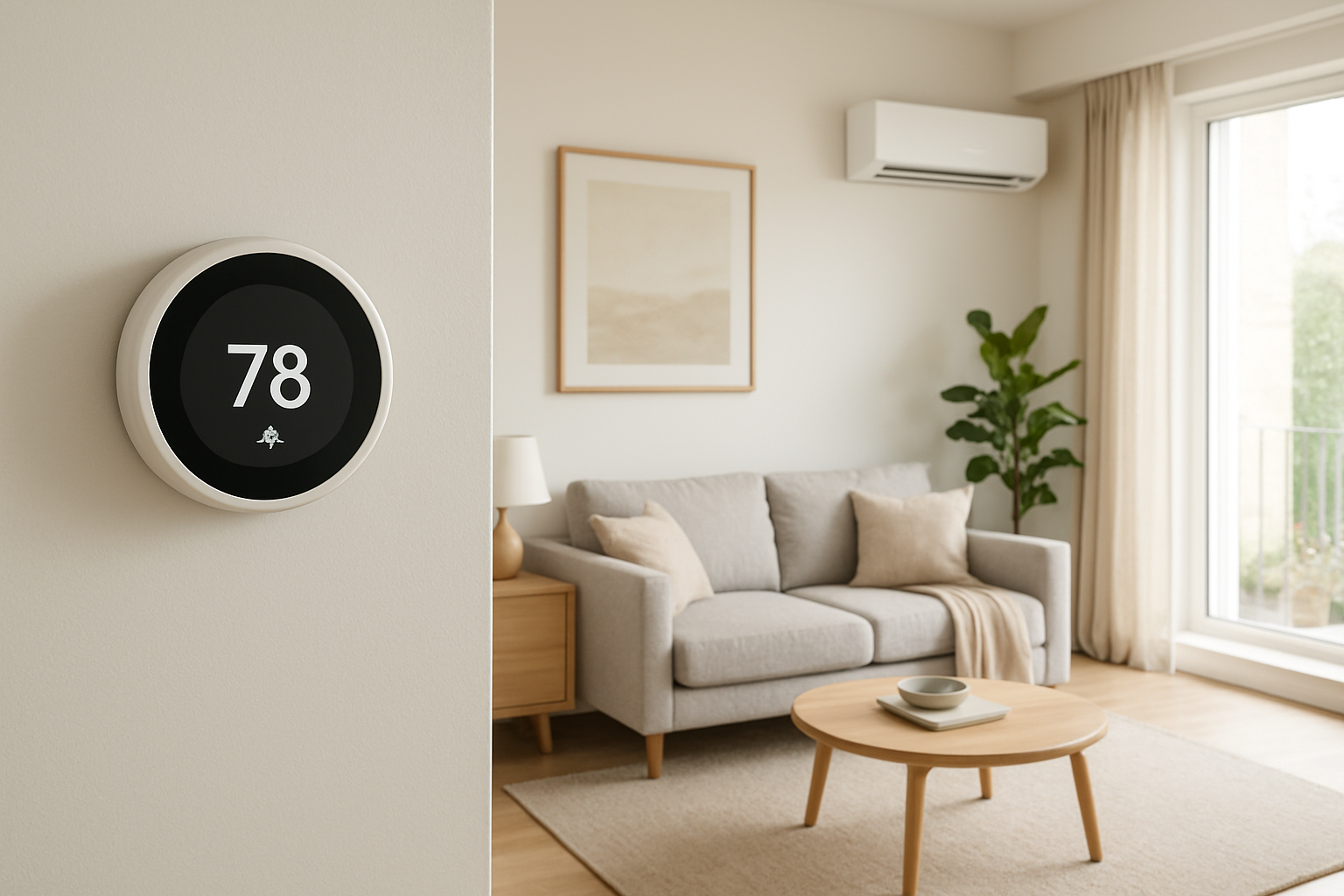
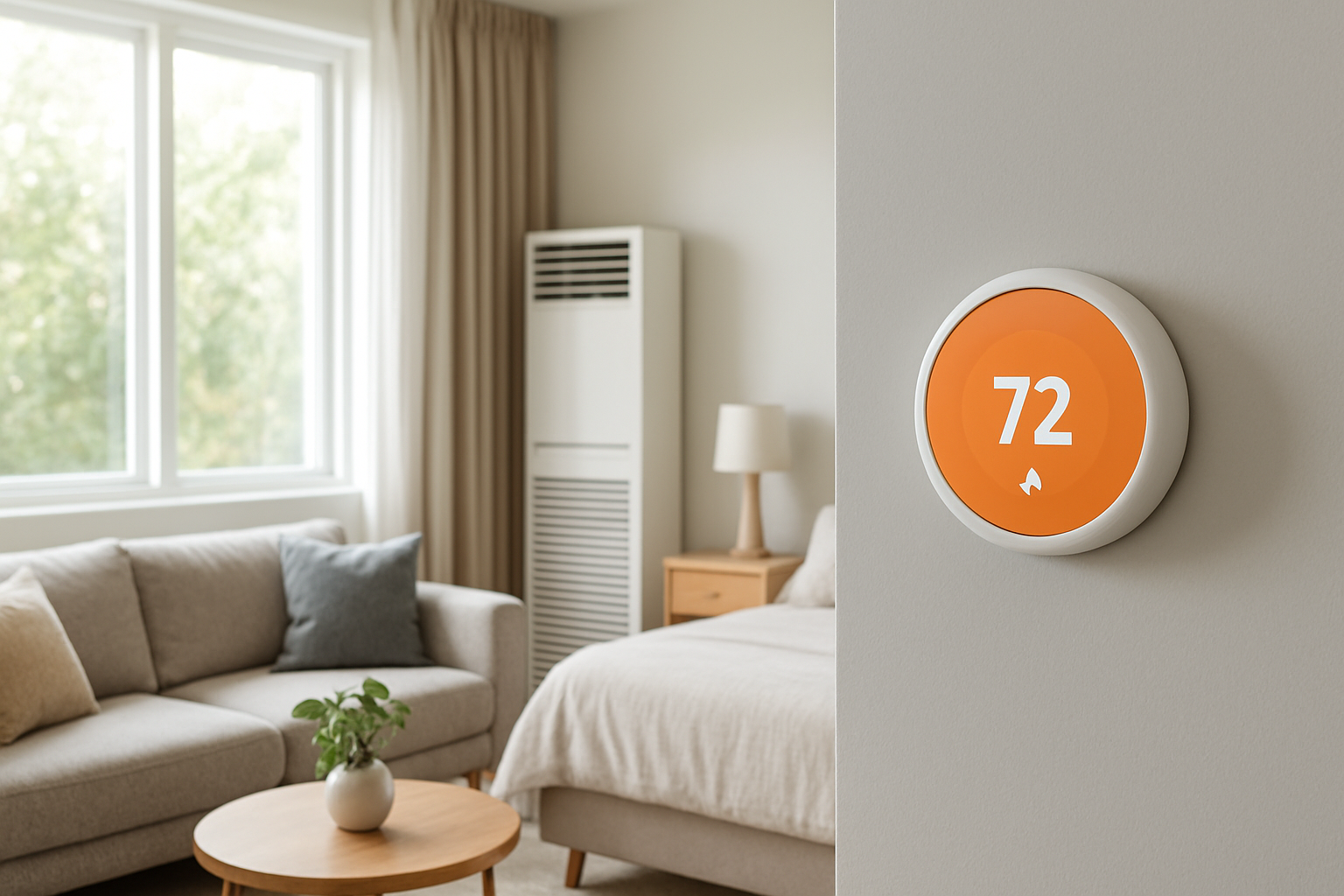
Learn how to diagnose and fix a thermostat that displays the wrong temperature due to sensor issues or environmental factors affecting accurate ambient temperature readings.
Thermostat Shows The Wrong Temperature? Why It Misreads
Quick Answer
Most thermostat temperature errors are not the furnace or AC failing. They are the thermostat sensing a pocket of air that is warmer or cooler than the room average due to airflow, drafts, or radiant heat. First check: place a reliable thermometer next to the thermostat for 20 minutes with the HVAC fan set to Auto and nearby doors in their normal position. Compare readings.
Identify the Comfort Pattern First
The fastest way to diagnose a misreading thermostat is to sort what you are feeling and when it happens. Your pattern points to whether the thermostat is sampling the wrong air.
Time of day pattern: If it reads too warm in late afternoon, suspect sun/solar gain on the thermostat wall. If it reads too cool overnight, suspect exterior-wall cooling, return-air pull, or a nearby draft.
Weather dependence: Errors that worsen on windy days point to infiltration drafts through the wall cavity, electrical box, or nearby door/window leakage. Errors that worsen on very hot or very cold days point to an exterior wall or attic influence.
System running vs off: If the thermostat looks wrong mainly while the system is running, suspect supply air washing over the thermostat, return air pulling across it, or internal thermostat self-heating when the screen is active.
Constant vs intermittent: A steady 2–4°F offset usually indicates location bias (draft, radiant heat, exterior wall). A swingy reading that changes quickly often indicates moving air across the sensor, loose thermostat mounting, or a wall cavity draft.
Changes with doors open/closed: If closing a nearby door changes the thermostat reading or the comfort quickly, airflow pathways are shifting and the thermostat is sampling a different air stream.
Vertical differences: If the thermostat reads warmer than you feel on the couch in cooling season, check for warm air stratification near the thermostat height or sunlight on the wall. If it reads cooler than you feel upstairs in heating season, stratification and return-air placement are likely.
Humidity perception: In summer, high humidity can make you feel warmer even when temperature matches. If the thermostat seems accurate but you feel sticky, it is not a sensor problem. If the thermostat reading is clearly wrong and comfort also feels wrong, focus on sensor location and airflow first.
Airflow strength: Weak airflow at supply registers can cause room-to-room temperature differences, but it does not usually make the thermostat misread. Strong airflow directed toward the thermostat can.
What This Usually Means Physically
A thermostat does not measure the whole house. It measures the temperature of the air and surfaces immediately around its sensor. If the sensor sits in a local microclimate, it will display a temperature that is technically real at that spot but wrong for the living condition you care about.
Air stratification: Warm air naturally rises and cool air falls. If your thermostat is in a hallway that stratifies (little mixing), it can read warmer than the occupied zone in cooling season or cooler than the occupied zone in heating season depending on airflow patterns and return placement.
Radiant heat influence: Sunlight, a warm exterior wall, a nearby TV, lamp, or kitchen heat can warm the thermostat body. The sensor then reports a higher temperature even if the room air is cooler. The reverse happens on a cold exterior wall in winter.
Drafts and pressure-driven leakage: Wind and stack effect move air through wall cavities. If the thermostat base is not sealed to the wall, the sensor can be washed by attic, crawlspace, or exterior air leaking through the opening behind it.
Return/supply air short-cycling at the thermostat: If the thermostat sits close to a return grille or in the path of a supply register, it can sample air that is not representative of the room average. This creates overshoot, short cycling, and persistent comfort complaints.
Sensor drift or mounting error: A thermostat sensor can drift out of calibration, but in the field, location and airflow effects are more common than true sensor failure. A loose thermostat not fully snapped to its base can also read wrong because the sensor is exposed to wall cavity air.
Most Probable Causes (Ranked)
Air leaking from the wall cavity behind the thermostat
Diagnostic clue: reading changes on windy days, changes when the HVAC blower turns on, or differs when a nearby exterior door is opened.
Return air influence or pressure pull near the thermostat
Diagnostic clue: thermostat is within a few feet of a return grille or in a hallway that feels breezy when the system runs; the displayed temperature moves quickly when the blower starts.
Radiant heating from sun, appliances, or lighting
Diagnostic clue: error peaks at a consistent time of day; wall feels warm to the touch; thermostat is across from a window, near a kitchen, or above electronics.
Supply register airflow washing over the thermostat
Diagnostic clue: a nearby supply blows toward the thermostat or down the hallway; the thermostat reading drops fast in cooling or rises fast in heating when the system starts.
Exterior wall or uninsulated cavity behind thermostat
Diagnostic clue: biggest errors during temperature extremes; thermostat is on an outside wall; wall feels cooler/warmer than interior walls.
Thermostat mounting, calibration, or sensor drift
Diagnostic clue: steady offset that does not track time-of-day or system operation, and persists after airflow and draft influences are ruled out.
How to Confirm the Cause Yourself
These checks are observation-based and safe. You are confirming whether the thermostat is sampling biased air.
Side-by-side thermometer test: Place a reliable digital thermometer 1–2 inches below or beside the thermostat (not in your hand). Leave it for 20 minutes with normal house conditions. If the thermostat differs by more than 2°F after stabilization, you likely have a sensor location or calibration issue.
System start/stop response test: Watch the thermostat temperature as the system starts. A jump of 1–3°F within the first few minutes suggests moving air across the sensor (return pull, supply wash, or wall cavity leakage) rather than true room temperature change.
Windy-day and door test: On a windy day, note whether the thermostat reading drifts more than usual. Then open and close the nearest exterior door and watch for a quick change in the thermostat reading within 1–5 minutes. Quick change indicates pressure-driven leakage paths affecting the sensor.
Sun and heat source check: At the time you notice the error, check for direct sun hitting the thermostat wall, a nearby lamp, a TV above/below, or warm kitchen air spilling into the hallway. If the thermostat reads high during these conditions and normal later, the sensor is being heated by radiation or convective spill.
Airflow pathway check: With the system running, stand near the thermostat and feel for air movement. If the hallway feels like an air channel, it can be dominated by return flow. Close a nearby door that changes the flow and see whether the thermostat reading stabilizes closer to the thermometer.
Vertical stratification check: Measure temperature at thermostat height and at sitting height (about 36–40 inches) in the same area using the same thermometer. If there is a consistent 3°F or greater difference, the thermostat may be reading a different layer than where occupants live, especially in tall foyers, stairwells, and open plans.
Normal Behavior vs Real Problem
Normal: A thermostat can differ from a handheld thermometer by 1–2°F depending on sensor design, display rounding, and placement.
Normal: Short-term changes of about 0.5–1°F when the blower starts can occur due to air mixing and sensor response time.
Real problem: A stable offset greater than 2°F after 20 minutes of side-by-side comparison, especially if it changes your run time and comfort.
Real problem: Fast swings of 2°F or more tied to blower operation, doors opening, or wind. That points to airflow or pressure washing the sensor, which causes short cycling and uneven temperatures.
Real problem: The thermostat reads comfortable but the house is clearly not, and you can confirm a large difference with a stable reference thermometer at the thermostat location.
When Professional Service Is Needed
Persistent error: Thermostat differs by more than 2–3°F from a stable reference thermometer at the thermostat after you have ruled out direct sun, nearby heat sources, and obvious airflow washing.
Comfort impact: The misread causes frequent cycling, rooms running hot/cold, or inability to maintain setpoint without long run times.
System performance decline: The issue coincides with weaker airflow, new noise, icing risk in cooling (reduced comfort with very long run times), or overheating symptoms in heating. Those indicate a separate HVAC performance problem in addition to sensing problems.
Control or wiring symptoms: Display resets, intermittent blank screen, erratic temperature jumps unrelated to conditions, or uncommanded heating/cooling calls. These suggest thermostat power, wiring, or control board issues.
How to Prevent This in the Future
Seal the wall opening: When a thermostat is replaced or remounted, ensure the wire hole and wall cavity behind the base are lightly sealed to prevent drafts affecting the sensor.
Keep the thermostat out of air streams: Avoid locations in direct line with supply registers, in return-air pathways, or at the top of stairwells that stratify.
Limit radiant influences: Avoid placement on sunlit walls, above electronics, near lamps, or near kitchens and laundry areas where heat plumes are common.
Maintain consistent airflow: Keep return grilles unblocked and filters changed to reduce pressure swings that can intensify hallway drafting around the thermostat.
Verify after changes: After furniture moves, register adjustments, or renovations, re-check thermostat accuracy with a nearby thermometer during a typical run cycle.
Related Home Comfort Symptoms
AC short cycles and never seems to run long enough
Heat runs too long and overshoots the set temperature
One room feels fine but the rest of the house is hot or cold
Upstairs is much hotter than downstairs in summer
Temperature swings when doors open or when it is windy
Conclusion
When a thermostat shows the wrong temperature, the most common explanation is sensor misreading caused by local airflow, wall cavity drafts, or radiant heat warming or cooling the thermostat body. Confirm it with a 20-minute side-by-side thermometer check, then watch how the reading reacts to blower operation, wind, and door position. If the offset stays above 2–3°F or causes cycling and comfort problems, schedule service to correct placement, sealing, or thermostat accuracy.
Frequently Asked Questions
How far off is too far for a thermostat?
After 20 minutes next to a reliable thermometer, more than 2°F of difference is enough to affect comfort and run time. More than 3°F usually creates noticeable cycling or room-to-room imbalance and should be corrected.
Why does my thermostat read different when the heat or AC turns on?
The sensor is being influenced by moving air. Common causes are return air pulling across the thermostat, supply air blowing toward it, or drafts from the wall cavity behind the thermostat that change when the blower changes house pressure.
Can a thermostat read wrong because it is on an exterior wall?
Yes. An exterior wall can be colder in winter and warmer in summer, especially if insulation is missing or compressed behind the thermostat. The thermostat body can be driven by wall temperature and read different than the room air.
Should I use the thermostat temperature offset setting?
Use offset only after you confirm the thermostat is consistently inaccurate at that location and you have ruled out sun, drafts, and airflow washing. If the reading changes with wind, time of day, or HVAC operation, offset will not fix the underlying sensing bias.
Can high humidity make the thermostat read wrong?
Humidity usually changes how you feel, not what the thermostat reads. If the displayed temperature matches a nearby thermometer but you feel warmer and sticky, the issue is likely humidity control or airflow, not a thermostat sensor error.
Need a complete overview? Visit the full troubleshooting guide here: Read the full guide for more causes and fixes.
There’s a particular kind of frustration in watching your thermostat announce one number while the room insists on another. The gap feels personal, like the house is quietly disagreeing with you in real time.
Still, getting past that misread changes the mood: the room becomes what it says it is, and daily habits settle back into place. It’s small, but it’s the kind of fix that makes everything feel less… negotiable.