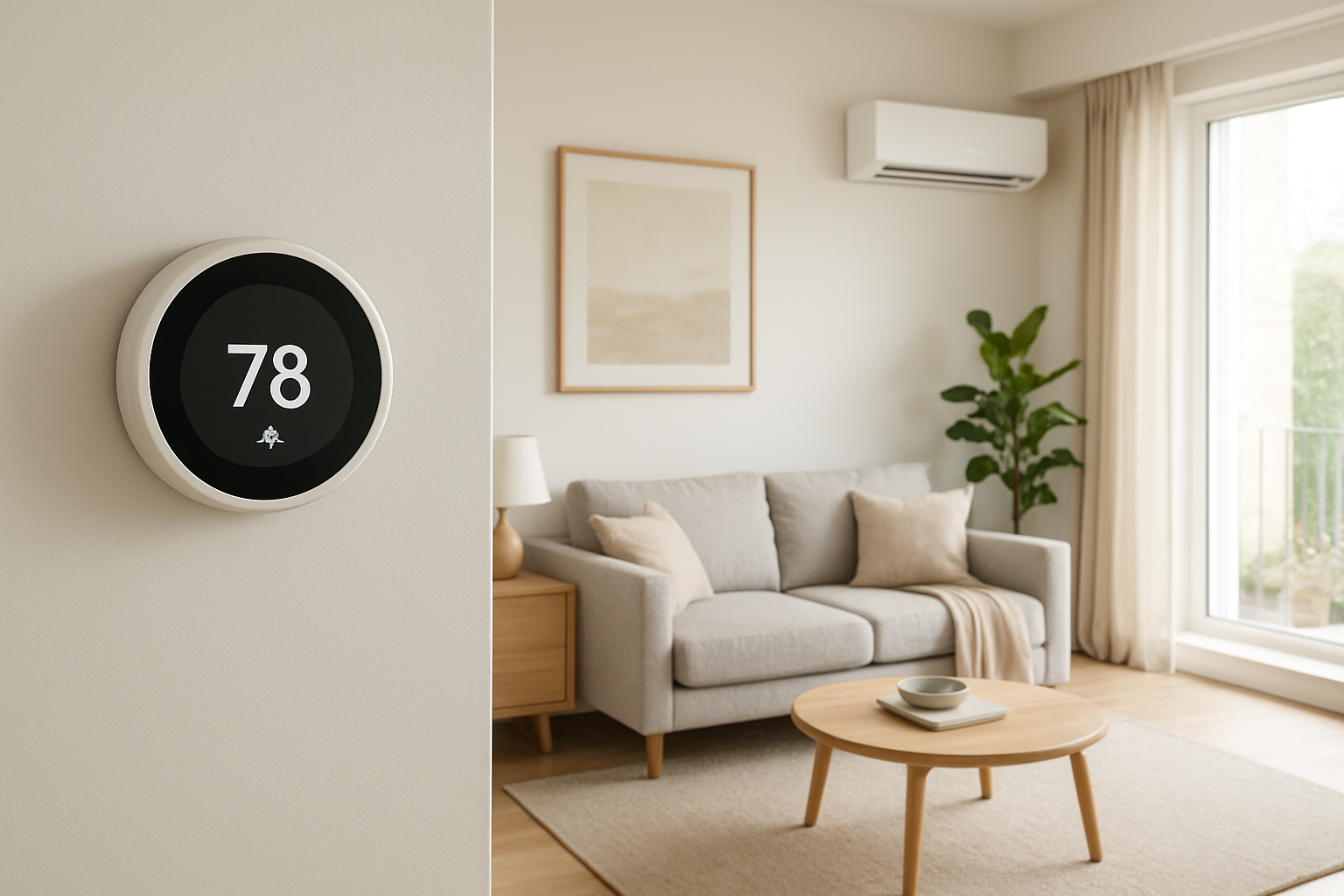
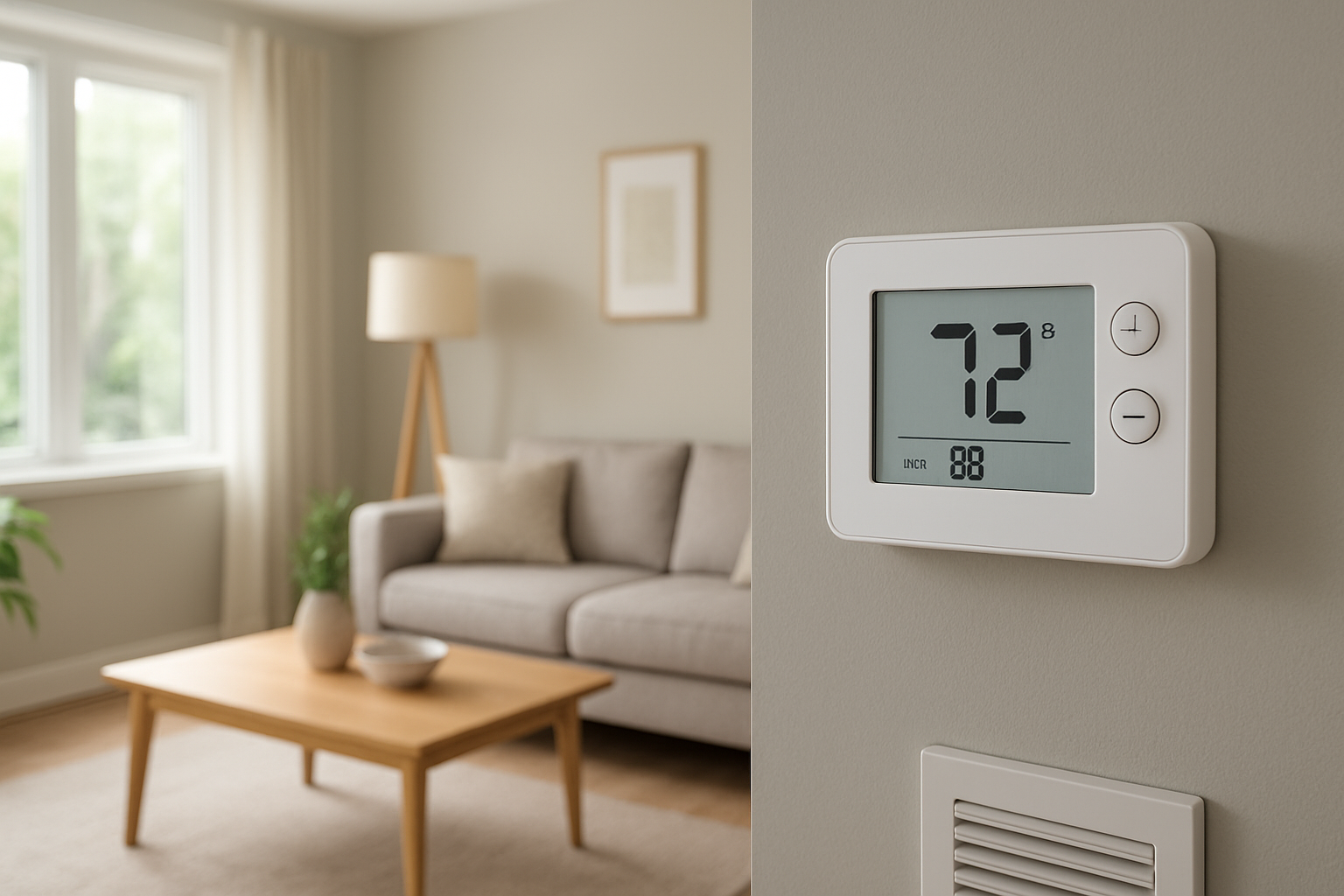
Diagnose and fix thermostat response lag when temperatures change quickly, including common causes and solutions for delayed heating or cooling adjustments in your home.
Thermostat Can’t Keep Up With Rapid Temperature Changes? Response Lag
Quick Answer
The most common reason a thermostat seems behind rapid indoor temperature changes is sensor lag caused by poor thermostat location and the thermostat sensing a small, unrepresentative pocket of air. The first check: place a reliable thermometer next to the thermostat and compare it to temperatures 5–10 feet away and in the problem room during a fast change (sunrise/sunset, cooking, door use).
Identify the Comfort Pattern First
Before assuming the HVAC is weak, sort the symptom into a repeatable pattern. Response lag looks different depending on what is driving the temperature swing.
When it happens: morning sun on one side of the home, late afternoon solar gain, after sunset, during windy weather, after showers/cooking, or during frequent door/garage openings.
Where it happens: only in one room, one side of the house, upstairs vs downstairs, or everywhere. A thermostat can only respond to what it senses at its location.
System running vs off: does the space feel like it heats up quickly even when the system is off, then takes a long time to recover once it turns on? Or does it run continuously but still trails?
Constant vs intermittent: a consistent daily pattern points to solar gain or envelope leakage; random spikes point to internal loads, door events, or sensor drafts.
Doors open vs closed: if closing the door to the thermostat hallway or the problem room changes the behavior, you are seeing the thermostat measure a different air mass than the occupied space.
Vertical differences: if the ceiling is much warmer than the floor (or vice versa), the thermostat may be reading a layer of air that is not what you feel at seating/bed height.
Humidity perception: during cooling season, a humid, sticky feel with only small temperature changes often means the thermostat is satisfied before moisture is removed, or the sensor is being cooled by supply air and shutting the system off early.
Airflow strength: if airflow from nearby registers is strong at the thermostat area but weak in the problem rooms, the thermostat will “think” the job is done while the rest of the house lags.
What This Usually Means Physically
A thermostat does not measure the whole home. It measures temperature at one point, and it does it with a sensor that has thermal mass. When the indoor temperature changes quickly, two things often happen:
Sensor response delay: the internal sensor and thermostat body warm up or cool down slower than the surrounding air during fast swings. The displayed temperature and the control decision can trail the real room condition by minutes.
Non-representative air at the thermostat: drafts from a return grille, supply register “wash,” exterior wall conduction, sunlight, a warm appliance nearby, or a dead-air pocket can make the thermostat read a temperature that is not what occupants are experiencing.
In real homes, rapid temperature change is usually driven by one of these physical forces:
Solar gain: sunlight loads a room faster than the HVAC can mix air, creating a hot zone while the thermostat stays cooler in shade.
Infiltration and pressure swings: wind or door openings change how outdoor air leaks in. The thermostat may be sheltered from the leak while an exterior room is hit directly.
Stratification: warm air rises and cool air falls. When the air isn’t being mixed well, the thermostat may sit in a stable layer while the occupied zone changes quickly.
Air distribution imbalance: if the thermostat area gets preferential heating/cooling, the system cycles based on that spot, not on the rooms that are changing rapidly.
The result is perceived lag: the home changes fast, but the thermostat does not detect it fast enough, or detects it in the wrong direction, so the system starts late or stops early.
Most Probable Causes (Ranked)
Thermostat location exposed to unrepresentative air (draft, return pull, supply wash, exterior wall): the thermostat is influenced by air movement or wall temperature that does not match the room. Clue: temperature at the thermostat differs from the room by 2°F or more during swings.
Solar gain creating a fast-changing zone away from the thermostat: one side of the home spikes in temperature in a predictable time window. Clue: sun-facing rooms swing quickly while thermostat area remains stable.
Stratification and poor mixing: temperature differs noticeably between floor and ceiling, and comfort changes when the air handler is running. Clue: 3°F+ difference between 1 foot and 6 feet height in the same room.
Air distribution imbalance favoring the thermostat area: airflow is strongest near the thermostat and weakest where discomfort occurs. Clue: the thermostat room reaches setpoint first; distant rooms overshoot or lag.
Thermostat sensor or display filtering (intentional averaging) or wrong cycle rate setup: many thermostats smooth readings to prevent short-cycling. Clue: the displayed temperature changes slowly compared to a separate thermometer placed at the same spot.
Equipment capacity or control issue masquerading as lag: the system runs long or continuously but cannot keep up with outdoor extremes. Clue: long runtimes with little temperature change across the home, not just in one zone.
How to Confirm the Cause Yourself
These checks are observation-only. Use a basic digital thermometer (or two) and your normal thermostat settings.
Thermostat-area comparison test: place a thermometer 2–3 inches from the thermostat (not touching it) and another 5–10 feet away at about 4–5 feet height. During a rapid change (sun hits windows, cooking, door opening), note whether the thermostat reading trails both thermometers, or whether only the thermostat area differs. A persistent difference points to location influence.
Room-to-thermostat delta test: during the complaint window, measure the problem room and the thermostat area. If the difference is 2°F or more for 20+ minutes, the thermostat is not sensing the space you care about, or air distribution is uneven.
Vertical stratification test: in the problem room, measure at ankle height and at head height. If you see 3°F+ difference, the thermostat can be “right” while you feel wrong. This often worsens when the system is off and improves when the fan runs.
Door position test: run the house normally for one day with interior doors open, then repeat with doors closed (especially the thermostat hallway/room and the problem room). If lag improves with doors open, the issue is mixing and pressure pathways, not thermostat electronics.
Supply wash check: stand still near the thermostat when the system starts. If you can feel supply air movement or a cool/warm draft across the thermostat wall, the sensor is being artificially pushed toward setpoint, causing early shutoff.
Time-of-day signature: if the issue is consistently tied to sun exposure, note which windows are bright at that time and whether blinds/curtains change the lag. A strong time signature points to solar gain, not a failing thermostat.
Runtime behavior: if the thermostat is late to react but the system then catches up quickly once it runs, suspect sensing/location. If it reacts correctly but cannot recover even with long runtimes, suspect capacity, airflow restriction, or refrigerant/combustion performance (needs professional confirmation).
Normal Behavior vs Real Problem
Some delay is expected. Thermostats often average temperature, and homes have thermal mass.
Usually normal: 1–2°F of short-term overshoot/undershoot during fast solar gain, or a few minutes of delay before the thermostat display catches up to a quick room change.
Likely a real problem: repeated 2–4°F swings that affect comfort in occupied rooms, especially when the thermostat area stays near setpoint while other rooms drift; cycling on/off rapidly because the thermostat is being hit by drafts or supply air; persistent day-to-day lag tied to doors, wind, or sun exposure.
Not a thermostat lag issue: the whole house temperature drifts together and the system runs nearly nonstop without catching up. That points away from sensing and toward capacity, airflow, or equipment performance.
When Professional Service Is Needed
Temperature mismatch persists: a verified 2°F+ difference between thermostat location and the main living area lasts longer than 20–30 minutes during normal operation.
Comfort impact is significant: occupants must frequently change setpoint, or certain rooms regularly become unusable during predictable times.
System behavior suggests control or airflow faults: short cycling, airflow that is weak at multiple vents, or comfort worsens after filter changes or duct work changes.
Performance decline: the system used to manage these swings and now cannot, despite similar weather and usage.
Safety indicators: any fuel-burning odor, soot, unusual noises, or repeated shutdowns. Those are not thermostat lag problems and require immediate professional evaluation.
How to Prevent This in the Future
Keep the thermostat sensing representative air: avoid placing heat-producing devices nearby, avoid direct sunlight, and avoid supply/return air paths that blow or pull across the thermostat.
Reduce rapid zone loads: manage solar gain with blinds, shades, or window film where the temperature spikes originate; close unused drapes before peak sun exposure.
Improve mixing during swing periods: if your system allows it, use intermittent fan or scheduled circulation during known swing windows to reduce stratification and room-to-room deltas.
Maintain consistent airflow: keep filters on schedule and do not block returns with furniture. Distribution problems exaggerate thermostat lag because the thermostat area becomes over-conditioned.
Avoid frequent large setpoint changes: big setbacks can create faster swings than the sensor and building can track smoothly, especially during shoulder seasons.
Related Home Comfort Symptoms
One room overheats in afternoon sun while thermostat reads normal
Upstairs too hot, downstairs comfortable, thermostat downstairs
Temperature swings larger when interior doors are closed
Conclusion
When a thermostat cannot keep up with rapid indoor temperature changes, the most likely issue is not “slow equipment” but delayed or distorted sensing: the thermostat is either lagging behind fast swings or measuring a pocket of air that does not match the occupied rooms. Confirm it by comparing temperatures at the thermostat, nearby, and in the problem room during the swing window. If you can document a persistent 2°F+ mismatch or early shutoff tied to drafts or solar gain, the fix is typically placement, air mixing, or air distribution correction.
Frequently Asked Questions
Why does the thermostat temperature change slowly compared to my room thermometer?
Many thermostats filter or average readings to avoid rapid cycling, and the thermostat body has thermal mass. If your thermometer next to the thermostat changes faster than the thermostat display by more than about 1°F for more than several minutes, the thermostat may be smoothing heavily or the sensor may be influenced by wall temperature, drafts, or supply air.
Can a thermostat be accurate and still feel wrong in the house?
Yes. A thermostat can be accurate at its location while the occupied rooms are different due to stratification, solar gain, or airflow imbalance. The key diagnostic is room-to-thermostat difference during the complaint period. If the room you live in is consistently 2°F+ different, the thermostat is not controlling to your actual comfort zone.
What temperature difference between rooms indicates a distribution problem rather than thermostat lag?
If the thermostat area reaches setpoint while other rooms remain 2–4°F off for 20+ minutes with the system running, that points to air distribution or mixing. If both spaces drift together and the thermostat display simply trails a separate thermometer at the same spot, that points more toward sensor filtering or sensor lag.
Does running the fan continuously fix thermostat response lag?
It can reduce the symptom when the true cause is stratification or poor mixing, because it blends temperature layers and room zones. It will not fix a thermostat being hit by sunlight, a wall temperature bias, or a supply-air draft. Use the fan as a diagnostic tool: if the lag improves noticeably with more air mixing, stratification or room-to-room isolation is involved.
When is the issue actually that the HVAC system cannot keep up?
If the system runs for long periods and the entire home temperature continues to drift away from setpoint (not just one or two rooms), especially during outdoor extremes, that’s more consistent with capacity, airflow restriction, or equipment performance issues. That scenario is not primarily thermostat response lag and should be evaluated by a professional.
Need a complete overview? Visit the full troubleshooting guide here: Read the full guide for more causes and fixes.
When the temperature swings faster than your thermostat can “feel” it, the house ends up wearing that slightly uncomfortable pause between decisions and results. It’s frustrating in a way that’s hard to explain—like watching a movie where the subtitles arrive after the punchline.
The fix isn’t about chasing perfection, it’s about getting back to the everyday rhythm of comfortable air on your schedule. After that, the lag stops being the main character, and everything just feels calmer—without anyone having to think about it.