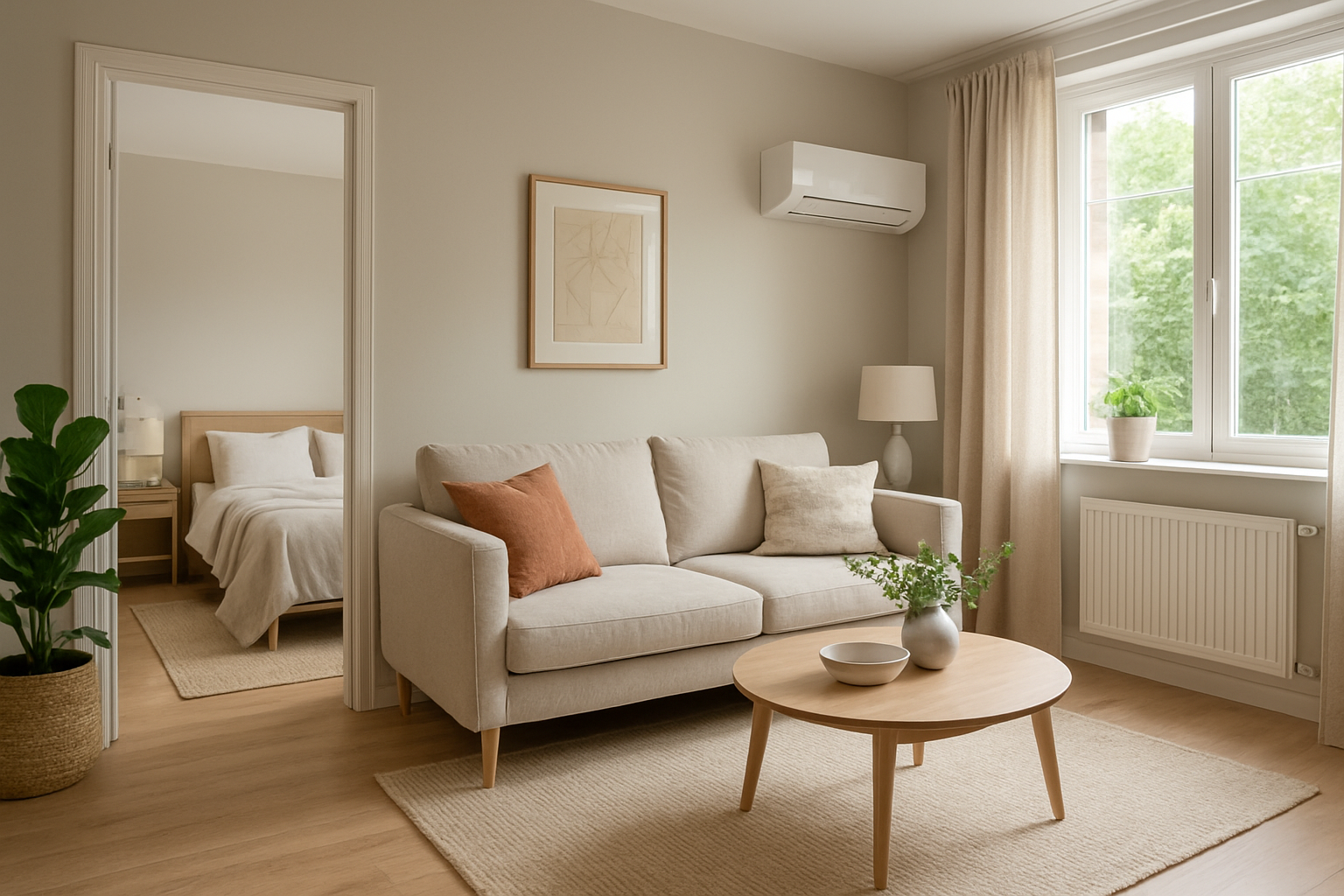
Learn how to diagnose and fix uneven ventilation causing heavy, stagnant air in living rooms while bedrooms remain fresh by addressing air balance issues in your home.
Living Room Air Feels Heavy While Bedrooms Feel Fresh? Air Balance Issue
Quick Answer
The most likely cause is uneven ventilation creating a low-air-movement pocket in the living room, so air stagnates and humidity and odors linger while bedrooms get more effective air exchange. First check: compare supply airflow at living room vs bedroom registers with the system running and interior doors in their normal positions. A big airflow mismatch points to an air balance issue.
Identify the Comfort Pattern First
Before assuming a mechanical failure, sort the complaint into a repeatable pattern. Heavy air is usually a ventilation and mixing problem, not a temperature-only problem.
When it happens: Does the living room feel heavy mainly in the evening when more people are present, cooking happens, and doors stay closed? Does it improve during long HVAC run cycles?
Weather dependence: Is it worse during humid weather or rainy days (higher outdoor moisture load), yet bedrooms still feel fine?
Where: Is the heaviness strongest in the center of the living room and near seating areas, while bedrooms or hallway feel noticeably fresher?
System running vs off: Does the living room feel better when the fan is running continuously, and worse when the system cycles off for long periods?
Constant vs intermittent: Is it consistent every day (suggesting fixed airflow distribution), or only when certain doors are shut or when exhaust fans run?
Door position test: With bedroom doors closed, does the living room get worse and bedrooms stay okay? With doors open, does the living room improve?
Vertical differences: Does the living room feel stuffier at sofa height while the ceiling area feels warmer or slightly different, suggesting poor mixing/stratification?
Humidity perception: Does the air feel damp, clammy, or odor-holding in the living room even when the thermostat temperature seems normal?
Airflow strength: Do living room registers feel weak while bedroom registers feel strong, or do you feel very little air movement in the living room unless you stand directly under a vent?
What This Usually Means Physically
Fresh-feeling air in one area and heavy-feeling air in another is commonly an air exchange difference, not a mystery air quality event. If the bedrooms are receiving better supply airflow (and/or have better return pathways), they get more frequent dilution of moisture, carbon dioxide, and odors. The living room can become a dead zone where air movement is low, so the same air lingers longer.
In real houses, air does not mix evenly. It follows pressure and resistance. If the duct system pushes more air to the bedrooms or pulls better from them, those rooms cycle in more conditioned, filtered air. Meanwhile the living room may have:
Lower effective air changes: not enough supply volume, not enough return pull, or poor transfer air back to the return.
Localized stagnation: air moves from supply to return along the easiest path, bypassing pockets in larger open rooms.
Humidity and odor persistence: without consistent airflow, moisture from occupants, pets, houseplants, or nearby kitchen activity lingers and feels heavy even at a normal dry-bulb temperature.
Stratification: in larger spaces with higher ceilings, warm air can collect higher while the occupied zone remains under-mixed, changing how the room feels.
This is why a living room can feel heavy while bedrooms feel fresh even when the thermostat reads fine: the sensor sees average temperature, not local ventilation performance.
Most Probable Causes (Ranked)
1) Living room is under-supplied compared to bedrooms
Diagnostic clue: living room supply registers feel noticeably weaker than bedroom supplies during the same run cycle; heaviness improves when HVAC runs continuously.
2) Poor return air path from the living room (or return is effectively short-circuiting)
Diagnostic clue: air seems to rush under a door or along a hallway when the system runs; the living room feels stagnant unless doors are positioned a certain way; return grille may be closer to bedrooms/hall, pulling more from there.
3) Bedroom doors and pressure imbalances are stealing airflow
Diagnostic clue: when bedroom doors are closed, bedrooms feel even fresher and living room feels worse; opening bedroom doors noticeably improves living room feel within 15–30 minutes.
4) Supply register placement and jet direction bypasses the occupied zone
Diagnostic clue: the supply stream shoots along a ceiling or directly into a return path; you feel little mixing where people sit while air movement is strong at the ceiling or near the return.
5) Duct restriction or damper position reducing living room flow
Diagnostic clue: a single trunk/branch serving the living room is kinked, crushed, disconnected, or a damper is partially closed; one register is much weaker than others in the same room.
6) Local moisture load is higher in the living room and ventilation is too low to dilute it
Diagnostic clue: heaviness increases with more people, pets, or after cooking; bedrooms remain stable; no major temperature difference, just a persistent humid feel.
How to Confirm the Cause Yourself
These checks rely on observation and simple comparisons. Do them during a normal cooling or heating call when the system has been running at least 10 minutes.
Supply airflow comparison: Stand at each supply register and compare airflow strength with your hand at the same distance. If bedrooms are clearly stronger and the living room is weak at multiple registers, you have an air distribution imbalance.
Door position test (most revealing): Leave bedroom doors in their normal position for a day, note living room heaviness. Next day, keep bedroom doors open. If the living room improves without any thermostat change, the issue is pressure/return path imbalance, not equipment capacity.
Fan ON test: Set the thermostat fan to ON for 1–2 hours (no temperature change needed). If the heavy feeling reduces, the house needs better mixing/air movement in that living room area, indicating stagnation rather than a temperature problem.
Register direction check: Look at where the living room supply is blowing. If it hugs the ceiling or points directly toward a return grille or hallway, it may be short-circuiting. A stagnant occupied zone is consistent with heavy air complaints.
Simple time-to-clear test: After a normal source of odor/moisture (several people in the living room, mild cooking nearby), note how long the living room takes to feel fresh again versus bedrooms. If bedrooms recover faster, they are getting more effective air exchange.
Temperature split observation: Without instruments, note if the living room feels the same temperature as bedrooms but still feels heavier. That points away from insulation/solar gain and toward ventilation/mixing.
Normal Behavior vs Real Problem
Normal behavior: Large open rooms can feel slightly less fresh during gatherings, cooking, or humid weather because moisture and odors are being generated faster than the HVAC can dilute them during short cycles. Some difference between rooms is expected, especially in multi-level homes or with high ceilings.
Real problem indicators:
Consistent living room heaviness even on low-occupancy days and even when the temperature is comfortable.
Noticeable airflow imbalance where bedroom registers are strong and living room is weak during the same call.
Strong dependence on door positions suggesting pressure/return path problems.
Lingering odors or clammy feel in the living room long after the source is gone, while bedrooms clear quickly.
Comfort improves with fan ON which indicates mixing and air exchange are the limiting factors.
When Professional Service Is Needed
Airflow imbalance persists after obvious register obstructions are cleared and after confirming door position effects.
Living room remains uncomfortable daily with a clear quality-of-air complaint (stuffy, heavy, odor-holding) despite normal thermostat readings.
System performance decline: longer run times, poor cooling/dehumidification, or certain rooms never stabilizing.
Ductwork concerns: suspected disconnected duct, crushed flex duct, or a damper that may be mis-set (common after renovations).
Moisture red flags: persistent musty odor localized to the living room area, visible condensation, or recurring damp surfaces. These require a targeted inspection to rule out building moisture issues alongside airflow imbalance.
How to Prevent This in the Future
Maintain consistent air pathways: avoid keeping key interior doors closed if the home relies on hallway returns; ensure there is an easy path for air to get back to the return from the living room.
Keep supply registers clear: furniture, rugs, and drapes commonly block living room registers more than bedroom registers, creating a predictable living-room dead zone.
Use fan settings strategically: during high-occupancy periods or humid days, using a circulation fan mode can prevent stagnation in large rooms (especially high-ceiling living rooms).
After any remodeling: verify no dampers were moved and no ducts were compressed; living rooms often get affected when soffits, ceilings, or floors are modified.
Filter discipline: consistently clogged filters reduce overall airflow, which makes already-weak areas feel heavier first. Replace on schedule appropriate to your home and filter type.
Related Home Comfort Symptoms
One room smells stale while the rest of the house smells normal
Living room feels clammy but thermometer reads fine
Bedrooms have strong airflow but common areas have weak airflow
House feels better with the fan ON but worse when it cycles AUTO
Comfort changes noticeably when interior doors are opened or closed
Conclusion
When the living room feels heavy but bedrooms feel fresh, the most probable explanation is uneven ventilation creating localized air stagnation in the living room. The fastest diagnostic path is comparing supply airflow between rooms and testing how the comfort changes with bedroom doors open versus closed. If the pattern clearly tracks airflow and pressure pathways, the correction is air balancing and return-path improvement, not a thermostat adjustment.
Frequently Asked Questions
Why does heavy air happen even when the temperature is comfortable?
Because the sensation is often driven by low air movement and poor dilution of moisture and odors, not temperature. A room can be 72°F and still feel heavy if the effective air exchange rate is low and the air stagnates in the occupied zone.
Does running the HVAC fan continuously fix it?
If the issue is mainly poor mixing, fan ON often improves the living room within an hour by moving air through stagnant zones. If there is a true supply/return imbalance or duct restriction, fan ON may help only slightly because the living room still is not getting its share of airflow.
Can closed bedroom doors really make the living room feel worse?
Yes. Closed doors can change pressure relationships and where return air is pulled from. If the return pathway favors bedrooms or a hallway, the system may circulate air more effectively in that area while the living room becomes under-exchanged and feels stale.
What is the simplest sign that this is an air balance problem?
Two signs are difficult to ignore: bedroom supply airflow feels much stronger than living room airflow during the same run cycle, and the living room noticeably improves when interior doors are opened or when the fan is left on for mixing.
Is this an indoor air quality issue or an HVAC issue?
Most often it is an airflow distribution issue that affects perceived air quality locally. Poor ventilation and mixing can concentrate normal indoor pollutants and moisture in one room. If the heaviness is accompanied by persistent musty odor or dampness limited to the living room, a moisture source may also be present and should be inspected.
Need a complete overview? Visit the full troubleshooting guide here: Read the full guide for more causes and fixes.
Some homes just seem to have moods. The living room hangs onto yesterday’s air like it pays rent, while the bedrooms feel like they actually got the memo.
When things are lined up again, it’s subtle but unmistakable. You walk in and exhale without realizing you’ve been holding your breath for days.