Learn how to diagnose and fix poor air exchange or CO2 buildup in bedrooms when your AC is running but air circulation feels inadequate or stuffy.
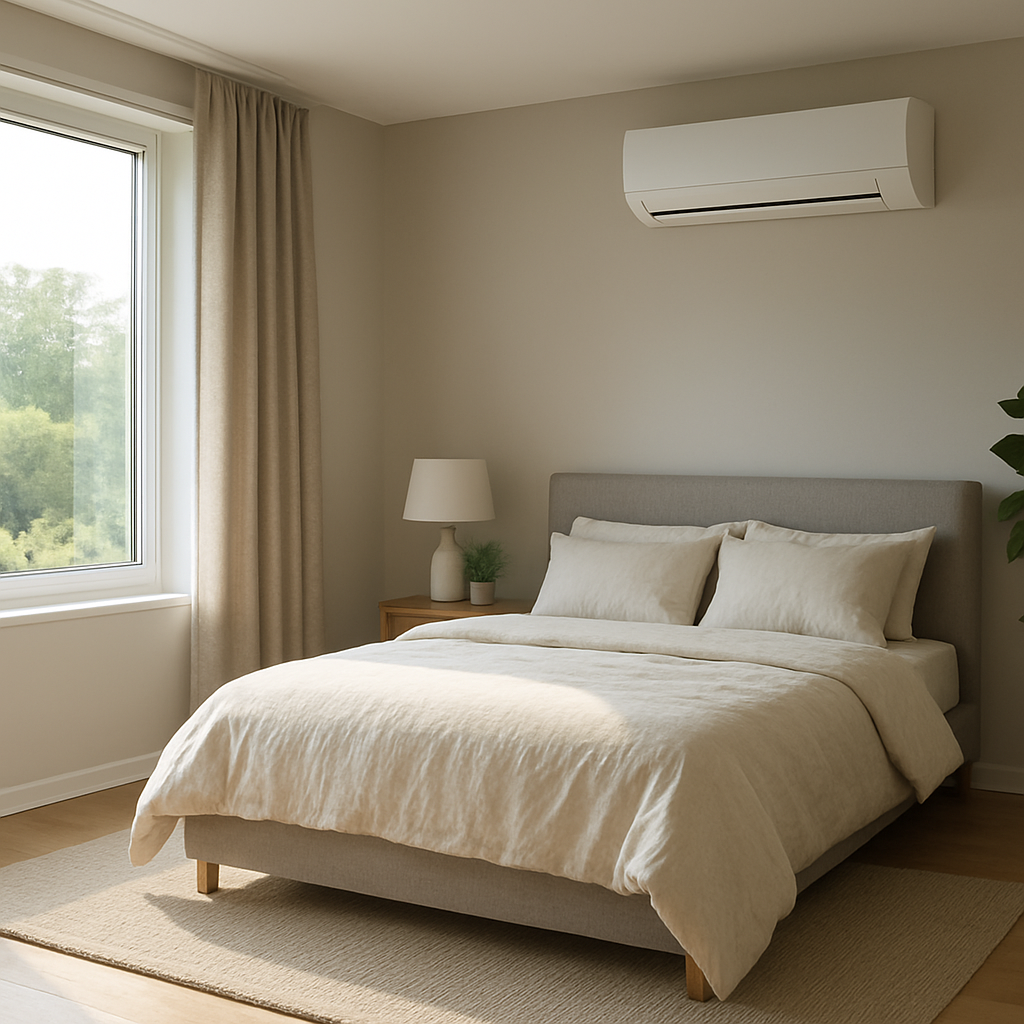
Bedroom Feels Stuffy Even With AC? Air Isn’t Moving Properly
Quick Answer
If the bedroom feels stuffy even while the AC is cooling, the most common reason is poor air exchange: the room is not getting enough fresh supply air or an escape path for air to leave, so CO2 and stale air build up. First check: run the system with the bedroom door fully closed, then crack it open 1–2 inches. If the stuffiness quickly improves, the room is pressure-locked with inadequate return airflow.
Identify the Comfort Pattern First
Stuffy is a specific complaint. Before assuming temperature or humidity, sort the pattern. These observations tell you whether the issue is air exchange and CO2 buildup versus normal warm air or a weak AC.
When it happens: worse overnight and first thing in the morning points strongly to CO2 accumulation from occupants in a closed room.
Where it happens: mostly one bedroom, not the whole house, points to a room-level airflow/return-path problem rather than a system-wide cooling problem.
System running vs off: if it still feels stale while the AC fan is running, the issue is usually not cooling capacity; it is that air is not actually being exchanged through the room.
Constant vs intermittent: intermittent stuffiness that lines up with doors being closed, people sleeping, or the fan cycling off is typical of inadequate ventilation/return path.
Door open vs closed: if opening the door makes the room feel fresher within minutes (even if temperature barely changes), that is a high-confidence sign of poor return airflow and trapped air.
Vertical differences: if the air feels heavy at head level while standing/sitting, with little difference between floor and ceiling temperature, it suggests stagnant air more than stratification.
Humidity perception: if it feels stale or “used” rather than clammy, CO2 and low air change are more likely than high humidity. If it feels sticky and the whole home is sticky, that is a different path.
Airflow strength: weak supply airflow at the bedroom register compared to other rooms suggests duct restriction; normal airflow but persistent stuffiness suggests the air cannot leave the room (no adequate return path).
What This Usually Means Physically
A bedroom can be cool and still feel uncomfortable when the air in the room is not being replaced. The AC may be removing heat, but it is not necessarily providing effective air exchange within that room.
In most homes, bedrooms have supply vents but no dedicated return grille. They rely on air flowing out of the room through a door undercut or transfer path back to a central return. When the bedroom door is closed and the undercut is small, the room becomes pressure-restricted. The supply register tries to push air in, the room pressure rises slightly, and total airflow drops. Reduced airflow means less mixing and less exchange with the rest of the house.
Overnight, occupants add CO2 and odors faster than the room can dilute them. CO2 itself is not an odor, but rising CO2 correlates strongly with the sensation of stale air, headache, and a stuffy feeling. Even with stable temperature, the air can feel “flat” because the room is effectively re-breathing and the HVAC system is not moving enough new air through that space.
This is commonly a room pressure and airflow path problem, not a refrigerant, compressor, or thermostat problem.
Most Probable Causes (Ranked)
Inadequate return air path when the bedroom door is closed
Diagnostic clue: stuffiness improves quickly when the door is cracked open; airflow at the supply feels stronger with the door open.
Undercut too small or carpet blocking the door gap
Diagnostic clue: door nearly drags carpet; no visible gap under the door; tissue at the gap barely moves when system runs.
Supply airflow to the bedroom is lower than the rest of the home
Diagnostic clue: the bedroom register has noticeably less throw/velocity than other similar registers; the room lags behind on comfort even with door open.
Supply register blocked or poorly aimed, causing short-cycling within the room
Diagnostic clue: register partially closed, covered by furniture/drapes; air blows into a corner and does not mix across the room.
Central return location pulling mostly from a hallway, not from closed rooms
Diagnostic clue: hallway feels drafty at the return while closed bedrooms feel stagnant; return grille suction feels strong but bedrooms still feel stale.
Low outdoor air exchange for the home in general (tight home, no ventilation)
Diagnostic clue: stuffiness occurs in multiple rooms, especially with more occupants; opening a window briefly makes a noticeable difference throughout the home.
How to Confirm the Cause Yourself
These checks use observation and simple comparisons. Do them when the issue is happening, typically at night or early morning.
Door position test (highest value): with the AC running, sit in the bedroom with the door fully closed for 10 minutes. Then crack the door open 1–2 inches. If the air feels fresher within 2–5 minutes, you have poor air exchange due to return-path restriction.
Supply airflow change with door movement: hold a small strip of toilet tissue 2–3 inches in front of the bedroom supply register. Note movement with the door closed, then with the door cracked open. A noticeable increase in tissue movement with the door open indicates the room was pressure-locked.
Compare register throw: compare the bedroom register to a similar-size register in another room (same floor) with doors open. If one room has clearly stronger airflow, suspect a duct restriction, damper position, or register blockage specific to the bedroom run.
Morning check: when the bedroom feels most stuffy, step into the hallway and leave the bedroom door open. If the stale sensation clears quickly despite minimal temperature difference, that points away from cooling capacity and toward CO2 dilution/air exchange.
Return suction clue: feel airflow at the central return grille with the bedroom door closed, then open. If hallway return suction increases when doors open, it suggests the return cannot effectively pull air from closed rooms.
Occupancy sensitivity: note whether the problem is much worse with two people sleeping versus one. A strong occupancy link supports CO2 accumulation from limited air change.
Normal Behavior vs Real Problem
Normal: A closed bedroom may feel slightly less fresh by morning, especially with two sleepers, even in a properly designed home. A mild difference that improves gradually after the door is opened is common.
Real problem indicators:
Stuffy sensation is persistent night after night and noticeable within 1–2 hours of closing the door.
Door-open test produces a fast, repeatable improvement in perceived freshness.
Bedroom supply airflow is weak compared to other rooms, or changes significantly with door position.
You develop recurring morning headaches or “air hunger” sensations that resolve after leaving the room (not a diagnosis, but a strong comfort pattern pointing to poor air exchange).
The room temperature is acceptable, but comfort is not, indicating air quality/mixing rather than cooling capacity.
When Professional Service Is Needed
Pressure/airflow symptoms are repeatable: door cracking consistently fixes the issue, indicating the home needs a proper return path or airflow adjustment rather than guesses.
Airflow is clearly low at the bedroom register: suggests duct restrictions, disconnected duct, crushed flex, closed damper, or poor balancing that requires measurement.
Comfort impact is significant: you cannot sleep comfortably with the door closed, or the room feels stagnant even with the fan set to run.
System performance decline: multiple rooms show weak airflow, unusual noise at returns, or the blower seems strained, which may indicate filter/coil issues or duct problems.
Safety indicators: if you have combustion appliances and notice backdrafting odors or soot, stop and call a professional immediately. Airflow and pressure imbalances can worsen these conditions.
How to Prevent This in the Future
Maintain a real return path from bedrooms: ensure there is an effective transfer path when doors are closed (adequate undercut, transfer grille, or jumper duct as appropriate for the home).
Keep supply registers clear and fully open: avoid furniture, rugs, and drapes blocking discharge or return pathways.
Run the fan strategically: if the system supports it and humidity is controlled, periodic fan circulation can reduce stagnant zones. If fan-only operation makes the home feel clammy, reduce fan runtime and address airflow/return path instead.
Stay consistent with filters: a heavily loaded filter can reduce total airflow and worsen room-to-room exchange. Replace at the interval that keeps airflow stable.
Address whole-home ventilation if the entire house feels stale: tight homes often need controlled outdoor air management rather than relying on random leakage.
Related Home Comfort Symptoms
Bedroom is colder or hotter than the rest of the house with the door closed
Whistling at the bedroom door or return grille when the system runs
Bedroom supply vent blows weakly compared to other rooms
Musty or stale smell that clears quickly when the door is opened
Hallway feels drafty while bedrooms feel stagnant
Conclusion
A bedroom that feels stuffy even with the AC running is most often an air exchange problem: the room cannot move enough air in and out when the door is closed, so CO2 and stale air build up. Use the door-crack test and compare supply airflow with the door open versus closed. If the change is immediate and repeatable, focus on creating a proper return path or correcting airflow to that bedroom rather than chasing refrigerant or thermostat issues.
Frequently Asked Questions
Can a bedroom feel stuffy even if the temperature is perfect?
Yes. Temperature control and air exchange are different. The AC can remove heat while the room still has low air change when the door is closed, allowing CO2 and stale air to accumulate and making the space feel heavy or used.
Why does cracking the door open fix it so fast?
Cracking the door creates a return path so the supply air can actually move through the room and leave. That restores airflow, improves mixing, and rapidly dilutes accumulated CO2 and odors, even if the thermostat setting and room temperature barely change.
Does running the fan continuously solve a stuffy bedroom?
Sometimes it helps, but it is not a reliable fix if the room is pressure-locked. A continuous fan may still move limited air into the bedroom if the return path is restricted, and in humid climates it can increase the perception of stickiness. The better fix is restoring proper in-and-out airflow.
Is this usually a duct problem or a return problem?
Most often it is a return-path problem in homes where bedrooms have supplies but no returns. If airflow at the bedroom register is also weak compared to other rooms even when the door is open, then a duct restriction or balancing issue becomes more likely.
How can I tell if it is humidity instead of CO2 and poor air exchange?
Humidity discomfort typically feels clammy or sticky and is often noticeable beyond one bedroom. CO2/low air change is more often described as stale, heavy, or hard to get a satisfying breath, and it usually improves quickly with door opening or a brief window opening.
Need a complete overview? Visit the full troubleshooting guide here: Read the full guide for more causes and fixes.
Getting that same room back to feeling “normal” is the small win you don’t realize you’ve been missing. When the air finally moves the way it should, the whole vibe softens—less heaviness, more breathing room, even if the day hasn’t changed.
There’s something satisfying about noticing what was off and having it click into place. Not dramatic, not glamorous, just a steady kind of relief that makes your bedroom feel like it’s finally working for you again.