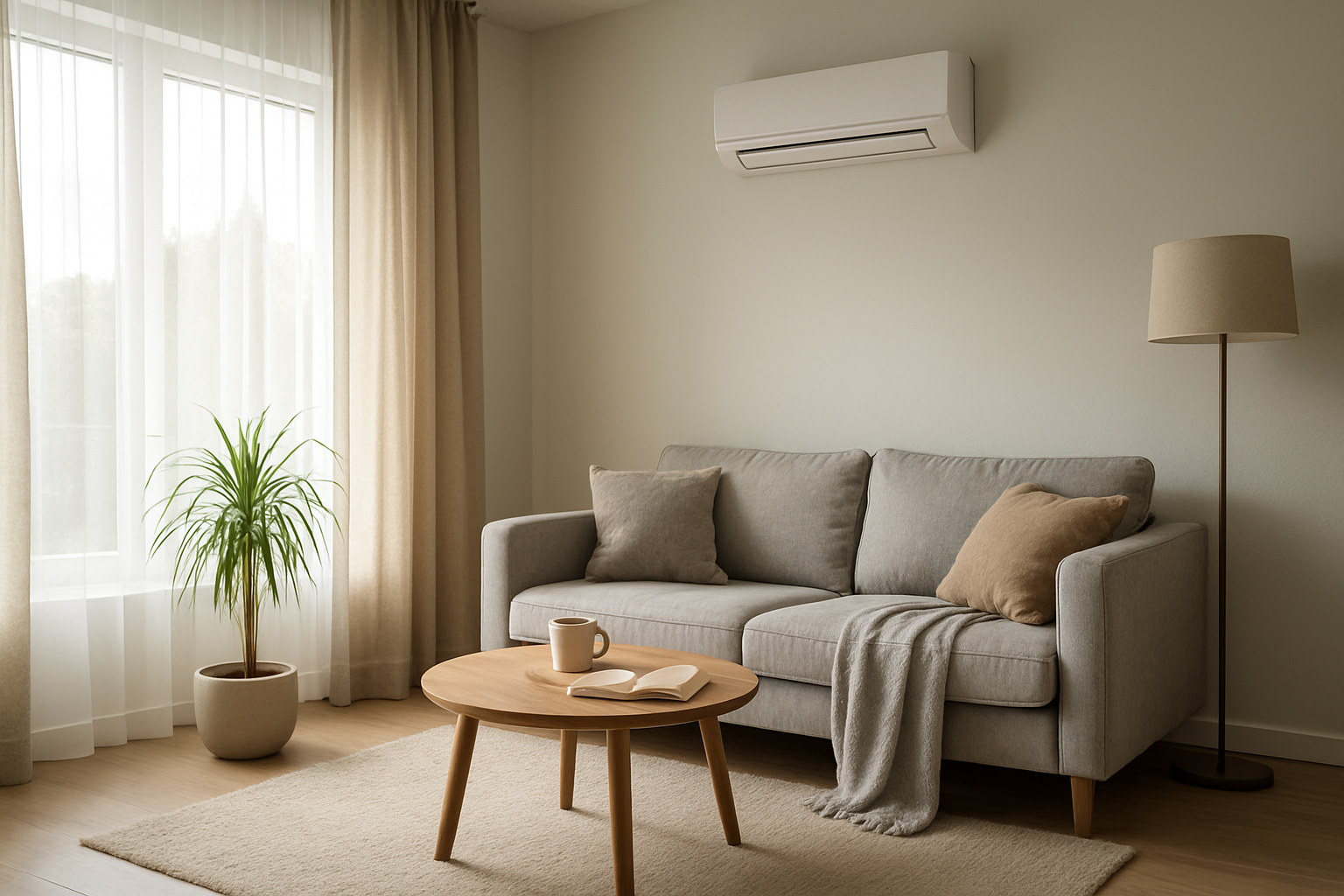
Learn how poor overnight ventilation leads to stale bedroom air in the morning and discover practical solutions to improve air exchange for fresher indoor air.
Bedroom Air Stale In Morning? Poor Overnight Ventilation
Quick Answer
Most stale-bedroom mornings are caused by poor overnight air exchange: the bedroom door stays closed, the HVAC fan cycles off, and the room becomes a low-ventilation zone where exhaled CO2 and humidity accumulate. First check: sleep one night with the door cracked 1–2 inches and compare morning air freshness and stuffiness. If it improves, you have an air exchange problem, not an odor problem.
Identify the Comfort Pattern First
Use these observations to sort the complaint into a ventilation issue versus a heating/cooling issue.
Timing: Worst right after waking, improves after the door opens or you leave the room. If it improves within 5–15 minutes of door-open time, that points to trapped air and low exchange overnight.
Where: Mainly one bedroom (often the farthest room from the air handler). Hallway and living areas feel normal in the morning.
System running vs off: Stale feeling is stronger when the system barely runs overnight (mild weather) and weaker on very hot/cold nights when the system runs longer.
Constant vs intermittent: Intermittent by season and weather, not constant every hour. Often worse in spring/fall when runtimes are short.
Door position: Noticeably better with the bedroom door open or cracked. Noticeably worse with the door fully latched.
Vertical differences: Air feels heavier near the bed and lower part of the room; warmer, stuffier air can collect near the ceiling if there is little mixing.
Humidity perception: Room feels humid, clammy, or smells like people in the morning even if the rest of the house does not. Windows may show light condensation in cool weather.
Airflow strength: Bedroom supply air feels weaker than other rooms, or the supply quits quickly because the system cycles off. Little to no air movement is noticeable when lying in bed.
What This Usually Means Physically
Overnight, a closed bedroom becomes its own small air zone. Two adults can add a meaningful moisture load and a steady CO2 load simply by breathing. If the bedroom has limited supply air and especially limited return-air path, the HVAC system cannot move enough air through the room to dilute and remove what is generated inside it.
When the system cycles off, air exchange often drops close to zero because many bedrooms do not have an active return grille. The only return path is usually the gap under the door or leakage around the door, which may be restricted by carpet, weatherstripping, or a tight fit. With low mixing, the room also stratifies: warmer, more humid, higher-CO2 air lingers in the upper portion of the space and diffuses slowly. By morning, the air can feel stale even if temperature is acceptable.
This is why the symptom often tracks HVAC runtime, door position, and mild weather more than it tracks thermostat setpoint.
Most Probable Causes (Ranked)
Closed-door bedroom with no effective return-air path: Staleness improves quickly when the door is cracked; airflow at the supply changes when the door position changes.
Short HVAC runtimes overnight leading to low air changes: Worse in mild conditions; better during extremes when the system runs longer and mixes the home more.
Bedroom supply airflow is low (register partially closed, blocked, or weak): The bedroom register feels noticeably weaker than a similar-size room; the room is also the last to heat/cool.
Return grille in the hallway is restricted by closed doors and pressure imbalance: Bedroom door hard to close or tends to drift; whistling at the door gap; supply air noise changes when door shuts.
Exhaust-driven depressurization or outside air not available when doors are closed: Bathroom fan, kitchen hood, or dryer use late evening worsens it; the bedroom feels more stagnant while other rooms feel draftier.
Odor source misread as staleness: Persistent musty or chemical odor that does not clear quickly with door open points to a source (laundry, carpet, pet area), not strictly poor exchange.
How to Confirm the Cause Yourself
These checks are designed to isolate low overnight air exchange without tools.
Door-crack test: For two nights, keep everything the same except door position. Night 1: door fully closed. Night 2: door cracked 1–2 inches. If morning air is clearly fresher on Night 2, the primary issue is inadequate return-air path/air exchange.
Door undercut check: Look at the gap under the bedroom door. If carpet contacts the door or the gap is very tight, the room may not be able to “breathe” back to the return when the door is shut.
Airflow reaction test: With the system running, stand by the bedroom supply register. Slowly close the bedroom door. If airflow drops, changes tone, or the register feels weaker when the door shuts, the room is pressure-bound and lacks a return path.
Compare morning humidity feel: If the bedroom feels noticeably more humid or clammy than the hallway in the morning, that is consistent with occupant-generated moisture being trapped overnight.
Runtime pattern check: Note whether the system ran much overnight. If stale mornings happen most when the system barely runs, that supports low air exchange rather than a mechanical failure.
Fast-clear check: Open the bedroom door in the morning and note how long it takes before the room no longer feels stale. Clearing within 5–15 minutes suggests dilution by house air movement, not a persistent contaminant source.
Normal Behavior vs Real Problem
Normal: Slightly stuffy air in a closed bedroom after 7–9 hours, especially with two sleepers, is common in homes without dedicated bedroom returns or continuous ventilation. If it clears quickly with the door open and there are no humidity signs, this can be normal building behavior.
Real problem indicators: The room feels stale every morning regardless of weather; the bedroom is also difficult to heat/cool compared to the rest of the house; the supply airflow noticeably weakens when the door is closed; condensation appears on windows in cool weather; or the stale feeling is accompanied by headaches or persistent fatigue that improves after leaving the room (this suggests poor air exchange and warrants stronger correction).
When Professional Service Is Needed
Persistent daily staleness despite door-crack improvement attempts, or no improvement even with the door open (suggests airflow delivery or an odor/source issue).
Bedroom comfort imbalance: If the bedroom is consistently hotter/colder than other rooms by more than about 3–4°F, airflow balancing and return-path evaluation are needed.
Evidence of pressure/airflow problems: Register airflow changes significantly with door position, doors slam or are hard to close, or whistling occurs at door gaps.
Humidity indicators: Recurring window condensation, musty smells that persist after airing out, or visible moisture issues.
Safety indicators: If anyone experiences severe symptoms, or if combustion appliances are present and you suspect unusual backdrafting or strong exhaust effects, stop relying on guesswork and have the home evaluated for pressure/ventilation interactions.
How to Prevent This in the Future
Maintain a return-air path from the bedroom: Keep an adequate door undercut clear of carpet, or use transfer solutions that allow air to move to the nearest return when the door is closed.
Do not choke bedroom supply registers: Avoid closing the register to reduce noise or drafts; it typically reduces air changes and makes mornings worse.
Use consistent overnight circulation when needed: If your system supports it, modest scheduled fan circulation can reduce stagnation on mild nights when heating/cooling runtimes are short.
Control evening moisture loads: If the bedroom feels humid in the morning, reduce late-night moisture sources (wet towels, humidifiers set too high) and ensure bathrooms are exhausted appropriately.
Keep filters and grilles clean: A loaded filter or blocked return reduces whole-house airflow, which reduces how much fresh mixed air ever reaches the bedroom.
Related Home Comfort Symptoms
Bedroom hotter than rest of house at night
Bedroom colder than rest of house in morning
Weak airflow from one room vent
Humidity spikes overnight
Musty smell only in one room
Doors whistling or hard to close when HVAC runs
Conclusion
Stale bedroom air in the morning is most often an overnight air exchange problem: a closed door, limited return path, and short HVAC runtimes allow exhaled CO2 and moisture to build up. Use the door-crack test and the door-closed airflow reaction test to confirm. If the symptom is persistent, tied to door position, or paired with uneven bedroom temperatures, the fix is usually restoring a proper return path and balancing airflow, not replacing equipment.
Frequently Asked Questions
Why is the bedroom stale only in the morning and not during the day?
At night the door is usually closed and the room has steady occupant output (CO2 and moisture) with very little air exchange if the HVAC cycles off. During the day, doors open, people move around, and the system often runs more, so the room gets diluted and mixed.
Is stale air a sign my HVAC is broken?
Not usually. It is more often a zoning and airflow-path issue: the room cannot move air back to the central return when the door is shut. The equipment can be operating correctly while the bedroom still has poor air exchange.
Why does it get worse in spring and fall?
Mild outdoor conditions reduce heating and cooling runtime. Less runtime means less mixing and fewer air changes through the bedroom. On hotter or colder nights, longer runtimes usually improve air movement and dilution.
Will leaving the bedroom door open fix it?
It often improves it because it restores a return path and allows the bedroom air to mix with the rest of the house. If it helps significantly, the underlying issue is the closed-room ventilation path, not a mysterious odor.
How can I tell if it is low ventilation versus a musty odor source?
Low ventilation staleness clears relatively quickly when the door is opened and the house air circulates. A true odor source tends to persist even after airing out and may be strongest near a specific item or area (closet, carpet edge, hamper) rather than being uniform across the room.
Need a complete overview? Visit the full troubleshooting guide here: Read the full guide for more causes and fixes.
Morning stale air can feel like the house didn’t quite “finish” overnight, like it was holding its breath until you wake up. The difference shows up fast—less heaviness, less noticeable stuffiness, more of that clean-start feeling.
It’s a small daily annoyance, but it’s also strangely telling: you can tell how a place is living just by how it breathes in the first minutes. Here’s to bedrooms that wake up with you, not before you.