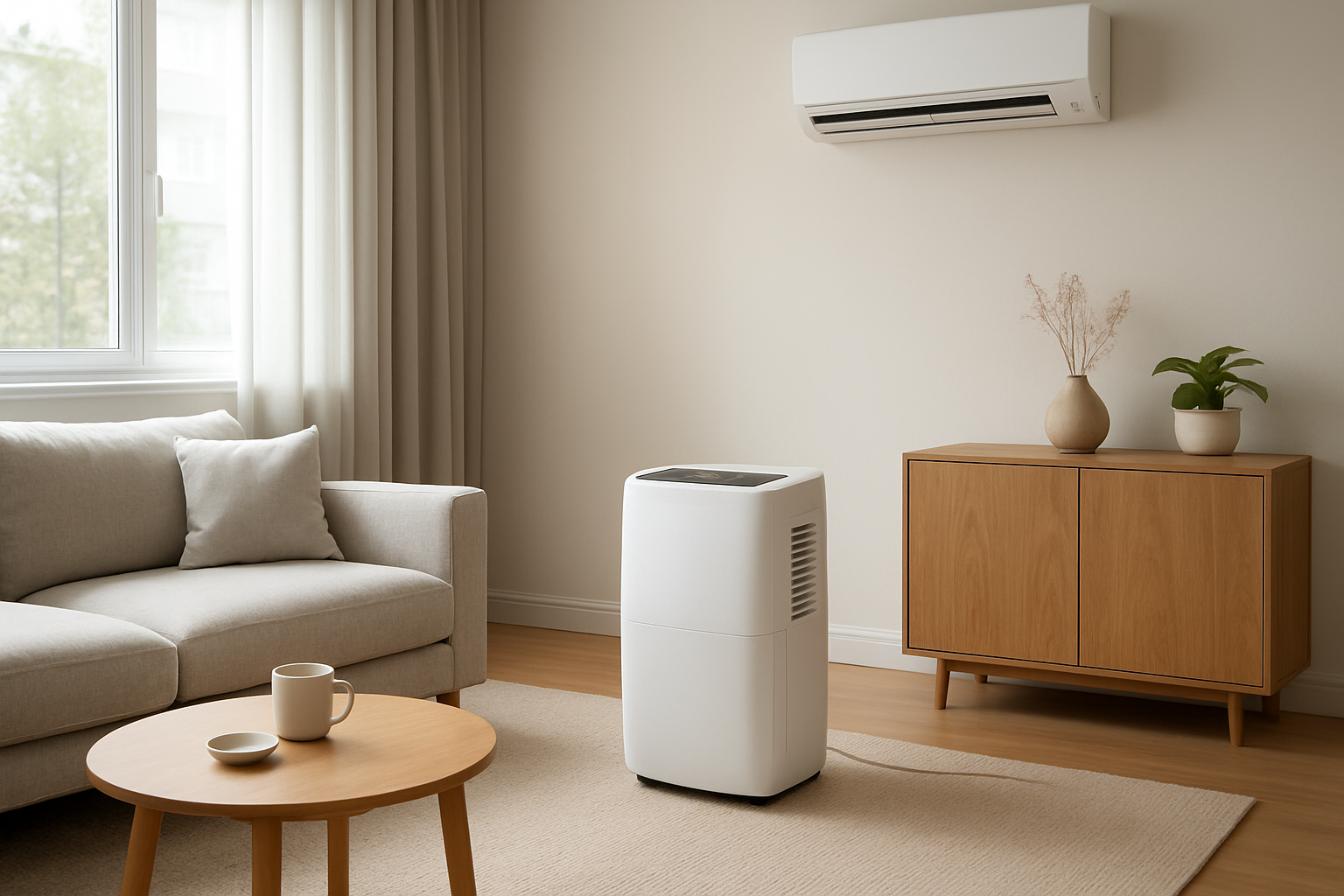
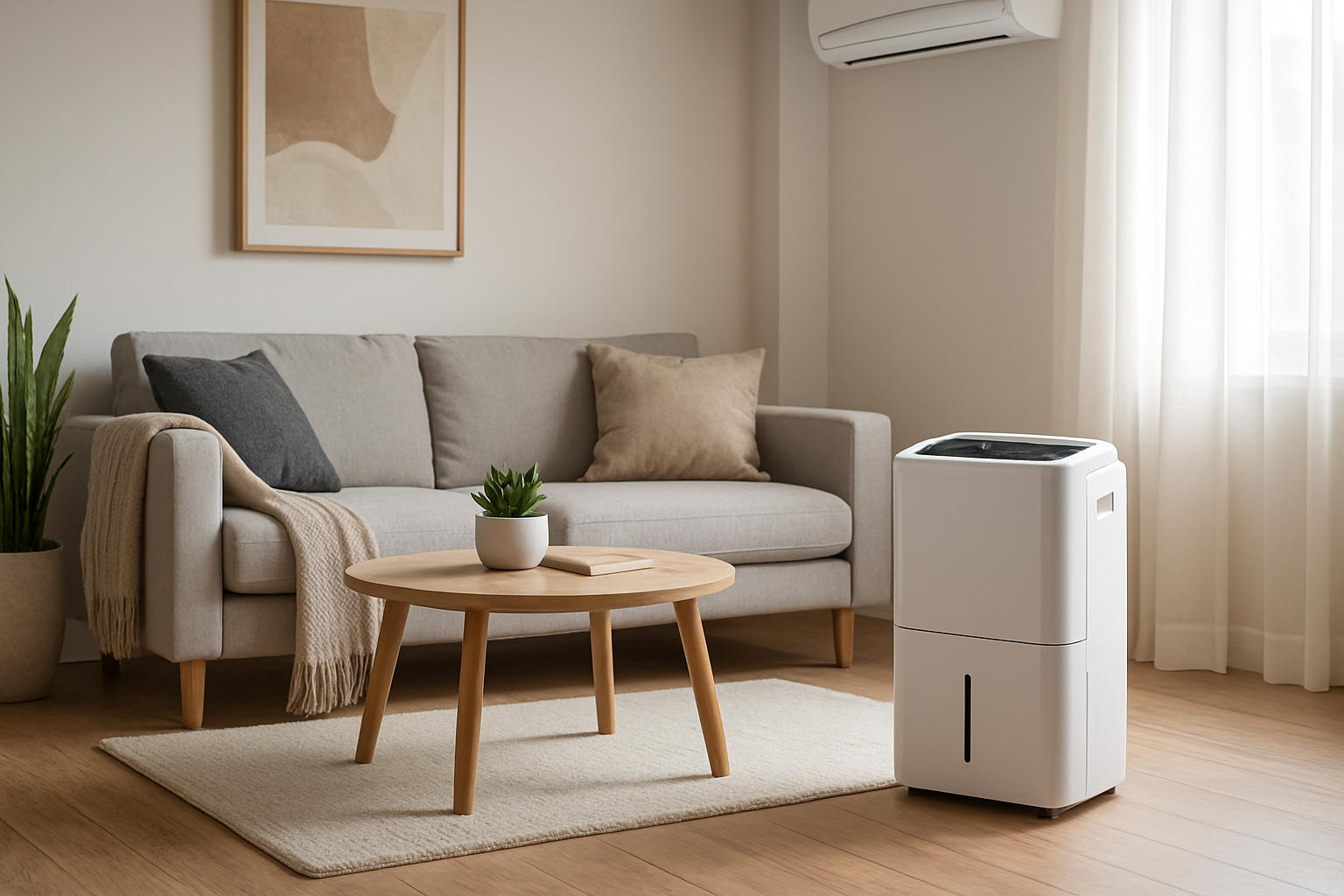
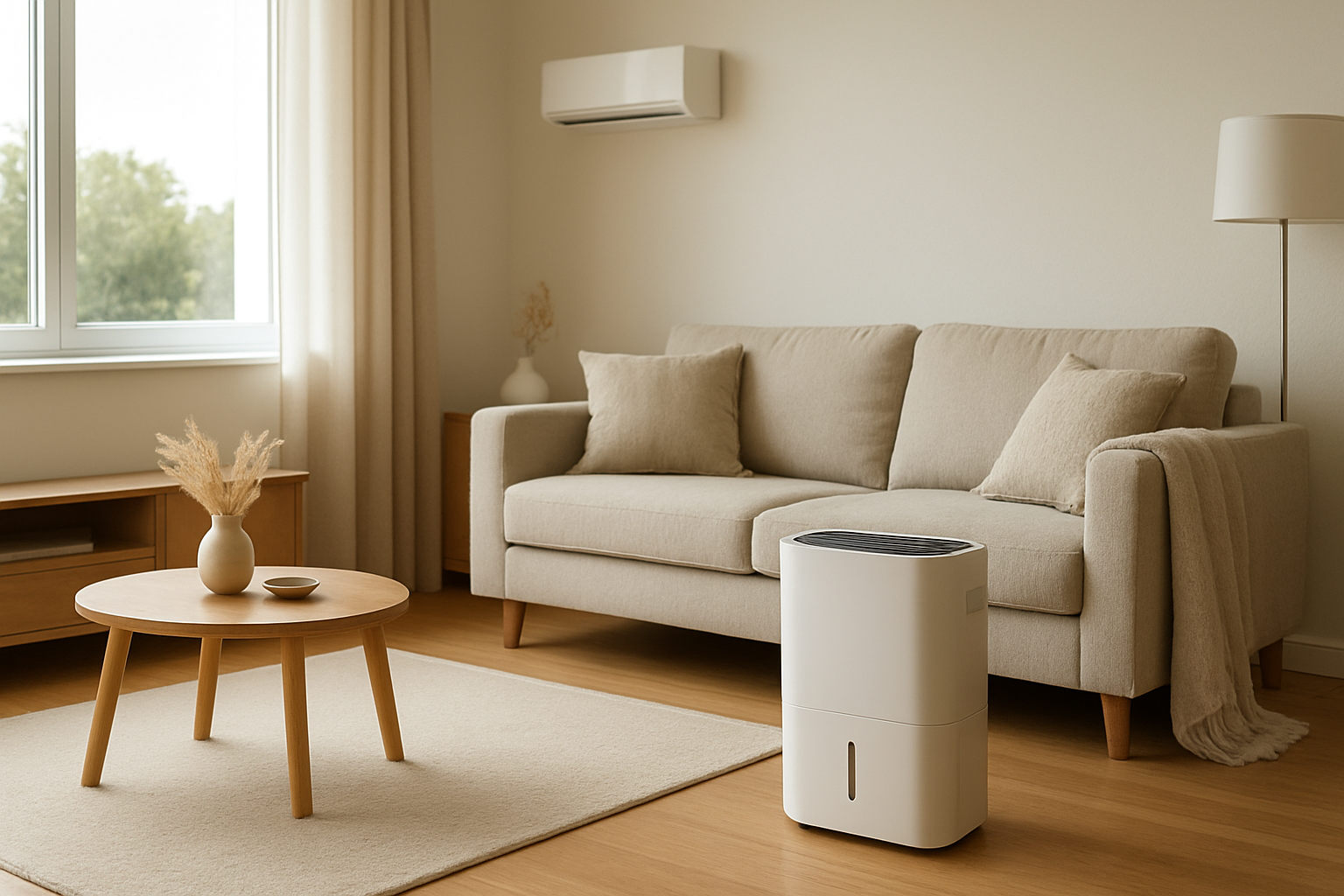
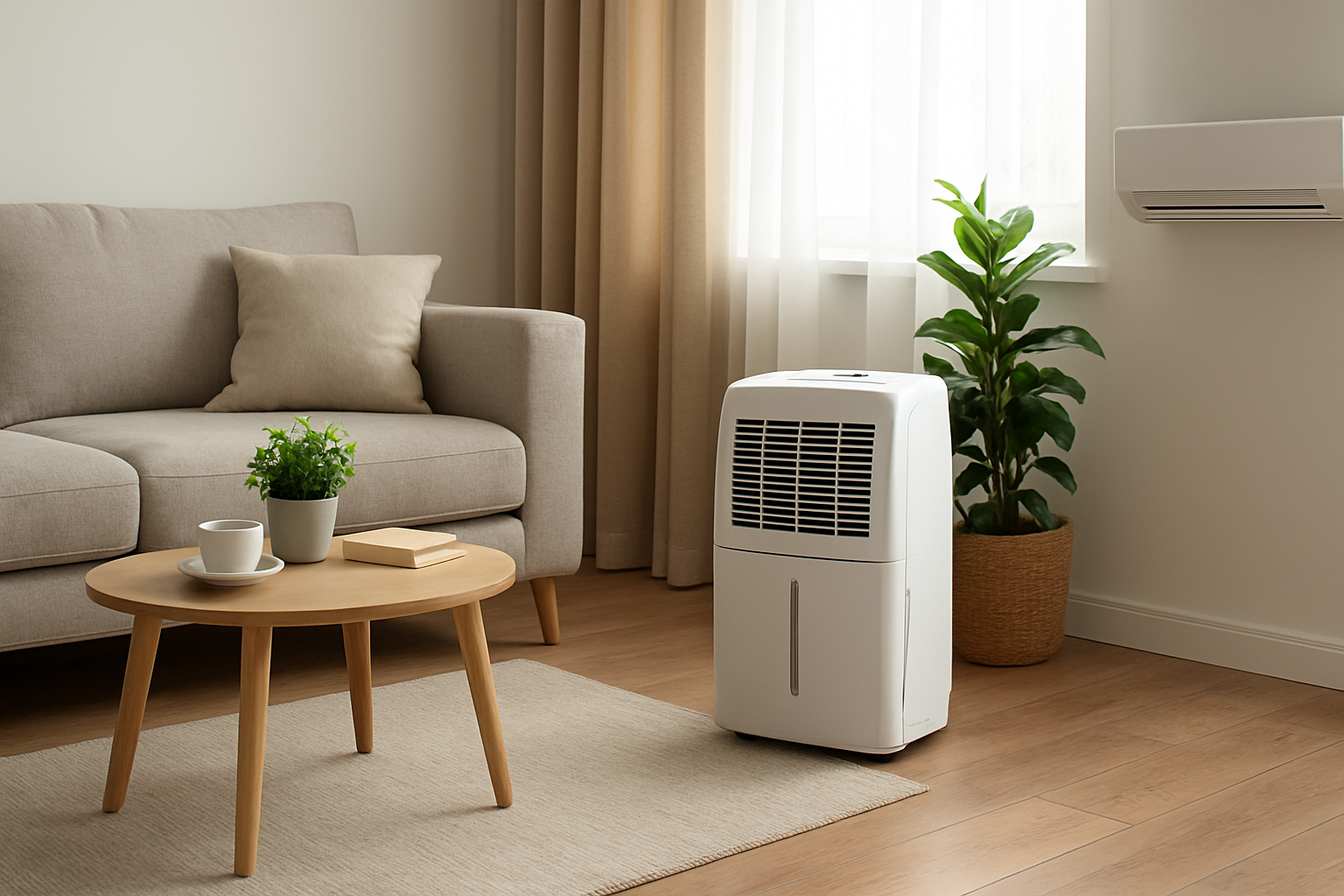
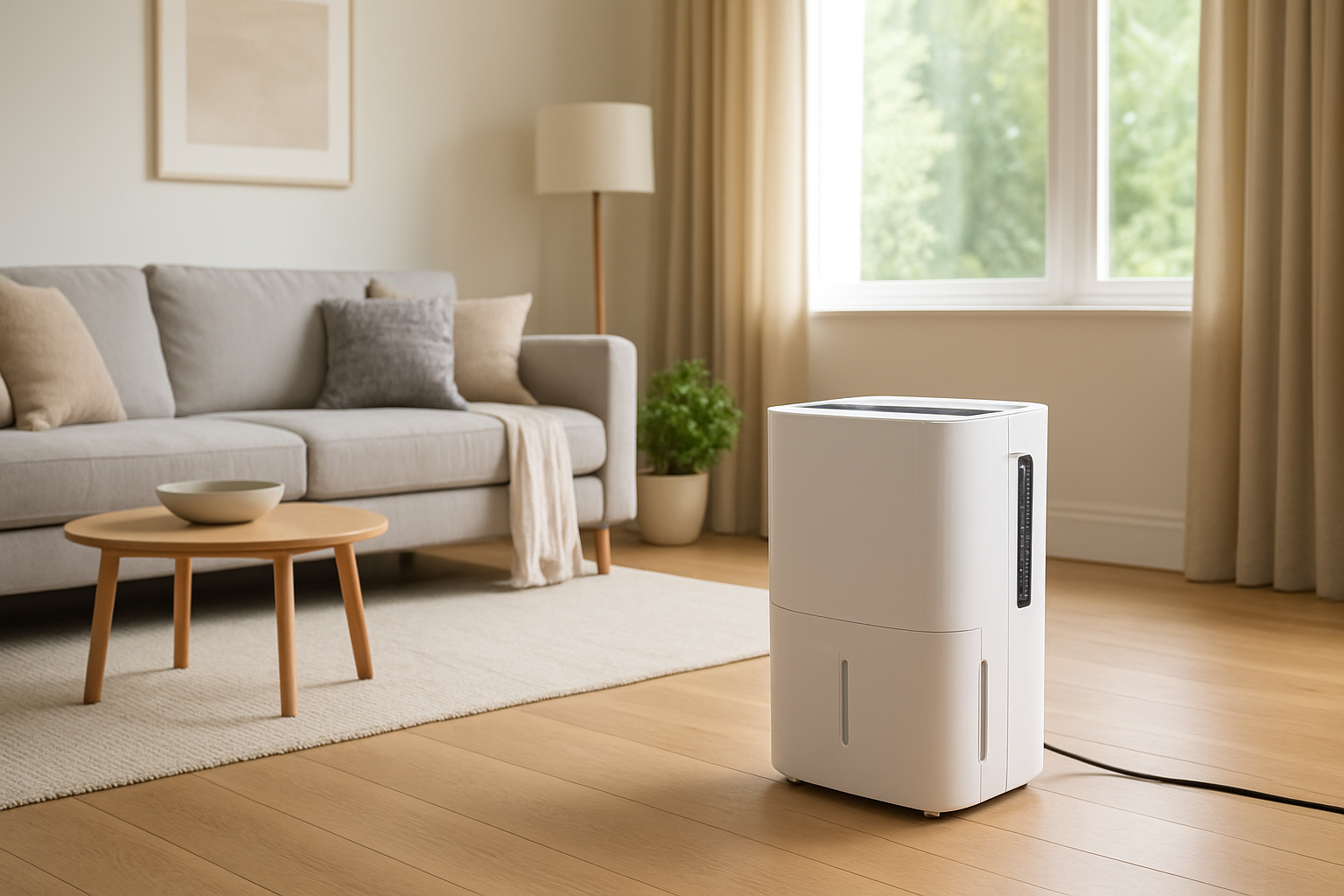
Your dehumidifier runs all day but the air still feels damp? Here’s why humidity doesn’t always drop as expected.
If your dehumidifier runs all day but the air still feels damp, the issue is rarely that the unit is “broken.” More often, it’s simply being asked to handle more moisture than it can realistically remove.
You hear it running, the bucket collects some water, and yet the room never really feels dry. The humidity might drop a little at first, then stop improving. This pattern is surprisingly common, especially in basements or during humid seasons.
When a Dehumidifier Starts Falling Behind
Most people expect a dehumidifier to steadily bring humidity down to the setpoint. But in real homes, things don’t work that cleanly.
Moisture is constantly entering the space. It comes from outside air, from the ground, from the structure itself, and even from everyday activities. When that incoming moisture becomes greater than what the unit can remove, humidity stops improving — even though the machine keeps running.
This is what a capacity limit looks like in practice.
The Pattern You’ll Usually Notice
This situation tends to follow a very consistent pattern.
The unit runs for long periods with very few breaks. Humidity drops slightly at first, then seems to stall. Some days feel worse than others, especially when outdoor air is humid or after rain.
Lower levels of the home — especially basements — are usually affected first. The air feels cool but slightly clammy, and a musty smell can linger even when the temperature feels comfortable.
You might also notice that closing a door helps. When the space becomes smaller, the unit suddenly seems more effective. That’s a strong sign that the problem isn’t failure — it’s scale.
Why Moisture Keeps Coming Back
One of the most misunderstood aspects of humidity is how persistent it is.
Moisture doesn’t just appear once — it continuously enters the space. Small air leaks, ground moisture, and porous materials like concrete slowly release water into the air throughout the day.
Even if your dehumidifier removes some of it, new moisture keeps replacing what was just removed. Over time, this creates a plateau where humidity barely moves.
Why Basements Are Especially Difficult
Basements create the perfect conditions for this issue.
They are cooler, which reduces the effectiveness of most portable dehumidifiers. They are also closer to the ground, where moisture naturally accumulates. And they often have limited airflow compared to the rest of the home.
This combination means the unit has to work harder while being less efficient at the same time.
What You Can Check Yourself
You don’t need special tools to understand what’s happening. A few simple observations can give you a clear answer.
If humidity drops when you close the door, the unit is likely undersized for the full area
If the bucket fills slowly despite constant runtime, conditions may be too cool or moisture too spread out
If humidity rises quickly when the unit stops, moisture is entering faster than expected
If different parts of the room feel different, airflow and distribution may be limiting effectiveness
These patterns point to capacity or environmental limits, not a sudden malfunction.
When It’s Not Just a Capacity Issue
There are situations where the problem goes beyond sizing.
If humidity stays very high for days, if you see condensation or damp surfaces, or if the smell returns quickly after the unit stops, there may be a continuous moisture source feeding the space.
This could come from the ground, from leaks, or from outside air entering more than expected.
In those cases, increasing capacity alone won’t fully solve the problem.
How to Improve the Situation
In many homes, small changes can make a noticeable difference.
Reduce the area the unit is trying to handle by closing doors
Improve air movement so humidity is evenly distributed
Limit outdoor air entering the space where possible
Address obvious moisture sources like ground contact or poor sealing
These adjustments don’t change the unit itself — they change what it has to deal with.
Why This Feels Like a Problem Even When It Isn’t
From a user perspective, this situation feels like something is wrong. The machine is running, but the result isn’t there.
But in reality, the unit is often doing exactly what it can. It’s just operating at its limit.
If you want to explore how humidity and indoor air conditions affect your home in more detail, you can check our humidity and indoor air troubleshooting guide for a complete overview.
Conclusion
When a dehumidifier runs steadily but humidity barely drops, the most common explanation is not a defect — it’s a mismatch between moisture load and removal capacity.
Once you understand that balance, the situation becomes much clearer, and easier to improve.
After a while, it starts to feel a little unfair—like the machine is doing the work, but the room refuses to cooperate. Dampness can be stubborn in its own quiet way, clinging to whatever it’s holding onto.
The good news is you’re not missing something obvious, and you’re not crazy for noticing it. The situation just isn’t as simple as “on means solved,” and that’s a lot of the frustration right there.