Diagnose and fix heat pump short cycling caused by control or sensor issues, helping prevent frequent on-off cycles and restore efficient heating or cooling operation.
Heat Pump Switching On And Off Every Few Minutes? Control Issue
Quick Answer
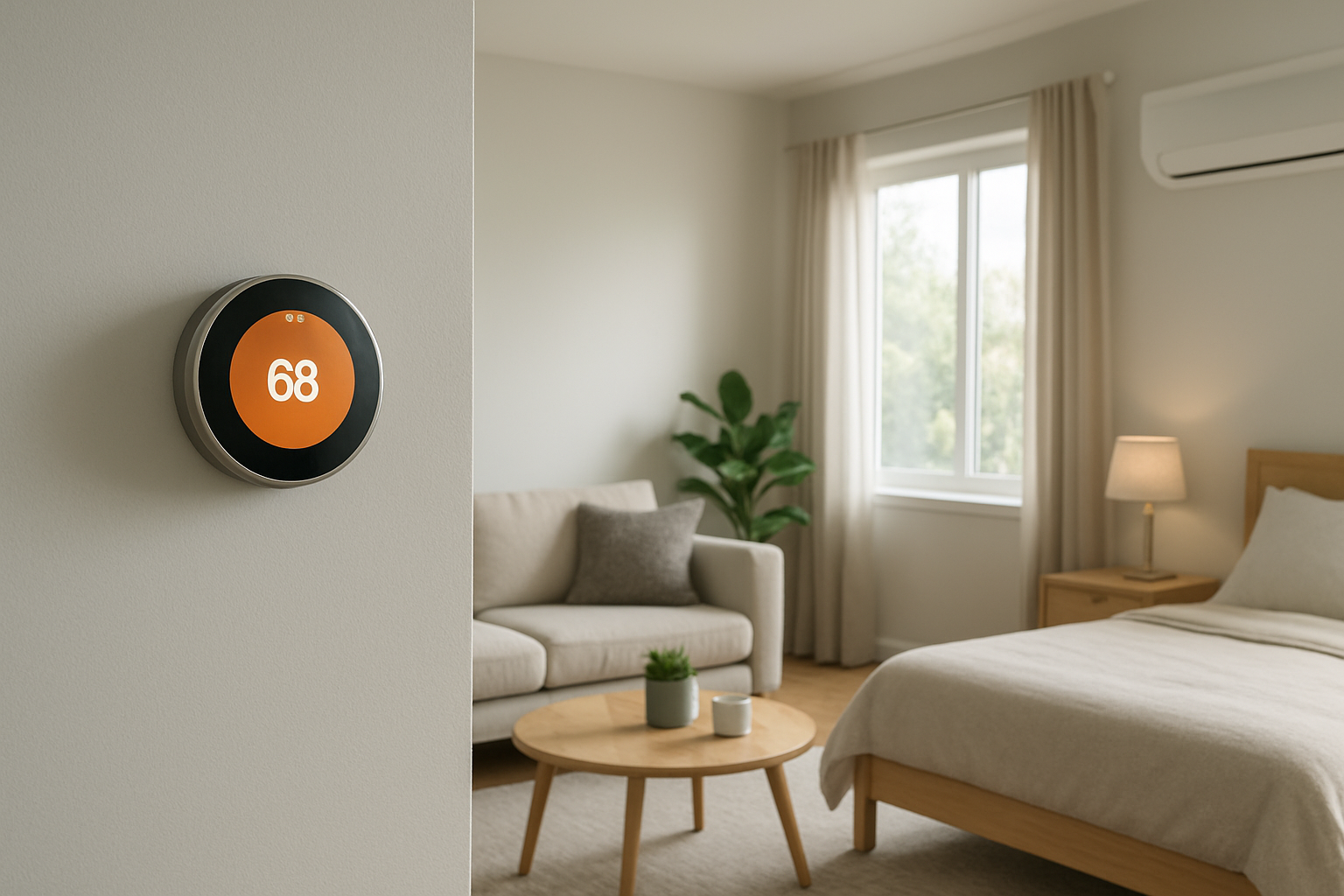
If your heat pump turns on and off every few minutes, the most likely cause is a control or sensor problem making the system think it has reached the setpoint when it has not. First check: watch the thermostat display during a cycle. If room temperature is steady but the thermostat reading jumps, or it quickly hits setpoint then drops, suspect thermostat placement, settings, or a faulty temperature sensor.
Identify the Comfort Pattern First
Short cycling from a control or sensor issue has repeatable patterns. Use these observations to sort what you are dealing with before you assume an equipment failure.
When it happens: Note if it is worse on mild days (40–60°F) or during sunny afternoons. Control-driven short cycling often shows up when the load is light and the thermostat is easily fooled by localized heat.
Where it happens: Does it affect the whole home equally, or do you feel one room is comfortable while others drift colder/warmer? Sensor errors typically produce uneven comfort because the system is reacting to a bad measurement, not actual whole-house conditions.
System behavior: Does the outdoor unit and indoor blower both stop, or does the blower keep running while heating/cooling stops? Thermostat or control board decisions usually stop the call for heating/cooling; blower-only behavior can indicate fan settings or control logic changes.
Constant vs intermittent: True control/sensor problems are often consistent: many short cycles back-to-back with similar run times. If it only happens once or twice a day, look harder at sun, doors, or supply air washing over the thermostat.
Door test: If leaving interior doors open changes cycling behavior quickly, your thermostat may be reading an unrepresentative pocket of air (stratification or a closed-off hallway effect).
Vertical difference: Check if upstairs feels hot while downstairs feels cool (or vice versa). Stratification can make a thermostat in one location satisfy early, creating short cycles and persistent discomfort elsewhere.
Humidity perception: In cooling mode, frequent short cycles often feel clammy because run time is too short for moisture removal. In heating mode, humidity perception changes less, but air may feel drafty because the system never stabilizes supply temperature.
Airflow strength: If airflow at vents feels normal and steady during the short run, that points away from major airflow restriction and toward the thermostat/control side.
What This Usually Means Physically
A heat pump should run long enough to move the indoor air temperature toward the setpoint and then coast, not start and stop repeatedly every few minutes. When it short cycles due to control or sensor issues, the equipment is usually responding correctly to bad information.
Here is the mechanism technicians look for:
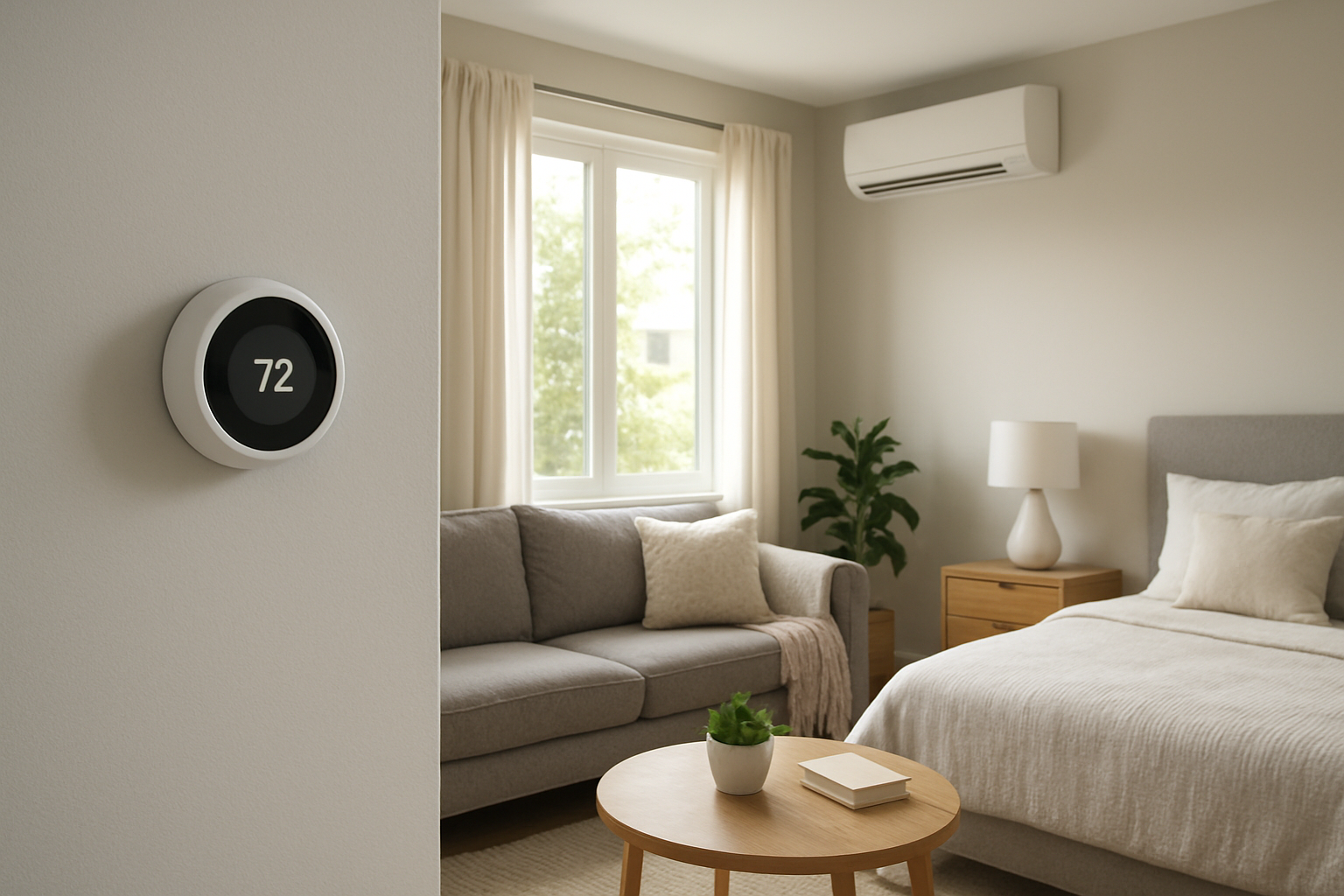
Localized temperature at the thermostat: The thermostat senses temperature at its own location, not the average of the house. If supply air leaks, a nearby register, a return grille, a lamp, a sunny wall, or a kitchen heat source warms that spot, the thermostat reaches setpoint early. The system shuts off even though the rest of the home still needs heating or cooling.
Sensor interpretation and control logic: A drifting or noisy sensor can cause the thermostat to flip between calling and not calling. The heat pump obeys those rapid changes, producing repeated short cycles.
Air stratification and pressure-driven mixing: Warm air rises, cool air sinks. If the thermostat is in a stratified layer (for example, high on a wall near a stairwell), it can read warmer than the occupied zone in heating mode. Doors and returns change how air mixes, so cycling can change when doors open or close.
Light load conditions: On mild days, a correctly sized heat pump may already run shorter cycles. A control or sensor bias makes that worse, driving cycles into the 2–6 minute range.
Staging and recovery: Some systems use auxiliary heat, staging, or smart recovery. Incorrect configuration can cause rapid staging changes that look like short cycling because heating output is being turned on and off by control decisions rather than by load.
Most Probable Causes (Ranked)
Thermostat location being influenced by a local heat/cool source
Diagnostic clue: Cycling is worse when sun hits the wall, when cooking, when a nearby register runs, or when the hallway door is closed.
Diagnostic clue: Cycling started after a thermostat replacement, firmware update, utility demand program change, or a settings change; the on/off timing is very regular and similar each time.
Bad thermostat temperature sensor or poor thermostat power/communication
Diagnostic clue: Thermostat temperature display jumps a degree or two without any real room change; the system stops and starts with no change in weather or indoor conditions.
Return air or supply air interaction at the thermostat (pressure/airwash effect)
Diagnostic clue: A nearby return grille, stairwell, or supply register makes the thermostat feel a temperature change faster than the rest of the home; opening doors changes cycling quickly.
Control board/low-voltage control issue intermittently dropping the call
Diagnostic clue: Thermostat still shows a call for heat/cool, but the outdoor unit stops; or cycling is erratic and not tied to reaching setpoint.
How to Confirm the Cause Yourself
These checks rely on observation, not tools. You are looking for evidence that the system is being turned off by a control decision rather than by a true whole-house temperature change.
Measure the cycle timing: For one hour, write down start/stop times. Control/sensor short cycling often produces repeated run times under 6–8 minutes with only a few minutes off in between.
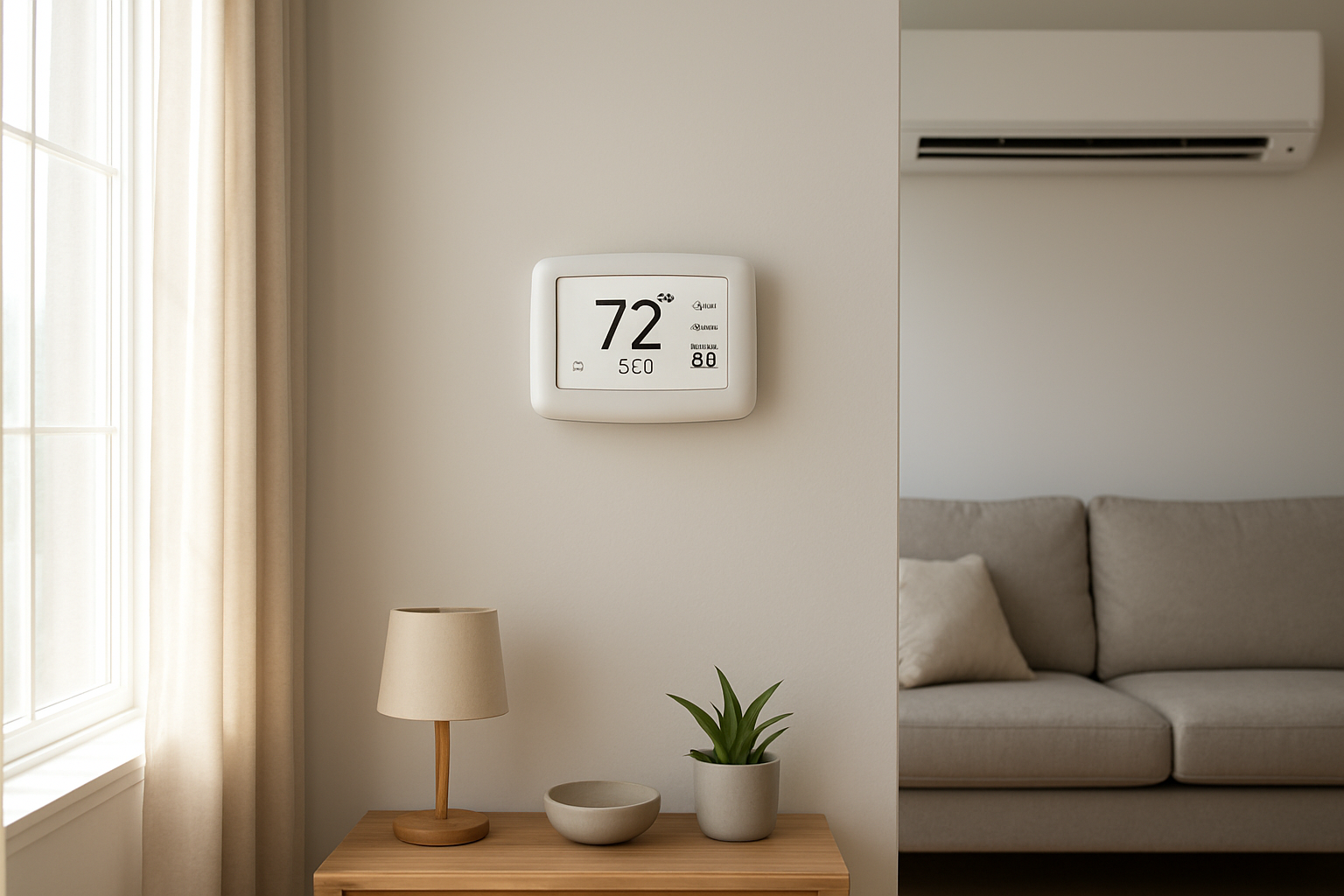
Watch the thermostat temperature vs reality: Stand in the thermostat area for a full cycle and compare how it feels to what the display reports. If the display rises or falls quickly while the space does not feel like it changed, suspect sensor bias or airwash from a register/return.
Check for setpoint satisfaction without home comfort satisfaction: When the system shuts off, walk to the farthest room (or the room that usually feels worst). If that room still feels clearly off-target while the thermostat says it is satisfied, the thermostat location/reading is likely the driver.
Door position test: Run the system with the nearest interior door open for 20–30 minutes, then repeat with it closed. A major change in cycling frequency points to airflow/mixing affecting the thermostat reading.
Sun and internal heat test: If cycling is worse in the afternoon, shade the thermostat wall temporarily (close blinds, reduce lamp heat near it) and compare behavior on the next cycle. Thermostat wall warming often creates short cycles even when the air temperature is stable.
Listen for who is making the decision: When the system turns off, look at the thermostat immediately. If it no longer shows heating/cooling active, the thermostat decided to stop. If it still indicates a call but equipment stopped, a control/communication issue is more likely.
Check fan setting effect: If the fan is set to ON, try AUTO for a day. Constant fan can mix air differently and can also expose sensor placement issues; if cycling pattern changes dramatically, you have a mixing/measurement problem, not a capacity problem.
Normal Behavior vs Real Problem
Not every short run is a fault. The decision point is whether cycling is frequent enough to disturb temperature stability, humidity control, or equipment operation.
Often normal: On mild days, a heat pump may run 8–15 minutes and shut off for a period, especially if the home has low load and good insulation. Longer off-times and stable indoor temperature suggest normal control.
Likely a real problem: Repeated cycles under about 6–8 minutes for extended periods, especially if room temperature does not hold steady and you feel alternating warm/cool bursts.
Cooling mode warning sign: Indoor air feels clammy or sticky even though the thermostat temperature is satisfied. Short cycles reduce dehumidification because the coil does not stay cold long enough.
Heating mode warning sign: The house feels drafty and uneven, and the system seems to stop just as it starts delivering consistent warm air.
Control-driven signature: Cycling happens even when outdoor temperature is stable and there is no major door opening or occupant activity. The timing looks repetitive and tied to the thermostat reaching its displayed setpoint quickly.
When Professional Service Is Needed
Cycle frequency threshold: If the heat pump repeatedly runs less than 6–8 minutes for more than an hour at a time under steady weather conditions.
Comfort threshold: If rooms drift more than about 2–3°F from the thermostat area or if humidity comfort is noticeably worse in cooling season.
Control mismatch: If the thermostat indicates heating/cooling is active but the outdoor unit stops, or if the thermostat display behaves erratically.
Repeated auxiliary heat problems: If auxiliary heat is rapidly turning on and off or energy use spikes alongside short cycling, the staging configuration or sensors need verification.
Any electrical/communication symptoms: Intermittent thermostat rebooting, blank display, or repeated system resets.
A technician will typically verify thermostat calibration and placement influences, check low-voltage stability, confirm staging and cycle-rate settings, and review sensor inputs that can terminate a call prematurely.
How to Prevent This in the Future
Keep the thermostat representative: Avoid heat-producing lamps, electronics, or direct sun on the thermostat wall. Do not place supply registers that blow toward the thermostat area.
Maintain stable airflow paths: Keep return paths open (door undercuts, transfer grilles) so closing a door does not isolate the thermostat from the rest of the home’s air.
Use appropriate thermostat configuration: Ensure heat pump type, staging, and cycle-rate settings match your equipment. After thermostat replacement, confirm the installer settings rather than relying on defaults.
Reduce stratification drivers: Use ceiling fans on low when needed, and avoid blocking returns that help mix air between floors.
Change filters on schedule: While this article focuses on controls/sensors, stable airflow helps the thermostat track the actual occupied-zone temperature rather than a distorted airflow pattern.
Related Home Comfort Symptoms
Upstairs too hot while downstairs is cold in heating season
Cooling feels clammy even when temperature is correct
One room overshoots and the rest of the house lags
Heat pump runs, stops, then restarts with no setpoint change
Auxiliary heat comes on unexpectedly or cycles rapidly
Conclusion
A heat pump that switches on and off every few minutes is most often being commanded to stop by a control decision driven by a biased thermostat reading or unstable sensor input. Confirm it by tracking run times and watching whether the thermostat is actually ending the call when the system stops. If cycles stay under 6–8 minutes with real comfort swings or humidity issues, schedule service to verify thermostat placement, configuration, sensor accuracy, and low-voltage control stability.
Frequently Asked Questions
How many minutes should a heat pump run before shutting off?
In steady conditions most homes see cycles commonly in the 8–20+ minute range. Repeated cycles under about 6–8 minutes usually point to a control/sensor influence, especially if the indoor temperature or humidity is not stable.
Why does short cycling get worse on sunny afternoons?
Sun can warm the thermostat wall or the air pocket around it faster than the rest of the home. The thermostat reaches setpoint early and stops the system, even though shaded rooms and interior spaces still need heating or cooling.
If the thermostat still shows heating/cooling, why would the heat pump stop?
If the thermostat is still calling but equipment stops, the issue is less likely to be simple setpoint satisfaction. It points toward a control/communication interruption, a control board dropping the call, or a sensor/safety input telling the system to stop.
Can a thermostat setting cause the system to cycle every few minutes?
Yes. Incorrect cycle rate, staging configuration, or heat pump setup can make the thermostat command short runs and frequent shutoffs. This is common after thermostat replacement when installer settings are left at defaults.
Will short cycling affect humidity in air conditioning mode?
Yes. Moisture removal depends on sustained coil operation. Frequent short cycles often leave the home feeling clammy because the system satisfies temperature quickly but does not run long enough to pull out moisture consistently.
Need a complete overview? Visit the full troubleshooting guide here: Read the full guide for more causes and fixes.
That repeating on-off rhythm can make a whole home feel like it can’t decide what it wants, and it’s exhausting in the background. When things are lined up properly, the system settles into a steadier pace, and your comfort stops behaving like a mood swing.
It’s one of those fixes you don’t notice in the moment—until the cycles stop and everything just feels normal again. Quiet heat, or quiet cool, has a way of reminding you how much you were tolerating before.